
You remember the taste, that distinct, savory depth that turned a simple can of tomato paste into a rich, simmering pot of spaghetti sauce. For years, a small envelope of Spatini seasoning mix was a pantry staple, a reliable shortcut to a meal that felt both homemade and perfectly consistent. Then, it vanished from most store shelves, leaving many to wonder how to recapture that specific flavor.
I understand that search for the old recipe. In my kitchen, balancing nutrition with timeless taste is a constant focus. Recreating this sauce isn’t just about nostalgia; it’s about reclaiming control over what goes into your food. You can manage sodium, adjust sweetness, and know every ingredient.
This guide provides the classic formula directly from the original packet, a detailed homemade seasoning mix, and a deep exploration of how each component works. We will move from a simple medium saucepan to understanding the science of tomatoes and herbs. Let’s restore that familiar, beloved sauce to your table.
How to Make Spatini Sauce Recipe
This section details the traditional method using the original Spatini spaghetti sauce mix packet. It is the foundation upon which we will build all our variations and deeper knowledge. The process is straightforward, but success lies in the gentle simmer.
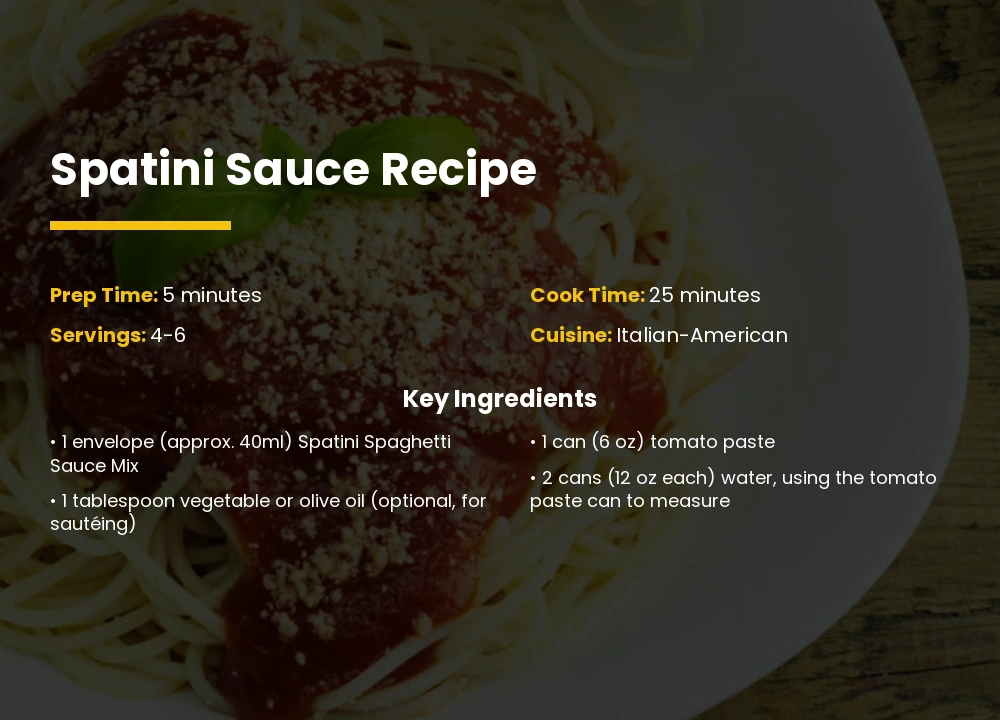
Recipe Details
- Prep Time: 5 minutes
- Cook Time: 25 minutes
- Servings: 4-6
- Course: Main Course
- Cuisine: Italian-American
- Diet: Vegetarian
Ingredients
- 1 envelope (approx. 40ml) Spatini Spaghetti Sauce Mix
- 1 tablespoon vegetable or olive oil (optional, for sautéing)
- 1 can (6 oz) tomato paste
- 2 cans (12 oz each) water, using the tomato paste can to measure
Instructions
- Gather your ingredients: one envelope of Spatini mix, one 6-ounce can of tomato paste, and your chosen oil.
- If using oil, place your medium saucepan over low heat. Add the oil and let it warm for a minute. This step is optional but can add a layer of flavor.
- Add the entire can of tomato paste to the saucepan. If you warmed oil, stir the paste into it for about one minute. If not using oil, simply add the paste to the dry pan.
- Pour in one full can of water, using the empty tomato paste can. Stir vigorously to combine the water and paste, working out any lumps.
- Add the second can of water and continue to stir until the mixture is smooth.
- Open the envelope of Spatini seasoning mix and sprinkle it evenly over the tomato mixture. Stir thoroughly to incorporate.
- Increase the heat to bring the sauce to a very low bubble, then immediately reduce it to the lowest setting that maintains a gentle simmer. You should see occasional small bubbles break the surface.
- Allow the sauce to simmer uncovered for 20-25 minutes, stirring occasionally to prevent sticking. The sauce will reduce slightly and deepen in color.
- After simmering, taste the sauce. It is now ready to serve over cooked spaghetti or your preferred pasta.
Nutrition
- Calories: 70 kcal
- Protein: 2 g
- Fat: 3.5 g
- Carbohydrates: 9 g
- Sugar: 5 g
- Fiber: 2 g
- Sodium: 480 mg
- Cholesterol: 0 mg
Note: These values are approximate estimates per serving for the basic recipe using the original mix and are highly dependent on the specific mix formulation. Sodium content is a key consideration.
Cooking Method
The core method is a gentle stovetop simmer. This process is non-negotiable for developing flavor. The simmer allows water to evaporate, concentrating the tomato solids and giving the dried herbs and spices time to rehydrate and release their essential oils into the sauce. A rapid boil can cause the sugars in the tomato to scorch, leading to a burnt, bitter taste.
Tools Needed
- A reliable 2 to 3-quart medium saucepan. This size prevents messy boil-overs and allows for proper reduction.
- A sturdy wooden spoon or silicone spatula for stirring.
- A can opener.
- A measuring spoon for the optional oil.
Understanding the Original Spatini Formula
To truly master this sauce, we must look at its history. Spatini was a product of its time, created for convenience and consistency. The original small packets, later replaced by a 15-ounce carton, contained a precise blend designed to transform basic tomato products.
The Official Recipe Chart
The packaging always included a chart. For a sauce using tomato paste, the ratio was fixed: one envelope of mix to one 6-ounce can of paste and two cans of water. This yielded a smooth, rich sauce. For a larger batch, perhaps for a family gathering, the 15-ounce package would have provided multiple envelopes.
Many online queries ask, “how much seasoning do I use out of a 15oz package?” The answer is that the large carton contained multiple pre-portioned envelopes inside, typically for making 2 ½ gallons of sauce total. You would use one small envelope per batch as directed.
The Role of Tomato Paste
Tomato paste is tomato concentrate, with most of the water removed. It provides intense umami, a deep red color, and a thick, luxurious body. When you combine it with water and simmer, you are essentially reconstituting and cooking it further, which mellows its raw acidity and develops complex caramelized notes.
The quality of your paste matters. I find that paste packaged in a tube, rather than a can, offers a fresher taste and allows you to use smaller amounts without waste. The type of tomato also affects the final flavor, with San Marzano tomatoes being renowned for their sweetness and low acidity.
Creating Your Own Spatini Seasoning Mix
Since finding the original mix can be difficult, making your own blend is the ultimate solution. This approach lets you adjust salt, avoid anti-caking agents, and use fresher dried herbs. The goal is to mimic that distinctive, well-balanced profile.
Homemade Seasoning Mix Ingredients
This recipe makes the equivalent of one original Spatini envelope. You can scale it up and store it in a jar.
- 2 tablespoons cornstarch (the thickener and base)
- 1 tablespoon dried minced onion
- 2 teaspoons granulated sugar
- 2 teaspoons salt
- 1 ½ teaspoons garlic powder
- 1 teaspoon dried oregano
- 1 teaspoon dried parsley
- ½ teaspoon dried basil
- ½ teaspoon black pepper
- ¼ teaspoon dried thyme
Why This Blend Works
Cornstarch is the silent workhorse. It replicates the smooth, slightly thickened texture of the original sauce and helps suspend the spices evenly. Dried minced onion and garlic powder provide the foundational savory notes without requiring sautéing.
The herb combination of oregano, parsley, basil, and thyme is classic Italian-American. The sugar is not just for sweetness; it is a crucial tool for balancing the acidity of the tomato paste. You have complete control over the sodium level here, which is a significant dietary advantage.
Exploring Tomato Bases and Textures
The original recipe called for tomato paste, but the old packets often included a chart for other tomato products. Understanding these options allows you to customize your sauce’s texture and flavor intensity.
Using Tomato Puree
Tomato puree is smoother and thinner than paste but thicker than juice. To use it, combine one envelope of seasoning mix with one 15-ounce can of puree and one can of water. The resulting sauce will be lighter in body and slightly less concentrated in flavor than the paste version, but it cooks faster.
Using Crushed Tomatoes
For a chunky, homestyle spaghetti sauce, crushed tomatoes are an excellent choice. They provide pieces of tomato for texture. Use one envelope of mix with one 28-ounce can of crushed tomatoes. You may only need to add ½ cup of water to adjust consistency. Simmer for 25-30 minutes to allow the chunks to soften and the flavors to marry.
Using Fresh Tomatoes
This is the most advanced adaptation. You will need about 2 pounds of ripe Roma or plum tomatoes. Core and peel them, then puree in a blender or food processor. Cook the fresh puree down in your saucepan for about 10 minutes before adding the seasoning mix and simmering for another 20. The flavor will be brighter and fresher, but different from the concentrated, nostalgic profile of the paste-based sauce.
Nutritional Considerations and Adaptations
From a dietary perspective, recreating this sauce at home is an opportunity for improvement. The primary concern in any pre-made seasoning mix is sodium content. By making your own blend, you directly address this.
Managing Sodium Intake
The homemade mix recipe provided uses 2 teaspoons of salt. For a sauce serving 4-6, this contributes significantly to the daily limit. You can reduce this to 1 teaspoon, or use a potassium-based salt substitute if medically appropriate. The other spices will still provide ample flavor.
Another strategy is to use a no-salt-added tomato paste. This single switch puts you in charge of all the salt in the dish, allowing you to season to your personal taste and health needs.
Dietary Adaptations
For a gluten-free version, ensure your cornstarch is certified gluten-free, as some processing facilities may have cross-contamination. The recipe is naturally vegetarian and can be vegan if you use oil instead of butter for any optional sautéing.
To reduce sugar, you can cut the amount in the homemade mix in half or use a granulated alternative like monk fruit sweetener. Be aware this may slightly alter the balance against the tomato’s acidity.
Expert Techniques for a Perfect Sauce
Small details separate a good sauce from a great one. These tips are drawn from both culinary practice and the science of cooking.
The Importance of Simmering
Do not rush the simmer. The 20-25 minute window is critical for chemical reactions. The heat breaks down pectin in the tomatoes, naturally thickening the sauce. It also allows the volatile compounds in the dried herbs to infuse the liquid fully. A lid-on simmer will retain more water, creating a thinner sauce, while lid-off promotes reduction and concentration.
Common Mistakes to Avoid
Adding the seasoning mix to cold water and tomatoes before heating can result in clumping, especially with cornstarch. Always mix the paste and water first, get a smooth base, then sprinkle in the seasoning while stirring.
Using a saucepan that is too small leads to messy splattering. Using one that is too large causes the sauce to reduce too quickly, potentially burning. A medium saucepan is the specified tool for a reason.
Stirring too infrequently, especially in the final minutes of simmering, can cause the denser sauce to stick and scorch on the bottom of the pan, imparting a bitter flavor to the entire batch.
Serving, Storage, and Recipe Expansion
Your sauce is simmered and ready. Now, let’s integrate it into a complete meal and plan for leftovers.
Serving and Pairing Suggestions
Obviously, this sauce is ideal for spaghetti. For a more nutrient-dense meal, consider serving it over a legume-based pasta or spiralized zucchini. It also works beautifully as a pizza sauce, a dipping sauce for meatballs, or a base for homemade lasagna.
To round out the meal, pair it with a simple green salad dressed with an acidic vinaigrette to cut the richness of the sauce. A side of roasted vegetables, like broccoli or bell peppers, adds fiber and vitamins.
Storage and Reheating Instructions
Allow the sauce to cool completely before storage. Transfer it to an airtight container. It will keep in the refrigerator for up to 5 days. For longer storage, freeze it in portion-sized containers for up to 3 months.
Reheat gently in a saucepan over low heat, adding a small splash of water if the sauce has thickened too much in storage. Microwave reheating is possible but can be uneven; stir thoroughly halfway through.
Recipe Variations
For a spicier tomato sauce, add ¼ to ½ teaspoon of red pepper flakes to your seasoning mix. To create a meat sauce, brown 1 pound of ground beef, turkey, or plant-based crumbles in your saucepan before removing them and proceeding with the oil and paste. Return the cooked meat to the sauce when you add the seasoning mix.
For a richer, “Sunday gravy” style, add browned Italian sausage slices or meatballs to the sauce during the final 15 minutes of simmering, allowing their flavors to bleed into the tomato base.
Frequently Asked Questions
What is the exact old Spatini recipe with tomato paste?
The original recipe from the small packets required one envelope of Spatini mix, one 6-ounce can of tomato paste, and two full cans of water (using the paste can to measure). Combine all in a medium saucepan, bring to a simmer, and cook for 20-25 minutes.
How much of the 15-ounce Spatini package do I use for one batch?
The 15-ounce carton contained multiple individual envelopes inside. You used one small envelope per batch. The large package was designed to make many batches, totaling around 2 ½ gallons of finished sauce.
Can I make Spatini sauce without the official mix?
Yes, you can create a close copycat seasoning mix using common pantry spices. A blend of cornstarch, dried onion, garlic powder, oregano, parsley, basil, salt, sugar, and pepper will replicate the core flavor profile when combined with tomato paste and water.
Why did my sauce turn out too salty or too sweet?
This is likely due to the specific formulation of a pre-made mix or an imbalance in a homemade blend. The beauty of making your own is the ability to adjust. If a sauce is too salty, add a teaspoon of vinegar or lemon juice to balance. If too sweet, a pinch of additional herbs or black pepper can help counteract it.
What can I use instead of tomato paste?
You can use a 15-ounce can of tomato puree with one can of water, or a 28-ounce can of crushed tomatoes with perhaps ½ cup of water. The simmering time may vary slightly with these alternatives, and the final texture will be different.
How can I lower the sodium in this recipe?
The most effective method is to prepare your own seasoning mix and drastically reduce or omit the added salt. Start with 1 teaspoon instead of 2, and always use a no-salt-added tomato paste. Your taste buds will adjust to the more herbal-forward flavor.
How long can I store homemade Spatini sauce?
Cooled sauce stored in a sealed container will last 4-5 days in the refrigerator. For longer storage, freeze it. The sauce may separate slightly upon thawing; a vigorous stir or a brief re-simmer will recombine it perfectly.
Is the oil in the recipe necessary?
No, the oil listed in the original instructions is optional. It can add a subtle richness and help distribute fat-soluble flavors. You can make the sauce successfully with just the paste, water, and seasoning mix.