
There’s a moment in every hot sauce enthusiast’s kitchen when the store-bought bottles just don’t cut it. You want more control over the heat, the smoke, the tang. I remember standing in my backyard, the smoker wafting hickory scent, as I prepared a batch of habaneros for what would become my staple condiment.
This smoked habanero hot sauce recipe emerged from that desire for a personalized fire. It balances the fierce heat of the peppers with a mellow smokiness, creating a versatile sauce that elevates everything from eggs to grilled meats. If you’ve ever wondered how to capture that barbecue pit essence in a bottle, you’re in the right place.
Making your own hot sauce isn’t just about spice; it’s about crafting flavor layers that commercial brands often miss. Here, I’ll guide you through each step, from selecting peppers to bottling your creation, ensuring you end up with a sauce that rivals any artisanal brand.
How to Make Smoked Habanero Hot Sauce Recipe
Recipe Details
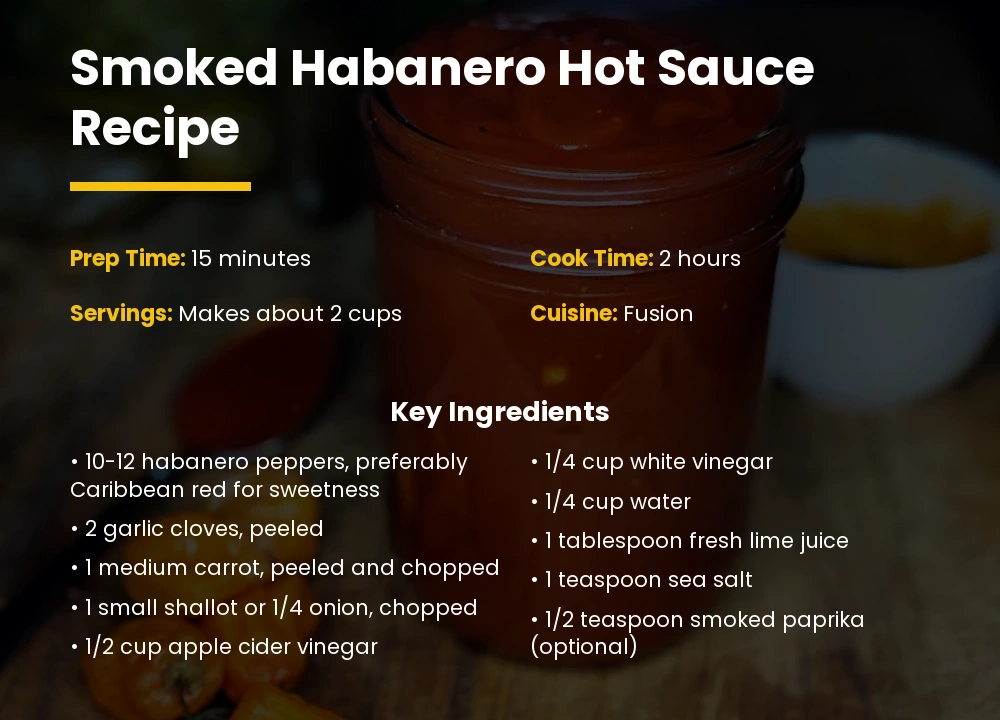
- Prep Time: 15 minutes
- Cook Time: 2 hours
- Servings: Makes about 2 cups
- Course: Condiment
- Cuisine: Fusion
- Diet: Vegan, Gluten-Free
Ingredients
- 10-12 habanero peppers, preferably Caribbean red for sweetness
- 2 garlic cloves, peeled
- 1 medium carrot, peeled and chopped
- 1 small shallot or 1/4 onion, chopped
- 1/2 cup apple cider vinegar
- 1/4 cup white vinegar
- 1/4 cup water
- 1 tablespoon fresh lime juice
- 1 teaspoon sea salt
- 1/2 teaspoon smoked paprika (optional)
- 1 teaspoon honey or agave syrup (optional, for balance)
Instructions
- Put on disposable gloves to protect your hands from the capsaicin in the peppers. Rinse the habaneros under cold water and pat dry. Remove the stems.
- Preheat your smoker to 225°F. Use a mild wood like apple or cherry for a subtle smoke flavor. Place the habaneros on the smoker rack and smoke for 1 to 2 hours, until they are slightly wrinkled and have a smoky aroma.
- While the peppers smoke, heat a small skillet over medium heat. Add a teaspoon of oil and sauté the chopped garlic, carrot, and shallot until softened, about 5 minutes. This step enhances the sweetness and depth of the sauce.
- Once the peppers are smoked, carefully transfer them to a blender or food processor. Add the sautéed vegetables, apple cider vinegar, white vinegar, water, lime juice, salt, and smoked paprika if using.
- Blend on high speed until completely smooth. This may take 1-2 minutes. For a thinner sauce, add more water one tablespoon at a time.
- Pour the blended mixture into a small saucepan. Bring to a gentle simmer over low heat and cook for 10 minutes, stirring occasionally. This allows the flavors to meld and the sauce to thicken slightly.
- Taste and adjust seasoning. If you prefer a sweeter sauce, stir in honey or agave syrup. Let the sauce cool to room temperature.
- Using a funnel, pour the sauce into sterilized glass bottles or jars. Seal tightly and store in the refrigerator.
Nutrition
- Calories: 10 kcal
- Protein: 0.2 g
- Fat: 0.1 g
- Carbohydrates: 2 g
- Sugar: 1 g
- Fiber: 0.5 g
- Sodium: 100 mg
- Cholesterol: 0 mg
Values are per tablespoon and are approximate.
Cooking Method
This recipe uses a two-step process: smoking the peppers to infuse a deep, woody flavor, followed by blending and simmering to create a smooth, emulsified sauce. The smoking step is crucial for that authentic barbecue note, while the simmering ensures safety and flavor integration.
Tools Needed
- Smoker (or grill with smoking capabilities)
- Disposable gloves
- Blender or food processor
- Small skillet
- Saucepan
- Knife and cutting board
- Glass bottles or jars for storage
- Funnel (optional but helpful)
Understanding Habanero Peppers
Habanero peppers bring more than just heat to your sauce. Their distinct fruity aroma and floral notes make them a favorite for complex condiments. On the Scoville scale, they typically register between 100,000 and 350,000 units, which is considerably hotter than a jalapeño but offers a flavor profile that is often described as citrusy and tropical.
Varieties and Heat Levels
You’ll encounter several types of habaneros in markets. Orange habaneros are the most common, with a bright color and balanced heat. Caribbean red habaneros are prized for their sweetness and slightly lower heat, making them ideal for this smoked sauce. There are also chocolate habaneros, which have a deeper, earthier flavor.
Selecting the Best Peppers
Always choose ripe, healthy looking peppers when making hot sauce. They should feel firm to the touch and have a vibrant, unblemished skin. Avoid peppers with soft spots or wrinkles, as they may be past their prime. For the best results, I recommend using fresh peppers rather than dried ones for this recipe.
Caribbean Red Habaneros
These peppers are a staple in Caribbean cuisine, often used in traditional sauces like those from Jamaica or Trinidad. Their red color indicates full ripeness, and they contribute a natural sweetness that complements the smoking process. If you can find them, they elevate the sauce significantly.
The Art of Smoking Peppers
Smoking transforms habaneros by adding a layer of complexity that you can’t achieve with fresh peppers alone. The low heat slowly breaks down the peppers’ cell walls, concentrating their flavors while infusing them with smoky compounds. This method draws inspiration from traditional preservation techniques used in many cultures.
Choosing Your Smoker
You can use various smokers, from electric models like Cookshack to charcoal or pellet grills. Each type imparts a slightly different character. Electric smokers offer precise temperature control, while charcoal provides a more robust smoke. For this recipe, I’ve had success with several tries on different setups, but consistency is key.
Wood Selection for Flavor
The wood you choose affects the final taste. Mild woods like apple, cherry, or pecan are excellent for habaneros, as they won’t overpower the peppers’ natural fruitiness. Avoid strong woods like mesquite unless you want a very bold, earthy sauce. Experiment to find your perfect mix.
Smoking Time and Temperature
Maintain a steady temperature of 225°F for 1 to 2 hours. The peppers should become pliable and aromatic but not completely dried out. Over-smoking can lead to bitterness, so check them periodically. This cook time allows the smoke to penetrate without cooking away the essential oils.
Ingredient Deep Dive
Every component in this sauce plays a specific role in building flavor and texture. Understanding these ingredients helps you customize the recipe to your taste.
Vinegars: White vs. Apple Cider
Vinegar acts as both a flavor agent and a preservative. White vinegar provides a clean, sharp acidity that cuts through the heat. Apple cider vinegar adds a fruity tang and subtle sweetness, complementing the habaneros’ natural notes. Using a blend, as in this recipe, creates a balanced acidity that enhances without dominating.
Aromatics: Garlic and Onions
Garlic cloves and shallots (or onions) form the aromatic base. Sautéing them softens their raw edge and brings out their sweetness, which counteracts the peppers’ heat. Garlic also adds a savory depth that makes the sauce more versatile. I use two garlic cloves as a starting point, but you can adjust based on your preference.
Sweeteners and Thickeners
Carrots are a natural sweetener that also thicken the sauce, giving it body without added sugars. Optional honey or agave syrup can fine-tune the sweetness. Some recipes use molasses or Worcestershire sauce for complexity, but in this version, we keep it simple to let the smoked peppers shine.
Nutritional Profile and Health Considerations
As a dietician, I appreciate that this sauce is low in calories but rich in beneficial compounds. It’s a condiment that can enhance meals without adding excessive sodium or sugar, unlike many commercial options.
Capsaicin and Metabolism
Capsaicin, the compound that gives habaneros their heat, has been studied for its potential to boost metabolism and promote fat oxidation. While the amounts in a tablespoon of sauce are small, incorporating it into a balanced diet may offer mild metabolic benefits. It also acts as an appetite suppressant for some people.
Vitamin Content in Peppers
Habaneros are packed with vitamins, particularly vitamin C and vitamin A. Smoking preserves much of this nutrient content, making the sauce a good source of antioxidants. Vitamin C supports immune function, while vitamin A is essential for vision and skin health.
Low-Calorie Condiment Benefits
With only about 10 calories per tablespoon, this sauce allows you to add flavor without significant caloric intake. It’s also free from cholesterol and low in fat, aligning with heart-healthy eating patterns. The fiber from peppers and carrots aids digestion.
Dietary Adaptations
This recipe is inherently vegan and gluten-free, but you can make further adjustments to suit specific dietary needs. Here are practical swaps that maintain the sauce’s integrity.
Vegan and Gluten-Free Versions
To ensure the sauce is vegan, use agave syrup instead of honey. For gluten-free concerns, confirm that any added ingredients like Worcestershire sauce are certified gluten-free. Most basic recipes, including this one, naturally avoid common allergens.
Reducing Sodium and Sugar
If you’re watching sodium intake, reduce the salt to 1/2 teaspoon or use a salt substitute. For lower sugar, omit the optional sweeteners and rely on the natural sweetness from carrots and smoked peppers. The vinegar and lime juice will still provide ample flavor.
Cultural Roots of Hot Sauce
Hot sauce has a long history across the Americas, with habaneros playing a central role in Caribbean and Mexican cuisines. Understanding this context enriches the cooking experience.
Habanero in Caribbean and Mexican Cuisine
Habaneros are believed to have originated in the Amazon but were cultivated extensively in the Yucatán Peninsula and the Caribbean. In these regions, they are often used in fresh salsas, marinades, and bottled sauces. The smoking technique adds a North American barbecue twist, creating a fusion that honors multiple traditions.
Historical Use of Smoke Preservation
Smoking food dates back thousands of years as a method to preserve meat and vegetables. Applying it to peppers likely emerged from similar practices, allowing communities to enjoy spicy flavors year-round. Today, we use smoking primarily for taste, but it nods to this culinary heritage.
Common Pitfalls and Pro Tips
Even with a simple recipe, small mistakes can affect the outcome. Based on my experience, here are key points to ensure success.
Avoiding Bitterness
Bitterness often comes from over-smoking the peppers or burning the garlic during sautéing. Stick to the recommended smoking time and use low heat when cooking aromatics. Also, ensure your peppers are fully ripe; underripe habaneros can have a harsher taste.
Achieving the Right Consistency
If your sauce is too thick, blend in additional water or vinegar one tablespoon at a time. If it’s too thin, simmer it longer to reduce, or add a pinch of xanthan gum as a stabilizer. The perfect texture should coat the back of a spoon without being gloopy.
Safety with Hot Peppers
Always wear gloves when handling habaneros to prevent capsaicin burns. Avoid touching your face or eyes during preparation. Work in a well-ventilated area, as blending can release pepper aerosols that may irritate the respiratory system.
Serving Suggestions and Storage
This smoked habanero sauce is incredibly versatile. Here’s how to incorporate it into meals and keep it fresh.
Pairing with Foods
Drizzle it over grilled chicken, fish, or tofu. Use it as a dipping sauce for spring rolls or wings. Mix it into mayo for a spicy sandwich spread. It also complements eggs, pizza, and even soups like chili. The smoky heat cuts through rich, fatty dishes beautifully.
Bottling and Shelf Life
Store the sauce in sterilized glass bottles with tight-fitting lids. In the refrigerator, it will last for up to 6 months due to the vinegar’s preservative properties. For longer storage, you can process the bottles in a water bath canner, but refrigeration is sufficient for most home use.
The Science Behind the Sauce
Understanding the basic science helps you troubleshoot and innovate. This section covers why certain steps are essential.
Fermentation vs. Fresh Sauces
This recipe uses a fresh method, where ingredients are cooked and blended immediately. Fermented sauces involve lacto-fermentation, which develops tangy flavors over time. Smoking adds complexity without the wait, making it a quick recipe option for those who want depth without fermentation.
pH and Preservation
The acidity from vinegar lowers the pH of the sauce, inhibiting bacterial growth. A pH below 4.6 is generally safe for water-bath canning. This sauce typically has a pH around 3.5-4.0, ensuring stability. You can test with pH strips if you plan to store it at room temperature.
Frequently Asked Questions
How hot is habanero hot sauce?
Habanero hot sauce is typically very hot, ranging from 100,000 to 350,000 Scoville heat units. However, the heat can be tempered by ingredients like carrots and vinegar. In this recipe, the smoking process and added vegetables mellow the intensity slightly, creating a more balanced flavor.
Can I make this without a smoker?
Yes, you can use a grill with indirect heat and smoking chips, or even roast the peppers in the oven with a bit of liquid smoke. However, for authentic smoky flavor, a dedicated smoker is best. I’ve had success with both electric smokers like Cookshack and charcoal grills.
How long does homemade hot sauce last?
When stored in sterilized bottles in the refrigerator, this sauce can last for up to 6 months. The high vinegar content acts as a natural preservative. Always use clean utensils to avoid contamination.
Is this recipe vegan and gluten-free?
Yes, as written, the recipe is vegan and gluten-free. Ensure that any optional sweeteners like honey are substituted with agave syrup for a strict vegan version. Worcestershire sauce, if added, should be a vegan brand without anchovies.
What can I use if habaneros are too hot for me?
You can reduce the number of habaneros and supplement with milder peppers like jalapeños or bell peppers. Alternatively, remove the seeds and membranes from the habaneros to lower the heat while retaining flavor.
Can I ferment the peppers for this sauce?
Fermentation is another method to develop flavor. You can smoke the peppers first, then ferment them with salt and water for a few days before blending. This adds a tangy, complex note but requires additional time and care.
Why did my sauce turn out bitter?
Bitterness can result from over-smoking the peppers or using too high heat. Stick to mild woods and monitor the smoking time closely. Also, ensure you’re using ripe peppers and not burning the garlic during sautéing.
How can I adjust the consistency of the sauce?
If the sauce is too thick, blend in more water or vinegar a tablespoon at a time. If it’s too thin, simmer it longer to reduce, or add a small amount of xanthan gum as a thickener.
What are the best foods to pair with this hot sauce?
This smoked habanero sauce pairs well with grilled meats, tacos, eggs, pizza, and even stirred into soups or stews. Its smoky heat complements rich, fatty foods beautifully.
Can I use other types of vinegar?
Absolutely. White vinegar provides a clean sharpness, while apple cider vinegar adds fruity notes. You can experiment with rice vinegar for mildness or red wine vinegar for depth. The blend in this recipe offers a balanced acidity.