
The constant hum of modern life can leave your nervous system feeling like a tightly wound string. For years, I searched for a natural method to ease this tension without harsh side effects. My discovery of skullcap tea in a dusty herbal compendium changed my daily routine.
This warm herbal brew became my anchor during busy weeks. I want to share this simple preparation with you. This guide provides everything you need to know, from sourcing the herb to understanding its profound effects on the body.
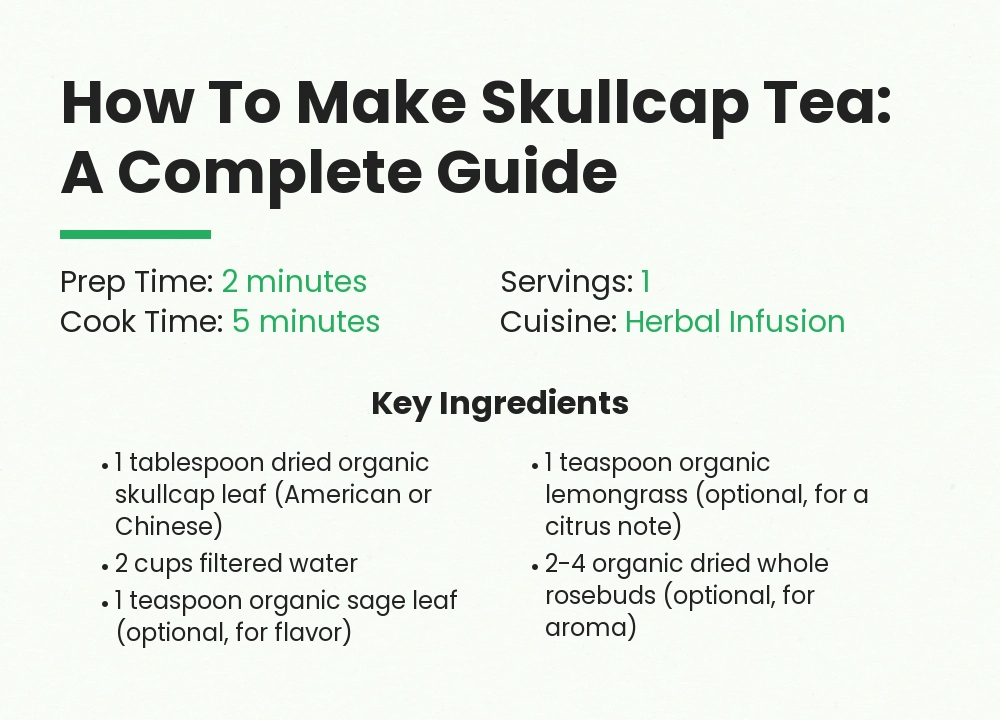
How to Make Skullcap Tea
This section details the fundamental method for preparing a single serving of skullcap tea. The process is straightforward, but precision with temperature and steeping time is important for extracting the beneficial compounds.
Recipe Details
- Prep Time: 2 minutes
- Cook Time: 5 minutes
- Servings: 1
- Course: Beverage
- Cuisine: Herbal Infusion
- Diet: Vegan, Gluten-Free
Ingredients
- 1 tablespoon dried organic skullcap leaf (American or Chinese)
- 2 cups filtered water
- 1 teaspoon organic sage leaf (optional, for flavor)
- 1/2 teaspoon organic red clover (optional, for added benefit)
- 1 teaspoon organic lemongrass (optional, for a citrus note)
- 2-4 organic dried whole rosebuds (optional, for aroma)
- Raw honey or lemon slice to taste (optional)
Instructions
- Bring 2 cups of filtered water to a rolling boil in a small saucepan or kettle.
- Place the dried skullcap and any additional herbs you are using into a teapot or mason jar. A tea infuser can also be used for easy cleanup.
- Pour the boiling water directly over the herbs, ensuring they are fully submerged.
- Cover the container immediately to prevent the volatile oils from escaping with the steam.
- Allow the mixture to steep for 10 to 15 minutes. A longer steep yields a stronger, more potent infusion.
- Strain the tea into your cup, pressing gently on the herbs to extract all the liquid.
- Add a little honey or a slice of lemon for additional sweetness and flavor if desired. Your tea is ready to drink.
Nutrition
- Calories: 5 kcal
- Protein: 0 g
- Fat: 0 g
- Carbohydrates: 1 g
- Sugar: 0 g
- Fiber: 0 g
- Sodium: 5 mg
- Cholesterol: 0 mg
Cooking Method
The preparation of skullcap tea is technically an infusion, not cooking. This method involves extracting flavors and active ingredients from plant material using hot water. The key is to use water that has just reached a boil.
Pouring boiling water over the herbs and then covering them is a non-negotiable step. This process ensures the maximum extraction of the delicate compounds responsible for the tea’s properties. The heat helps break down the plant cell walls, releasing the valuable constituents into the water.
Tools Needed
- Small saucepan or electric kettle
- Teapot with lid, mason jar, or mug
- Fine mesh strainer or tea infuser basket
- Measuring spoons
Selecting Your Skullcap
Not all skullcap is the same, and the type you choose will influence your experience. The two primary varieties used in herbal drinks are American skullcap and Chinese skullcap. They belong to different species and have different dominant active ingredients.
American Skullcap (Scutellaria lateriflora)
American skullcap is the variety most traditionally associated with nerve support in Western herbalism. The above-ground parts of the plant, particularly the leaf, are harvested for use. It is known for its anti-spasmodic and sedative effects on the nervous system.
This herb gained prominence in 19th-century America as a treatment for anxiety and nervous disorders. The Britton & Brown Illustrated Flora of 1913 documents its use during that period. It was often recommended for conditions like hysteria and epilepsy.
When sourcing American skullcap, look for a vibrant green color in the dried leaf. It should have a distinct, earthy aroma. I prefer to purchase from suppliers who provide certified organic herbs to ensure purity and potency.
Chinese Skullcap (Scutellaria baicalensis)
Chinese skullcap has a longer documented history within traditional Chinese medicine. Unlike its American cousin, the root of the plant is the part used medicinally. Its chemical profile is distinct, with a high concentration of the antioxidant baicalin.
This variety is often employed for its strong anti-inflammatory and antioxidant properties. It is commonly used to address chronic inflammation conditions, support healthy gut function, and combat infections. The flavor of the root is more bitter and robust than the American leaf.
Your choice between the two depends on your primary goal. For direct nervous system calming, American skullcap is the classic choice. For systemic inflammation, Chinese skullcap may be more appropriate.
Understanding the Benefits
Skullcap tea works by interacting with the body’s complex systems, primarily the nervous system. Its effects are attributed to a range of flavonoids and other compounds that modulate biological activity. These are not drug-like effects but rather gentle nudges toward balance.
Support for the Nervous System
Modern life creates constant nervous system stimulus from bright fluorescent lights, digital screens, and daily demands. American skullcap is known to act as a nervine, a substance that calms nervous tension. It does not force sedation but encourages a state of calmness.
This makes it a valuable ally for those dealing with apprehension or agitation. It can be particularly useful after a good day’s work to help the body transition into a restful state. Many find it helps quiet a busy mind, making it easier to focus or prepare for sleep.
The mechanism is not fully understood, but it is believed to influence neurotransmitter activity. It may help modulate GABA, a chemical that slows down brain activity, promoting relaxation without dangerous drops in cognitive function.
Anti-Inflammatory and Antioxidant Action
Both types of skullcap contain powerful antioxidants that help protect the body from oxidative stress. Chinese skullcap, in particular, is rich in baicalin, a compound studied for its role in managing chronic inflammation. This systemic inflammation is linked to numerous long-term health challenges.
By reducing inflammation, the tea can indirectly support the management of discomfort associated with various conditions. This anti-inflammatory effect also supports the health of the circulatory system and other vital organs. Regular consumption can be part of a broader strategy for maintaining cellular health.
Creating Your Own Herbal Blends
While skullcap tea is effective on its own, it blends beautifully with other herbs to create a more complex and targeted beverage. Blending is an art that allows you to tailor your herbal drink to your specific needs and taste preferences.
A Nerve-Nourishing Tea Recipe
This is my personal go-to blend for frayed nerves and late nights. It combines skullcap with other herbs renowned for their supportive roles. The result is a warm, comforting brew that feels like a reset for your entire system.
Combine 1 tablespoon of dried American skullcap, 1 teaspoon of oatstraw, and 1/2 teaspoon of marshmallow root. Oatstraw is another go-to herb for nourishing a stressed nervous system. Marshmallow root adds a moistening, soothing quality to the blend, which is helpful if tension causes physical tightness.
Prepare this blend using the standard infusion method outlined in the main recipe. Steep for a full 15 minutes to extract the full spectrum of benefits from all the herbs. You can add a little honey to counter the earthy flavors.
The Extrovert’s Balancing Blend
Social engagement can be draining, even for those who enjoy it. This blend is designed to help restore balance after periods of high social demand. It incorporates herbs that are both calming and gently uplifting.
Mix 0.3 part dried skullcap with 0.5 part lemon balm and 0.2 part rosebuds. The skullcap provides the foundational calm, while lemon balm offers a bright, calming flavor. The rosebuds contribute a subtle aromatic quality that lightens the spirit.
This is an excellent tea to brew after a long day of meetings or social events. It helps soothe the agitation that can follow constant interaction, allowing for a more peaceful evening.
Practical Tips and Common Mistakes
Success with herbal tea often lies in the details. A small misstep in preparation can significantly alter the potency and flavor of your final beverage. These insights come from years of personal practice and consultation.
Avoiding Bitterness and Maximizing Potency
Some users report that skullcap tea can taste unpleasantly bitter. This is often a result of using boiling water that is too harsh, or steeping for an excessively long time. The sweet spot for a balanced infusion is between 10 and 15 minutes.
Never boil the herbs directly in the water. Decoction is a method reserved for hard materials like roots and barks. Boiling the delicate skullcap leaf will destroy its volatile oils and release excessive tannins, creating a bitter, less effective drink.
Always cover your tea while it steeps. This simple act traps the steam and the essential oils that carry both flavor and therapeutic value. An uncovered pot will result in a much weaker tea.
Storage and Sourcing
The quality of your dried herbs is the single most important factor in making effective tea. Purchase from reputable suppliers who specialize in certified organic botanical products. Look for herbs that are vibrant in color and aromatic.
Store your dried skullcap and other herbs in airtight glass containers. Keep them in a cool, dark place away from direct sunlight and heat. Properly stored, your herbs will maintain their potency for up to a year.
If you grow your own skullcap, harvest the leaves just before the plant flowers for the highest concentration of active components. Dry them slowly in a dark, well-ventilated area.
Frequently Asked Questions
What is the difference between American and Chinese skullcap tea?
American skullcap uses the leaf of the Scutellaria lateriflora plant and is primarily used for calming the nervous system and easing anxiety. Chinese skullcap uses the root of the Scutellaria baicalensis plant and is valued for its strong anti-inflammatory and antioxidant properties, often used for chronic inflammation and infections.
Can I drink skullcap tea every day?
Yes, for most people, consuming one to two cups of skullcap tea daily is considered safe. It can be integrated as a daily herbal tea for ongoing support. However, it is wise to take a break for a week after several weeks of consistent use to see how your body feels without it.
How long does it take to feel the effects of skullcap tea?
The effects can often be felt within 30 to 60 minutes of consumption, especially the calming sensations. For cumulative benefits related to inflammation or long-term nervous system support, consistent use over several weeks is typically necessary.
Are there any side effects or people who should avoid it?
Skullcap is generally well-tolerated. In rare cases, it may cause drowsiness, so it is prudent to avoid operating heavy machinery until you know how it affects you. Due to a lack of safety data, it is not recommended for pregnant or breastfeeding women, or for young children. Always consult your doctor before use if you are on prescription medication.
Can I use fresh skullcap leaves to make tea?
Yes, you can use fresh leaves, but the measurement will differ. Use approximately two tablespoons of fresh, chopped leaves for every one tablespoon of dried herb called for in a recipe. The flavor of fresh skullcap tea is notably lighter and grassier.
Is skullcap tea a good hangover remedy?
While not a direct cure, skullcap tea can be a supportive part of recovering from a hangover. Its calming effect can ease the headache and agitation, while its antioxidant action helps the body process toxins. Its mild anti-spasmodic quality may also help with any stomach discomfort.
Can I add skullcap to my coffee?
While you can combine herbs, adding skullcap to coffee is counterproductive. Coffee is a stimulant that can cause agitation, while skullcap is a calming nervine. The stimulating effects of caffeine would likely override the subtle calming effects of the skullcap.