
That moment when a simple sauce transforms an entire meal stays with you long after the plates are cleared. I experienced this years ago in a tucked-away bistro in Lyon, where Sauce Choron turned a basic grilled fish into a dish I still think about. Its vibrant color and balanced acidity cut through the richness, making each bite feel both luxurious and light.
If you have ever wondered how to replicate that professional touch at home, this guide is for you. Sauce Choron is a tomato-enhanced version of béarnaise, one of the five mother sauces in French cuisine. It combines the velvety texture of an emulsion with the bright, tangy notes of tomato.
This article will walk you through every step, from selecting the right butter to achieving the perfect consistency. You will learn not just the method but the science and history behind it, ensuring you can confidently prepare this sauce for any occasion.
Whether you are dressing up a weeknight chicken breast or impressing guests with a steak dinner, this recipe provides the foundation. Let us begin by crafting the sauce together, with detailed instructions based on hands-on testing in my own kitchen.
How to Make Sauce Choron Recipe
Creating Sauce Choron involves building a classic béarnaise base and incorporating tomato for color and flavor. The process requires attention to temperature and timing to prevent the emulsion from breaking. Follow these steps closely for a smooth, stable result.
Recipe Details
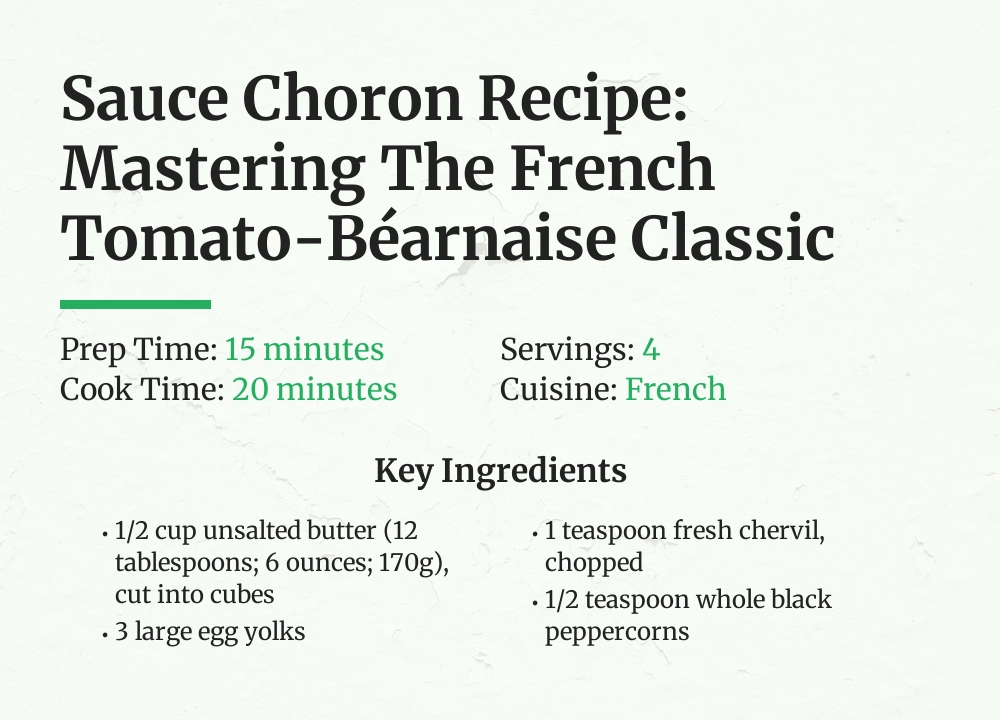
- Prep Time: 15 minutes
- Cook Time: 20 minutes
- Servings: 4
- Course: Condiment, Sauce
- Cuisine: French
- Diet: Contains Dairy, Eggs
Ingredients
- 1/2 cup unsalted butter (12 tablespoons; 6 ounces; 170g), cut into cubes
- 3 large egg yolks
- 1/3 cup white wine vinegar
- 2 tablespoons chopped shallot
- 1 teaspoon fresh tarragon, chopped
- 1 teaspoon fresh chervil, chopped
- 1/2 teaspoon whole black peppercorns
- 2 tablespoons tomato paste or 1/4 cup fresh diced tomatoes, puréed
- 1/4 teaspoon coarse salt, or to taste
- 1 tablespoon dry white wine (optional, for depth)
Instructions
- Begin by preparing the reduction. In a small saucepan, combine the white wine vinegar, chopped shallot, fresh tarragon, chervil, and black peppercorns. Bring to a gentle boil over medium heat, then reduce to a simmer. Cook until the liquid is reduced by half, about 5-7 minutes. Strain the mixture through a fine-mesh sieve into a clean bowl, discarding the solids. This concentrated liquid forms the flavor base of your sauce.
- Clarify the butter if desired for a smoother emulsion. Melt the unsalted butter in a separate saucepan over low heat. Skim off any foam that rises to the top. Keep the butter warm but not hot; it should be around 130-140°F (55-60°C).
- Set up a bain-marie (double boiler). Fill a saucepan with an inch of water and bring it to a simmer. Place a heatproof bowl over the pan, ensuring the bottom does not touch the water. Add the egg yolks and 1 tablespoon of the reduction to the bowl. Whisk continuously until the yolks thicken and become pale, about 3-5 minutes. This step cooks the eggs gently and creates the emulsion foundation.
- Slowly drizzle in the warm clarified butter while whisking constantly. Start with a few drops at a time to incorporate the fat, then gradually increase to a thin stream. The sauce will thicken and emulsify, resembling a loose mayonnaise. If it becomes too thick, add a teaspoon of warm water to adjust consistency.
- Stir in the tomato paste or puréed tomatoes, along with the salt and optional white wine. Whisk until fully combined and the sauce takes on a uniform pink hue. Taste and adjust seasoning as needed. Serve immediately or keep warm in the bain-marie for up to 30 minutes, stirring occasionally.
Nutrition
- Calories: 220 kcal
- Protein: 3 g
- Fat: 23 g
- Carbohydrates: 2 g
- Sugar: 1 g
- Fiber: 0.5 g
- Sodium: 150 mg
- Cholesterol: 180 mg
Cooking Method
This sauce employs the emulsion technique, where fat (butter) is suspended in a water-based liquid (egg yolks and reduction) through vigorous whisking. The bain-marie provides indirect heat, preventing the eggs from curdling. Unlike direct heating, this method allows for precise temperature control, which is critical for stability.
Tools Needed
- Small saucepan for reduction
- Heatproof bowl (ceramic or stainless steel)
- Whisk
- Fine-mesh sieve or chinois
- Measuring cups and spoons
- Knife and cutting board for chopping
The Essence of Sauce Choron
Sauce Choron is more than a mere condiment; it is a testament to French culinary ingenuity. At its core, it is a derivative of béarnaise sauce, which itself springs from hollandaise. The addition of tomato introduces acidity and color, balancing the richness of the butter and eggs.
This sauce belongs to the family of warm emulsions, meaning it must be served shortly after preparation or held at a consistent temperature. Its versatility allows it to complement a wide range of dishes, from simple vegetables to elaborate meat courses.
Understanding its components helps in mastering the technique. Each ingredient plays a specific role, from the emulsifying power of egg yolks to the aromatic depth of fresh herbs.
What Defines Choron Sauce?
Choron sauce is characterized by its pink color and tangy flavor profile, achieved through the integration of tomato into a classic béarnaise. Unlike a basic tomato sauce, it maintains the creamy, buttery texture of an emulsion. This makes it ideal for dishes where a rich, yet bright, accompaniment is desired.
The tomato element can vary from tomato paste to fresh purée, each offering distinct notes. Paste provides concentrated umami, while fresh tomatoes contribute a lighter, fruitier acidity. Your choice depends on the intended use and personal preference.
Historical Roots and Alexandre Choron
The sauce is named after Alexandre Étienne Choron, a French chef from the late 19th century. He was known for his innovations in classic cooking, often adapting traditional recipes to suit contemporary tastes. Choron introduced the tomato addition to béarnaise, creating a variation that gained popularity in Parisian restaurants.
This period in French culinary history saw the codification of many sauces, with chefs like Auguste Escoffier documenting them. Choron’s contribution highlights how classic techniques evolve through creative experimentation, much like how modern cooks might adjust recipes today.
Ingredient Analysis
Every component in Sauce Choron serves a purpose, from structural to flavorful. Selecting high-quality ingredients ensures the best outcome, as there are few elements to hide behind in such a simple recipe.
Butter: The Emulsion Backbone
Unsalted butter is preferred for control over seasoning. When clarified, it removes milk solids that can cause the sauce to break. The fat content provides richness and helps create a stable emulsion when slowly incorporated into the egg yolks.
Using European-style butter with higher fat content (around 82%) can yield a creamier texture. The temperature of the butter is crucial; too hot, and it will cook the eggs, too cold, and it won’t blend properly.
Tomatoes: Acidity and Color
Tomato paste offers a concentrated flavor and deep color, while fresh diced tomatoes provide a brighter, more nuanced taste. The acidity in tomatoes cuts through the richness of the butter, balancing the sauce. Cooking the tomatoes slightly before adding can enhance their sweetness.
From a nutritional standpoint, tomatoes contribute lycopene, an antioxidant, though the amount in this sauce is modest due to the small quantity used.
Egg Yolks: The Emulsifier
Egg yolks contain lecithin, a natural emulsifier that binds fat and water. Fresh yolks are essential for maximum emulsifying power. They also add protein and contribute to the sauce’s velvety mouthfeel.
Handling yolks gently over heat prevents scrambling, which is why the bain-marie method is employed. This slow cooking thickens the yolks without curdling.
Herbs and Aromatics: Flavor Depth
Tarragon and chervil are classic in béarnaise, providing an anise-like note that pairs well with the tomato. Shallots add a subtle sweetness, while black peppercorns contribute warmth. Using fresh herbs rather than dried ensures a vibrant, not muddy, flavor.
If chervil is unavailable, additional tarragon or a pinch of parsley can substitute, though the authentic profile may shift slightly.
Nutritional Perspective
As a dietitian, I analyze recipes for both their health impacts and culinary merits. Sauce Choron is energy-dense due to its butter and egg content, but it can be part of a balanced diet when used in moderation.
Macronutrient Breakdown
The primary sources of calories are fat from butter and egg yolks, with minimal carbohydrates from tomatoes and herbs. This makes it suitable for low-carb diets, though portion control is advised for weight management.
Each serving provides about 220 calories, with 23 grams of fat, 3 grams of protein, and 2 grams of carbohydrates. The cholesterol level is significant, so individuals with heart conditions should consume it sparingly.
Health Considerations
The sauce contains vitamins A and E from the butter and eggs, and lycopene from tomatoes, which has been linked to reduced inflammation. However, the high saturated fat content means it should be enjoyed as an occasional treat rather than a staple.
For those monitoring sodium intake, using unsalted butter and adjusting salt added allows for better control. The recipe as written contains 150 mg of sodium per serving, which can be reduced by omitting added salt.
Adapting for Dietary Needs
Modern cooking often requires flexibility to accommodate various dietary restrictions. Sauce Choron can be modified without sacrificing its essential character.
Vegan and Dairy-Free Version
Replace butter with a plant-based alternative like coconut oil or vegan butter. Use aquafaba (chickpea brine) instead of egg yolks for emulsification. For the tomato element, ensure any paste or purée is free of animal products.
This version may have a slightly different texture but can still achieve a creamy consistency. Adjust herbs and acidity to balance the flavors, as plant-based fats can lack the richness of dairy.
Low-Fat and Reduced-Cholesterol Options
Substitute half the butter with Greek yogurt or a light roux made from flour and low-fat milk. This changes the sauce to a more béchamel-like consistency but reduces fat content. For lower cholesterol, use egg substitutes or reduce the number of yolks, though this may affect emulsion stability.
Experiment with increasing the tomato proportion to add volume without significant calories, but note that this alters the traditional ratio.
Avoiding Common Pitfalls
Even experienced cooks can encounter issues with emulsion sauces. Recognizing potential mistakes beforehand helps ensure success every time you make this recipe.
Preventing a Broken Sauce
If the sauce separates, it is often due to adding butter too quickly or overheating. To fix it, start with a fresh egg yolk in a clean bowl over the bain-marie, and gradually whisk in the broken sauce. This re-emulsifies the mixture.
Keeping all ingredients at similar temperatures reduces shock to the emulsion. Never let the sauce boil, as high heat will cause curdling.
Balancing Flavors
Too much tomato can overpower the delicate herbs, while insufficient reduction may leave the sauce tasting sharp. Taste as you go, and adjust with a pinch of sugar if the tomatoes are too acidic, or more reduction if needed for depth.
If the sauce is too thick, thin it with a few drops of warm water or white wine. For a thinner consistency, add liquid gradually to avoid over-diluting.
Serving and Pairing Ideas
Sauce Choron elevates both simple and complex dishes. Its versatility means it can be paired with proteins, vegetables, or even eggs for a luxurious touch.
With Meats and Seafood
Classic pairings include grilled beef steaks, such as fillet or sirloin, where the sauce cuts through the meat’s richness. It also complements chicken, especially roasted or grilled breasts, and works well with fish like salmon or sole.
For a traditional French presentation, serve with steak au poivre or eggs Benedict, replacing the standard hollandaise with Choron for a twist.
Vegetarian and Vegetable Applications
Drizzle over asparagus, broccolini, or roasted Brussels sprouts to add flavor without heaviness. It can also be used as a dip for artichokes or a topping for baked potatoes.
In vegetarian cuisine, pair with grain bowls or stuffed peppers to introduce a creamy element that contrasts with earthy flavors.
Storage and Make-Ahead Strategies
This sauce is best served fresh but can be stored for short periods with care. Proper handling maintains quality and food safety.
Keep leftover sauce in an airtight container in the refrigerator for up to two days. Reheat gently in a bain-marie, stirring constantly. Avoid microwaving, as it can cause separation.
For advance preparation, make the reduction up to a day ahead and store it chilled. Complete the emulsion steps just before serving to preserve texture and flavor.
The Science of Emulsion
Understanding the chemistry behind Sauce Choron demystifies the process. An emulsion is a mixture of two immiscible liquids, like oil and water, stabilized by an emulsifier.
In this case, egg yolks contain lecithin, which surrounds fat droplets and keeps them suspended in the water-based reduction. Whisking introduces air and helps distribute the fat evenly, creating a stable, creamy sauce.
Temperature control is key because heat can denature the proteins in eggs, leading to coagulation. The bain-marie provides a gentle, consistent heat that promotes emulsification without curdling.
Frequently Asked Questions
What is the difference between Sauce Choron and béarnaise?
Sauce Choron is a variation of béarnaise that includes tomato, giving it a pink color and tangy flavor. Standard béarnaise relies solely on herbs and reduction for its profile, while Choron incorporates tomato paste or purée.
Can I use canned tomatoes instead of fresh?
Yes, canned diced tomatoes, drained and puréed, work well. Ensure they are unsalted to control the sauce’s seasoning. The key is to use a form of tomato that is concentrated enough to impart flavor without making the sauce watery.
Why did my sauce curdle?
Curdling usually occurs from excessive heat or adding butter too rapidly. To prevent this, maintain a low temperature with the bain-marie and incorporate butter slowly while whisking continuously. If it curdles, see the troubleshooting tips in the Common Pitfalls section.
Is Sauce Choron gluten-free?
Yes, the traditional recipe is gluten-free, as it does not include flour or other gluten-containing ingredients. Always check labels on tomato products or wine if you have celiac disease, as some may have additives.
How can I make this sauce ahead for a dinner party?
Prepare the reduction and clarify the butter in advance. Store them separately in the refrigerator. When ready to serve, reheat the reduction gently, then proceed with the emulsion steps using fresh egg yolks for best results.
What dishes pair best with Sauce Choron?
It pairs excellently with grilled meats like beef and chicken, seafood such as salmon, and vegetables like asparagus. It can also be used in eggs Benedict or as a condiment for roasted potatoes.
Can I freeze Sauce Choron?
Freezing is not recommended, as emulsions tend to separate upon thawing. The texture becomes grainy and unstable. For best quality, consume within two days of preparation.
What herbs can substitute for tarragon and chervil?
If unavailable, use additional parsley or a small amount of dried tarragon, though fresh is preferable. Basil can add a different but complementary note, especially with the tomato element.