
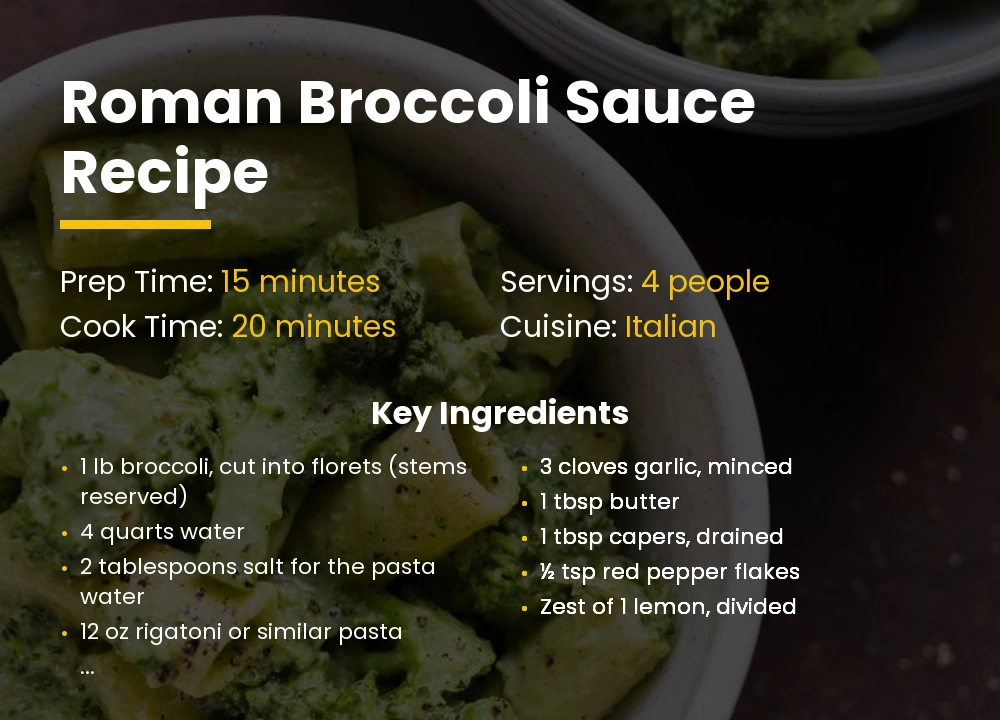
You might think broccoli belongs on the side, but in Rome, it transforms into a vibrant pasta sauce. I first tasted this dish after a friend shared Christopher Kimball’s version, and it changed my view on vegetables entirely.
This recipe turns simple florets into a light, lemony coating that clings to every noodle. Let me guide you through making a Roman broccoli sauce that will earn no objections at your table.
How to Make Roman Broccoli Sauce Recipe
This method uses one pot of water efficiently, creating sauce and pasta in harmony. You will blend cooked broccoli with staples like garlic and lemon for a fresh finish.
Building on this, the reserved cooking water is key for emulsifying the sauce into silkiness. Follow these steps closely for a dish that comes together in about 35 minutes.
Recipe Details
- Prep Time: 15 minutes
- Cook Time: 20 minutes
- Servings: 4 people
- Course: Main Course
- Cuisine: Italian
- Diet: Vegetarian
Ingredients
- 1 lb broccoli, cut into florets (stems reserved)
- 4 quarts water
- 2 tablespoons salt for the pasta water
- 12 oz rigatoni or similar pasta
- 4 tbsp olive oil
- 3 cloves garlic, minced
- 1 tbsp butter
- 1 tbsp capers, drained
- ½ tsp red pepper flakes
- Zest of 1 lemon, divided
- ¾ tsp salt for the sauce
- Freshly ground black pepper to taste
Instructions
- Bring the 4 quarts of water to a rolling boil in a large pot. Add the 2 tablespoons of salt to season the water thoroughly.
- Submerge the broccoli florets and chopped stems in the boiling water. Cook for about 5 minutes until very tender but not mushy.
- Use a slotted spoon to remove the broccoli, placing it in a bowl. Reserve at least 2 cups of the green-tinted cooking water.
- Return the pot of water to a boil and add the rigatoni. Cook according to package directions until al dente, usually 10-12 minutes.
- While the pasta cooks, heat olive oil in a large skillet over medium. Sauté the garlic until fragrant, about 30 seconds.
- Add the butter, capers, pepper flakes, and ¾ teaspoon salt to the skillet. Stir until the butter melts and the flavors combine.
- Transfer half of the reserved broccoli to a blender. Add the skillet mixture, half the lemon zest, and 1 cup of reserved cooking water.
- Blend on high until completely smooth, adding more cooking water if needed for a saucy consistency.
- Drain the pasta, reserving another cup of its water. Return the empty pot to the stove over low heat.
- Pour the blended sauce back into the pot. Add the drained pasta and the remaining reserved broccoli florets.
- Toss everything together, adding pasta water a splash at a time until the sauce coats each piece evenly.
- Finish with the remaining lemon zest and a generous grind of black pepper. Taste and adjust seasoning before serving.
Nutrition
- Calories: 420 kcal
- Protein: 12 g
- Fat: 18 g
- Carbohydrates: 58 g
- Sugar: 4 g
- Fiber: 7 g
- Sodium: 850 mg
- Cholesterol: 10 mg
Cooking Method
This recipe employs a twofold boiling technique for the broccoli and pasta. The same water first tenderizes the vegetable and then cooks the noodles, infusing them with flavor.
Consequently, the sauce is created by blending part of the broccoli with aromatics, using the starchy water to bind it. This method ensures a cohesive dish with minimal waste and maximum taste.
Tools Needed
- A large pot for boiling
- Blender or food processor
- Slotted spoon
- Large skillet
- Colander for draining pasta
- Measuring spoons and cups
The Origins of Broccoli as a Sauce
In Roman cuisine, vegetables are often pureed into sauces to stretch ingredients and add nutrition. This approach turns a humble brassica into the star of pasta night.
Specifically, the “broccoli sauce” concept comes from Lazio, where cooks prioritize seasonal, straightforward preparations. Christopher Kimball and Milk Street popularized this version, highlighting its light and lemony profile.
Why Roman Cooking Embraces Vegetables
Roman dishes often feature “cucina povera” or poor cooking, which makes the most of available produce. Broccoli, abundant in cooler months, is a perfect candidate for this treatment.
Therefore, pureeing it into a sauce aligns with historical practices of creating hearty meals from inexpensive items. This method also integrates the vegetable seamlessly into the pasta course.
Ingredient Roles and Selection
Each component in this recipe has a specific function that builds the final flavor and texture. Understanding these roles helps you make informed substitutions if needed.
For instance, broccoli florets provide body and a subtle sweetness when cooked. Their stems add thickness to the sauce without bitterness when peeled and chopped.
Choosing Your Aromatics
Garlic offers a pungent base that mellows when sautéed in olive oil. Capers contribute a briny acidity that balances the broccoli’s earthiness.
Moreover, red pepper flakes introduce a gentle heat that can be adjusted to your preference. Lemon zest delivers a bright, citrusy note without the juice’s potential bitterness.
The Importance of Quality Fats
Olive oil is the primary fat, lending fruitiness and richness to the sauce. A tablespoon of butter adds creaminess and helps the sauce cling to the pasta.
Using both fats creates a more complex mouthfeel than either would alone. This combination is common in Italian cooking for achieving a luxurious texture.
Nutritional Benefits of This Dish
From a dietician’s view, this recipe is a nutrient-dense meal that covers multiple food groups. It provides vitamins, fiber, and plant-based protein in one bowl.
Broccoli is rich in vitamin C, vitamin K, and folate, supporting immunity and bone health. Blending it into a sauce makes these nutrients more accessible and enjoyable.
Analyzing the Macronutrient Balance
The pasta offers carbohydrates for energy, while the olive oil and butter provide healthy fats. Together, they create a satisfying meal that stabilizes blood sugar levels.
Additionally, the fiber from broccoli and whole wheat pasta options aids digestion. This balance makes the dish suitable for a regular part of a varied diet.
Practical Tips for Perfect Results
Ensuring your broccoli is tender enough to blend smoothly is crucial. Cook it until a fork pierces the stems easily, which might take an extra minute.
Similarly, reserving ample cooking water gives you control over the sauce’s thickness. The starchy liquid helps emulsify the fats and puree into a cohesive sauce.
Common Mistakes to Avoid
Overcooking the broccoli can lead to a dull-colored, watery puree. Aim for al dente texture in the florets you reserve for tossing.
Conversely, undercooking it will result in a grainy sauce that lacks smoothness. Testing a piece before blending guarantees the right consistency.
How to Adjust Consistency and Flavor
If your sauce is too thick, add reserved pasta water in small increments. For a thinner sauce, use more of the broccoli cooking liquid.
Always taste and season at the end, as capers and salted water affect sodium content. Fresh pepper and the remaining lemon zest brighten the dish just before serving.
Variations and Dietary Adaptations
This recipe is versatile and can be modified for different dietary needs or pantry items. Changing one element can create a new experience while keeping the core method.
For a vegan version, omit the butter and use an additional tablespoon of olive oil. Nutritional yeast can add a cheesy note if desired.
Pasta and Vegetable Alternatives
Rigatoni is ideal because its ridges hold the sauce, but penne or fusilli work well. For a gluten-free meal, use certified gluten-free pasta made from rice or corn.
Broccolini or cauliflower can replace broccoli for a different flavor profile. Adjust cooking times slightly based on the vegetable’s density.
Enhancing the Sauce with Add-Ins
Toasted pine nuts or breadcrumbs add crunch when sprinkled on top. A handful of grated Pecorino Romano cheese integrates Roman authenticity.
For more protein, stir in white beans or chickpeas with the pasta. These additions make the meal more substantial without complicating the recipe.
Serving and Storage Guidelines
Serve this dish immediately after tossing to enjoy its vibrant color and temperature. A drizzle of extra virgin olive oil on each plate enhances the presentation.
Pair it with a simple green salad and crusty bread for a complete springtime meal. This combination balances the richness and adds textural contrast.
Handling Leftovers Effectively
Store any leftovers in an airtight container in the refrigerator for up to three days. The sauce may thicken, so loosen it with a splash of water when reheating.
Reheat gently on the stove over medium-low heat, stirring frequently. Avoid microwaving, as it can make the pasta gummy and the sauce separate.
Frequently Asked Questions
Can I use frozen broccoli for this recipe?
Yes, frozen broccoli works if you thaw and drain it thoroughly to prevent a watery sauce. Cook it according to package directions before blending to ensure tenderness.
What type of pasta is best for Roman broccoli sauce?
Short, sturdy shapes like rigatoni, penne, or fusilli are best because they capture the sauce. Their ridges and holes hold the puree better than long, smooth noodles.
How can I make this sauce creamier?
Add a quarter cup of grated Parmesan or Pecorino cheese to the blender for creaminess. Alternatively, incorporate a few tablespoons of ricotta for a milder flavor.
Is this recipe suitable for meal prep?
You can prep the sauce and cook the pasta separately, storing them apart for up to two days. Combine and reheat with added water to refresh the texture before serving.
Can I omit the capers if I don’t like them?
Omit capers and add a teaspoon of lemon juice or a few chopped olives for acidity. This substitution maintains the balance without altering the recipe structure.
How do I know when the broccoli is cooked enough for blending?
The broccoli is ready when a knife slides easily into the thickest part of the stem. It should be tender but not falling apart, usually after 5-6 minutes in boiling water.
What can I do with leftover broccoli stems?
Peel and chop the stems to cook with the florets; they blend well into the sauce. You can also save them for soups or stir-fries to minimize food waste.
Why is reserved cooking water important in this recipe?
The starchy, seasoned water helps emulsify the sauce and adjust consistency. It binds the puree and fats, creating a silky texture that coats the pasta evenly.