
I still remember the first time I prepared this dish for a family gathering. The aroma of spices and fresh fish filled my kitchen, transporting me back to a small eatery in New Orleans where I first fell in love with Creole flavors. You might be looking for a meal that balances robust taste with nutritional value, and this recipe delivers exactly that.
Red snapper with creamy Creole sauce combines tender fish fillets with a rich, slightly spicy sauce made from bell peppers, onions, and a blend of seasonings. It is a versatile dish that works for weeknight dinners or special occasions. In this article, I will guide you through making it from scratch, sharing tips I have learned over years of testing and enjoying it.
We will cover everything from selecting the best ingredients to understanding the science behind the sauce. Whether you are new to Creole cooking or a seasoned chef, this guide aims to answer all your questions. Let us start with the recipe itself, so you can see how straightforward it is to bring this southern classic to your table.
How to Make Red Snapper with Creamy Creole Sauce Recipe
This section provides the complete recipe in a clear, step-by-step format. Follow these instructions for a consistent result every time. I have refined this method through multiple trials to ensure it is efficient and reliable.
Recipe Details
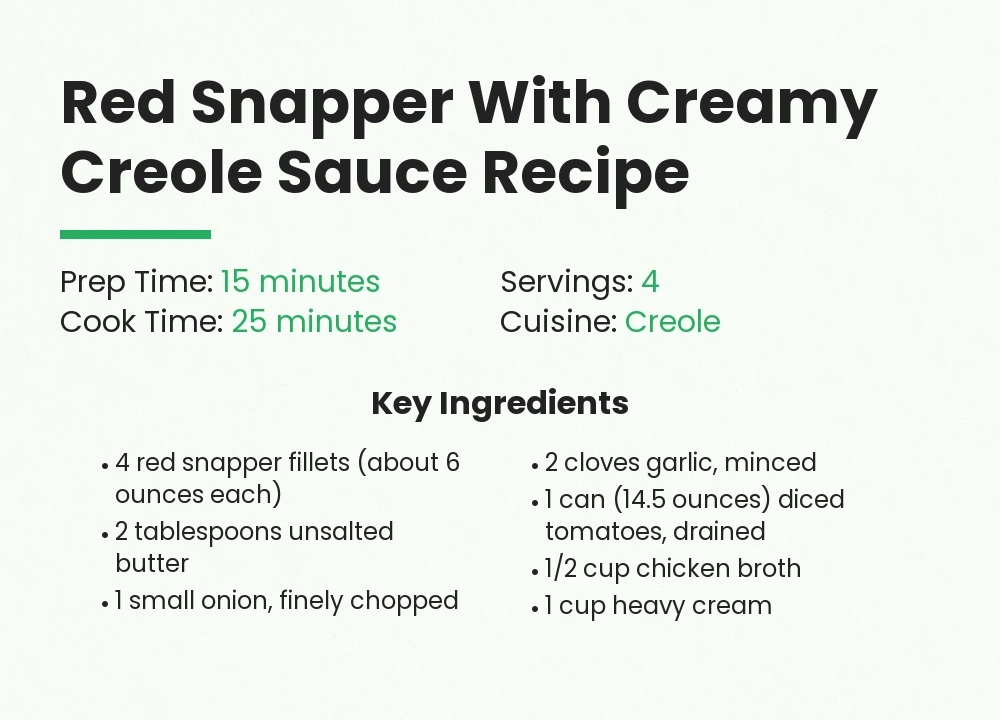
- Prep Time: 15 minutes
- Cook Time: 25 minutes
- Servings: 4
- Course: Main Course
- Cuisine: Creole
- Diet: Gluten-Free
Ingredients
- 4 red snapper fillets (about 6 ounces each)
- 2 tablespoons unsalted butter
- 1 small onion, finely chopped
- 1 green bell pepper, finely chopped
- 2 celery stalks, chopped
- 2 cloves garlic, minced
- 1 can (14.5 ounces) diced tomatoes, drained
- 1/2 cup chicken broth
- 1 cup heavy cream
- 1 teaspoon Creole seasoning
- 1/4 teaspoon cayenne pepper
- 1 tablespoon lemon juice
- 2 tablespoons fresh parsley, chopped
- 2 tablespoons olive oil
- Salt and black pepper to taste
Instructions
- Pat the red snapper fillets dry with paper towels. Season both sides with salt, black pepper, and half of the Creole seasoning. Set them aside on a plate.
- Heat olive oil in a large oven-safe skillet over medium heat. Add the snapper fillets and cook for 3-4 minutes per side until lightly browned. Remove the fish from the skillet and place it on a separate baking pan or plate.
- In the same skillet, melt the unsalted butter. Add the chopped onion, green bell pepper, and celery stalks. Sauté for 5-7 minutes until the vegetables soften and become fragrant.
- Stir in the minced garlic and cook for another minute. Be careful not to burn the garlic, as it can turn bitter.
- Add the drained diced tomatoes, chicken broth, remaining Creole seasoning, and cayenne pepper. Bring the mixture to a simmer and let it cook for 5 minutes, allowing the flavors to meld.
- Reduce the heat to low and pour in the heavy cream. Stir continuously to combine the ingredients and prevent curdling. Let the sauce simmer gently for 3-4 minutes until it thickens slightly.
- Return the snapper fillets to the skillet, nestling them into the sauce. Spoon some of the sauce over the fish to coat it evenly.
- If your skillet is oven-safe, you can transfer it to a preheated oven at 375°F (190°C) for 5-7 minutes to finish cooking. Alternatively, cover the skillet and let it simmer on the stove for 5-7 minutes until the fish is opaque and flakes easily with a fork.
- Drizzle with lemon juice and garnish with chopped fresh parsley before serving.
Nutrition
- Calories: 420 kcal
- Protein: 35 g
- Fat: 28 g
- Carbohydrates: 10 g
- Sugar: 5 g
- Fiber: 2 g
- Sodium: 480 mg
- Cholesterol: 120 mg
Cooking Method
This recipe uses a combination of pan-searing and simmering. Searing the fish first creates a crispy exterior while locking in moisture. The sauce is built in the same skillet, leveraging the fond from the fish to enhance depth. Finishing in the oven or covered on the stove ensures even cooking without drying out the snapper.
Tools Needed
- Large oven-safe skillet
- Cutting board and chef’s knife
- Measuring cups and spoons
- Mixing bowls
- Wooden spoon or spatula
Exploring the Key Ingredients
Understanding each component of this dish helps you make informed substitutions and appreciate the flavor profile. I will break down the primary ingredients, their attributes, and how they contribute to the final result.
Red Snapper Fillets
Red snapper is a lean, mild-flavored fish with a firm texture that holds up well in sauces. It is rich in protein and omega-3 fatty acids, which support heart health. When selecting fillets, look for bright red skin and firm flesh without any fishy odor. Freshness is critical for the best taste and texture.
If red snapper is unavailable, you can substitute it with other white fish like grouper or mahi-mahi. These alternatives have similar cooking properties and mild flavors that complement the Creole sauce.
Creole Seasoning
Creole seasoning is a blend of spices including paprika, garlic powder, onion powder, oregano, and thyme. It adds a savory, slightly spicy note to the dish. You can use store-bought mixes or make your own by combining equal parts of these spices with a pinch of cayenne for heat.
This seasoning is distinct from Cajun blends, which tend to be hotter and lack the herbal notes. The balance in Creole seasoning enhances the sauce without overwhelming the fish.
Bell Peppers and Onions
Green bell pepper and onion form the base of the Creole sauce, providing sweetness and crunch. Bell peppers are high in vitamins A and C, while onions add antioxidants and depth. Finely chopping them ensures they cook evenly and integrate smoothly into the sauce.
You can use other color bell peppers for variation, but green peppers offer a slightly bitter contrast that balances the creaminess. Onions should be yellow or white for their mild sweetness when cooked.
Heavy Cream and Butter
Heavy cream gives the sauce its luxurious, velvety texture. It emulsifies with the tomato and broth base, creating a cohesive mixture. Butter adds richness and helps in sautéing the vegetables. For a lighter version, you could use half-and-half, but the sauce may be less thick.
These dairy components contribute to the calorie content, but they also provide satiety and help absorb fat-soluble vitamins from the vegetables and fish.
Nutritional Insights
This dish offers a balanced mix of macronutrients and micronutrients. Red snapper is an excellent source of lean protein, which aids in muscle repair and satiety. The vegetables contribute fiber, vitamins, and minerals, while the cream and butter add healthy fats that support brain function.
The sauce includes tomatoes, which are rich in lycopene, an antioxidant linked to reduced inflammation. Using herbs and spices instead of excess salt helps manage sodium intake. Overall, this recipe fits into a Mediterranean-style diet, emphasizing whole foods and moderate fat.
If you are monitoring calories, consider reducing the heavy cream by half and adding more broth. The protein-to-fat ratio can be adjusted based on your dietary goals without compromising flavor.
Adapting for Dietary Needs
This recipe is naturally gluten-free, but you can modify it for other dietary preferences. Here are some practical swaps I have tested successfully.
Dairy-Free Version
Replace heavy cream with full-fat coconut milk and use olive oil instead of butter. Coconut milk adds a subtle sweetness that pairs well with the spices. Ensure the chicken broth is dairy-free if needed.
Low-Carb and Keto Options
The dish is already low in carbohydrates, but you can reduce the onions and tomatoes slightly to minimize carbs. Increase the fat content by adding more olive oil or avocado oil during cooking.
Vegan Alternative
Substitute red snapper with firm tofu or chickpeas. Use vegetable broth instead of chicken broth, and opt for plant-based cream like cashew or almond cream. The cooking method remains similar, but adjust times for plant-based proteins.
Roots of Creole Cuisine
Creole cooking originated in Louisiana, blending French, Spanish, African, and Native American influences. It often features a “holy trinity” of onions, bell peppers, and celery, which forms the base of many dishes like this one. Creole sauces are typically more tomato-based and less spicy than Cajun versions, reflecting the urban, cosmopolitan origins of the cuisine.
This recipe embodies the Creole emphasis on balanced flavors and fresh ingredients. It evolved from community kitchens where resourcefulness led to dishes that are both nutritious and satisfying. Understanding this history adds depth to your cooking experience.
Avoiding Common Pitfalls
Based on my experience, here are mistakes to watch for and how to prevent them. These tips will help you achieve a perfect result every time.
Overcooking the Fish
Red snapper cooks quickly and can become dry if left on heat too long. Use a timer and check for flakiness with a fork. The fish should be opaque and separate easily but still moist.
Sauce Separation
If the cream curdles or the sauce breaks, it is often due to high heat. Simmer the sauce gently after adding cream, and stir constantly. If separation occurs, remove from heat and whisk in a tablespoon of cold butter to emulsify it again.
Underseasoning
Creole dishes rely on layered spices. Taste the sauce before adding the fish and adjust seasoning as needed. Remember that the Creole seasoning contains salt, so add extra salt sparingly.
Serving and Storage Tips
This dish pairs well with sides that absorb the sauce, such as easy sweet potato cornbread or steamed rice. For a complete meal, consider adding a green salad or sautéed greens like collard greens. The flavors improve if allowed to rest for a few minutes after cooking.
Store leftovers in an airtight container in the refrigerator for up to two days. Reheat gently on the stove to prevent the fish from breaking apart. I do not recommend freezing, as the cream sauce may separate upon thawing.
The Science of Emulsification
The creamy Creole sauce is an emulsion where fat molecules from cream and butter are suspended in the aqueous base of tomatoes and broth. Lecithin in the cream acts as an emulsifier, stabilizing the mixture. Heating slowly and stirring helps maintain this balance, preventing the sauce from splitting.
Acids from lemon juice and tomatoes can cause curdling if added too quickly, which is why we incorporate them gradually. Understanding this process allows you to troubleshoot issues and achieve a smooth, consistent sauce.
Frequently Asked Questions
What is red snapper with creamy Creole sauce?
It is a seafood dish where red snapper fillets are cooked in a sauce made from bell peppers, onions, celery, tomatoes, cream, and Creole seasoning. The result is a flavorful, slightly spicy meal with a rich texture.
Can I use frozen red snapper?
Yes, but thaw it completely in the refrigerator first. Pat it dry to remove excess moisture, which helps in achieving a good sear and prevents the sauce from becoming watery.
How do I make the sauce less spicy?
Reduce or omit the cayenne pepper and use a mild Creole seasoning. You can also add more cream to mellow the heat without altering the overall flavor profile.
What are good side dishes for this recipe?
Easy sweet potato cornbread, steamed rice, or a simple green salad complement the dish well. The cornbread’s sweetness balances the sauce’s spice, while rice soaks up the extra sauce.
Is this recipe suitable for a low-sodium diet?
Yes, use low-sodium chicken broth and limit added salt. Make your own Creole seasoning without salt, relying on herbs and spices for flavor.
Can I prepare this ahead of time?
You can chop vegetables and mix seasonings in advance, but cook the fish fresh for the best texture. The sauce can be made a day ahead and reheated gently before adding the fish.
What other proteins work with this sauce?
Chicken, shrimp, or sausage like Cajun sausage can be substituted. Adjust cooking times based on the protein, as chicken may take longer than fish or shrimp.
How do I know when the red snapper is cooked?
The fish should turn opaque and flake easily when tested with a fork. An internal temperature of 145°F (63°C) indicates it is done, but visual cues are often sufficient.