
That creamy, tropical dip accompanying Red Lobster’s coconut shrimp has a way of sticking in your memory long after the meal ends. I found myself thinking about it during a summer barbecue, where store-bought versions fell flat on flavor and texture. After testing numerous combinations in my kitchen, I landed on a formula that mirrors the restaurant’s signature condiment.
This article guides you through crafting that exact pina colada sauce, with insights from nutritional science and culinary history. You will learn not just how to mix the ingredients, but why each component matters for taste and health. Let’s get started on replicating that sweet and tangy experience in your own home.
How to Make Red Lobster Pina Colada Sauce Recipe
This section provides the core recipe for creating the pina colada dipping sauce. Follow these steps for a result that closely matches the Red Lobster original. The process requires no cooking, making it accessible for any skill level.
Recipe Details
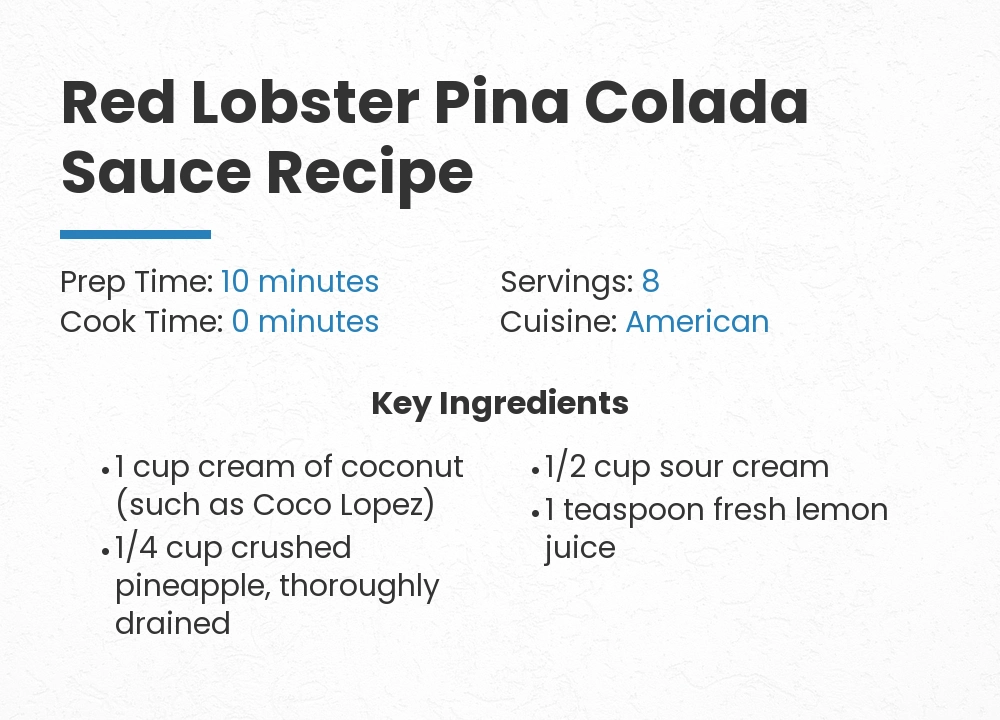
- Prep Time: 10 minutes
- Cook Time: 0 minutes
- Servings: 8
- Course: Condiment, Appetizer
- Cuisine: American
- Diet: Vegetarian
Ingredients
- 1 cup cream of coconut (such as Coco Lopez)
- 1/4 cup crushed pineapple, thoroughly drained
- 1/2 cup sour cream
- 1 teaspoon fresh lemon juice
Instructions
- Place a fine-mesh strainer over a bowl and add the crushed pineapple. Press down with a spoon to remove excess liquid, ensuring the pineapple is well-drained to prevent a watery sauce.
- In a medium mixing bowl, combine the cream of coconut, drained crushed pineapple, sour cream, and fresh lemon juice.
- Use a whisk or electric mixer on low speed to blend the ingredients until smooth and fully incorporated, about 1-2 minutes.
- Transfer the sauce to an airtight container. Cover and refrigerate for at least 30 minutes to allow the flavors to meld and the sauce to thicken slightly.
- Serve chilled alongside coconut shrimp, fish tacos, or other preferred dishes. Stir briefly before use if separation occurs.
Nutrition
- Calories: 120 kcal
- Protein: 1 g
- Fat: 6 g
- Carbohydrates: 16 g
- Sugar: 14 g
- Fiber: 0.5 g
- Sodium: 15 mg
- Cholesterol: 10 mg
Cooking Method
This is a no-cook recipe that relies on mechanical mixing and chilling. The absence of heat preserves the fresh, bright notes of pineapple and citrus. Refrigeration is crucial for texture development and food safety, as dairy and coconut components can spoil if left at room temperature.
Tools Needed
- Mixing bowl (medium size, non-reactive material like glass or stainless steel)
- Fine-mesh strainer
- Measuring cups and spoons
- Whisk or electric mixer
- Airtight container for storage
Ingredient Analysis
Understanding each component helps you make informed substitutions and appreciate the sauce’s structure. Here, we break down the primary elements and their roles in the final product.
Cream of Coconut
Cream of coconut, often sold in cans like Coco Lopez, is a sweetened, thickened product made from coconut meat and sugar. It differs from coconut cream or milk by its high sugar content and stable emulsion. In this sauce, it provides richness, sweetness, and the iconic tropical flavor. Look for brands without added preservatives for a cleaner taste.
The viscosity of cream of coconut contributes to the dipping consistency, allowing it to coat shrimp evenly. If you cannot find it, combine full-fat coconut milk with powdered sugar, but note the texture may vary. Store unused portions in the fridge for up to a week or freeze for longer shelf life.
Crushed Pineapple
Crushed pineapple adds fruity acidity and texture. Draining it thoroughly is critical; excess moisture can make the sauce runny and dilute the flavors. Use canned pineapple packed in juice rather than syrup to control sweetness. Fresh pineapple can be pulsed in a food processor, but its enzymes might affect dairy over time, so canned is preferred for stability.
The pineapple’s natural bromelain enzyme, which breaks down proteins, is deactivated in canning, making it safe to mix with dairy without curdling. This ingredient introduces fiber and vitamin C, enhancing the nutritional profile subtly.
Sour Cream
Sour cream introduces tanginess and creaminess, balancing the sweetness of coconut and pineapple. Its fat content, typically around 20%, emulsifies the mixture, creating a smooth mouthfeel. For a lighter version, Greek yogurt can substitute, though it may alter the tang profile. Always use full-fat sour cream to avoid separation.
From a dietary perspective, sour cream provides probiotics if labeled as containing live cultures, aiding gut health. However, it also contributes saturated fat, so moderation is key for those monitoring intake.
Lemon Juice
Fresh lemon juice brightens the sauce with citrus notes, cutting through the richness. Bottled juice lacks the volatile oils in fresh lemons, which add depth. The acidity also helps preserve the sauce slightly by lowering pH. If unavailable, lime juice works as an alternative, offering a similar zesty character.
This small addition impacts flavor significantly, preventing the sauce from tasting overly sweet. It also provides a hint of vitamin C and antioxidants.
Nutritional Breakdown
As a dietician, I analyze recipes for their health implications. This sauce is energy-dense due to sugars and fats, with about 120 calories per two-tablespoon serving. The primary sources are carbohydrates from added sugars in cream of coconut and natural sugars in pineapple.
Fat content comes mainly from saturated fats in coconut and sour cream. While coconut fat contains medium-chain triglycerides, which some studies link to quick energy use, excessive intake can raise LDL cholesterol. Protein and fiber are minimal, so pair this sauce with protein-rich foods like shrimp or chicken for a balanced meal.
Sodium levels are low, making it suitable for low-sodium diets. The cholesterol is modest, primarily from dairy. To reduce calories, consider using light sour cream or reducing the cream of coconut, but expect flavor changes.
Dietary Adaptations
Adapting this recipe for specific diets ensures everyone can enjoy it. Here are practical swaps based on common dietary needs.
Vegan Version
Replace sour cream with unsweetened coconut yogurt or vegan sour cream. Use a vegan-certified cream of coconut, as some brands may contain dairy derivatives. Ensure all ingredients are plant-based, and adjust sweetness if needed with agave syrup.
Dairy-Free Option
Substitute sour cream with coconut cream or cashew cream. Blend soaked cashews with water until smooth for a neutral, creamy base. This maintains richness without dairy allergens.
Low-Sugar Variation
Opt for unsweetened coconut cream and add a sugar substitute like stevia. Use fresh pineapple without added sugars, and reduce the amount slightly. Note that this will alter the traditional taste and texture.
Gluten-Free Consideration
This sauce is naturally gluten-free, but check labels on cream of coconut and pineapple for hidden gluten in additives. Most brands are safe, but cross-contamination can occur in processing facilities.
Cultural and Historical Context
The pina colada drink originated in Puerto Rico in the 1950s, blending rum, coconut, and pineapple. Red Lobster adapted these flavors into a dipping sauce for their coconut shrimp, introduced in the 1990s as part of a tropical-themed menu. This sauce reflects America’s fascination with Caribbean cuisine, simplifying it into a accessible condiment.
Historically, coconut and pineapple were luxury items, but canning and global trade made them staples. The sauce’s popularity underscores how restaurant chains reinterpret ethnic flavors for broad appeal. It remains a fixture in seafood dining, often paired with fried items to contrast richness with sweetness.
Common Mistakes and Expert Tips
Avoiding pitfalls ensures your sauce turns out perfectly every time. Here are frequent errors and how to correct them.
Inadequate Draining
Failing to drain crushed pineapple thoroughly leads to a watery sauce. Use a strainer and press firmly, or even pat with paper towels. Excess liquid can also cause separation in storage.
Overmixing
Vigorous mixing can incorporate too much air, making the sauce foamy. Mix gently until just combined. An electric mixer on low speed works well for uniformity without over-aeration.
Skipping Chilling Time
Chilling allows flavors to integrate and the sauce to thicken. Serve it immediately, and it might taste disjointed. Plan for at least 30 minutes in the fridge, though overnight is ideal.
Ingredient Temperature
Using room temperature ingredients blends more smoothly than cold ones. Take sour cream and cream of coconut out of the fridge 15 minutes before mixing to avoid clumping.
Serving, Pairing, and Storage
This sauce versatility extends beyond coconut shrimp. Try it with air fryer potstickers, grilled chicken tenders, or as a dressing for fruit salad. It complements spicy dishes by cooling the palate, such as with buttered Old Bay shrimp.
For storage, keep it in an airtight container in the fridge for up to 5 days. Do not freeze, as dairy and coconut can separate upon thawing. If the sauce thickens too much, stir in a teaspoon of pineapple juice or water to adjust consistency.
When serving, present it in a small bowl alongside main courses or appetizers. It pairs well with citrus-marinated meats or fish tacos, adding a tropical twist. For parties, double the recipe and offer it with chips or vegetable sticks for dipping.
The Science Behind the Sauce
The emulsion in this sauce relies on the fat in sour cream and cream of coconut binding with water-based components. Lemon juice’s acidity stabilizes the mixture by affecting pH, which can prevent microbial growth. Chilling reduces molecular movement, allowing flavors to merge and the sauce to set.
Enzymatic reactions are minimal due to canned pineapple, but fresh pineapple’s bromelain could break down proteins in dairy, leading to thinning. This is why canned, drained pineapple is recommended for consistency and safety.
Frequently Asked Questions
What is Red Lobster pina colada sauce made of?
It typically contains cream of coconut, crushed pineapple, sour cream, and lemon juice. These ingredients create a sweet, tangy dip often served with coconut shrimp.
Can I make this sauce ahead of time?
Yes, prepare it up to two days in advance. Store it covered in the refrigerator to enhance flavor development. Stir before serving if separation occurs.
Is there an alcoholic version of this sauce?
For a boozy dip, add a tablespoon of rum or Malibu coconut rum. Incorporate it during mixing, but note that alcohol can affect texture and is not suitable for all diets.
How can I use this sauce if I have a food allergy?
For dairy allergies, use vegan sour cream. For coconut allergies, substitute with sweetened condensed milk, but this changes the flavor profile significantly. Always check labels for allergens.
What dishes pair well with pina colada sauce?
Beyond coconut shrimp, it works with fish tacos, chicken tenders, or as a condiment for grilled meats. It can also dress fruit salads or accompany desserts like pound cake.
Why did my sauce turn out watery?
This usually happens if the pineapple isn’t drained properly or if ingredients are over-mixed. Ensure thorough draining and mix gently. Chilling often thickens it further.
Can I reduce the sugar in this recipe?
Use unsweetened coconut cream and add a sugar alternative, but expect a less authentic taste. Reducing pineapple amount also lowers sugar, but balance with acidity from lemon.
How long does homemade pina colada sauce last?
It keeps for 3-5 days in the refrigerator in an airtight container. Discard if you notice off smells, colors, or signs of spoilage like mold.
Is this sauce suitable for weight management?
Due to its calorie density, use it in moderation. Pair with lean proteins and vegetables to create a balanced meal that fits your calorie needs.
Can I use an electric mixer for this recipe?
Yes, an electric mixer on low speed helps achieve a smooth consistency quickly. Avoid high speeds to prevent incorporating too much air.