
That unmistakable green sauce from Pollo Tropical has a way of transforming simple meals into something extraordinary. I found myself constantly thinking about it after moving away from Florida, where the chain originated. The tangy, garlicky creaminess became a culinary memory I needed to recreate in my own kitchen.
After numerous tests and adjustments, I perfected a version that captures the essence of the original. This article shares not only the recipe but also the science, history, and practical knowledge behind it. You will learn how to make this sauce, understand its components, and adapt it for any dietary need.
This cilantro garlic sauce recipe replicates the Pollo Tropical classic using fresh, accessible ingredients. It serves as a versatile condiment for grilled meats, bowls, and tacos. Let me guide you through every step to ensure your success.
How to Make Pollo Tropical Cilantro Garlic Sauce
This section provides the complete formula for creating the sauce. Follow these steps for a consistent, restaurant-quality result every time. The process is straightforward, but precision with measurements matters.
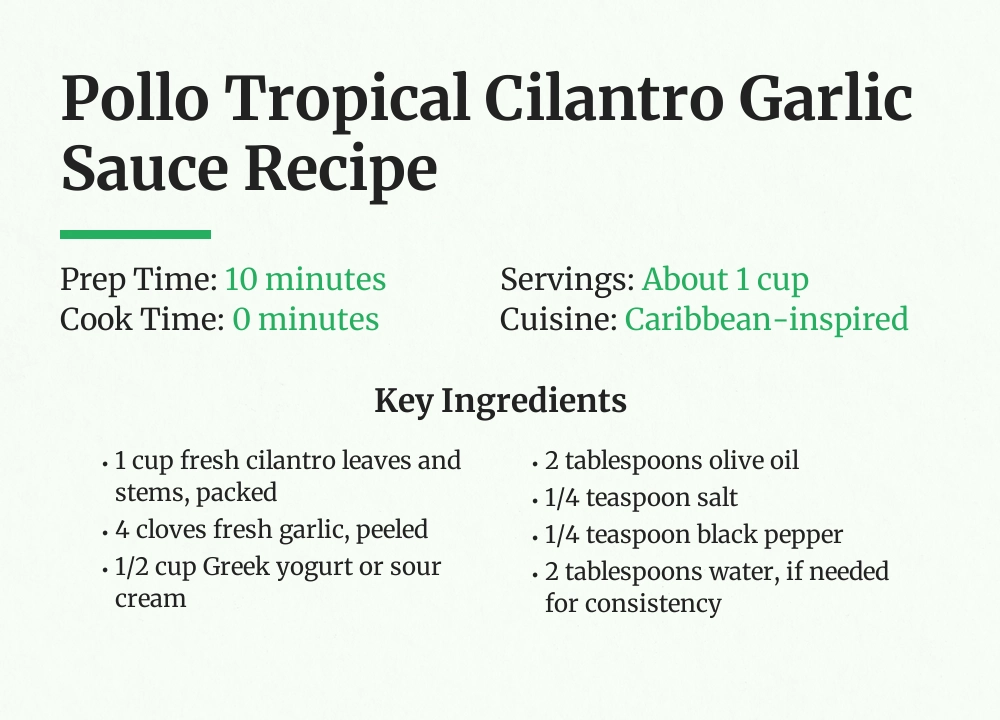
Recipe Details
- Prep Time: 10 minutes
- Cook Time: 0 minutes
- Servings: About 1 cup
- Course: Condiment
- Cuisine: Caribbean-inspired
- Diet: Vegetarian
Ingredients
- 1 cup fresh cilantro leaves and stems, packed
- 4 cloves fresh garlic, peeled
- 1/2 cup Greek yogurt or sour cream
- 3 tablespoons lime juice, freshly squeezed
- 2 tablespoons olive oil
- 1/4 teaspoon salt
- 1/4 teaspoon black pepper
- 2 tablespoons water, if needed for consistency
Instructions
- Wash the cilantro thoroughly and pat it dry. Remove any thick stems, but keep the tender ones for added flavor.
- Peel the garlic cloves. For a milder taste, you can lightly crush them and remove the inner germ.
- Combine the cilantro, garlic, Greek yogurt, lime juice, olive oil, salt, and pepper in a blender or food processor.
- Secure the lid and blend on medium speed for 30 seconds. Scrape down the sides with a spatula.
- Continue blending until the mixture is completely smooth and creamy. If it appears too thick, add water one tablespoon at a time until it reaches your desired consistency.
- Taste and adjust seasoning, adding more salt or lime juice if necessary. Transfer to an airtight container like a mason jar.
Nutrition
- Calories: 35 kcal
- Protein: 1 g
- Fat: 3 g
- Carbohydrates: 2 g
- Sugar: 1 g
- Fiber: 0 g
- Sodium: 75 mg
- Cholesterol: 1 mg
Cooking Method
No heating is involved in this preparation. The sauce relies on mechanical emulsification through blending. This method preserves the raw, vibrant flavors of the cilantro and garlic while creating a smooth texture.
Tools Needed
- Blender or food processor
- Measuring cups and spoons
- Spatula for scraping
- Airtight container for storage
Exploring the Core Ingredients
Each component in this sauce contributes to its unique profile. Understanding these elements allows you to make informed substitutions and adjustments. Let’s examine the key players in detail.
Cilantro: The Herbaceous Heart
Cilantro, also known as coriander leaf, belongs to the Apiaceae family. It originated in the Mediterranean and Middle Eastern regions. The plant’s leaves and stems are entirely edible and packed with flavor compounds like aldehydes, which give it that distinctive, polarizing taste.
Freshness is non-negotiable for this recipe. Look for bright green leaves without wilting or yellowing. The stems contain intense flavor, so including them enhances the sauce’s depth. Cilantro provides vitamins A, C, and K, along with antioxidants that support detoxification.
If you dislike cilantro, flat-leaf parsley makes a suitable alternative. The flavor profile shifts, but it maintains the green, herbaceous quality. Another option is using a blend of mint and basil for a different aromatic twist.
Garlic: The Pungent Powerhouse
Garlic, a bulb from the Allium family, has been cultivated for thousands of years. Its sulfur compounds, like allicin, release when crushed or chopped, creating that characteristic sharpness. In this sauce, garlic acts as the primary pungent element, balancing the creaminess.
Using fresh garlic cloves rather than pre-minced versions ensures the best flavor. The size of the cloves can vary, so taste as you go. Roasting the garlic beforehand can mellow its bite, but for authenticity, raw is preferred. Garlic offers cardiovascular benefits and antimicrobial properties.
If raw garlic is too intense, you can blanch it briefly in boiling water. This process reduces the harshness while retaining some of the flavor. Elephant garlic provides a milder option, though it is less potent.
Dairy Base: Creaminess Defined
The choice between Greek yogurt and sour cream determines the sauce’s tang and richness. Greek yogurt, strained to remove whey, has a thicker consistency and higher protein content. It introduces a slight acidity that brightens the other ingredients.
Sour cream, made from fermented cream, contributes a richer, more decadent mouthfeel. Its fat content helps carry the flavors of the herbs and garlic. Both options work well, so select based on your dietary preferences and desired outcome.
For a dairy-free version, unsweetened coconut yogurt or cashew yogurt are excellent substitutes. They provide similar creaminess without animal products. Almond-based yogurts can work but may add a subtle nutty note.
Lime Juice: The Citrus Catalyst
Fresh lime juice is essential for acidity and brightness. It prevents the sauce from tasting flat and helps balance the fat from the dairy or oil. Bottled lime juice often contains preservatives that alter the flavor, so squeezing fresh limes is worth the effort.
The acidity also interacts with the chlorophyll in cilantro, helping to preserve its green color. If limes are unavailable, lemon juice can be used, though it will change the sauce’s character slightly. Lime zest can be added for an extra burst of citrus aroma.
Nutritional Profile and Health Benefits
This sauce is more than a flavor enhancer. It incorporates several nutrient-dense ingredients that contribute to a balanced diet. The combination offers vitamins, minerals, and healthy fats in a low-calorie package.
Cilantro provides vitamin K, which supports bone health and blood clotting. It also contains antioxidants that help reduce inflammation. Garlic has been linked to improved cholesterol levels and immune function due to its bioactive compounds.
Using Greek yogurt increases the protein content, promoting satiety and muscle maintenance. The probiotics in yogurt support gut health, though they may be reduced in blended sauces. Olive oil contributes monounsaturated fats, which are heart-healthy.
The sauce is naturally low in carbohydrates and sugar, making it suitable for various eating plans. It can be part of a weight management strategy when used in moderation. The fiber content is minimal, so pair it with high-fiber foods for a complete meal.
Adapting the Recipe for Special Diets
This sauce is highly adaptable to meet different dietary requirements. With simple swaps, you can create vegan, dairy-free, or low-sodium versions without sacrificing flavor. Here are practical modifications.
Vegan and Dairy-Free Options
Replace Greek yogurt or sour cream with plant-based alternatives. Unsweetened coconut yogurt provides a creamy base with a subtle tropical note. Cashew yogurt is neutral in flavor and high in healthy fats. Almond yogurt works but may require additional thickening.
For a nut-free version, sunflower seed yogurt or soy-based sour cream are good choices. Ensure that any substitute has a similar thickness to achieve the right consistency. You may need to adjust the amount of lime juice or salt to balance the flavors.
Low-Sodium and Reduced-Fat Variations
To lower sodium, reduce or omit the salt. Enhance flavor with other seasonings like a dash of cumin or smoked paprika. Using fresh ingredients already provides plenty of taste, so salt can often be minimized without issue.
For a lower-fat version, select low-fat Greek yogurt or a light sour cream. Reduce the olive oil or replace it with water or vegetable broth. The sauce might be less rich, but it will still be flavorful and usable as a dip or drizzle.
Allergy Considerations
This recipe is naturally gluten-free, but always check labels on packaged ingredients like yogurt for hidden additives. For those with garlic allergies, a small amount of garlic-infused oil can provide flavor without the whole cloves. Asafoetida powder is another alternative, though it has a stronger taste.
Historical and Cultural Background
Pollo Tropical is a fast-food chain that started in Miami, Florida, in 1988. It focuses on Caribbean-inspired dishes, particularly grilled chicken. The cilantro garlic sauce is a signature condiment that reflects the region’s culinary influences.
Caribbean cuisine often features bold, fresh flavors from herbs, citrus, and spices. Cilantro and garlic are staples in many Latin American and Caribbean recipes. This sauce embodies that tradition, serving as a modern interpretation of classic flavors.
The concept of creamy herb sauces has roots in various cultures, from Mexican cremas to Mediterranean tzatziki. Pollo Tropical’s version likely draws from these, creating a versatile sauce that complements grilled meats and grains. It has become a beloved item for its ability to add zest to any dish.
Avoiding Common Preparation Errors
Small mistakes can affect the sauce’s texture and taste. Here are typical pitfalls and how to sidestep them. These tips come from repeated testing in my own kitchen.
Ingredient Preparation
Do not skip washing the cilantro. Sand and grit can hide in the leaves, leading to a gritty texture. Dry it well to prevent diluting the sauce. Using old or wilted cilantro results in a dull flavor and color.
Garlic should be fresh, not sprouted. The green germ in older cloves can impart bitterness. Remove it if present. Measure ingredients accurately, especially the lime juice, as too much can make the sauce overly acidic.
Blending Techniques
Over-blending can incorporate too much air, making the sauce foamy. Blend just until smooth. Under-blending leaves chunks of garlic or cilantro, which affects the mouthfeel. Scrape the sides midway to ensure even processing.
If the sauce separates, it may need more emulsification. Adding the olive oil slowly while blending can help. Alternatively, increase the dairy base slightly to stabilize the mixture. The consistency should be pourable but not runny.
Storage and Freshness
This sauce is best consumed within three to four days. Store it in a sealed container in the refrigerator. The color may darken due to oxidation, but it remains safe to eat. Freezing is not recommended, as it can alter the texture upon thawing.
Serving Suggestions and Pairings
This sauce elevates a wide range of dishes. Its creamy, tangy profile complements proteins, vegetables, and grains. Think beyond the obvious uses to maximize its potential.
With Proteins
Drizzle it over grilled chicken, broiled salmon, or fish tacos. It pairs well with crispy chicken tacos or garlic parm chicken wings. Use it as a marinade or finishing sauce for fajitas. The acidity helps cut through the richness of fried or fatty meats.
With Vegetables and Grains
Add it to grain bowls, Cuban-style stuffed sweet potatoes, or as a dip for raw vegetables. It works as a dressing for salads or a topping for baked potatoes. Mix it into quinoa or rice for an instant flavor boost.
As a Condiment
Serve it alongside burritos, as part of a sauce bar, or with chips. It can replace mayo in sandwiches or burgers. Combine it with other sauces, like mixing with chili for a creamy dip. Its versatility makes it a kitchen staple.
The Science of Flavor and Emulsification
Understanding the chemistry behind this sauce explains why certain steps are crucial. Emulsification is the process of combining oil and water-based liquids. In this recipe, the dairy base and olive oil create a stable mixture when blended.
The mechanical action of the blender breaks the oil into tiny droplets suspended in the watery components. Garlic and cilantro contain compounds that enhance this stability. Lime juice’s acidity can slightly denature proteins in yogurt, contributing to thickness.
Flavor molecules in garlic and cilantro are volatile, meaning they evaporate quickly. Blending releases these compounds, intensifying the aroma. Freshness matters because these molecules degrade over time. Salt acts as a flavor enhancer, making other tastes more pronounced.
Frequently Asked Questions
What is Pollo Tropical cilantro garlic sauce?
It is a creamy condiment made from cilantro, garlic, lime juice, and a dairy base like Greek yogurt. It originated at the Pollo Tropical restaurant chain and is known for its tangy, herbaceous flavor.
Why is this sauce important in Caribbean cuisine?
It embodies key elements of Caribbean cooking: fresh herbs, citrus, and bold garlic. It adds brightness and creaminess to grilled meats and other dishes, reflecting the region’s culinary traditions.
How does the sauce work as a marinade?
The acidity in lime juice helps tenderize proteins, while the garlic and cilantro infuse flavor. It can be used as a marinade for chicken or fish, but avoid marinating too long to prevent over-acidification.
Can I make this sauce without a blender?
Yes, but it requires more effort. Finely chop the cilantro and garlic, then whisk with other ingredients. The texture will be chunkier, but the flavor will be similar.
How long does homemade cilantro garlic sauce last?
Store it in the refrigerator for up to four days. The color may darken, but it remains safe to eat. Do not leave it at room temperature for extended periods.
What can I use if I don’t have Greek yogurt?
Sour cream is the best substitute. For dairy-free options, use coconut yogurt or cashew yogurt. Adjust consistency with water or oil as needed.
Is this sauce spicy?
No, the basic recipe is not spicy. You can add jalapeño or chili flakes for heat. Start with a small amount and blend to taste.
Can I freeze the sauce?
Freezing is not recommended. The dairy or yogurt base may separate and become watery upon thawing, affecting the texture.
What dishes pair best with this sauce?
It complements grilled chicken, tacos, burritos, grain bowls, and roasted vegetables. Use it as a dip, drizzle, or spread for versatile applications.
How can I make the sauce thicker or thinner?
For a thicker sauce, reduce the lime juice or add more yogurt. For thinner consistency, incorporate water or additional lime juice gradually until desired texture is achieved.