
I still have a vivid memory of my first encounter with Parma Rosa sauce in a small trattoria near Parma, Italy. The chef explained how this pink-hued sauce balances the acidity of tomatoes with the richness of cream, creating a versatile base for numerous dishes. You might have seen similar sauces in restaurants or stores, but crafting it yourself allows control over ingredients and flavor intensity.
This guide walks you through each step, from selecting fresh components to achieving the ideal consistency. Whether you are preparing a weeknight dinner or hosting a gathering, this method ensures a reliable outcome. Beyond the basic steps, I will share insights on nutritional benefits, common errors to avoid, and ways to adapt the recipe for various dietary needs.
Parma Rosa sauce combines marinara and Alfredo elements, resulting in a smooth, creamy texture that pairs well with pasta, chicken, or vegetables. By understanding its foundation, you can customize it to suit your taste preferences and health goals. Let us begin with the core recipe before exploring deeper aspects like ingredient roles and historical background.
How to Make Parma Rosa Sauce
This section provides a straightforward recipe for creating Parma Rosa sauce from scratch. Follow these instructions for a consistent, flavorful result. The process involves simmering tomatoes with cream and cheese, emphasizing even heat distribution to prevent separation.
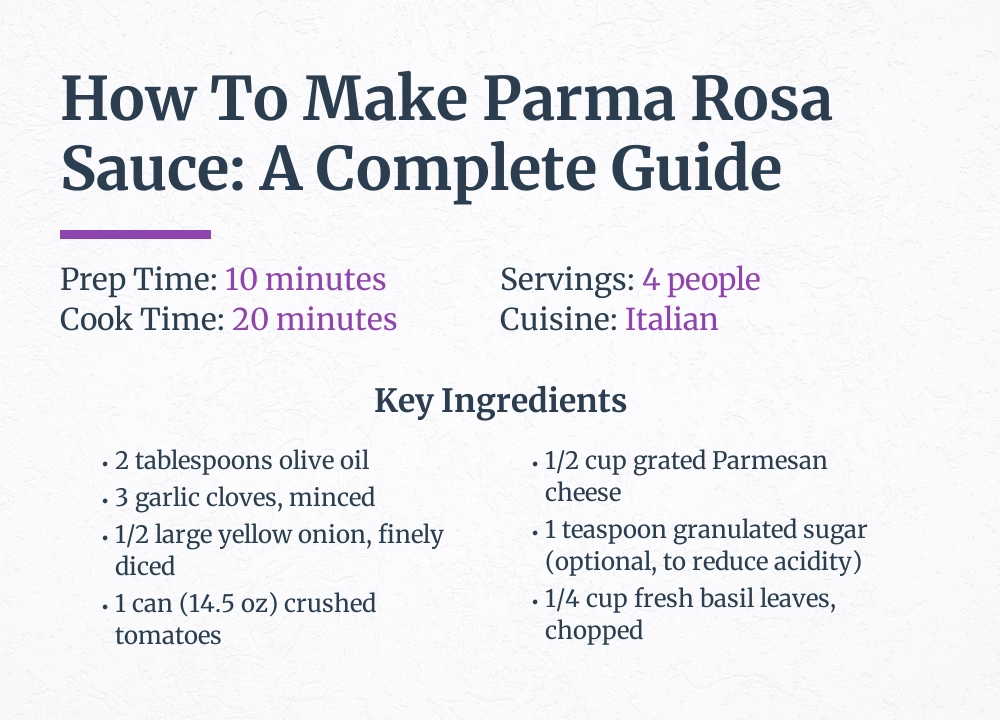
Recipe Details
- Prep Time: 10 minutes
- Cook Time: 20 minutes
- Servings: 4 people
- Course: Main Course
- Cuisine: Italian
- Diet: Vegetarian
Ingredients
- 2 tablespoons olive oil
- 3 garlic cloves, minced
- 1/2 large yellow onion, finely diced
- 1 can (14.5 oz) crushed tomatoes
- 3/4 cup heavy cream
- 1/2 cup grated Parmesan cheese
- 1 teaspoon granulated sugar (optional, to reduce acidity)
- 1/4 cup fresh basil leaves, chopped
- Salt and black pepper to taste
Instructions
- Heat olive oil in a medium saucepan over medium heat. Add minced garlic and diced onion, sautéing until translucent and fragrant, about 3-4 minutes.
- Pour in the crushed tomatoes, stirring to combine. Bring to a gentle simmer and cook for 10 minutes, allowing the flavors to meld.
- Reduce heat to low and slowly whisk in the heavy cream. Ensure the sauce does not boil after adding cream to avoid curdling.
- Stir in grated Parmesan cheese until fully incorporated. Add sugar if using, and season with salt and pepper.
- Fold in fresh basil leaves just before serving. For a smoother texture, use an immersion blender to puree the sauce to your preferred consistency.
Nutrition
- Calories: 280 kcal
- Protein: 8 g
- Fat: 22 g
- Carbohydrates: 12 g
- Sugar: 7 g
- Fiber: 2 g
- Sodium: 320 mg
- Cholesterol: 55 mg
Cooking Method
This sauce is prepared using a stovetop simmering technique. Start by sautéing aromatics like garlic and onion to build a flavor base. Adding tomatoes and simmering helps develop depth, while incorporating cream and cheese at lower heat maintains a smooth emulsion. Constant stirring ensures even cooking and prevents sticking.
Tools Needed
- Medium saucepan or Dutch oven
- Wooden spoon or whisk
- Measuring cups and spoons
- Immersion blender or standard blender (optional, for smoothing)
- Cheese grater
Understanding Parma Rosa Sauce
Parma Rosa sauce, often called pink sauce, originates from Italian-American cuisine, blending elements of traditional marinara and creamy Alfredo. Its name derives from Parma, Italy, known for Parmesan cheese, though it is not a classic regional dish. This fusion creates a versatile sauce that reduces tomato acidity with dairy, offering a milder alternative to plain tomato sauce.
You can use it as a pasta topping, pizza base, or dipping sauce for proteins like chicken. The balance between tangy tomatoes and rich cream makes it appealing for various palates, including those who find marinara too sharp. Understanding its components helps in adjusting thickness, flavor, and nutritional content based on your needs.
What is Parma Rosa Sauce?
Parma Rosa sauce is a creamy tomato sauce made by combining tomato-based ingredients like crushed or diced tomatoes with dairy products such as heavy cream and Parmesan cheese. The result is a pink-colored sauce that is thicker than marinara but lighter than Alfredo. It typically includes garlic, onions, and herbs like basil for added complexity.
This sauce differs from standard tomato cream sauces by often emphasizing a equal balance between tomato and cream, whereas others might lean heavily on one component. Its versatility allows it to be used in one-pot pasta dishes, where pasta cooks directly in the sauce, absorbing flavors and simplifying cleanup.
Historical Background
While not rooted in ancient Italian tradition, Parma Rosa sauce gained popularity in mid-20th century America, where chefs experimented with hybrid recipes to cater to diverse tastes. It reflects the immigrant influence on Italian cuisine abroad, incorporating readily available ingredients like canned tomatoes and heavy cream.
The use of Parmesan cheese links it loosely to Parma, Italy, renowned for its dairy products. Over time, variations emerged, including shortcuts using pre-made marinara and Alfredo sauces. This adaptability has made it a common feature in home kitchens and restaurants, symbolizing comfort food with an elegant twist.
Ingredient Selection and Impact
Choosing high-quality ingredients significantly affects the sauce’s flavor, texture, and nutritional profile. Each component plays a specific role, from providing acidity to adding creaminess. Here is a breakdown of key elements and their attributes.
Tomatoes
Tomatoes form the base of the sauce, contributing acidity, sweetness, and body. Options include canned crushed tomatoes, which offer consistency and depth, or fresh cherry tomatoes for a brighter note. Crushed tomatoes break down easily during cooking, creating a smooth texture, while diced varieties add chunkiness.
The type of tomato affects the sauce’s color and taste. San Marzano tomatoes, known for low acidity and sweetness, are ideal for a balanced flavor. Using peeled tomatoes reduces bitterness, and incorporating tomato paste can intensify richness. Always consider sodium content in canned versions if monitoring salt intake.
Cream and Dairy
Heavy cream provides the signature creamy texture and richness, with a fat content around 36-40% that emulsifies with tomato acids. Lower-fat alternatives like half-and-half or milk can be used but may result in a thinner sauce prone to separation. Parmesan cheese adds umami and saltiness, melting smoothly into the mixture.
For those avoiding dairy, substitutes like coconut cream or cashew-based products mimic the creaminess. The choice of dairy influences calorie and cholesterol levels, so adjustments can align with dietary goals. Incorporating cream cheese offers extra thickness and a tangy undertone, though it is optional.
Herbs and Aromatics
Garlic and onions form the aromatic foundation, sautéed initially to release sweetness and reduce sharpness. Fresh basil adds a peppery, floral note that complements the tomatoes, while dried herbs like oregano can be included for complexity. Using fresh ingredients enhances flavor vibrancy compared to dried alternatives.
Balancing herbs prevents overpowering the sauce; basil should be added late in cooking to preserve its essence. Garlic cloves minced finely distribute evenly, and yellow onions provide a milder sweetness than white varieties. These elements contribute minimal calories but significant flavor depth.
Nutritional Insights
From a dietary perspective, Parma Rosa sauce offers a mix of macronutrients, with calories primarily from fats and carbohydrates. A typical serving contains moderate protein from cheese and tomatoes, along with vitamins A and C from tomato-based ingredients. The cream and cheese contribute saturated fats and cholesterol, which can be moderated with substitutions.
Understanding the nutritional breakdown helps in managing portion sizes and adaptations. For instance, using low-fat dairy reduces calorie density, while adding vegetables like carrots or spinach increases fiber content. This sauce can fit into balanced meals when paired with whole-grain pasta or lean proteins.
Macronutrients Breakdown
Calories in Parma Rosa sauce come mainly from fats (e.g., cream and olive oil) and carbohydrates (e.g., tomatoes and optional sugar). Protein sources include Parmesan cheese and trace amounts from tomatoes. The fat content provides satiety, while carbohydrates offer energy, with natural sugars from tomatoes contributing to sweetness.
Fiber content is modest, around 2 grams per serving, from tomato skins and herbs. Sodium levels depend on cheese and canned tomato choices, so selecting low-sodium options helps control intake. Adjusting cream quantity alters fat grams, useful for those monitoring heart health.
Health Benefits and Considerations
Tomatoes are rich in lycopene, an antioxidant linked to reduced inflammation and improved heart health. Cooking tomatoes enhances lycopene absorption. Dairy ingredients provide calcium and vitamin D, supporting bone health, but high saturated fat may be a concern for some diets.
To make the sauce healthier, use Greek yogurt instead of cream for protein boost, or incorporate pureed vegetables for hidden nutrients. Be mindful of added sugars if using sweeteners to counter acidity. Balancing portions with vegetables or whole grains ensures a nutrient-dense meal.
Dietary Modifications
Adapting Parma Rosa sauce for specific dietary needs is straightforward with ingredient swaps. Whether you avoid dairy, gluten, or animal products, these changes maintain flavor and texture. Always test adjustments in small batches to fine-tune consistency.
Vegan and Dairy-Free Options
Replace heavy cream with canned coconut milk or unsweetened almond milk for a creamy base. Use nutritional yeast or vegan Parmesan alternatives instead of cheese, adding umami without dairy. For thickness, blend cashews soaked in water until smooth, or stir in a tablespoon of tahini.
Ensure canned tomatoes are vegan-friendly, as some brands may contain animal-derived additives. Sauté aromatics in olive oil as usual, and simmer with plant-based creams on low heat to prevent curdling. The sauce may be slightly thinner, so extend cooking time to reduce liquid.
Gluten-Free and Low-Carb Versions
Parma Rosa sauce is naturally gluten-free if no thickeners like flour are added. For low-carb diets, reduce or omit sugar and use full-fat dairy to increase satiety. Serve over zucchini noodles or shirataki pasta instead of traditional wheat-based options.
Thickening without carbs can involve reducing the sauce longer or adding a pinch of xanthan gum. Monitor sodium levels if using cheese substitutes, as some contain added salts. These adaptations allow enjoyment without compromising dietary restrictions.
Common Pitfalls and Solutions
Even experienced cooks can encounter issues when making Parma Rosa sauce. Recognizing these problems early ensures a smooth process. Key areas include sauce separation, uneven seasoning, and texture inconsistencies.
Avoiding Curdling
Curdling occurs when dairy is added to high heat or acidic tomatoes too quickly. To prevent this, always reduce heat to low before incorporating cream, and whisk continuously. Tempering the cream by adding a small amount of tomato mixture first can help stabilize it.
If curdling happens, remove the sauce from heat and blend vigorously with an immersion blender. Adding a tablespoon of cold butter at the end can sometimes rescue the emulsion. Using fresh, high-fat cream reduces likelihood, as lower-fat alternatives separate more easily.
Achieving the Right Consistency
Sauce thickness varies based on tomato type and cooking time. For a thinner sauce, add pasta cooking water or broth gradually. For a thicker consistency, simmer longer to evaporate liquid, or incorporate a roux (flour and butter mixture) at the start.
Over-thickening can make the sauce pasty; if this occurs, stir in more cream or tomato juice. Blending part of the sauce smooths chunks, while leaving some texture provides a rustic feel. Consistency should coat the back of a spoon without dripping quickly.
Serving and Pairing Ideas
Parma Rosa sauce is incredibly versatile, complementing various dishes beyond pasta. Pair it with proteins, vegetables, or grains for a complete meal. Consider the sauce’s richness when selecting accompaniments to balance flavors.
Pasta Pairings
Short pasta shapes like cavatappi, rotini, or bow ties hold the sauce well, trapping it in crevices. Cook pasta al dente to maintain texture, and toss with sauce immediately after draining. Reserve some pasta water to adjust sauce consistency if needed.
For one-pot meals, add uncooked pasta directly to the simmering sauce with extra liquid, allowing it to absorb flavors. This method reduces cleanup and intensifies taste. Serve with a side salad or garlic bread to round out the meal.
Beyond Pasta: Other Uses
Use Parma Rosa sauce as a topping for baked chicken or fish, adding cheese and baking until bubbly. It works as a pizza base instead of traditional tomato sauce, topped with mozzarella and vegetables. For appetizers, serve as a dip for breadsticks or roasted potatoes.
Incorporate into casseroles or lasagna layers for creamy richness. Leftover sauce can be frozen and reused in soups or stews. Experiment with different herbs like thyme or rosemary to match the main dish.
Storage and Meal Prep
Proper storage extends the sauce’s shelf life and simplifies future meals. Cool it completely before transferring to airtight containers. Refrigerate for up to 4 days or freeze for 3 months, though dairy-based sauces may separate slightly upon thawing.
To reheat, warm gently on the stove over low heat, stirring frequently. Add a splash of cream or water to restore consistency if needed. For meal prep, portion sauce into single-serving containers with cooked pasta or proteins for quick dinners.
Avoid microwaving frozen sauce directly, as it can heat unevenly. Thaw in the refrigerator overnight for best results. Label containers with dates to track freshness, and never refreeze previously frozen sauce.
Frequently Asked Questions
What is Parma Rosa sauce?
Parma Rosa sauce is a creamy tomato sauce made by combining tomato puree or crushed tomatoes with heavy cream and Parmesan cheese. It has a pink color and balanced flavor, less acidic than marinara but lighter than Alfredo sauce.
Why is it called Parma Rosa?
The name “Parma Rosa” references Parma, Italy, famous for Parmesan cheese, and “rosa” means pink in Italian, describing its color. It is not a traditional Italian recipe but an Italian-American creation that highlights Parmesan’s role.
How can I make the sauce thicker?
Simmer the sauce longer to reduce liquid, or add a slurry of cornstarch and water. Incorporating more cheese or a tablespoon of tomato paste also increases thickness without altering flavor significantly.
Can I use fresh tomatoes instead of canned?
Yes, use ripe cherry tomatoes or peeled, seeded fresh tomatoes. Cook them down until soft, then blend for smoothness. Fresh tomatoes may require longer cooking to achieve the desired consistency and depth.
Is Parma Rosa sauce gluten-free?
Yes, if made without flour-based thickeners, it is naturally gluten-free. Always check labels on canned tomatoes and dairy products to ensure no gluten-containing additives are present.
How do I prevent the cream from curdling?
Add cream to the sauce off the heat or on low heat, and whisk constantly. Using full-fat cream and avoiding boiling after addition reduces curdling risk. Tempering with a bit of tomato mixture first helps too.
What can I substitute for heavy cream?
Use half-and-half, whole milk, or Greek yogurt for lower fat options. For dairy-free, coconut cream or blended silken tofu works well. Adjust cooking times as alternatives may thin the sauce.
Can I freeze Parma Rosa sauce?
Yes, but dairy-based sauces may separate upon thawing. Reheat slowly while stirring to recombine. For best results, freeze without herbs and add them fresh when serving.
What dishes pair well with this sauce?
It complements pasta, chicken, shrimp, vegetables, and pizza. Try it with air fryer roasted potatoes or as a base for one-pot pasta dishes. Its versatility suits various cuisines and meal types.
How long does homemade sauce last in the fridge?
Store in an airtight container for up to 4 days. If you notice off smells or mold, discard it immediately. For longer storage, freezing is recommended.