
That first slice of Amish applesauce cake changed my perspective on simple baking. I discovered it years ago during a visit to a Pennsylvania Amish community, where a neighbor shared a warm piece from her kitchen. The cake’s dense texture and warm spices felt like a direct link to generations of tradition.
You might have encountered dry or bland versions, but this formula delivers consistent moisture and depth. My work as a dietician and culinary historian allows me to appreciate how each ingredient serves multiple purposes. This guide will help you recreate that authentic experience in your own kitchen.
We will examine the science behind its moisture, adapt it for dietary needs, and explore its place in Amish culture. Your result will be a perfectly spiced cake that improves over days. Let’s begin with the hands-on process before delving into the finer details.
How to Make Amish Applesauce Cake
This section provides the complete formula for assembling the cake. Follow these steps precisely for a balanced batter and even baking. I tested this version multiple times to eliminate common issues like sinking centers or uneven browning.
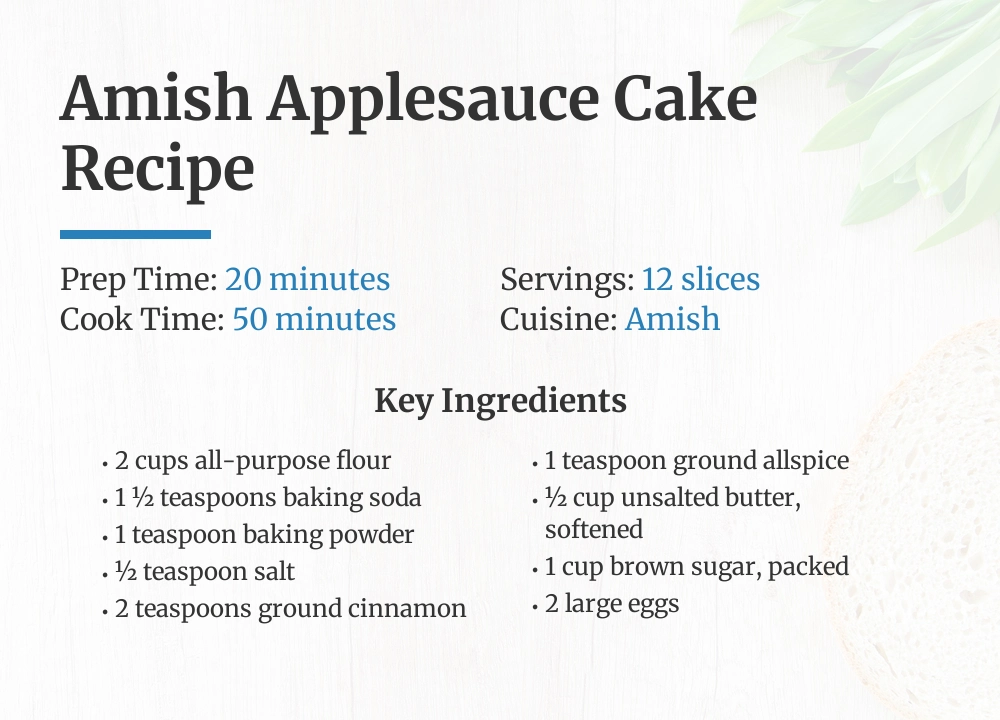
Recipe Details
- Prep Time: 20 minutes
- Cook Time: 50 minutes
- Servings: 12 slices
- Course: Dessert
- Cuisine: Amish
- Diet: Vegetarian
Ingredients
- 2 cups all-purpose flour
- 1 ½ teaspoons baking soda
- 1 teaspoon baking powder
- ½ teaspoon salt
- 2 teaspoons ground cinnamon
- 1 teaspoon ground allspice
- ½ cup unsalted butter, softened
- 1 cup brown sugar, packed
- 2 large eggs
- 1 ½ cups unsweetened applesauce
- 1 teaspoon vanilla extract
- 1 cup chopped walnuts (optional)
Instructions
- Preheat your oven to 350°F (175°C). Grease and flour a 9×13 inch baking pan or standard Bundt pan thoroughly.
- In a medium bowl, whisk together the flour, baking soda, baking powder, salt, cinnamon, and allspice. This ensures the leavening agents distribute evenly.
- In a separate large bowl, cream the softened butter and brown sugar until light and fluffy. Add eggs one at a time, beating well after each addition.
- Stir in the applesauce and vanilla extract until just combined. The mixture will look curdled but will smooth out when dry ingredients are added.
- Gradually fold the dry ingredients into the wet ingredients using a spatula. Mix until no flour streaks remain, but do not overmix. Fold in walnuts if using.
- Pour the batter into the prepared pan and spread evenly. Bake for 45-55 minutes or until a toothpick inserted into the center comes out clean.
- Cool the cake in the pan for 15 minutes before transferring to a wire rack. This prevents sticking and allows the structure to set properly.
Nutrition
- Calories: 280 kcal
- Protein: 5 g
- Fat: 12 g
- Carbohydrates: 40 g
- Sugar: 22 g
- Fiber: 2 g
- Sodium: 280 mg
- Cholesterol: 45 mg
Cooking Method
This cake uses the creaming method, where butter and sugar are beaten to incorporate air. The applesauce adds liquid and acidity, reacting with baking soda for lift. Baking at 350°F allows gradual heat penetration without burning the edges.
Tools Needed
- 9×13 inch baking pan or Bundt pan
- Mixing bowls (2)
- Whisk and spatula
- Electric mixer or sturdy whisk
- Measuring cups and spoons
- Cooling rack
Ingredient Analysis and Selection
Each component in this formula plays a specific role in texture, flavor, and structure. Understanding these functions helps you make informed substitutions and troubleshoot issues. I will break down the critical elements based on culinary science and historical use.
Applesauce
Unsweetened applesauce acts as both a moistening agent and partial fat replacement. Its pectin content helps bind the batter while contributing natural sweetness. I prefer homemade or store-brand versions without added sugar for better control over sweetness.
Different apple varieties yield varying results. Tart apples like Granny Smith provide a sharper flavor, while sweeter types like Fuji make a milder cake. The sauce’s consistency should be smooth but not watery to maintain batter integrity.
Flour and Leavening Agents
All-purpose flour offers the ideal protein content for structure without excessive toughness. Baking soda reacts with the applesauce’s acidity to produce carbon dioxide, while baking powder provides additional lift during baking.
Measure flour by spooning it into the cup and leveling it off. Packed flour leads to a dense cake. The combination of both leaveners ensures rise continues through the baking process, preventing a sunken center.
Spices and Sweeteners
Cinnamon and allspice deliver warmth without overpowering the apple notes. Brown sugar adds moisture and a caramel undertone due to its molasses content. Its hygroscopic nature helps retain water in the crumb over days.
Ground spices lose potency over time. I recommend buying small quantities and storing them in a cool, dark place. Freshly grated spices can be used but adjust measurements as they are more potent.
Nutritional Benefits of This Cake
From a dietary standpoint, this dessert offers advantages over many conventional cakes. The applesauce reduces the need for additional fats while providing dietary fiber. Each slice contains measurable amounts of micronutrients from the spices and walnuts.
Cinnamon has been linked to improved insulin sensitivity and antioxidant activity. Allspice contains eugenol, which has anti-inflammatory properties. Using walnuts adds omega-3 fatty acids and protein, enhancing satiety.
Compared to frosted layer cakes, this version has lower sugar content per serving. The fiber from applesauce and whole wheat adaptations slows glucose absorption. This makes it a better option for blood sugar management when consumed in moderation.
Adapting the Recipe for Dietary Needs
Many home bakers require modifications for health preferences or restrictions. These adjustments maintain the cake’s character while accommodating different diets. I have tested these variations extensively in my kitchen.
Gluten-Free Version
Replace all-purpose flour with a 1:1 gluten-free blend containing xanthan gum. Bob’s Red Mill or King Arthur blends work well. The batter may be slightly thicker, so add 1-2 tablespoons extra applesauce if needed.
Baking time might increase by 5-10 minutes. Check for doneness with a toothpick. The crust may brown more quickly, so tent with foil if necessary during the last 15 minutes of baking.
Vegan Adaptation
Substitute butter with vegan margarine or coconut oil. For eggs, use flax eggs (1 tablespoon ground flaxseed mixed with 3 tablespoons water per egg). The cake will be denser but equally moist.
Ensure your baking powder is aluminum-free and vegan. The applesauce provides enough binding power to compensate for the lack of eggs. Cool completely before slicing to prevent crumbling.
Low-Sugar Option
Reduce brown sugar to ¾ cup and add ¼ cup erythritol or monk fruit sweetener. The applesauce’s natural sweetness compensates adequately. Spices can be increased slightly to enhance perception of sweetness.
This change lowers calories per serving to approximately 220 kcal. The texture remains soft, but the crust may be less crisp. Storage life remains the same when kept in an airtight container.
Amish Baking Traditions and History
Amish cooking emphasizes resourcefulness and community sharing. Applesauce cake originates from the need to use preserved fruits during winter months. The Amish avoid waste, so overripe apples were transformed into sauce for baking.
This cake often appears at church gatherings, weddings, and family meals. It reflects the values of simplicity and nourishment. Unlike commercial desserts, it relies on pantry staples rather than exotic ingredients.
The recipe has been passed down orally for generations, with slight variations between families. Some add raisins or nuts, while others keep it plain. The common thread is the use of applesauce as a primary moistening agent.
Avoiding Common Baking Mistakes
Even experienced bakers can encounter issues with this cake. These tips will help you achieve perfect results on your first attempt. I learned many of these through trial and error in my own oven.
Measuring Errors
Incorrect flour measurement is the most frequent problem. Always use the spoon-and-level method rather than scooping directly from the bag. This prevents up to 20% extra flour, which causes dryness.
Brown sugar must be packed firmly into the measuring cup. Loose sugar reduces moisture and sweetness. Use fresh baking soda and powder, as old agents lose effectiveness and result in poor rise.
Mixing and Baking Issues
Overmixing the batter after adding flour develops gluten, leading to a tough texture. Mix until just combined, even if a few streaks remain. They will incorporate during the final folds.
Oven temperature accuracy varies. Use an oven thermometer to verify 350°F. Rotate the pan halfway through baking if your oven has hot spots. Opening the door frequently causes temperature drops and uneven rising.
Serving Suggestions and Storage Methods
This cake shines when served slightly warm. It needs no frosting, but a dusting of powdered sugar enhances presentation. For special occasions, a cream cheese glaze pairs well with the spices.
Store cooled cake in an airtight container at room temperature for up to 5 days. The flavor deepens after 24 hours as the spices meld. It can be frozen for 3 months; wrap slices individually in plastic before placing in a freezer bag.
Serve it with sharp cheddar cheese for a traditional Amish combination. The saltiness contrasts with the cake’s sweetness. For breakfast, toast slices and spread with apple butter or Greek yogurt.
The Science of Moisture in Baking
Applesauce contributes to tenderness through multiple mechanisms. Its water content turns to steam during baking, creating air pockets. Pectin and soluble fibers form a gel that traps moisture, similar to the role of fats in other cakes.
Brown sugar’s molasses attracts and holds water molecules hygroscopically. This chemical property prevents staling by maintaining water activity in the crumb. The balanced pH from applesauce and baking soda optimizes Maillard reaction browning.
Frequently Asked Questions
What makes Amish applesauce cake different from regular applesauce cake?
Amish versions typically use simpler ingredients and avoid elaborate decorations. The focus is on practical, hearty baking rather than presentation. Spicing is often more pronounced, and walnuts are a common addition.
Can I use homemade applesauce in this recipe?
Yes, homemade applesauce works excellently. Ensure it is smooth and cooled completely before use. If your homemade version is watery, strain it briefly or reduce the liquid by simmering until thickened.
Why did my cake sink in the middle?
A sunken center usually indicates underbaking or premature oven door opening. Verify doneness with a toothpick—it should come out clean. Ensure your leavening agents are fresh and accurately measured.
How can I make this cake dairy-free?
Replace butter with an equal amount of coconut oil or vegetable oil. The texture will be slightly more dense but equally moist. Use dairy-free substitutes for any optional glazes or toppings.
Is this cake suitable for freezing?
Yes, it freezes very well. Wrap cooled slices or the whole cake in plastic wrap, then aluminum foil. Thaw at room temperature for 2-3 hours before serving. Freezing preserves moisture for up to 3 months.
Can I add other fruits or nuts to the batter?
Dried cranberries, raisins, or pecans work well. Soak dried fruits in warm water first to prevent them from absorbing moisture from the cake. Limit additions to 1 cup total to avoid overwhelming the structure.
What is the best way to grease the pan for this cake?
Use butter or baking spray, then dust with flour, tapping out excess. For Bundt pans, ensure every crevice is coated to prevent sticking. Alternatively, use parchment paper for rectangular pans.
How do I know when the cake is fully baked?
The edges will pull away from the pan slightly, and the top will spring back when lightly pressed. A toothpick inserted into the thickest part should come out with a few moist crumbs but no wet batter.