
Finding a balanced barbecue sauce that works on everything from ribs to grilled vegetables can be surprisingly difficult. Many store-bought versions are either cloyingly sweet or overpoweringly acidic, and some have changed their formulas over time, losing the complexity that made them special. I spent time in my kitchen working to recreate a sauce with the depth and tang I remembered from a beloved bottle, focusing on natural ingredients for a clean, versatile result.
This recipe delivers a sauce with a marvelous flavor profile that clings perfectly to all meats, including beef and pork ribs, fish, and poultry. We will build it from the foundation up, examining each component’s role and how you can adapt it to your own barbecue needs.
How to Make Pappy’s BBQ Sauce Recipe
This process is straightforward, but patience during the simmering stage is key for developing a unified flavor. You will combine your ingredients in a specific order to ensure everything integrates smoothly without any lumps or separation.
Recipe Details
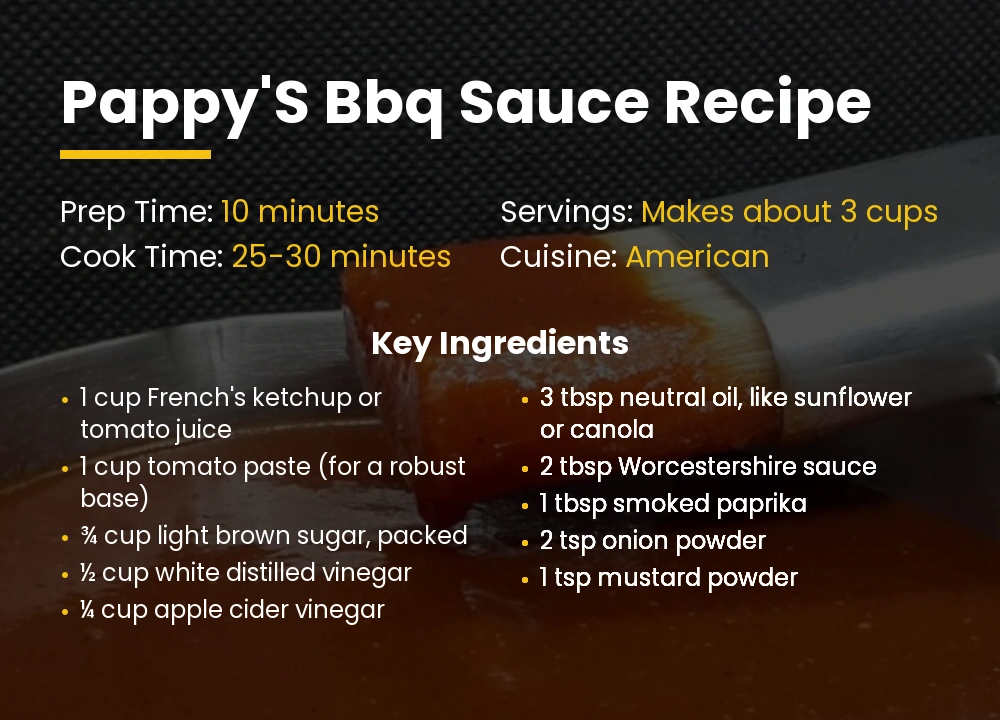
- Prep Time: 10 minutes
- Cook Time: 25-30 minutes
- Servings: Makes about 3 cups
- Course: Condiment
- Cuisine: American
- Diet: Vegan, Gluten-Free (check Worcestershire sauce label)
Ingredients
- 1 cup French’s ketchup or tomato juice
- 1 cup tomato paste (for a robust base)
- ¾ cup light brown sugar, packed
- ½ cup white distilled vinegar
- ¼ cup apple cider vinegar
- 3 tbsp neutral oil, like sunflower or canola
- 2 tbsp Worcestershire sauce
- 1 tbsp smoked paprika
- 2 tsp onion powder
- 1 tsp mustard powder
- 1 tsp fine sea salt
- ½ tsp freshly ground black pepper
- ¼ tsp cayenne pepper (optional)
- ½ cup water, as needed for consistency
Instructions
- Add the neutral oil to a medium saucepan over medium-low heat. Stir in the smoked paprika, onion powder, mustard powder, black pepper, and cayenne. Heating the spices in the oil for about 60 seconds will bloom their flavors and remove any raw taste. You should smell a warm, aromatic fragrance.
- Immediately pour in the white distilled vinegar and apple cider vinegar to stop the cooking of the spices. Use a whisk to scrape any bits from the bottom of the pan. This deglazing step captures all the flavor.
- Whisk in the ketchup (or tomato juice), tomato paste, brown sugar, Worcestershire sauce, and salt until the mixture is completely smooth and uniform in color. The sauce will be very thick at this stage.
- Bring the mixture to a gentle simmer, then reduce the heat to low. Let it cook uncovered for 20-25 minutes, stirring occasionally to prevent sticking. The sauce will darken slightly and the flavors will meld together.
- Check the thickness. For a sauce that coats the back of a spoon, it is ready. If you prefer a thinner consistency, like a Carolina vinegar sauce, whisk in a bit more water or tomato juice, one tablespoon at a time. Remove from heat and let it cool completely before using or bottling.
Nutrition
- Calories: 60 kcal
- Protein: 1 g
- Fat: 2 g
- Carbohydrates: 11 g
- Sugar: 9 g
- Fiber: 1 g
- Sodium: 320 mg
- Cholesterol: 0 mg
Cooking Method
The primary method here is a stovetop simmer. This gentle, moist-heat cooking allows the sugars to dissolve and caramelize slightly while the acids from the vinegars mellow. Unlike a grill-based sauce, this method gives you complete control over the temperature, preventing the sugars from burning and creating a bitter flavor.
Building on this, the initial step of blooming spices in fat is a technique borrowed from global cuisines. It fully unlocks the essential oils in paprika and mustard powder, distributing their flavor evenly throughout the entire batch of sauce.
Tools Needed
- A medium-sized, heavy-bottomed saucepan (prevents hot spots and burning)
- A sturdy whisk for smoothing the tomato paste
- A flexible silicone spatula for scraping
- Measuring cups and spoons
- A fine-mesh sieve, if a perfectly smooth texture is desired (an optional step for straining after cooking)
- Glass jars or bottles for storage
The Foundation of Flavor
Understanding each ingredient’s purpose empowers you to make intelligent substitutions and troubleshoot your results. Every component in this sauce was selected to contribute to a specific aspect of the final flavor profile: sweet, tangy, smoky, and savory.
Tomato Base and Sweetness
The combination of ketchup and tomato paste creates a rich, concentrated umami backbone. French’s ketchup is often specified for its balanced sweetness and tang, but using plain tomato juice instead offers a cleaner, less processed starting point where you control all the sugar.
Consequently, the primary sweetener is light brown sugar, which contains molasses. This delivers the same molasses flavor and complexity that some note is missing from modern commercial sauces. The molasses in brown sugar adds a deeper, more caramel-like sweetness compared to plain white sugar.
Tang and Acidity
The sharp, clean punch of white distilled vinegar is essential for cut-through and preservation. Apple cider vinegar introduces a fruity, slightly softer acidity. Together, they create a layered tang that is bright but not harsh.
This balance is what separates a flat sauce from a vibrant one. Worcestershire sauce further deepens this complexity with its fermented anchovy and tamarind notes, contributing a savory depth often labeled as “umami” without the need for additives like MSG.
Spices and Aromatics
Smoked paprika is the non-negotiable star here, providing the characteristic “low and slow” barbecue aroma without requiring a smoker. Using a high-quality smoked paprika makes a significant difference in the final taste.
Onion powder and mustard powder dissolve seamlessly into the sauce, offering a rounded savory foundation and a subtle sharpness that complements the vinegar. Black pepper and a hint of cayenne provide a gentle warmth that builds with each bite.
Fat and Texture
A small amount of neutral oil serves multiple critical functions. It carries the fat-soluble flavor compounds from the spices during the bloom, ensuring they permeate the sauce. Furthermore, it helps emulsify the ingredients, leading to a smoother, glossier texture that clings to food rather than sliding off.
For those strictly avoiding added fats, this ingredient can be omitted, but you should gently dry-toast the spices in the dry pan for 30 seconds before adding the vinegar to still awaken their flavors.
Perfecting Your Sauce
With the basics mastered, you can focus on refining the texture and adapting the flavor to your specific meal. This is where your personal preference takes center stage.
Controlling Thickness
Sauce thickness is a matter of liquid content and simmering time. The recipe as written produces a classic, clingy barbecue sauce. For a thinner, more basting-friendly sauce or one reminiscent of a Carolina vinegar style, add more water, tomato juice, or even additional apple cider vinegar after cooking.
If your sauce becomes too thin, simply return it to a low simmer to reduce and concentrate it further. Remember that the sauce will always thicken slightly as it cools to room temperature.
Variations and Adaptations
This recipe is a perfect template for creating your own signature sauces. For a Spicy Pappy BBQ Sauce, increase the cayenne pepper to one teaspoon or add a finely minced chipotle pepper in adobo sauce. To make a Honey BBQ Sauce, replace half of the brown sugar with an equal measure of pure honey, adding it at the end of simmering to preserve its floral notes.
You could even create a selection of four delicious BBQ sauces from one base. Divide the finished sauce into batches and stir in different mix-ins: extra molasses for a “Sweet Baby Jane” style, more vinegar for a Carolina twist, or liquid smoke and extra heat for a “HooDoo” inspired version.
Storage and Usage
Proper storage preserves your effort, and knowing how to apply the sauce maximizes its impact on your food. Always let the sauce cool completely before transferring it to storage containers to prevent condensation, which can reduce shelf life.
Bottling and Shelf Life
Pour the cooled sauce into clean glass jars or bottles, leaving about a half-inch of headspace. Stored in the refrigerator, this homemade sauce will keep for up to three weeks due to its vinegar and sugar content, which are natural preservatives. For longer storage, you can process jars in a water bath canner.
The flavor often improves after a day or two in the refrigerator, as the ingredients continue to marry. Always use a clean spoon to withdraw sauce to avoid introducing bacteria that could spoil the entire batch.
How to Use Your Sauce
This sauce is incredibly versatile. Use it as a finishing glaze during the last 5-10 minutes of grilling or smoking ribs, chicken, or salmon. Brushing it on too early can cause burning due to the sugar content. You can also gently warm it and serve it on the side for dipping, a practice that emphasizes the “SAUCE ON THE SIDE. NOTHING TO HIDE” philosophy of some classic barbecue joints.
It also works wonderfully as a marinade component or stirred into baked beans and braises. For a quick meal, try it as a base for Pappy Honey BBQ Chicken by thinning a quarter cup with a tablespoon of honey and brushing it over chicken pieces before baking.
Nutritional and Dietary Perspective
As a dietician, I view condiments as an opportunity to add flavor without excessive sodium or artificial additives. This homemade version puts you in control of those elements. The sugars are present for flavor balance and caramelization, but you can adjust them to your preference.
By using natural ingredients and no MSG, you avoid the flavor enhancers and stabilizers common in many bottled products. The fiber from the tomato paste and the spices, particularly paprika which contains antioxidants and capsaicin, offer more than just empty calories.
For specific dietary needs, ensure your Worcestershire sauce is gluten-free and anchovy-free if necessary. The recipe is inherently vegan and can be made without oil. The sodium level can be moderated by using a low-sodium ketchup or tomato paste and adjusting the added salt to taste.
Historical and Cultural Context
While “Pappy’s” evokes a specific tradition, this style of sauce sits firmly within the broader American barbecue narrative. It is a thick, tomato-based sauce, which has roots in the Kansas City tradition—a style known for being sweet, tangy, and smoky.
The use of multiple vinegars hints at influences from the Piedmont region of North Carolina, known for its “Lexington Dip” or “Western Carolina” sauce that often includes ketchup. This recipe represents a kind of culinary crossroads, blending these regional preferences into a balanced, all-purpose condiment.
Family recipes like these, often 80 years old or more, were typically developed to make the most of available pantry staples—ketchup, vinegar, sugar, and spices—to enhance and preserve smoked meats. Crafting your own version continues that tradition of local pride and personal touch in every bottle.
Frequently Asked Questions
Can I use all white vinegar instead of mixing with apple cider vinegar?
Yes, you can use all white distilled vinegar, but the flavor will be sharper and less complex. The apple cider vinegar adds a fruity note that softens the overall acidity and is a hallmark of the sauce’s balanced tang.
Why did my sauce turn out too sweet or too tangy?
Imbalances often come from ingredient measurements or simmering time. If it’s too sweet, add more vinegar one teaspoon at a time. If it’s too tangy, a small amount of additional brown sugar or a teaspoon of molasses will help round it out. Always simmer for at least 20 minutes to allow these flavors to integrate fully.
How can I make my sauce perfectly smooth?
For a restaurant-smooth texture, use an immersion blender in the pot after cooking, or pour the cooled sauce through a fine-mesh sieve, pressing it through with a spatula. This optional step will remove any tiny bits of tomato skin or spice.
Is this sauce suitable for canning for long-term storage?
Yes, due to its high acidity from vinegar and tomatoes, this sauce can be safely processed in a water bath canner. Pour the hot sauce into sterilized jars, leaving ½-inch headspace, and process for 15 minutes for half-pint jars. Always follow validated canning guidelines for safety.
What is a good substitute for Worcestershire sauce for a vegetarian version?
Use an equal amount of coconut aminos or a vegan Worcestershire sauce. You could also use a combination of soy sauce (or tamari) and a splash of lemon juice to replicate the salty, savory, and tangy notes.
My sauce tastes bland. What happened?
Blandness usually indicates underseasoning or undercooked spices. Ensure you adequately bloomed the spices in the oil at the beginning and used the full simmering time. The flavors develop and concentrate as the sauce cooks and cools. Always season to taste at the end with a pinch more salt if needed.
Can I use this as a marinade for beef and pork ribs?
You can use it as a marinade component, but I recommend mixing it with an equal part of water or broth to thin it, as the sugar content can cause the exterior to burn over direct high heat. For ribs, it is most effective as a glaze applied during the last stage of low and slow cooking.