
I spent years trying to find that specific sauce. You know the one. It comes in a little cup on the side of a perfectly grilled chicken plate, sitting next to a mountain of fresh veggie slaw and brown rice. For me, it was always from a specific restaurant in the Pacific Northwest.
The memory of that flavor stuck with me long after I moved away. It was a sauce with a personality: creamy yet sharp, rich but with a bright tang, and a gentle heat that built with each bite. My search for a reliable formula led me down many paths, from online forums to my own kitchen experiments. Today, I’m sharing the result of that process.
This is more than a list of ingredients. It is a breakdown of a modern classic. We will examine its components from a nutritional and historical perspective, ensuring you can recreate not just the taste, but understand the harmony behind it.
Understanding Osaka Sauce
Before we measure a single ingredient, context is important. The term “Osaka Sauce” as we discuss it here is not a traditional Japanese condiment you would find in that vibrant city. Its roots appear to be firmly planted in American restaurant culture, specifically linked to a beloved establishment called Noodle Express.
Many people, myself included, first encountered this sauce in Spokane, Washington. The dish often called Chicken Osaka became a signature item. The sauce itself is a masterful emulsion, a blend of Western and Asian pantry staples creating something entirely new.
It sits in the family of creamy, mayonnaise-based sauces but distinguishes itself with pronounced notes of ginger, the umami of soy, and the clean acidity of citrus and vinegar. This balance is what makes it so versatile and memorable.
Core Flavor Profile and Components
The character of this condiment is built on three pillars. First, a rich and fatty base provides body and carries other flavors. Second, a potent acidic element cuts through that richness. Third, aromatic and savory ingredients add complexity and depth.
Mayonnaise forms the essential base. Its stable emulsion of oil and egg yolk creates a smooth, clingy texture perfect for coating grilled chicken or blending into a slaw. The acidity primarily comes from fresh lemon juice and rice vinegar. Freshness here is non-negotiable for the brightest flavor.
Aromatics like finely minced ginger and garlic provide a pungent, warming foundation. Soy sauce introduces salt and umami, while a touch of toasted sesame oil contributes a nutty fragrance. The gentle heat typically comes from Sriracha or a similar chili sauce, allowing you to control the spice level.
Why This Combination Works
From a culinary science perspective, each element has a job. The fat in the mayo coats the tongue, allowing flavors to be perceived slowly and lasting longer. The acids in the lemon and vinegar act as flavor enhancers, brightening the ginger and garlic while balancing the fat.
The ginger contains compounds like gingerol, which provide a sharp, slightly peppery warmth that is distinct from capsaicin heat. Soy sauce’s glutamates synergize with the savory notes in the dish it accompanies. This creates a sauce that is both a standalone star and a team player.
How to Make Osaka Sauce Recipe
This is the core method I developed after testing many variations. The process is straightforward, but the quality of your ingredients will directly influence the final result. I recommend using full-fat mayonnaise for the proper texture and mouthfeel.
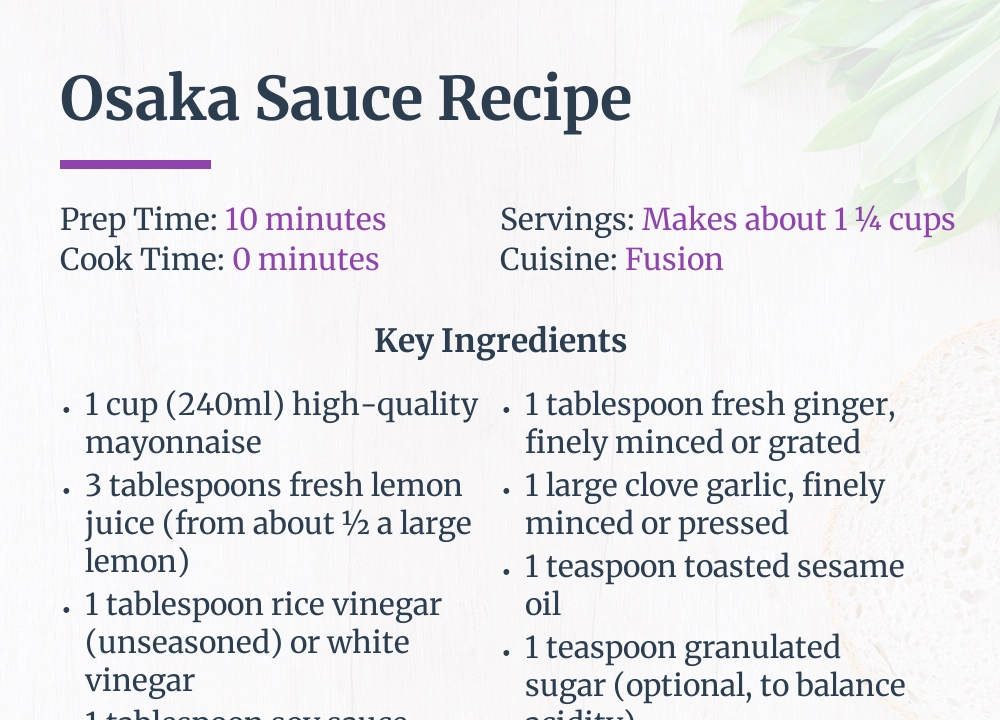
Recipe Details
- Prep Time: 10 minutes
- Cook Time: 0 minutes
- Servings: Makes about 1 ¼ cups
- Course: Condiment, Sauce
- Cuisine: Fusion
- Diet: Vegetarian
Ingredients
- 1 cup (240ml) high-quality mayonnaise
- 3 tablespoons fresh lemon juice (from about ½ a large lemon)
- 1 tablespoon rice vinegar (unseasoned) or white vinegar
- 1 tablespoon soy sauce (regular or low-sodium)
- 2 teaspoons Sriracha sauce, or to taste
- 1 tablespoon fresh ginger, finely minced or grated
- 1 large clove garlic, finely minced or pressed
- 1 teaspoon toasted sesame oil
- 1 teaspoon granulated sugar (optional, to balance acidity)
Instructions
- Prepare your aromatics. Finely mince the fresh ginger and garlic. The finer the mince, the smoother your final sauce will be and the more their flavors will disperse evenly.
- Juice your lemon. Measure out three tablespoons of the fresh juice. Using bottled lemon juice will result in a flatter, less vibrant taste.
- In a medium mixing bowl, combine the mayonnaise, fresh lemon juice, and rice vinegar. Whisk these together until the mixture is smooth and uniform.
- Add the soy sauce, Sriracha, minced ginger, minced garlic, toasted sesame oil, and sugar (if using) to the bowl.
- Whisk vigorously until all ingredients are fully incorporated and the sauce is creamy with no separate streaks. The color will be a light, creamy orange or peach hue.
- For the best flavor, transfer the sauce to an airtight container and refrigerate for at least 30 minutes before using. This resting time allows the flavors to meld and harmonize.
Nutrition
- Calories: 100 kcal (per 2-tbsp serving)
- Protein: 0.5 g
- Fat: 11 g
- Carbohydrates: 1 g
- Sugar: 0.5 g
- Fiber: 0 g
- Sodium: 180 mg
- Cholesterol: 5 mg
Please note: This is an approximate nutritional breakdown for the sauce alone. Values can vary based on specific brand choices, especially for mayonnaise and soy sauce.
Cooking Method
This is a no-cook, emulsified sauce. The primary technique is thorough whisking to create a stable, homogenous mixture. No heat is applied at any stage, which preserves the fresh, raw qualities of the ginger, garlic, and lemon juice.
Tools Needed
- Sharp chef’s knife and cutting board
- Citrus juicer or reamer
- Microplane grater (optional, for ginger)
- Garlic press (optional)
- Medium mixing bowl
- Whisk
- Measuring spoons and cups
- Airtight container for storage
Ingredient Deep Dive and Substitutions
Choosing your components with intention transforms a good sauce into an exceptional one. Let’s examine each key player and its potential substitutes for dietary needs or pantry limitations.
Mayonnaise: The Foundation
Standard, full-fat mayonnaise made with soybean oil is the traditional base. Its neutral flavor allows other ingredients to shine. For a richer taste, you might try an avocado oil-based mayo. If you need a vegan version, many plant-based mayonnaises made from sunflower oil or aquafaba work well, though the texture might be slightly thinner.
Using low-fat or fat-free mayonnaise is not advised. These products often contain added starches, gums, and water, which can lead to a runny sauce and an artificial flavor that clashes with the fresh aromatics.
Acids: Lemon Juice and Vinegar
Fresh lemon juice is irreplaceable. It provides a volatile, bright top note that bottled juice, which is often pasteurized and lacks complexity, cannot match. The rice vinegar contributes a milder, sweeter acidity. White vinegar can be used in a pinch, but it has a sharper, more aggressive sourness.
For a different profile, you could experiment with half fresh lime juice and half rice vinegar. Apple cider vinegar is another possible substitute, though it will introduce a fruity, tangy note that deviates from the original profile.
Aromatics: Ginger and Garlic
Fresh ginger root is essential. Powdered ginger will not provide the same pungent, floral heat and will make the sauce gritty. Look for firm, smooth pieces of ginger. A microplane grater is the best tool to achieve a fine pulp that integrates seamlessly.
Fresh garlic is equally important. Garlic powder lacks the enzymatic bite and complexity. If you must use it, start with a quarter teaspoon and adjust. The toasted sesame oil is used sparingly as a flavor accent, not a cooking oil. Its potent nuttiness is key.
Building Heat and Salt
Sriracha is the standard for its garlicky, moderately spicy flavor. Sambal oelek is a good alternative if you prefer a purer chili paste without the added sugar and garlic. For a smokier heat, a few drops of chipotle in adobo sauce could be interesting.
Soy sauce provides the salty, umami backbone. For a gluten-free version, use tamari. Coconut aminos are a sweeter, less salty alternative, but you may need to adjust the quantity and potentially add a pinch of salt.
Serving Ideas and Complete Meal Construction
This sauce’s true purpose is to elevate a meal. While famously paired with grilled chicken, its utility extends far beyond that single application. Thinking of the complete Noodle Express plate provides the perfect blueprint.
The Classic Chicken Osaka Plate
To recreate the full experience, you need three components: a protein, a complex carbohydrate, a fresh vegetable element, and of course, the sauce. Grill or pan-sear chicken breasts or thighs, seasoned simply with salt and pepper. Slice the cooked chicken thinly against the grain.
Prepare a batch of brown rice. Its nutty flavor and firm texture stand up better to the robust sauce than white rice. The final, crucial element is a fresh cabbage mix, often called a veggie slaw.
Creating the Perfect Veggie Slaw
The slaw is not a standard mayonnaise-heavy coleslaw. It is a light, crisp, shredded vegetable blend that acts as a cooling counterpoint. Thinly shred green cabbage, red cabbage, and carrots. Some versions include very thin slices of bell pepper or onion.
The key is to keep it undressed until serving. Its purpose is to provide a clean, crunchy texture. You can place a mound of it directly on the plate next to the rice and chicken, or you can drizzle a small amount of the Osaka sauce over it just before eating to lightly dress it.
Modern Applications and Variations
Consider this sauce a versatile condiment for your refrigerator. Use it as a dip for spring rolls or tempura vegetables. It makes an excellent spread for a wrap filled with sliced chicken or tofu and the same fresh slaw.
Thin it out with a little extra lemon juice or vinegar to make a vibrant dressing for a sturdy grain bowl with quinoa, edamame, and cucumbers. It can even serve as a unique topping for a grilled fish like salmon or halibut.
Nutritional Analysis from a Dietary Perspective
As a condiment, this sauce is meant to be used in moderation to add significant flavor. A typical serving for a meal might be two to three tablespoons. The primary nutritional consideration is its fat and sodium content, which comes from the mayonnaise and soy sauce.
The fats are primarily unsaturated from the vegetable oils in the mayo. While these are generally considered better than saturated fats, it is still a calorie-dense ingredient. The fresh ginger and garlic contribute minimal calories but offer beneficial compounds like gingerol and allicin, which have been studied for their anti-inflammatory properties.
To create a lighter version, you can use a reduced-fat mayonnaise, but be mindful of the texture trade-off. Using low-sodium soy sauce is an effective way to cut down on salt without compromising the umami flavor significantly. The sauce contains negligible amounts of fiber or protein.
Make-Ahead Option and Storage
This sauce is an ideal candidate for preparation in advance. In fact, its flavor improves after a rest in the refrigerator, as the harsh edges of the raw garlic and ginger mellow slightly while still remaining present. Store it in a sealed container for up to five days.
I do not recommend freezing it. Mayonnaise-based emulsions can break and become grainy when frozen and thawed. The fresh ingredients like lemon juice and garlic also lose their vibrant qualities after freezing. For best results, prepare it fresh weekly.
Cultural and Culinary Context
It is fascinating to trace the journey of a dish like this. While it carries the name of a major Japanese city, the combination is a fusion creation likely born in an American kitchen. This is not inauthentic; it is an evolution, a testament to how food cultures adapt and inspire new forms.
You can see threads of different traditions. The use of mayonnaise as a base has parallels to Japanese dishes like “omu rice” or various “mayo” toppings. The ginger and soy are quintessential Japanese flavors. The presentation as a sauce for grilled protein with rice and shredded cabbage fits a broad, health-conscious Western dining style.
This synthesis created something that resonated deeply with people in a specific region, enough that years later, they search for the recipe online to recapture a taste of home. That is the power of a well-crafted sauce.
Frequently Asked Questions
Can I make this sauce without mayonnaise?
Creating a similar profile without mayo is challenging, as it provides the essential creamy base. For a dairy-free but still creamy alternative, you could try blending soaked cashews with water, lemon juice, and the other seasonings until completely smooth. The flavor will be different but nutty and rich.
My sauce turned out too thin. How can I thicken it?
The most likely cause is using a low-fat or vegan mayonnaise with a higher water content. To salvage it, you can slowly whisk in additional regular mayonnaise until the desired consistency is reached. Alternatively, let it rest in the refrigerator for an hour; chilling often firms it up slightly.
How long can I store homemade Osaka sauce?
When stored in a clean, airtight container in the refrigerator, your sauce will remain at its best quality for up to five days. The fresh garlic and ginger mean it is not suitable for long-term storage beyond a week. Always check for any off smells or signs of separation before using.
Is there a way to make this sauce less spicy?
Absolutely. The heat is controlled by the Sriracha. Simply omit it entirely or start with half a teaspoon, whisk it in, and taste. You can add more incrementally until it meets your preference. The sauce will still be flavorful from the ginger, garlic, and soy.
What can I use instead of fresh ginger?
I strongly advise against substituting dried ground ginger for fresh. The flavors are vastly different. If you absolutely cannot find fresh ginger, look for ginger paste sold in tubes in the produce section. This is a better alternative, though the taste will still be less bright.
Can I use this as a marinade for chicken?
I do not recommend it. The mayonnaise and fresh lemon juice would not behave well over extended marinating time. The acid can begin to “cook” the surface of the chicken in an unappealing way. It is best used as a finishing sauce or drizzle after the chicken is cooked.
What is the difference between this and Yum Yum Sauce?
They are cousins in the family of creamy, tangy sauces. Yum Yum Sauce, often served at Japanese steakhouses, typically includes tomato paste or ketchup, paprika, and melted butter, giving it a sweeter, richer, and pinkish color. Our sauce is defined by the sharpness of fresh ginger and the clean hit of lemon.
My sauce tastes too sharp or acidic. How do I fix it?
A bit of sweetness can balance pronounced acidity. Whisk in an additional quarter to half teaspoon of granulated sugar. You can also add a tiny bit more mayonnaise to mellow the overall flavor. Next time, you may want to reduce the lemon juice by half a tablespoon.