
You have likely ordered the creamy mushroom sauce at Olive Garden, perhaps with fettuccine or spooned over chicken. The flavor is distinct, a savory blend that is more than just Alfredo with mushrooms added. I spent years trying to replicate it, testing batches against my memories of the restaurant version.
My final attempt, after consulting culinary texts on Italian-American sauces and adjusting ratios, produced a result that silenced my family’s dinner table. This is that method, broken down with the precision of a dietician and the curiosity of a food historian.
What Is Olive Garden’s Creamy Mushroom Sauce?
This sauce is a cornerstone of the restaurant’s menu, often paired with pasta or as a base for chicken dishes. It is not a traditional Alfredo, which is typically just butter, Parmesan, and pasta water. The Olive Garden version incorporates a roux, dairy, and a specific technique for the mushrooms to create a balanced, velvety texture.
From a culinary history perspective, it is a classic example of Italian-American “cream sauce,” a category that evolved in the United States using local dairy products. Understanding this helps us build the sauce correctly, respecting its origins while mastering its execution.
The Great Sauce Debate: Alfredo or Something New?
Many online discussions ask if this is just Alfredo sauce with mushrooms. The answer is no, it is a completely different recipe. A traditional Alfredo lacks a roux and uses heavy cream sparingly, if at all, relying on emulsification.
The Olive Garden creamy mushroom sauce uses a flour-and-butter roux as a thickener, which gives it a stable, cohesive body that clings to pasta without becoming greasy or separating. This fundamental difference in technique is what we will replicate.
How to Make olive garden creamy mushroom Sauce recipe
This section provides the complete, tested formula. Follow these steps in order for a sauce that mirrors the restaurant’s profile.
Recipe Details
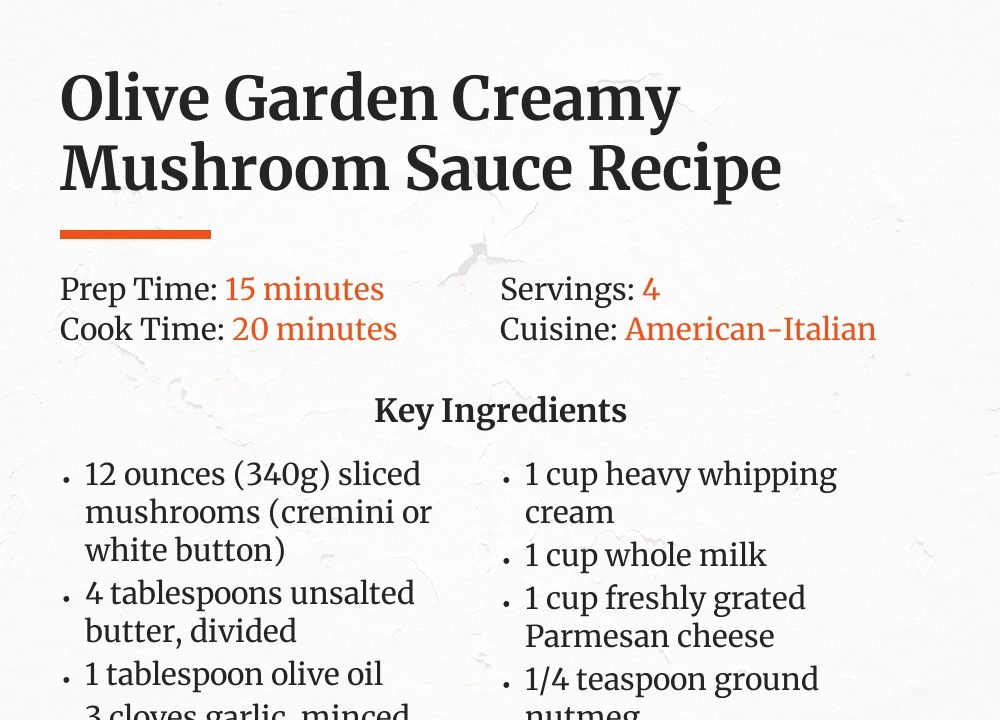
- Prep Time: 15 minutes
- Cook Time: 20 minutes
- Servings: 4
- Course: Main Course
- Cuisine: American-Italian
- Diet: Vegetarian
Ingredients
- 12 ounces (340g) sliced mushrooms (cremini or white button)
- 4 tablespoons unsalted butter, divided
- 1 tablespoon olive oil
- 3 cloves garlic, minced
- 2 tablespoons all-purpose flour
- 1 cup heavy whipping cream
- 1 cup whole milk
- 1 cup freshly grated Parmesan cheese
- 1/4 teaspoon ground nutmeg
- Salt and freshly ground black pepper to taste
- 2 tablespoons fresh parsley, chopped
- 2-3 tablespoons water (if needed for consistency)
Instructions
- Prepare your mushrooms by wiping them clean with a damp cloth and slicing them uniformly, about 1/4-inch thick.
- In a large saute pan or skillet, heat 2 tablespoons of butter and the olive oil over medium-high heat. Once the butter foams, add the sliced mushrooms in a single layer. Do not crowd the pan; cook in batches if necessary. Saute for 6-8 minutes until they release their water, it evaporates, and the mushrooms turn a deep golden brown. Transfer to a plate.
- Reduce the heat to medium. Add the remaining 2 tablespoons of butter to the same pan. Once melted, add the minced garlic and cook for 30 seconds until fragrant.
- Sprinkle the flour over the butter and garlic. Cook, stirring constantly with a whisk, for about 90 seconds. This cooks the raw flour taste and forms your roux.
- Slowly pour in the heavy cream while whisking vigorously to prevent lumps. Then whisk in the milk until the mixture is smooth.
- Bring the sauce to a gentle simmer, stirring frequently. Let it cook for 3-4 minutes until it thickens enough to coat the back of a spoon.
- Reduce the heat to low. Stir in the grated Parmesan cheese and ground nutmeg until the cheese is fully melted and incorporated.
- Return the browned mushrooms to the pan. Stir to combine and heat through for 1-2 minutes. If the sauce is thicker than you prefer, thin it with 2-3 tbsp water, one tablespoon at a time.
- Season with salt and a generous amount of black pepper. Finish by stirring in the fresh parsley.
Nutrition
- Calories: 761 Kcal
- Protein: 22 g
- Fat: 66 g
- Carbohydrates: 18 g
- Sugar: 8 g
- Fiber: 2 g
- Sodium: 650 mg
- Cholesterol: 195 mg
These values are per serving and are estimates. Using reduced-fat dairy will significantly alter the texture and flavor.
Cooking Method
The primary method here is pan-sauteing followed by sauce building via a roux. The critical step is the Maillard reaction on the mushrooms. Boiling them will make them rubbery and watery. We want high, dry heat to concentrate their flavor, which is essential for the sauce’s depth.
Tools Needed
- A large skillet or saute pan (stainless steel or non-stick)
- Wooden spoon or silicone spatula
- Whisk
- Microplane or box grater for the cheese
- Measuring cups and spoons
Ingredient Deep Dive: Building Flavor with Purpose
Each component has a specific role. Changing one can alter the final product significantly.
Mushrooms: The Heart of the Sauce
The type of mushroom matters. White button mushrooms offer a mild flavor. Cremini (baby bellas) provide a deeper, earthier note closer to the restaurant’s profile. I recommend cremini.
Slicing is preferable to chopping. It provides a better mouthfeel and more surface area for browning. Avoid pre-sliced mushrooms if possible; they are often treated and can become slimy.
The Dairy Trio: Butter, Cream, and Milk
Butter is used in two stages: first for sauteing, then for the roux. Its milk solids contribute to the nutty, rich base flavor. Do not substitute with margarine.
The combination of heavy cream and whole milk creates the ideal richness and fluidity. Using only cream makes it overly heavy. Using only milk makes it too thin. This 1:1 ratio is the key to that “fairly thin sauce” that still coats pasta luxuriously.
Parmesan Cheese: Not Just a Garnish
Use a block of Parmigiano-Reggiano or Grana Padano and grate it yourself. Pre-grated cheese contains anti-caking agents like cellulose, which prevent it from melting smoothly into a silky sauce. The cheese adds umami and saltiness, so adjust your added salt accordingly.
Choosing the Right Pasta
This sauce works with any pasta, but some shapes are superior. The sauce is fluid enough to seep into tubes and coat intricate shapes.
- Fettuccine or Linguine: The classic choice. The broad, flat noodles hold the sauce well.
- Rigatoni or Penne: The tubular shapes catch pieces of mushroom in their cavities.
- Angel Hair: Cooks very quickly and offers a delicate texture, but can become overwhelmed if the sauce is too thick.
- For a Baked Application: This sauce is excellent for giant stuffed shells or as a base for a pasta bake.
Always cook your pasta in well-salted water and drain it just before it is al dente. You can finish cooking it for the last minute in the sauce with a splash of pasta water, which helps the sauce adhere.
Nutritional Perspective and Adaptations
As a dietician, I analyze the nutritional profile to offer informed adaptations. The standard recipe is energy-dense, primarily from fats. This is not inherently negative, as fats aid in the absorption of fat-soluble vitamins and provide satiety.
Understanding the Caloric Density
The 761 Kcal per serving includes energy from the pasta. The sauce itself is rich. If you are managing energy intake, consider these adjustments without sacrificing texture.
- Use half heavy cream and half 2% milk for a lighter version. The sauce will be slightly less unctuous but still creamy.
- Increase the mushroom-to-sauce ratio. Mushrooms are low in energy and high in fiber, adding volume and nutrition.
- Add a lean protein like grilled chicken breast or shrimp to create a more balanced meal, turning a side into an entree.
Dietary Modifications
For a gluten-free version, use a 1:1 gluten-free flour blend in the roux and pair with gluten-free pasta. For a vegetarian version, ensure your Parmesan cheese is made without animal rennet (many brands specify this).
Storing, Reheating, and Freezing
This sauce stores well, but proper technique prevents separation.
Let the sauce cool completely before transferring it to an airtight container. It will keep in the refrigerator for up to 4 days. When reheating, do so gently over low heat, stirring often. Add a small splash of milk or water to loosen it if it has thickened.
You can freeze the sauce for up to 2 months. Thaw overnight in the refrigerator before reheating. Note that the texture may change slightly upon thawing; a vigorous whisk during reheating will help re-emulsify it.
Common Pitfalls and How to Avoid Them
- Sauce is too thin: You likely did not simmer it long enough after adding the dairy. Let it reduce further, or create a small additional roux in a separate pan and whisk it in.
- Sauce is too thick: This is an easy fix. Thin it with a bit of water, milk, or reserved pasta water until you reach the desired consistency.
- Sauce is grainy or separated: The heat was likely too high when adding the cheese, causing the proteins to tighten. Always add cheese off the heat or on very low heat. A grainy sauce can sometimes be saved by blending it with an immersion blender.
- Mushrooms are watery: You did not cook them long enough. Cook until all the released liquid has evaporated and the mushrooms begin to sizzle in the fat again.
Frequently Asked Questions
What kind of mushrooms does Olive Garden use?
Olive Garden typically uses common white button mushrooms or a blend that includes them. For a deeper, more robust flavor at home, cremini mushrooms are an excellent choice and are widely available.
Can I make this sauce ahead of time?
Yes. Prepare the sauce fully, let it cool, and store it in the refrigerator for up to 4 days. Reheat gently on the stove, adding a little liquid to refresh the consistency.
My sauce is too thin. How can I thicken it?
Create a slurry by mixing 1 tablespoon of softened butter with 1 tablespoon of flour. Whisk this paste into the simmering sauce and cook for 2-3 minutes. Alternatively, let the sauce simmer uncovered for a few extra minutes to reduce.
Can I use half-and-half instead of heavy cream?
You can, but the sauce will be noticeably less rich and may have a slightly thinner body. The fat in heavy cream is essential for the luxurious mouthfeel of the original.
Is this sauce suitable for freezing?
It freezes reasonably well for up to two months. Thaw in the refrigerator overnight. Be prepared to whisk it vigorously while reheating to recombine any separated fats.
What can I substitute for Parmesan cheese?
For a similar salty, umami punch, Pecorino Romano is a good substitute, though it is sharper. A high-quality Asiago could also work. Avoid pre-grated “cheese products” in canisters.
How can I add more protein to this dish?
Grilled or pan-seared chicken breast, sauteed shrimp, or even cannellini beans are excellent additions. Cook the protein separately and add it to the finished sauce to warm through.
Why do you add nutmeg to a creamy sauce?
Nutmeg is a classic, subtle enhancer in cream-based sauces. It does not taste like nutmeg outright but adds a layer of warm complexity that balances the richness of the dairy. Use just a touch.