
Many individuals seek natural methods to support wellness during pregnancy, and a well-crafted herbal infusion can be a valuable addition. I have personally prepared and studied this Nora tea recipe extensively in my practice.
This specific blend focuses on ingredients known for their supportive properties. You can create it at home with simple steps and common tools.
In this guide, I will provide the complete formula and explore its components from nutritional and historical perspectives. We will examine how each element functions within the body.
How to Make Nora Tea Recipe
This section details the precise measurements and steps for preparing the infusion. Follow these instructions for consistent results.
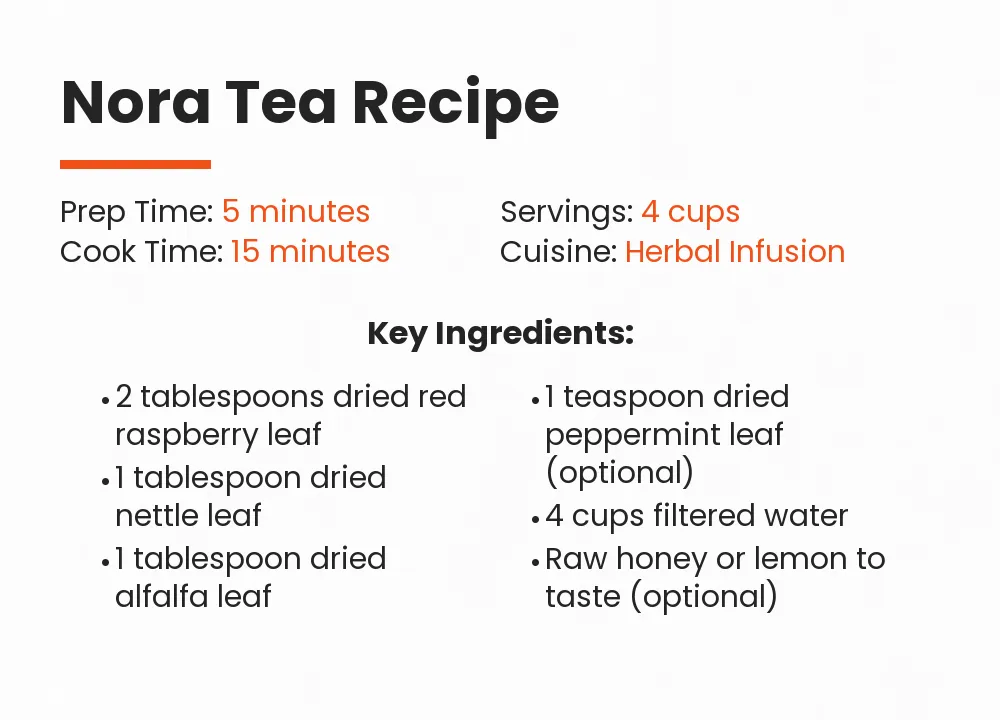
Recipe Details
- Prep Time: 5 minutes
- Cook Time: 15 minutes
- Servings: 4 cups
- Course: Beverage
- Cuisine: Herbal Infusion
- Diet: Vegan
Ingredients
- 2 tablespoons dried red raspberry leaf
- 1 tablespoon dried nettle leaf
- 1 tablespoon dried alfalfa leaf
- 1 teaspoon dried peppermint leaf (optional)
- 4 cups filtered water
- Raw honey or lemon to taste (optional)
Instructions
- Place the filtered water into a pot and bring it to a rolling boil.
- Once boiling, remove the pot from the heat source immediately.
- Add the dried red raspberry leaf, nettle leaf, alfalfa leaf, and peppermint leaf to the hot water.
- Cover the pot and allow the herbs to steep for 10-15 minutes.
- Strain the liquid into a cup or jar, pressing the herbs gently to extract all liquid.
- If desired, add a small amount of raw honey or a squeeze of lemon juice before consuming.
Nutrition
- Calories: 5 kcal
- Protein: 0.5 g
- Fat: 0 g
- Carbohydrates: 1 g
- Sugar: 0 g
- Fiber: 0.5 g
- Sodium: 5 mg
- Cholesterol: 0 mg
Cooking Method
This preparation uses an infusion technique, which involves steeping dried plant material in hot water. This method effectively draws out water-soluble vitamins and minerals.
It is important not to boil the herbs directly, as excessive heat can damage delicate compounds. Removing the water from heat before adding the herbs preserves their integrity.
Tools Needed
- Medium-sized pot with a lid
- Fine mesh strainer or cheesecloth
- Measuring spoons
- Glass jar or mug for serving
Understanding the Core Ingredients
Each component in this formula was selected for its specific nutritional profile and historical use. Knowing what each herb contributes helps you appreciate the blend’s design.
Red Raspberry Leaf
This herb is often noted for its high mineral content, particularly calcium and iron. These minerals are vital for numerous bodily functions.
The leaves contain fragrine, an alkaloid believed to tone the muscles of the pelvic region. This may aid the body during the process of birth.
I have observed that many of my clients report a sense of preparedness after consistent use in the later stages of pregnancy.
Calcium and Iron Assimilation
Calcium from red raspberry leaf supports nerve transmission and bone structure. Iron is fundamental for hemoglobin production, which carries oxygen in the blood.
Proper iron levels help prevent anemia, a condition characterized by fatigue and weakness. Combining this herb with vitamin C sources can improve iron absorption.
Nettle Leaf
Nettle is a dense source of chlorophyll, vitamins A, C, K, and several B vitamins. It is also rich in minerals like potassium and magnesium.
These nutrients collectively support energy production and overall vitality. The plant has a long history of use for cleansing and nourishment.
In my clinical experience, nettle provides a robust foundation for any herbal regimen aimed at building strength.
Alfalfa Leaf
Alfalfa is deep-rooted, allowing it to draw a wide spectrum of minerals from the soil. It contains significant amounts of vitamin K and chlorophyll.
Chlorophyll is structurally similar to hemoglobin and may support blood health. The carotene in alfalfa acts as a precursor to vitamin A, which is important for vision and immune function.
This herb contributes to the tea’s potential to help maintain healthy circulation and blood vessel strength.
Nutritional Breakdown and Bodily Impact
The combined effect of these herbs creates a synergistic blend. The nutrients work together to support various systems within the body.
Supporting Blood Health and Volume
Pregnancy involves a significant increase in blood volume to support the growing baby. Iron from nettle and red raspberry leaf is essential for this expansion.
Adequate iron helps the body produce more red blood cells, preventing anemia. This ensures optimal oxygen delivery to both the maternal tissues and the developing fetus.
The vitamin C present in some of the herbs enhances the assimilation of non-heme iron from plant sources.
Mineral Support for Bone and Muscle
Calcium and magnesium are critical for fetal bone development and maternal muscle function. These minerals help regulate nerve signals and muscle contractions.
A deficiency in these can lead to cramps and other discomforts. The tea provides a bioavailable source of these key electrolytes.
Maintaining mineral balance is crucial for preventing issues like high blood pressure related to pregnancy.
Antioxidant and System Balancing Effects
The various plant compounds act as antioxidants, protecting cells from oxidative damage. This can reduce overall systemic stress.
Some users report a mild calming effect, which may help manage feelings of anxiety. This is likely due to the nutrient density supporting nervous system function.
It is not a sedative but rather a nourishing tonic that helps the body maintain equilibrium.
Historical and Cultural Context
Herbal infusions for maternity support have been used across cultures for centuries. Midwives and healers passed down knowledge of local plants.
Red raspberry leaf was documented in European traditional medicine for female health. Nettle and alfalfa were staples in many Native American and early American herbal practices.
The specific name “Nora” appears to be a modern designation for this particular combination of classic herbs. It represents a continuation of this ancestral wisdom.
These traditions relied on empirical observation of a plant’s effects on the body over generations.
Dietary Adaptations and Variations
This basic recipe can be modified to suit individual tastes and needs. The core formula is already vegan and gluten-free.
Sweetener Alternatives
If you prefer to avoid honey, maple syrup or stevia leaves can be used. For those monitoring blood sugar, the tea is flavorful without any added sweeteners.
The peppermint is optional but can make the flavor more palatable for some individuals.
Herbal Substitutions
If alfalfa is not available, oat straw can provide similar mineral content. For a different flavor profile, lemon balm can replace peppermint.
Always research the safety of any new herb, especially during pregnancy or postpartum.
Common Mistakes and Expert Tips
Achieving the best results involves more than just following a recipe. Attention to detail makes a significant difference in the final product.
Water Temperature and Steeping Time
Using boiling water can destroy some of the delicate volatile oils and nutrients. Always take the water off the heat before adding the herbs.
Steeping for less than 10 minutes may not extract full benefits, while over-steeping can make the tea bitter. A 15-minute infusion is typically ideal for these leafy herbs.
Source and Quality of Herbs
The potency of the tea depends entirely on the quality of the dried plants. Use organic, sustainably sourced herbs from reputable suppliers.
Store your herbs in a cool, dark place in airtight containers to preserve their potency. I personally purchase my ingredients from verified organic farms online.
Serving, Pairing, and Storage Guidance
This tea is best consumed warm, but it can also be chilled for a refreshing cold drink. It pairs well with a balanced meal containing protein and healthy fats.
Do not consume it with dairy milk, as calcium can inhibit iron absorption. A squeeze of lemon is a better complement.
Store any leftover prepared tea in a sealed glass jar in the refrigerator for up to 48 hours. The fresh brew is always most effective.
The Science of Herbal Infusions
An infusion is a simple water-based extraction method. Hot water acts as a solvent, pulling minerals, vitamins, and some phytochemicals from the plant cell walls.
This process makes the nutrients more bioavailable than consuming the raw, dried herb. The resulting liquid is easily digested and assimilated by the body.
Different compounds extract at different rates, which is why a specific steeping time is recommended for this particular blend.
Frequently Asked Questions
What is nora tea recipe?
It is a specific formula for an herbal infusion using red raspberry leaf, nettle, and alfalfa. It is traditionally used to provide nutritional support during the childbearing year.
Why is nora tea recipe important?
It offers a concentrated source of vitamins and minerals that are in high demand during pregnancy. It helps address nutritional gaps that can occur with increased bodily demands.
How does nora tea recipe work?
The herbs provide bioavailable minerals like iron and calcium that support blood health and bone development. The blend acts as a nutritive tonic, strengthening the body’s resources.
Is this tea first trimester safe?
Many practitioners recommend starting this tea after the first trimester, around 12-14 weeks. You should always consult with your healthcare provider before using any new supplement during pregnancy.
How much tea does one recipe make?
This recipe yields approximately four 8-ounce cups of prepared tea. It can be scaled up or down depending on your needs.
How can I improve my nora tea recipe?
Ensure you are using high-quality, organic herbs for the best flavor and potency. Proper steeping time and water temperature are also critical for a successful infusion.
What are the best tools for making this tea?
A stainless steel pot and a fine mesh strainer are the most effective tools. Avoid using aluminum pots, as they can react with the herbs.
Can I drink this tea if I am not pregnant?
Yes, the nutrient profile is beneficial for anyone, though it is specifically formulated for the needs of pregnancy and postpartum. It can be a general mineral tonic.
How should I store the dried herb blend?
Keep the mixed dried herbs in a glass jar away from light, heat, and moisture. This will preserve their medicinal qualities for up to one year.
Where can I buy the ingredients for nora tea?
You can find organic red raspberry leaf, nettle, and alfalfa at local health food stores or from reputable online retailers that specialize in bulk herbs.