
The first time I tasted a sauce inspired by Myron Mixon’s methods, it was at a small-town barbecue festival. The balance of sweet, tangy, and smoke was unlike any store-bought bottle I had tried. It transformed a simple pork shoulder into something memorable.
This experience sent me on a path to understand the composition of a championship-level sauce. After testing numerous variations and consulting the principles behind Mixon’s creations, I developed a version you can make in your own kitchen.
This article provides the formula for a robust, hickory-kissed barbecue sauce in the style of the winningest man in barbecue. We will cover the recipe, the science behind the ingredients, and how to adapt it for any dietary need.
How to Make Myron Mixon BBQ Sauce Recipe
This recipe produces a versatile, tangy, and sweet sauce with a deep, smoky undertone. It works as a marinade, a cooking glaze, and a finishing sauce at the table. The process is straightforward, but the order of operations is important for flavor development.
Recipe Details
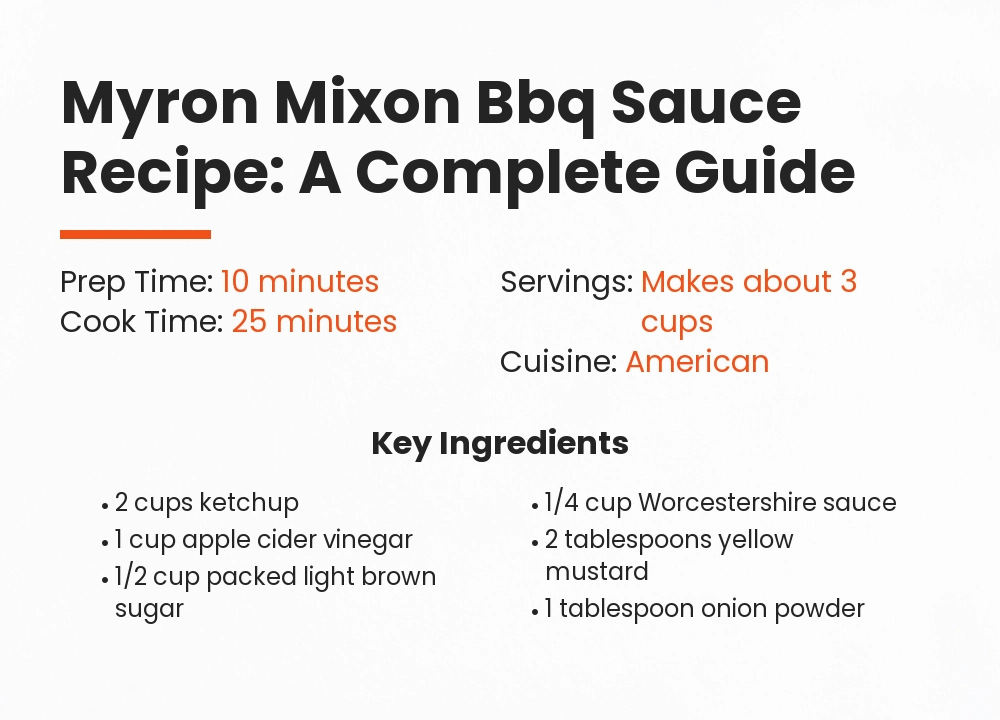
- Prep Time: 10 minutes
- Cook Time: 25 minutes
- Servings: Makes about 3 cups
- Course: Condiment, Sauce
- Cuisine: American
- Diet: Vegetarian
Ingredients
- 2 cups ketchup
- 1 cup apple cider vinegar
- 1/2 cup packed light brown sugar
- 1/2 cup honey
- 1/4 cup molasses
- 1/4 cup Worcestershire sauce
- 2 tablespoons yellow mustard
- 1 tablespoon onion powder
- 1 tablespoon garlic powder
- 2 teaspoons smoked paprika
- 1 teaspoon chipotle powder (adjust for heat)
- 1/2 teaspoon black pepper
- 1/4 teaspoon cayenne pepper (optional)
Instructions
- Combine all ingredients in a medium-sized, heavy-bottomed saucepan.
- Place the saucepan over medium heat and whisk until the mixture is smooth and the sugar has dissolved.
- Bring the sauce to a gentle simmer, then immediately reduce the heat to low. It is important to avoid a rolling boil.
- Allow the sauce to simmer gently for 20-25 minutes, stirring occasionally to prevent sticking at the bottom.
- As it cooks, the sauce will slowly thicken and the flavors will meld together. The finished consistency should coat the back of a spoon.
- Remove the saucepan from the heat and let the sauce cool to room temperature. It will continue to thicken as it cools.
- Once cooled, transfer the sauce to a clean glass jar or bottle. It can be used immediately or stored for later.
Nutrition
- Calories: 45 kcal
- Protein: 0.4 g
- Fat: 0.1 g
- Carbohydrates: 11 g
- Sugar: 10 g
- Fiber: 0.1 g
- Sodium: 210 mg
- Cholesterol: 0 mg
Values are per 2-tablespoon serving and are estimates. Actual numbers can vary based on specific ingredient brands.
Cooking Method
The primary method for this sauce is a stovetop simmer. This gentle cooking process is essential. It allows the vinegar’s sharpness to mellow and the sugars to caramelize slightly without burning.
A rapid boil can cause the sugars to scorch, creating a bitter flavor. The low, slow heat encourages the spices to release their oils and fully integrate into the ketchup and vinegar base.
Tools Needed
- Medium heavy-bottomed saucepan
- Whisk
- Measuring cups and spoons
- Fine-mesh sieve (optional, for a perfectly smooth texture)
- Glass jars or bottles for storage
A heavy-bottomed pot is the most important tool. It distributes heat evenly, preventing hot spots that can lead to burning. A whisk is better than a spoon for thoroughly combining the mustard and other thickeners.
Understanding the Core Ingredients
Every component in this sauce has a specific role. Altering one can change the entire profile, which is why understanding their function is the first step to mastering the recipe.
Ketchup: The Foundation
Ketchup provides the tomato base, body, and a touch of sweetness and tang. Its consistency is the starting point for the sauce’s thickness. Using a high-quality ketchup with a clean ingredient list will yield a superior result.
Cheaper ketchups often contain high-fructose corn syrup, which can make the final sauce overly sweet and give it a one-dimensional flavor. A ketchup sweetened with cane sugar provides a more complex base.
Apple Cider Vinegar: The Tangy Backbone
Apple cider vinegar is non-negotiable for an authentic flavor. Its fruity acidity cuts through the richness of smoked meats. The sharpness balances the sweetness from the sugar and honey, preventing the sauce from being cloying.
The amount used here creates a pronounced tang, a hallmark of many Carolina-style sauces that influenced Mixon’s style. White vinegar can be substituted, but it will deliver a harsher, less nuanced acidity.
Sweeteners: Brown Sugar and Honey
Light brown sugar contributes a deep molasses flavor and moistness that white sugar cannot provide. The honey adds a floral note and helps create a glossy, sticky glaze on meat.
Together, they create a layered sweetness. The molasses in the brown sugar complements the separate molasses ingredient, building a robust, almost earthy sweetness that stands up to smoke.
Molasses and Its Role
Molasses is a power ingredient. It introduces a bitter, mineral-rich counterpoint to the simple sugars. This complexity is what separates a good sauce from a great one.
It also contributes to the sauce’s dark color and helps in caramelization during cooking. Use unsulphured molasses for the best flavor, as the sulphured variety has a stronger, more chemical taste.
Flavor Amplifiers: Worcestershire and Mustard
Worcestershire sauce is a fermented liquid seasoning. It adds umami, a savory depth that makes the sauce taste meatier and more rounded. It contains tamarind, anchovies, and spices that are undetectable individually but vital collectively.
Yellow mustard is not just for flavor; it acts as an emulsifier. It helps bind the oil-soluble and water-soluble components, creating a stable, smooth sauce that does not separate easily.
Spice Profile: Creating Smoke and Heat
Since we are making this sauce in a home kitchen without a smoker, we use spices to replicate the smoky flavor of a pit. Smoked paprika is the key, providing a clean, red pepper smoke flavor.
Chipotle powder is dried, smoked jalapeños. It adds a second layer of smoke along with a building, earthy heat. The cayenne pepper is optional for those who prefer a straightforward heat kick without the smokiness.
Nutritional Perspective on Barbecue Sauce
As a condiment, barbecue sauce is used in moderation, but its nutritional impact is worth considering. The primary considerations are sugar and sodium content.
Analyzing Sugar Content
A single serving of this sauce contains a notable amount of sugar from ketchup, brown sugar, honey, and molasses. This sugar is crucial for texture, browning, and flavor balance.
From a metabolic standpoint, the body processes these sugars similarly. However, using honey and molasses provides trace minerals like iron, calcium, and potassium that are absent in refined white sugar.
Sodium and Flavor
The sodium in this recipe comes predominantly from the ketchup and Worcestershire sauce. Salt is a fundamental flavor enhancer that makes the sweet, sour, and smoky notes taste more vibrant.
If you are monitoring sodium intake, you can use low-sodium ketchup and reduce the Worcestershire sauce by half. Be prepared to adjust other seasonings, as the sauce may taste flat initially.
Adapting the Recipe for Dietary Needs
This foundational recipe is highly adaptable. With a few simple swaps, you can accommodate most dietary restrictions without sacrificing the core flavor profile.
Creating a Sugar-Free Version
For a low-sugar or diabetic-friendly version, replace the brown sugar and honey with a granulated sweetener like erythritol or allulose. Use a sugar-free ketchup as the base.
Be aware that the texture and browning properties will change. Allulose caramelizes well, making it the best choice for mimicking the original recipe’s performance on the grill.
Making a Gluten-Free Sauce
This recipe is naturally gluten-free, but you must verify your ingredient labels. Some Worcestershire sauce brands contain malt vinegar derived from barley, which contains gluten.
Seek out a certified gluten-free Worcestershire sauce or use tamari as a substitute. Most major brands of ketchup, mustard, and spices are inherently gluten-free.
The World of Myron Mixon Sauces
Myron Mixon’s commercial line includes a wide array of sauces, each with a specific purpose. Understanding these variations can inspire your own custom creations.
Hickory BBQ Sauce
The hickory-style sauce is a classic American barbecue profile. It relies on liquid smoke or hickory smoke powder to achieve its distinct flavor, much like the smoked paprika in our base recipe.
Hickory is a strong, pungent wood smoke that pairs exceptionally well with pork and beef. To intensify the hickory note in our recipe, you could add a small amount of natural hickory liquid smoke, but use it sparingly.
BBQ Vinegar Sauce
This style is a thinner, sharper sauce, often used on pulled pork in Eastern North Carolina. It is primarily apple cider vinegar, pepper, and a small amount of sugar. Myron’s version is a masterclass in this sharp, penetrating style.
It is not a thick, glazy sauce but a tenderizing mop and finishing sauce. To make a vinegar sauce, you would drastically reduce the ketchup and sweeteners, focusing on the vinegar and spice elements.
Sweet Heat Mustard BBQ Sauce
This is a nod to South Carolina’s gold sauce. It uses yellow mustard as the base instead of ketchup, combined with vinegar, sugar, and spices. It is tangy, sweet, and peppery.
To convert our recipe, replace the ketchup with an equal amount of yellow mustard. You may need to adjust the sweetener slightly, as mustard provides a sharper bite that requires a bit more balance.
Fruit-Infused Variations
Myron Mixon’s raspberry chipotle, blackberry, and apple maple sauces demonstrate how fruit can elevate barbecue. The fruit adds natural sweetness and a unique tartness.
For a raspberry chipotle version, add 1/2 cup of raspberry preserves and an extra teaspoon of chipotle powder to the base recipe. Simmer and then strain for a smooth finish.
Avoiding Common Pitfalls
Several small mistakes can derail an otherwise good batch of sauce. Being aware of these will increase your consistency and success rate.
Managing Heat During Cooking
The most frequent error is cooking the sauce over too high a heat. This causes the sugars to caramelize too quickly and then burn, imparting a bitter, acrid flavor to the entire batch.
If you see large, rapid bubbles, your heat is too high. The simmer should be gentle, with small bubbles breaking the surface only occasionally. A splatter screen can be helpful here.
Balancing Sweet and Sour
Taste your sauce at the end of the cooking time, after it has cooled slightly. If it is too tangy, a pinch more brown sugar can help. If it is too sweet, a splash of additional apple cider vinegar will balance it.
Remember that the flavors will continue to meld and mellow over the first 24 hours. Making adjustments a day later often gives a more accurate picture of the final taste.
Storing and Using Your Homemade Sauce
Proper storage is key to maintaining flavor and food safety. This sauce lacks the preservatives of commercial products, so handling it correctly is important.
Storage Guidelines
Once cooled, transfer the sauce to a clean, airtight glass container. It can be stored in the refrigerator for up to three weeks.
Always use a clean spoon when dispensing sauce to prevent introducing bacteria. For longer storage, the sauce can be frozen for up to six months. Consider freezing it in ice cube trays for convenient portioning.
Serving and Pairing Suggestions
This sauce is incredibly versatile. Use it as a glaze during the last 10 minutes of grilling or smoking chicken, ribs, or pork chops. It can be used as a dipping sauce for fries or onion rings.
For a traditional application, serve it alongside pulled pork or smoked brisket. It also makes an excellent base for a slow-cooker cocktail sausage appetizer.
Frequently Asked Questions
What is the key to Myron Mixon’s barbecue sauce style?
The key is a assertive balance of tangy, sweet, and smoky flavors. His sauces are designed to complement the rich, fatty flavors of slow-smoked meat without overpowering them. A strong vinegar presence and layered sweetness from multiple sources are characteristic.
Can I make this sauce without ketchup?
Yes, you can create a base using tomato paste and water. Use one 6-ounce can of tomato paste and 1 1/2 cups of water. You will likely need to adjust the sweeteners and vinegar, as ketchup already contains both.
Why did my sauce turn out too thin?
The sauce may not have simmered long enough for the water content to reduce. You can return it to the stove and continue to simmer until it thickens. Alternatively, a small amount of tomato paste can be whisked in to thicken it quickly without altering the flavor significantly.
Is this sauce suitable for canning?
Due to the variable acidity from ingredients like onions and garlic in powder form, this recipe is not ideally suited for standard water-bath canning. For long-term shelf-stable storage, a pressure canner would be required for safety. Refrigeration or freezing is the recommended storage method.
How can I make the sauce spicier?
To increase the heat, you can double the amount of chipotle powder or cayenne pepper. For a different kind of heat, add a finely minced habanero pepper during the cooking process. You can also stir in a few teaspoons of your preferred hot sauce after the sauce has finished cooking.
What is the difference between a marinade and a finishing sauce?
A marinade is used to tenderize and flavor meat before cooking, often containing acidic ingredients like vinegar. A finishing sauce is applied after cooking or at the table for added flavor and moisture. This recipe functions well as both, though its sugar content means it should only be used as a glaze in the final stages of cooking to prevent burning.