
Summer afternoons spent around the grill always centered on one element: the sauce. A bottle of Moe’s BBQ sauce found its way into my kitchen after a friend’s recommendation, and its balanced flavor sparked a curiosity to recreate it from scratch. You might have sampled this sauce at a local spot or seen it on store shelves, and now you can craft it in your own space.
This recipe replicates that signature blend of sweet, tangy, and spicy notes, using accessible ingredients. Beyond just mixing components, understanding how each part contributes to the final product ensures your version stands out. Let’s walk through the process step by step, from gathering tools to storing the finished sauce.
Moe’s BBQ sauce recipe combines tomato base, sweeteners, and spices for a versatile condiment that elevates grilled meats and vegetables. It’s rooted in American barbecue traditions, with room for personal tweaks based on your taste preferences.
How to Make Moe’s BBQ Sauce Recipe
This section provides the complete method for preparing Moe’s BBQ sauce. Follow these instructions closely for a consistent outcome, and refer to later sections for deeper insights into ingredients and techniques.
Recipe Details
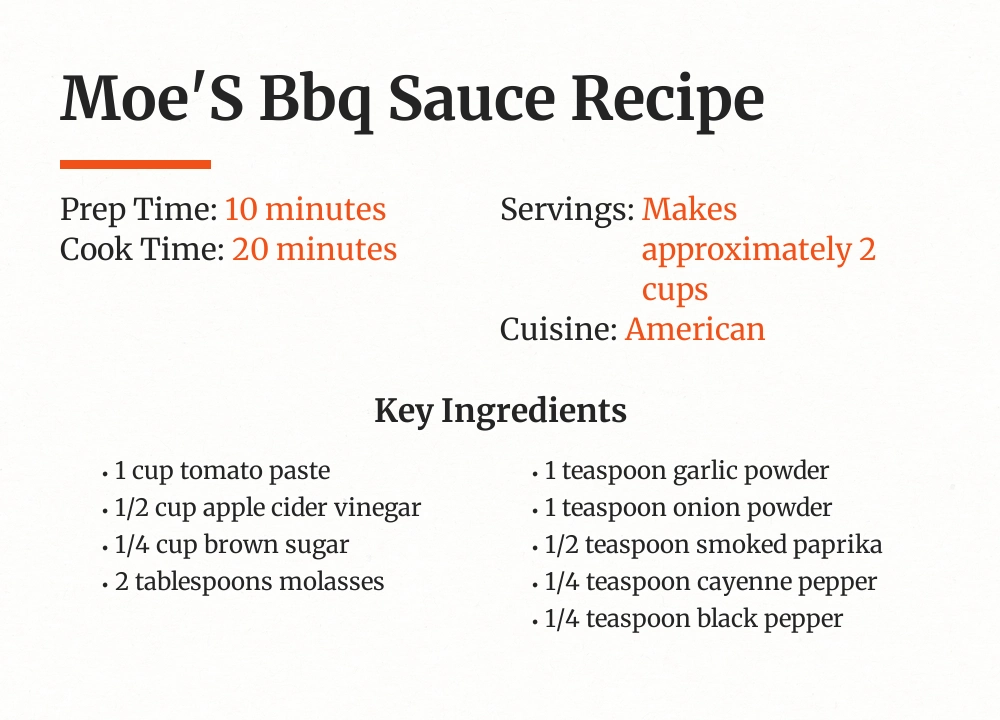
- Prep Time: 10 minutes
- Cook Time: 20 minutes
- Servings: Makes approximately 2 cups
- Course: Condiment
- Cuisine: American
- Diet: Vegetarian
Ingredients
- 1 cup tomato paste
- 1/2 cup apple cider vinegar
- 1/4 cup brown sugar
- 2 tablespoons molasses
- 1 tablespoon Worcestershire sauce
- 1 teaspoon garlic powder
- 1 teaspoon onion powder
- 1/2 teaspoon smoked paprika
- 1/4 teaspoon cayenne pepper
- 1/4 teaspoon black pepper
- 1/2 cup water
- 1 tablespoon olive oil
Instructions
- Heat olive oil in a medium saucepan over medium heat.
- Add tomato paste and cook for 2 minutes, stirring constantly to deepen its flavor.
- Pour in apple cider vinegar and water, whisking to combine with the tomato paste.
- Stir in brown sugar, molasses, and Worcestershire sauce until the sugar dissolves.
- Add garlic powder, onion powder, smoked paprika, cayenne, and black pepper, mixing well.
- Reduce heat to low and simmer for 15 minutes, stirring occasionally to prevent sticking.
- Remove from heat and let cool before transferring to a jar or bottle.
Nutrition
- Calories: 35 kcal
- Protein: 0.5 g
- Fat: 1 g
- Carbohydrates: 6 g
- Sugar: 5 g
- Fiber: 0.5 g
- Sodium: 150 mg
- Cholesterol: 0 mg
Cooking Method
This sauce uses a stovetop simmering technique. Start by sautéing the tomato base to develop a richer taste, then incorporate liquids and spices. Simmering allows flavors to meld and the sauce to thicken to a spreadable consistency.
Tools Needed
- Medium saucepan
- Whisk
- Measuring cups and spoons, such as Cuisipro stainless steel sets
- Glass jar or bottle for storage
Understanding the Core Ingredients
Each component in Moe’s BBQ sauce plays a specific role in building its complex profile. Knowing why you use certain items helps in making informed substitutions or adjustments.
Tomato Paste as the Foundation
Tomato paste provides a concentrated umami base, contributing thickness and a slight acidity. Opt for brands with no added sugars or salts to control the recipe’s sodium and sweetener levels. Cooking it briefly in oil before adding liquids enhances its depth, reducing any raw taste.
Sweeteners: Brown Sugar and Molasses
Brown sugar offers a moist sweetness with hints of caramel, while molasses adds a robust, bitter-sweet note and dark color. Together, they balance the vinegar’s sharpness. For a lighter version, reduce the quantity or use alternatives like maple syrup.
Acidic Elements: Apple Cider Vinegar
Apple cider vinegar introduces tanginess and acts as a preservative, extending the sauce’s shelf life. Its fruity undertones complement the sweeteners without overpowering them. White vinegar can substitute, but it may result in a sharper flavor.
Spices and Heat Components
Garlic and onion powders provide savory layers, while smoked paprika imparts a subtle smokiness. Cayenne pepper brings adjustable heat; start with a quarter teaspoon and increase based on your preference. Black pepper adds a mild pungency that ties the spices together.
Nutritional Profile and Health Considerations
As a condiment, this sauce should be used in moderation due to its sugar and sodium content. A single tablespoon contains around 35 calories, primarily from carbohydrates. The tomato base contributes a small amount of fiber and vitamins like C and K.
Reducing sugar can lower calorie count, but it might affect the sauce’s viscosity and balance. Using low-sodium tomato paste and Worcestershire sauce helps manage sodium intake. For those monitoring diets, this recipe can be part of a balanced meal when paired with lean proteins and vegetables.
Adapting the Recipe for Dietary Needs
Versatility is key in homemade sauces, and this recipe can be modified for various dietary restrictions without losing its essence.
Vegan and Vegetarian Options
Replace Worcestershire sauce with a vegan alternative, as traditional versions often contain anchovies. Ensure all other ingredients are plant-based, and use agave syrup instead of honey if sweeteners are adjusted.
Low-Sugar and Diabetic-Friendly Versions
Substitute brown sugar with stevia or erythritol, keeping in mind that molasses contributes to flavor and color. Reduce the amount gradually and taste as you go to maintain a pleasing profile.
Gluten-Free Adaptations
Check Worcestershire sauce labels for gluten-containing ingredients, and opt for certified gluten-free brands. Most other components are naturally gluten-free, but always verify spice blends for additives.
Historical and Regional Context of BBQ Sauces
Barbecue sauces in the United States vary significantly by region, reflecting local ingredients and cultural influences. Moe’s style aligns with thicker, tomato-based sauces common in areas like Kansas City, while Alabama white sauce—a mayonnaise-based variant—offers a tangy alternative.
Origins trace back to early American settlers adapting European techniques with native resources. Over time, sauces evolved to include molasses from the South or vinegar bases in the Carolinas. Understanding this diversity allows you to appreciate Moe’s place within a broader culinary tradition.
Avoiding Common Mistakes in Sauce Preparation
Even small errors can alter the sauce’s texture or flavor. Heating the tomato paste too quickly may cause burning, leading to a bitter taste. Always use medium heat and stir frequently during the initial steps.
Adding spices at the wrong time can result in uneven distribution. Incorporate them after liquids are mixed in to ensure they dissolve properly. Simmering for the full duration is crucial for thickening; rushing this step might leave the sauce too thin.
Storage in improper containers can reduce shelf life. Use clean, airtight glass jars and refrigerate promptly. The sauce typically lasts up to three weeks when stored correctly.
Serving Suggestions and Pairing Ideas
This sauce pairs well with grilled chicken, brisket, or pulled pork. Brush it on during the last few minutes of cooking to prevent burning from high sugar content. It also works as a dipping sauce for wings or a glaze for roasted vegetables.
For balanced meals, serve with sides like coleslaw or cornbread. The sauce’s bold flavor complements milder dishes, so use it sparingly to enhance rather than overwhelm. Experiment with different meats to find your preferred combination.
The Science of Emulsification and Flavor Development
Simmering helps emulsify the oil-based and water-based ingredients, creating a stable mixture. The heat breaks down tomato solids, allowing them to blend smoothly with vinegar and sweeteners. Caramelization of sugars during cooking adds depth, while acids balance the overall taste profile.
Frequently Asked Questions
What is Moe’s BBQ sauce recipe?
Moe’s BBQ sauce recipe is a homemade version of a commercially available sauce, featuring a tomato base, vinegar, sweeteners, and spices. It aims to replicate the balanced sweet and tangy flavor found in original products.
Why is this recipe important?
This recipe allows you to control ingredients, avoiding preservatives and adjusting flavors to suit dietary needs. It supports healthier eating habits by enabling customization of sugar and sodium levels.
How does the sauce work with different meats?
The sauce’s acidity tenderizes meats while adding moisture and flavor. It forms a glaze when grilled, enhancing texture. For lean cuts like chicken, it prevents dryness; for fatty meats like brisket, it cuts through richness.
Can I make this sauce spicier?
Yes, increase cayenne pepper or add hot sauce to taste. Start with small increments and taste during simmering to avoid overpowering other flavors.
How long does homemade BBQ sauce last?
Stored in an airtight container in the refrigerator, it lasts up to three weeks. For longer storage, freeze it in portions for up to three months.
What can I use if I don’t have molasses?
Substitute with an equal amount of maple syrup or honey, though this will alter the flavor slightly. Molasses contributes a distinct bitterness, so the result may be sweeter.
Is this sauce similar to Alabama white sauce?
No, Alabama white sauce is mayonnaise-based with vinegar and pepper, while Moe’s recipe is tomato-based. They serve different regional styles but can both be used for grilling.
Can I use fresh garlic instead of powder?
Yes, mince one clove of garlic and sauté it with the tomato paste. Fresh garlic offers a sharper taste, so adjust quantity to avoid dominance.
What tools are essential for this recipe?
A saucepan, whisk, and accurate measuring tools like Cuisipro stainless steel spoons ensure consistency. These help in portioning ingredients correctly for balanced results.
How can I reduce the sugar content?
Decrease brown sugar by half and compensate with a sugar substitute. Taste the sauce during cooking and add more if needed, but note that texture may change.