
Walking into a bustling chicken shack on Chicago’s South Side, the air thick with the scent of frying oil and spices, I first tasted the iconic mild sauce. It was a tangy, slightly sweet condiment that transformed simple fried chicken into a memorable meal. That experience sparked a years-long fascination with recreating this staple in my own kitchen.
If you have ever wondered how to capture that distinct Chicago flavor at home, you are in the right place. This guide provides a step-by-step recipe for making mild sauce, along with deep dives into its ingredients, nutrition, and cultural roots. You will learn not just to mix components, but to understand why each element matters for authenticity and taste.
Chicago mild sauce is more than a condiment; it is a blend of barbecue sauce, vinegar, and spices that balances sweetness with a mild heat. Originating from local eateries, it has become a hallmark of the city’s food scene. By making it yourself, you gain control over ingredients for dietary needs and flavor preferences.
This article covers everything from the basic recipe to advanced tips, ensuring you can achieve that perfect consistency and flavor profile. Let us start with the core method to get you cooking right away.
How to Make Chicago Mild Sauce
This section details the exact process for crafting your own batch of Chicago mild sauce. Follow these instructions closely for a result that mirrors the classic version found in many Chicago establishments.
Recipe Details
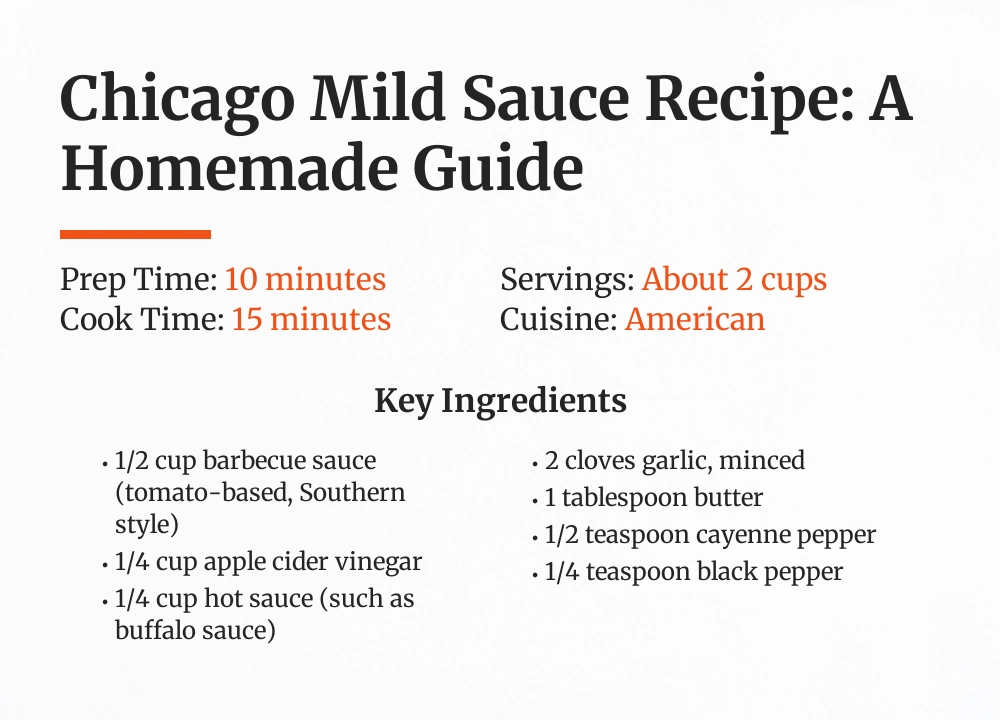
- Prep Time: 10 minutes
- Cook Time: 15 minutes
- Servings: About 2 cups
- Course: Condiment
- Cuisine: American
- Diet: Vegetarian
Ingredients
- 1/2 cup barbecue sauce (tomato-based, Southern style)
- 1/4 cup apple cider vinegar
- 1/4 cup hot sauce (such as buffalo sauce)
- 2 tablespoons Worcestershire sauce
- 1/4 cup brown sugar
- 2 cloves garlic, minced
- 1 tablespoon butter
- 1/2 teaspoon cayenne pepper
- 1/4 teaspoon black pepper
- 1/4 cup water (optional, for consistency)
Instructions
- Combine all ingredients in a medium saucepan over medium heat.
- Stir continuously to prevent burning, especially as the sugar dissolves.
- Bring the mixture to a gentle simmer, then reduce heat to low.
- Cook for 10-15 minutes, stirring occasionally, until the sauce thickens slightly.
- If the sauce becomes too thick, add water a tablespoon at a time to reach desired consistency.
- Remove from heat and let cool to room temperature before using.
- Transfer to an airtight container for storage.
Nutrition
- Calories: 45 kcal
- Protein: 0.5 g
- Fat: 1 g
- Carbohydrates: 10 g
- Sugar: 8 g
- Fiber: 0.2 g
- Sodium: 250 mg
- Cholesterol: 3 mg
Cooking Method
This sauce uses a stovetop simmering technique to meld flavors and achieve a smooth texture. The heat helps dissolve the brown sugar and integrate the spices evenly. Stirring is crucial to avoid scorching, which can introduce a bitter taste.
Tools Needed
- Medium saucepan
- Whisk or wooden spoon
- Measuring cups and spoons
- Airtight container for storage
Ingredient Deep Dive
Each component in Chicago mild sauce plays a specific role in building its unique profile. Understanding these elements allows you to make informed substitutions and adjustments.
Barbecue Sauce
Tomato-based Southern barbecue sauce forms the foundation, providing sweetness and body. Look for varieties with molasses or honey notes for authenticity. If your sauce is too thin, it can affect the final clinginess on food.
Avoid overly smoky versions, as they can overpower the mild heat. In testing, I found that a sweeter sauce with a hint of tang works best. This aligns with the Chicago tradition of balancing flavors for broad appeal.
Vinegar and Acidity
Apple cider vinegar adds a sharp, fruity acidity that cuts through the richness of fried foods. It also acts as a preservative, extending the sauce’s shelf life. A little extra vinegar can brighten the flavor if it tastes too sweet.
White vinegar or balsamic can be substitutes, but balsamic may darken the color and add a richer sweetness. The key is to maintain that tangy backbone without making it overly sour.
Sweeteners and Spices
Brown sugar contributes caramel-like sweetness and helps thicken the sauce. Cayenne pepper provides a mild heat that does not overwhelm, while black pepper adds depth. Adjust the cayenne based on your heat preference.
Garlic and Worcestershire sauce introduce umami and complexity. Worcestershire, with its anchovy base, adds a savory note, but for vegan versions, use a plant-based alternative.
Nutritional Perspectives
From a dietary standpoint, this sauce is moderate in calories and sugar, but sodium levels can be high due to condiments like barbecue and Worcestershire sauces. Using low-sodium versions can make it healthier.
The small amount of fat from butter aids in flavor absorption and mouthfeel. For those monitoring intake, omitting butter or using a substitute is feasible. The sauce’s primary role is to enhance meals without adding significant nutrients.
In terms of energy, it provides quick carbohydrates from sugars, but pair it with protein-rich foods like chicken for a balanced meal. This aligns with its common use in Chicago dining, where it complements hearty dishes.
Adapting for Dietary Needs
Customizing this recipe for various diets is straightforward with simple swaps. Here are practical adjustments to maintain flavor while meeting specific requirements.
Gluten-Free Version
Ensure the barbecue sauce and Worcestershire sauce are certified gluten-free. Many brands now offer these options. The other ingredients are naturally free from gluten, making this an easy adaptation.
Vegan and Dairy-Free
Replace butter with plant-based alternatives like coconut oil or vegan margarine. Use a vegan Worcestershire sauce, which omits anchovies. The rest of the ingredients are typically plant-based, so this change preserves the sauce’s character.
Low-Sugar and Keto
Substitute brown sugar with erythritol or stevia to reduce carbohydrate content. Choose a sugar-free barbecue sauce to cut down on sugars further. Be mindful that texture might change, so adjust cooking time for desired thickness.
Historical and Cultural Background
Chicago mild sauce emerged in the mid-20th century, closely tied to the city’s fried chicken establishments like Harold’s Chicken Shack. It evolved as a milder alternative to buffalo sauce, catering to diverse palates.
This condiment reflects Chicago’s culinary innovation, blending Southern barbecue traditions with local tastes. It is often served with fried chicken, but has found its way onto burgers, beef sandwiches, and even as a dip for bread.
The sauce’s popularity grew through community diners and family-owned spots, becoming a symbol of comfort food in the region. Its simplicity and versatility have made it a enduring part of the city’s food identity.
Avoiding Common Errors
Many home cooks encounter issues when making this sauce, such as inconsistent thickness or unbalanced flavors. Here is how to sidestep these pitfalls for reliable results.
Do not rush the simmering process; low heat allows flavors to meld without burning. If the sauce tastes too acidic, add a pinch of brown sugar to sweeten it. For a thicker, richer consistency, simmer longer or add a teaspoon of cornstarch slurry.
Storage is key: always use an airtight container and refrigerate to prevent spoilage. The sauce can last up to two weeks when stored properly. If separation occurs, a quick stir or reheat will restore its emulsion.
Serving and Storage Tips
Chicago mild sauce pairs excellently with fried chicken, as intended, but also with grilled meats, burgers, and vegetables. Brush it on during the last few minutes of cooking for a glossy finish.
Store in a glass or plastic container in the refrigerator. For longer preservation, consider freezing in small batches. Thaw overnight in the fridge before use, and stir well to recombine any separated liquids.
The Science of Flavor Balance
The interaction between sweet, sour, and spicy elements in this sauce creates a harmonious profile. Sugar from barbecue sauce and brown sugar counteracts the acidity of vinegar, while cayenne provides a subtle heat that stimulates taste buds without overwhelming them.
Heating the mixture helps dissolve solids and integrate flavors through Maillard reactions and reduction. This process enhances the sauce’s clingability, ensuring it adheres well to foods for maximum impact.
Frequently Asked Questions
What is Chicago mild sauce?
Chicago mild sauce is a condiment originating from the city’s food scene, typically made with barbecue sauce, vinegar, and spices. It is known for its sweet and tangy flavor with a mild heat, often used on fried chicken and other dishes.
Why is it important in Chicago cuisine?
This sauce is a staple in many local eateries, reflecting Chicago’s blend of culinary influences. It adds a distinctive touch to comfort foods, making it a beloved part of the dining experience in communities across the city.
How does the recipe work to achieve its flavor?
The recipe combines sweet, acidic, and spicy ingredients through simmering, which allows flavors to meld and thicken. The balance of elements like brown sugar and vinegar creates a complex profile that enhances without dominating.
Can I make it spicier or milder?
Yes, adjust the cayenne pepper or hot sauce to control heat levels. For a milder version, reduce or omit cayenne; for more spice, increase it or add a dash of hotter sauce.
What are the best food pairings?
It pairs well with fried chicken, burgers, beef sandwiches, and even as a dip for fries or bread. Its versatility makes it suitable for various meats and vegetarian options.
How long does homemade mild sauce last?
When stored in an airtight container in the refrigerator, it can last up to two weeks. For longer storage, freeze it for up to three months.
Is there a way to reduce the sodium content?
Use low-sodium barbecue and Worcestershire sauces, and limit added salt. This simple swap can significantly lower sodium while maintaining flavor.
Can I use this sauce for marinating?
Yes, it works well as a marinade for chicken or beef. Apply it a few hours before cooking to allow flavors to penetrate, but avoid over-marinating to prevent texture changes.