
That first dip of warm bread into the creamy, spiced curry sauce at The Melting Pot restaurant is a moment you do not forget. The balance of tangy yogurt and rich mayonnaise with the warmth of curry powder creates a dip that feels both familiar and exotic. For years, I tried to replicate that exact flavor in my own kitchen, experimenting with ratios and ingredients until I landed on a version that rivals the original.
This recipe is not just about mixing a few components; it is about understanding how each element contributes to the final product. Whether you are preparing it for a game day spread or a family dinner, this sauce elevates simple snacks into gourmet experiences. You will find that making it at home allows for customization to suit your taste preferences and dietary needs.
In this guide, I will walk you through every step, from selecting the right curry powder to storing leftovers for future use. We will explore the nutritional benefits, historical background, and practical tips to ensure your sauce turns out perfectly every time. Let us get started on recreating this beloved dipping sauce.
How to Make Melting Pot Curry Sauce Recipe
This section provides the complete recipe for the curry sauce. Follow the steps closely for a consistent and flavorful result. The ingredients are simple, but their quality and preparation method make all the difference.
Recipe Details
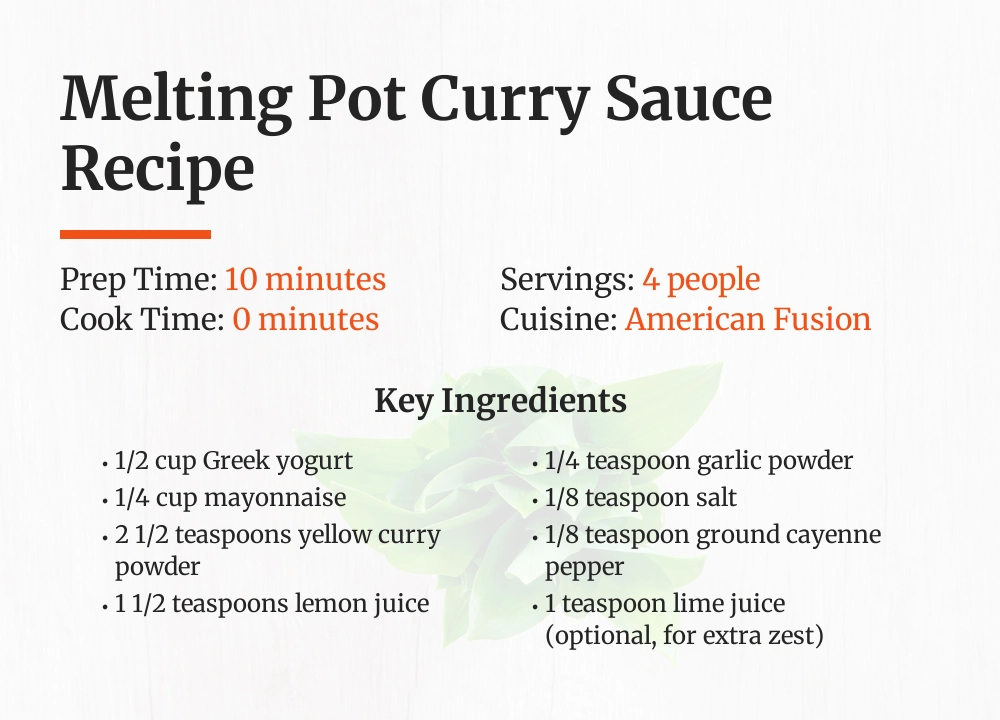
- Prep Time: 10 minutes
- Cook Time: 0 minutes
- Servings: 4 people
- Course: Appetizer, Dip
- Cuisine: American Fusion
- Diet: Vegetarian
Ingredients
- 1/2 cup Greek yogurt
- 1/4 cup mayonnaise
- 2 1/2 teaspoons yellow curry powder
- 1 1/2 teaspoons lemon juice
- 1 1/2 teaspoons granulated sugar
- 1/4 teaspoon garlic powder
- 1/8 teaspoon salt
- 1/8 teaspoon ground cayenne pepper
- 1 teaspoon lime juice (optional, for extra zest)
Instructions
- Gather all ingredients and ensure they are at room temperature for even mixing.
- In a medium bowl, combine the Greek yogurt and mayonnaise. Whisk them together until smooth and fully incorporated.
- Add the yellow curry powder, lemon juice, granulated sugar, garlic powder, salt, and cayenne pepper to the bowl.
- Stir the mixture thoroughly with a whisk or spoon until all ingredients are well blended and the sauce has a uniform color.
- Taste the sauce and adjust seasoning if needed. For a tangier note, add the optional lime juice and mix again.
- Cover the bowl with plastic wrap and refrigerate for at least 30 minutes to allow the flavors to meld.
- Serve chilled with your choice of dippers, such as bread, vegetables, or chicken.
Nutrition
- Calories: 120 kcal
- Protein: 3 g
- Fat: 10 g
- Carbohydrates: 5 g
- Sugar: 3 g
- Fiber: 0.5 g
- Sodium: 180 mg
- Cholesterol: 10 mg
Cooking Method
This sauce requires no cooking, as it is a cold preparation. The key step is thorough mixing and chilling to develop the flavors. Using a whisk helps achieve a smooth consistency without lumps.
Tools Needed
- Medium mixing bowl
- Whisk or stirring spoon
- Measuring spoons and cups
- Plastic wrap or airtight container for storage
Understanding the Ingredients
Each component in this sauce plays a specific role in texture, flavor, and nutrition. Knowing why you use certain items can help you make informed substitutions or adjustments.
Greek Yogurt
Greek yogurt provides a thick, creamy base with a tangy note. It is higher in protein compared to regular yogurt, which adds nutritional value. The probiotics in yogurt support gut health, making this a functional ingredient.
When selecting Greek yogurt, opt for plain varieties without added sugars. Full-fat versions yield a richer sauce, while low-fat options work for calorie-conscious diets. The acidity in yogurt balances the spices and enhances overall freshness.
Mayonnaise
Mayonnaise contributes richness and emulsifies the sauce, ensuring it does not separate. It introduces a subtle eggy flavor that complements the curry spices. Use high-quality mayonnaise for the best texture.
If you prefer a lighter version, you can reduce the mayonnaise amount or substitute with avocado oil-based mayo. The fat content helps carry the fat-soluble flavors from the curry powder, intensifying the taste.
Yellow Curry Powder
Yellow curry powder is a blend of spices like turmeric, coriander, cumin, and fenugreek. It gives the sauce its distinctive golden color and warm, aromatic profile. Turmeric provides anti-inflammatory benefits due to curcumin.
Freshness matters with curry powder; check the expiration date to ensure potency. Toasting the powder lightly in a dry pan before use can deepen its flavor, though it is not necessary for this no-cook recipe.
Lemon Juice and Sugar
Lemon juice adds acidity that cuts through the richness of the dairy components. It also acts as a natural preservative. The granulated sugar balances the tanginess and slight bitterness from spices.
Adjust the sugar based on your preference; honey or maple syrup can be used as alternatives. The citrus note from lemon juice can be amplified with lime juice for a more complex flavor profile.
Nutritional Insights
As a dietician, I appreciate how this sauce combines taste with health considerations. The macronutrients are balanced, providing a mix of protein, fats, and carbohydrates in moderate amounts.
Greek yogurt is the star here, offering protein that promotes satiety and muscle maintenance. The probiotics aid digestion, which is beneficial for overall gut health. Using it as a base reduces the need for excessive high-fat ingredients.
Curry powder introduces antioxidants from spices like turmeric and cumin. These compounds have been linked to reduced inflammation and improved metabolic health. The cayenne pepper adds capsaicin, which may boost metabolism.
Be mindful of sodium content if you are on a low-salt diet; you can reduce or omit added salt. The sauce is relatively low in calories per serving, making it a sensible choice for weight management when paired with vegetable dippers.
Adapting the Recipe for Dietary Needs
This curry sauce is versatile and can be modified to fit various dietary restrictions without compromising flavor. Here are practical swaps based on common needs.
Vegan Version
Replace Greek yogurt with unsweetened plant-based yogurt, such as coconut or almond yogurt. Use vegan mayonnaise made from aquafaba or soy. Ensure the curry powder and other spices are vegan-friendly.
The texture might be slightly different, but the flavor profile remains similar. Add a teaspoon of nutritional yeast for a cheesy note if desired. This version works well for those avoiding animal products.
Gluten-Free Adaptation
Most ingredients are naturally gluten-free, but check labels on curry powder and mayonnaise for hidden gluten. Serve with gluten-free dippers like rice crackers or vegetable sticks.
If using store-bought components, opt for certified gluten-free products. This adaptation is straightforward and maintains the integrity of the recipe.
Low-Sugar and Dairy-Free Options
For low-sugar needs, omit granulated sugar or use a sugar substitute like stevia. Replace Greek yogurt with dairy-free alternatives, and adjust lemon juice to taste.
These changes help manage blood sugar levels and cater to lactose intolerance. The sauce might be thinner with some dairy-free yogurts, so chill it longer to thicken.
Historical and Cultural Background
The Melting Pot restaurant chain, founded in 1975, popularized fondue and dipping sauces in American cuisine. This curry sauce is part of their signature offerings, reflecting a fusion of global flavors.
Curry itself has roots in South Asian cuisine, but the Americanized version often uses curry powder blends developed during British colonial times. The Melting Pot adapted it into a dip, aligning with the communal dining trend.
This sauce represents how immigrant influences shape modern American food. It is not authentic to any one culture but embodies the concept of a “melting pot” where elements blend to create something new.
Avoiding Common Errors
Many home cooks encounter issues when making this sauce. Here are tips to prevent mistakes and achieve optimal results.
Overmixing or Undermixing
Overmixing can incorporate too much air, making the sauce foamy. Undermixing leaves lumps of spices. Use a steady whisking motion until just combined.
If the sauce separates, stir it gently before serving. Chilling helps stabilize the emulsion, so do not skip this step.
Ingredient Temperature
Using cold ingredients straight from the fridge can hinder blending. Let them sit out for 10-15 minutes to reach room temperature. This ensures a smoother consistency.
If you are in a hurry, you can mix everything cold, but the flavors may not meld as well. Plan ahead for the best outcome.
Spice Adjustments
Curry powders vary in potency; start with the recommended amount and taste before adding more. Cayenne pepper adds heat, so adjust based on your tolerance.
For a milder version, reduce or omit cayenne. If you prefer smokiness, add a pinch of paprika. Customizing spices makes the sauce your own.
Serving Suggestions and Storage
This curry sauce is incredibly versatile. Serve it as a dip for bread, vegetables, or proteins like chicken and fish. It pairs well with game day snacks such as crinkle-cut fries or onion rings.
For a full meal, use it as a condiment for chicken curry soup or drizzle over rice. It also complements dishes like chicken honey butter biscuits or bacon cheeseburger dip, adding a spicy contrast.
Store leftovers in an airtight container in the refrigerator for up to 5 days. Do not freeze, as dairy-based sauces can separate upon thawing. Stir well before reuse.
The Science Behind the Sauce
Emulsification is key here; mayonnaise stabilizes the mixture of oil and water-based ingredients. Acidity from lemon juice denatures proteins in yogurt, thickening the sauce slightly.
Chilling allows hydration of spices, releasing their oils and flavors. This process, called steeping, is why the sauce tastes better after resting. Understanding these principles helps in troubleshooting.
Frequently Asked Questions
What is Melting Pot curry sauce recipe?
It is a copycat recipe for the curry dipping sauce served at The Melting Pot restaurants. It typically includes yogurt, mayonnaise, curry powder, and seasonings, resulting in a creamy, spiced dip.
Why is this sauce important?
This sauce is a popular item due to its unique flavor that enhances various dishes. Making it at home saves money and allows control over ingredients for health and dietary preferences.
How does the recipe work?
The recipe combines acidic and fatty components with spices to create a balanced emulsion. No cooking is required; mixing and chilling develop the flavors through chemical interactions.
Can I use different types of curry powder?
Yes, but yellow curry powder is recommended for its mild flavor. Red or green curry powders can be used for more heat, but adjust quantities to avoid overpowering the sauce.
How long can I store the sauce?
It lasts up to 5 days in the fridge when stored properly. Always check for off smells or separation before using leftovers.
What are the best dippers for this sauce?
Bread, vegetables like bell peppers, and proteins like chicken or beef are excellent. It also pairs well with snacks from other copycat recipes, such as Church’s Chicken honey butter biscuits.
Is this sauce suitable for weight loss?
In moderation, yes. It is relatively low in calories and high in protein. Pair it with vegetable dippers to keep the meal light and nutritious.
Can I make it without mayonnaise?
Yes, substitute with additional Greek yogurt or sour cream. The texture may be thicker, so add a splash of water or milk to achieve desired consistency.