Reina
Reina 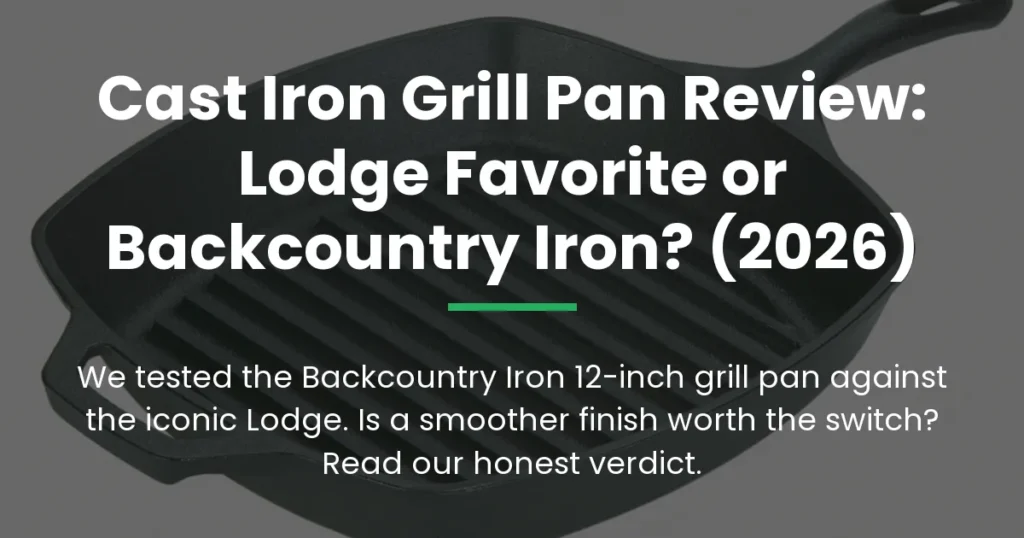
As an Amazon Associate, I may earn a small commission from qualifying purchases at no extra cost to you. This helps me create more valuable, tested content for you.
I’ve been cooking with cast iron for years. My daily driver is a beat-up skillet I restored myself, so I know the difference between good iron and bad iron. When I started seeing ads for Backcountry Iron claiming a “smoother finish” than the rough texture Lodge is known for, I got curious. Could this be the grill pan that finally doesn’t feel like a chore to clean?
If you’re searching for a lodge cast iron grill pan review, you probably know the trade-offs already. Lodge is affordable, tough, and made in the USA. But the surface is rough. Food sticks more during the break-in period. Backcountry Iron promises a vintage-style smooth surface that rivals old Griswold pans. So I bought one to find out if the hype holds up in a real kitchen.
The short answer: It’s a solid alternative. The smooth finish does help with cleanup, and it sears beautifully out of the box. But grill pans still have limits — and for some people, a reversible griddle or a flat skillet makes more sense. Let me walk you through what I actually experienced.
For campers specifically, I explored this further in my piece on the best grill pan for camping, where I tested weight, heat distribution, and cleanup ease.
Top Grill Pan Picks: Quick Comparison

First Look – What You Get with the Backcountry Iron Grill Pan
 Check Price on Amazon
When I first pulled this pan out of the box, the first thing I did was run my finger across the cooking surface. It was noticeably smoother than my old Lodge skillet. That’s not an accident — Backcountry Iron intentionally avoids the bumpy texture that most modern cast iron has. It feels closer to an heirloom piece.
The weight is what you’d expect for a 12-inch square cast iron pan. It’s heavy. If you struggle with wrist pain, this isn’t the pan for you. The handle is a single 5-inch loop, which is fine for stovetop use but can feel short when you’re trying to lift it with a mitt in the oven.
Specs at a Glance
- Size: 12″ square, 12.5″ spout‑to‑spout
- Weight: Heavy (typical for cast iron)
- Handle: 5‑inch single loop
- Seasoning: Pre‑seasoned with proprietary oil blend
- Compatibility: Electric, gas, induction + oven safe
- Origin: Designed in USA, virgin ore
How It Differs from Lodge
Lodge pans have a signature rough, pebbled texture. It’s a result of their manufacturing process — they don’t grind or polish the surface. Some people love it because they feel seasoning adheres better to the rough texture. Others can’t stand it because food snags more easily.
Backcountry Iron takes the opposite approach. The surface is polished smooth, similar to how vintage American pans were made back in the early 1900s. That difference matters from the first cook. With Lodge, you often have to cook a few fatty meals before things start releasing easily. With Backcountry Iron, the smooth surface gives you a head start on the non-stick feeling.
Performance – Does It Deliver Real Grill Marks?
I put the pan through a few rounds of real cooking. Burgers, chicken breasts, thick-cut veggies, and a ribeye. The deep ribs do a great job of lifting the food off the pan surface so you get those classic char lines. But you also lose some contact area compared to a flat skillet, so you won’t get an even crust across the entire surface.
Searing Power & Heat Retention
Cast iron’s main strength is how long it stays hot. Preheated for about 8 minutes on medium heat, this pan held its temp well even after I dropped a cold steak on it. The sear on the ribeye was impressive — deep brown lines with good contrast against the lighter areas in between.
One thing I noticed: the heat distribution across the square surface was pretty even, but the corners of the pan ran slightly cooler than the center. That’s common with square pans. If you’re cooking four burgers at once, rotate them once for even cooking.
Cooking Versatility
You’re not limited to meat. I grilled asparagus and bell peppers on it, and the high heat gave them good char without turning them into mush. The pan is oven-safe, so you can start a steak on the stovetop and finish it in the oven — something you can’t do with non-stick grill pans.
The Trade‑off
The ribs create less surface contact with the food. That means less browning compared to a flat skillet. If you want maximum crust, a cast iron skillet with a weighted press will outperform any grill pan. The trade-off is you don’t get those grill marks or fat drainage. Pick what matters more to you.
The Cleaning Reality (The #1 Weakness of Any Grill Pan)
Let’s be honest — cleaning a grill pan is the worst part of using one. I’ve owned a few over the years, and every single one has been annoying to scrub after cooking. The Backcountry Iron is easier than most, but it’s not a miracle worker.
Why Grill Pans Are Infamous
Food gets trapped between the ribs. Grease pools in the channels. If you let it cool completely, the residue hardens and requires serious elbow grease. A chainmail scrubber helps, but it’s still more work than wiping out a regular skillet.
Backcountry Iron’s Maintenance Instructions
Backcountry Iron has clear care guidelines. No dishwasher. No soaking. No air drying. Clean with warm water and a stiff brush or stainless steel scrubber while it’s still warm. Dry it thoroughly and rub a thin layer of oil on the surface before storing. If you skip the oil step, you’ll get rust spots within a day or two.
Is the Pre‑Seasoning Enough?
The pre-seasoning is decent for a factory job. It’s not as thick as what you’d build on your own over time, but it’s enough to cook on right away. I did notice that after cooking acidic foods like tomatoes or vinegar-based marinades, the seasoning looked a bit faded in spots. That’s normal, and it builds back after a few rounds of cooking fatty foods.
Compared to Lodge’s pre-seasoning, both are functional. But the smoother surface on Backcountry Iron does seem to release food slightly better from the start. Lodge’s rough surface tends to grab more until you build up a thick seasoning layer.
The Honest Lodge Cast Iron Grill Pan Comparison
When you look up a lodge cast iron grill pan review, you’re probably trying to decide if it’s worth buying the standard or if something else fits better. Here’s how the Backcountry Iron stacks up against what you’d get from Lodge.
Price & Value
Both pans sit in a similar price range. You’re not saving a ton by choosing one over the other. The value comes down to what you prefer in a pan. Backcountry Iron gives you a smoother finish out of the box. Lodge gives you a brand with decades of proof that its pans last forever. Both are made in the USA. Both will probably outlive you.
Smooth vs. Rough – Which Is Better?
This is where cast iron fans get into arguments. The rough finish on Lodge catches food initially, but some people find that seasoning sticks more stubbornly to it over time. The smooth finish on Backcountry Iron feels nicer at first and is easier to clean, but it can be harder to build a thick seasoning layer on because there are fewer micro-crevices for oil to bond to.
I’ve used both textures extensively. For daily cooking, I prefer the smooth finish. It just feels better when I’m scraping a spatula across it. But if you’re the type of person who likes to run a pan for decades and build up a black, glassy seasoning, Lodge’s rough finish gives you a solid foundation for that.
Handle and Weight
The 5-inch handle on the Backcountry Iron is functional but short. When I wanted to move the pan from the stovetop to the oven, I needed a good grip with a thick mitt. Lodge usually provides a longer handle with a helper handle on larger pans, which makes lifting safer. Weight is similar between both brands — heavy iron that you wouldn’t want to toss around.
Who Should Buy the Backcountry Iron Grill Pan? (And Who Shouldn’t)
Ideal for…
- Someone who wants a dedicated grill pan for indoor use and doesn’t mind the cleaning routine.
- Cooks who prioritize deep grill marks and fat drainage for healthier cooking.
- People who prefer the feel of smooth, vintage-style cast iron but don’t want to hunt down an old Griswold pan.
- Anyone cooking on induction or glass-top stoves — the flat base sits evenly without wobbling.
Better choices if…
- You want the flexibility of a reversible griddle (Lodge Pro-Grid gives you flat on one side, grill on the other).
- Cleaning is your biggest concern — in that case, buy a flat cast iron skillet and use a weighted press for crust.
- You need a lighter pan or one with a longer handle for easier maneuvering.
The Final Verdict – Should You Buy It?
Score Summary
- Searing: 4/5 — Good marks and decent crust, but a flat skillet gives better overall browning.
- Build quality: 4.5/5 — Smooth surface, solid construction, feels like it’ll last for generations.
- Cleaning: 2.5/5 — Easier than a Lodge grill pan, but still a grill pan. You will scrub.
- Value: 4/5 — Fair price for a well-made product that competes directly with Lodge.
Bottom Line
If you’re set on a square grill pan and you value a smooth finish that’s easier to clean and sears well out of the box, the Backcountry Iron is a strong alternative to Lodge. It feels nicer to cook on right away, and it doesn’t ask you to “season it for months” before it starts releasing food.
But I’ll be honest — for most home cooks, I still recommend a reversible griddle or a standard cast iron skillet. Grill pans are fun for presentation and fat drainage, but they add work. If you’re okay with that, the Backcountry Iron is one of the better ones I’ve used.
Check the latest price on Amazon here.
Frequently Asked Questions
Is this pan dishwasher safe?
No. Cast iron should never go in the dishwasher. The high heat and harsh detergents will strip the seasoning and promote rust.
Can I use it on an induction stove?
Yes. The flat cast iron base works perfectly on induction cooktops without any issues.
Does it come pre-seasoned?
Yes, it comes pre-seasoned with a proprietary oil blend and is ready to cook on right out of the box.
How does the smooth finish affect cooking compared to Lodge?
Food sticks less initially, making it easier to cook eggs or fish without a heavy seasoning layer. However, some enthusiasts feel the rough finish of a Lodge pan holds seasoning better over decades of use.
Will it rust if I don’t dry it properly?
Yes. Cast iron rusts quickly if left wet. Dry it thoroughly with a towel after washing and rub a thin layer of oil on the surface before storing.
My Take After Living with This Pan
I’ve had the Backcountry Iron grill pan for a few months now, and I’ve grown to appreciate it for what it is: a well-made, smooth-textured grill pan that gives you nice sear marks and doesn’t fight you as much as rougher cast iron. It’s not a perfect kitchen tool — nothing is. But if you’re okay with the extra steps that come with any bare cast iron grill pan, this one is a solid choice.
If I had to choose again, I’d still buy it for my own cooking style. But I’d also recommend everyone consider a flat skillet if they only want one piece of cast iron. Versatility usually wins in the kitchen.
Click here to grab the Backcountry Iron grill pan on Amazon if it fits your needs.