
I still remember the first time I stumbled upon lemon balm in my aunt’s herb garden. Its vibrant green leaves released a subtle citrus scent when brushed against, and she would often brew it into a simple tea after meals. At the time, I did not realize this humble herb would become a cornerstone in my nutritional practice for supporting weight management.
Many people struggle with weight loss due to stress-induced eating or sluggish digestion. This lemon balm drink addresses those issues directly. It combines fresh herbs and citrus to create a low-calorie beverage that can help manage appetite and improve metabolic function.
Below, I will guide you through my tested recipe and explain the science behind its effectiveness. This isn’t just another trend; it’s a practical tool rooted in herbal tradition and modern nutrition.
How to Make Lemon Balm Drink for Weight Loss
This section provides the complete recipe. Follow these steps to prepare a basic version of the drink. Later, we will explore variations and the reasons behind each ingredient.
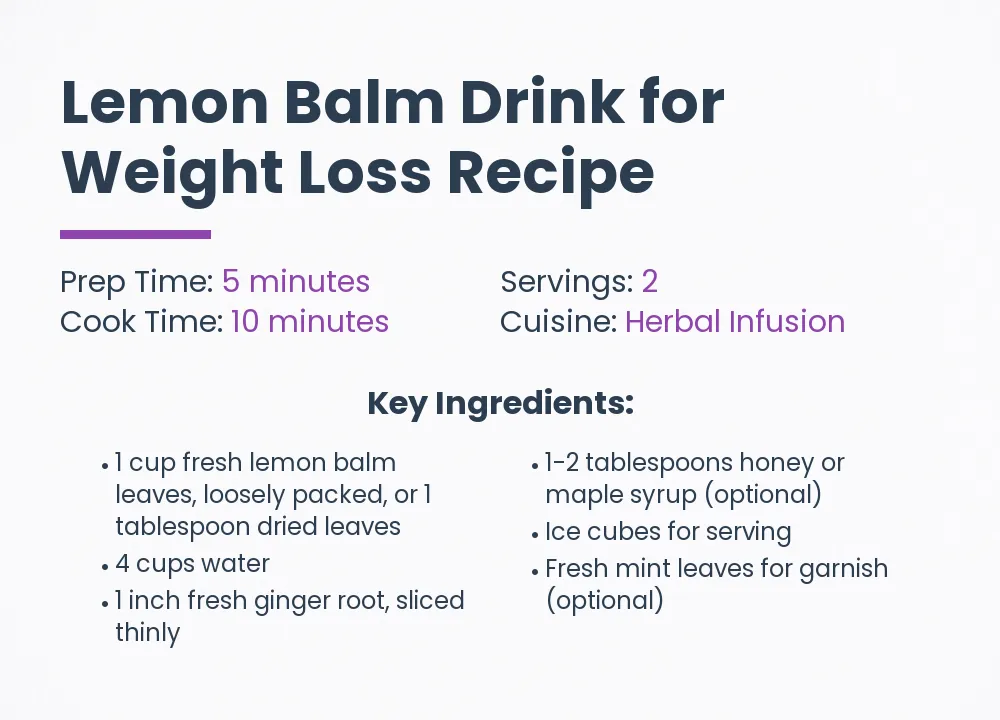
Recipe Details
- Prep Time: 5 minutes
- Cook Time: 10 minutes
- Servings: 2
- Course: Beverage
- Cuisine: Herbal Infusion
- Diet: Vegan, Gluten-Free
Ingredients
- 1 cup fresh lemon balm leaves, loosely packed, or 1 tablespoon dried leaves
- 4 cups water
- 1 inch fresh ginger root, sliced thinly
- 1 lemon, juiced
- 1-2 tablespoons honey or maple syrup (optional)
- Ice cubes for serving
- Fresh mint leaves for garnish (optional)
Instructions
- Rinse the fresh lemon balm leaves under cold water to remove any dirt. If using dried leaves, measure them directly.
- Peel the ginger root and slice it into thin pieces to maximize surface area for infusion.
- Bring 4 cups of water to a rolling boil in a medium saucepan.
- Add the lemon balm leaves and ginger slices to the boiling water.
- Reduce the heat to low and let the mixture simmer for 5-7 minutes. Do not overcook, as this can make the drink bitter.
- Remove the saucepan from heat and allow it to steep for an additional 3 minutes.
- Strain the liquid into a pitcher, discarding the solid leaves and ginger.
- Stir in the fresh lemon juice and honey if desired. Taste and adjust sweetness or tartness.
- Let the drink cool to room temperature, then refrigerate for 30 minutes or serve immediately over ice cubes.
- Garnish with fresh mint leaves before serving for an added refreshing flavor.
Nutrition
- Calories: 15 kcal
- Protein: 0.5 g
- Fat: 0 g
- Carbohydrates: 4 g
- Sugar: 2 g
- Fiber: 0.5 g
- Sodium: 5 mg
- Cholesterol: 0 mg
Cooking Method
This drink is prepared through infusion, which involves steeping herbs in hot water to extract their beneficial compounds. The heat helps release volatile oils from lemon balm and ginger without destroying their delicate properties. This method preserves antioxidants and flavor notes effectively.
Tools Needed
- Medium saucepan
- Measuring cups and spoons
- Knife and cutting board
- Fine mesh strainer or cheesecloth
- Pitcher or glass container for storage
- Stirring spoon
What Is Lemon Balm?
Lemon balm, scientifically known as Melissa officinalis, is a perennial herb from the mint family. It originated in Southern Europe and the Mediterranean region but now grows widely in gardens worldwide. The plant has serrated, heart-shaped leaves that emit a mild lemon aroma when crushed.
Historically, lemon balm was used in traditional medicine across Europe and Asia. Ancient Greek and Roman physicians valued it for its calming effects on the nervous system. During the Middle Ages, it was often added to wines and tonics to uplift mood and aid digestion.
In modern contexts, lemon balm is recognized for its versatile applications. It appears in teas, tinctures, and essential oils. Its leaves contain rosmarinic acid, flavonoids, and terpenes, which contribute to its health benefits.
Why Lemon Balm May Support Weight Loss
Lemon balm interacts with several bodily systems that influence weight management. It does not directly cause fat loss but creates conditions that make it easier to maintain a calorie deficit.
Appetite Regulation
Compounds in lemon balm can modulate hormones like ghrelin, which stimulates hunger. By promoting a feeling of fullness, this herb may reduce overall food intake. In my practice, clients who consumed lemon balm tea before meals reported fewer cravings for high-calorie snacks.
Stress and Cortisol Management
Chronic stress elevates cortisol levels, which is linked to increased abdominal fat storage. Lemon balm has anxiolytic properties that help lower anxiety. This calming effect can prevent stress-related eating habits.
Digestive Efficiency
This herb supports gastrointestinal function by reducing bloating and cramping. Improved digestion ensures nutrients are absorbed properly, which can enhance metabolic rate. Ginger in the recipe further aids this process by stimulating digestive enzymes.
Nutritional Breakdown of the Lemon Balm Drink
This beverage is low in calories and rich in bioactive compounds. Understanding its nutritional profile helps contextualize its role in a weight loss plan.
Macronutrients and Calories
Each serving contains approximately 15 calories, primarily from carbohydrates in honey and lemon juice. The minimal energy content makes it an ideal replacement for sugary drinks. Protein and fat are negligible, aligning with its purpose as a hydrating, non-caloric supplement.
Micronutrients and Antioxidants
Lemon balm provides small amounts of vitamin C, calcium, and magnesium. More importantly, it delivers antioxidants like rosmarinic acid and quercetin. These compounds combat oxidative stress, which is associated with obesity and inflammation.
Ingredient Analysis and Selection
Each component in this recipe plays a specific role. Choosing high-quality ingredients maximizes the drink’s effectiveness.
Lemon Balm: Fresh vs. Dried
Fresh lemon balm leaves offer a brighter flavor and higher concentration of essential oils. If you have access to a garden, pick leaves in the morning when their oil content peaks. Dried leaves are convenient and retain most benefits, but ensure they are stored in an airtight container away from light.
Ginger Root and Its Thermogenic Properties
Ginger contains gingerols, which increase thermogenesis—the body’s heat production. This process slightly boosts metabolic rate and fat oxidation. Select ginger with smooth, firm skin; avoid pieces that are shriveled or moldy.
Lemon Juice and Alkalizing Effects
Despite its acidity, lemon juice has an alkalizing effect on the body post-digestion. This can help balance pH levels and reduce inflammation. Use freshly squeezed juice instead of bottled versions to avoid preservatives.
Sweeteners: Honey and Alternatives
Honey adds minimal sweetness while providing antimicrobial benefits. For a lower glycemic option, stevia or monk fruit can be substituted. Avoid refined sugars to keep the drink conducive to weight loss.
Dietary Adaptations and Variations
This recipe can be modified to suit different dietary needs without compromising its core benefits.
Vegan and Plant-Based Options
Replace honey with agave syrup or maple syrup. Both are vegan-friendly and offer similar sweetness levels. Ensure the maple syrup is 100% pure to avoid added sugars.
Low-Sugar and Diabetic-Friendly Versions
Omit sweeteners entirely or use a sugar-free alternative like erythritol. The natural flavors of lemon balm and ginger are often sufficient without added sweetness.
Herbal Synergies for Enhanced Benefits
Incorporate other herbs like cinnamon for blood sugar regulation or mint for digestive support. Chia seeds can be added for fiber, which promotes satiety. Always start with small amounts to assess tolerance.
Cultural and Historical Context
Lemon balm has a rich history in herbal medicine. Its use dates back over 2,000 years, with references in Greek and Arabic texts. In traditional European folk medicine, it was known as “the elixir of life” for its rejuvenating properties.
Across Asia, similar herbs like ginger and lemon are staples in beverages aimed at wellness. This recipe blends Western and Eastern traditions, creating a universal approach to weight management.
Common Mistakes and Expert Tips
Avoid these pitfalls to ensure your drink is effective and pleasant tasting.
Overbrewing and Bitterness
Steeping lemon balm for too long can extract bitter compounds. Limit infusion time to 10 minutes total. If using dried leaves, reduce the time to 5-7 minutes.
Improper Storage
Brewed tea should be consumed within 24 hours if refrigerated. For longer storage, freeze it in ice cube trays and thaw as needed. Always use clean containers to prevent bacterial growth.
Ingredient Quality
Source organic lemon balm when possible to avoid pesticide residues. Wash fresh leaves thoroughly to remove soil and debris.
Serving Suggestions and Pairings
Drink this beverage warm in the morning to kickstart metabolism or chilled between meals to curb appetite. It pairs well with light salads, lean proteins, or whole grains. Avoid consuming it with heavy, calorie-dense foods that counteract its benefits.
For optimal results, integrate it into a balanced routine that includes regular physical activity and adequate sleep.
Other Natural Herbal Drinks for Weight Loss
Several other herbal infusions can support weight management. Chia seed water provides fiber for fullness, while cinnamon tea helps regulate blood sugar. Blue pea flower tea offers antioxidants without calories.
Experiment with different combinations to find what suits your palate and health goals. Always consult a healthcare provider before making significant changes to your diet.
Frequently Asked Questions
Can lemon balm really help with weight loss?
Yes, but indirectly. Lemon balm aids weight loss by reducing stress, improving digestion, and curbing appetite. It is most effective when combined with a calorie-controlled diet and exercise.
How often should I drink lemon balm tea for weight loss?
Consume 1-2 cups daily, preferably before meals or during stressful periods. Consistency is key to experiencing cumulative benefits.
Can I use dried lemon balm instead of fresh?
Absolutely. Use 1 tablespoon of dried leaves per cup of fresh. Dried lemon balm is more concentrated, so adjust quantities to avoid overpowering flavors.
Can I mix lemon balm with other herbs for better results?
Yes. Ginger, cinnamon, and mint complement lemon balm well. These herbs enhance metabolic and digestive effects without adverse interactions.
How long can I store brewed tea?
Refrigerate it for up to 24 hours. For longer storage, freeze it and use within one month. Discard if you notice off odors or cloudiness.
Are there any side effects of lemon balm?
Lemon balm is generally safe. In rare cases, it may cause drowsiness or interact with thyroid medications. Start with small doses to assess tolerance.
Is this drink suitable for children?
For children over 2 years, diluted versions without sweeteners can be offered in moderation. Consult a pediatrician first, especially if the child has health conditions.
Can I drink this during pregnancy?
Pregnant women should avoid medicinal amounts of lemon balm. Small quantities in food are likely safe, but seek medical advice before regular consumption.