
Creating a smooth, rich Alfredo sauce at home often feels like a culinary challenge, but it does not have to be complicated. I discovered this method during a busy week when I needed a quick dinner solution that still felt special. Using Kraft ingredients streamlined the process, and the result was a creamy sauce that my family now requests regularly.
This approach combines convenience with classic flavors, making it accessible for any skill level. You will find that with a few simple steps, you can achieve a consistent texture and depth of taste. Let me guide you through this recipe, which has become a reliable part of my cooking repertoire.
Beyond the basic steps, I will share insights into the ingredients, nutritional aspects, and adaptations for various diets. Whether you are new to cooking or looking to refine your technique, this comprehensive guide covers everything from preparation to storage.
How to Make Kraft Alfredo Sauce Recipe
This section provides the core recipe for crafting your Alfredo sauce using Kraft products. Follow these steps for a reliable outcome, and refer to the later sections for deeper explanations and tips.
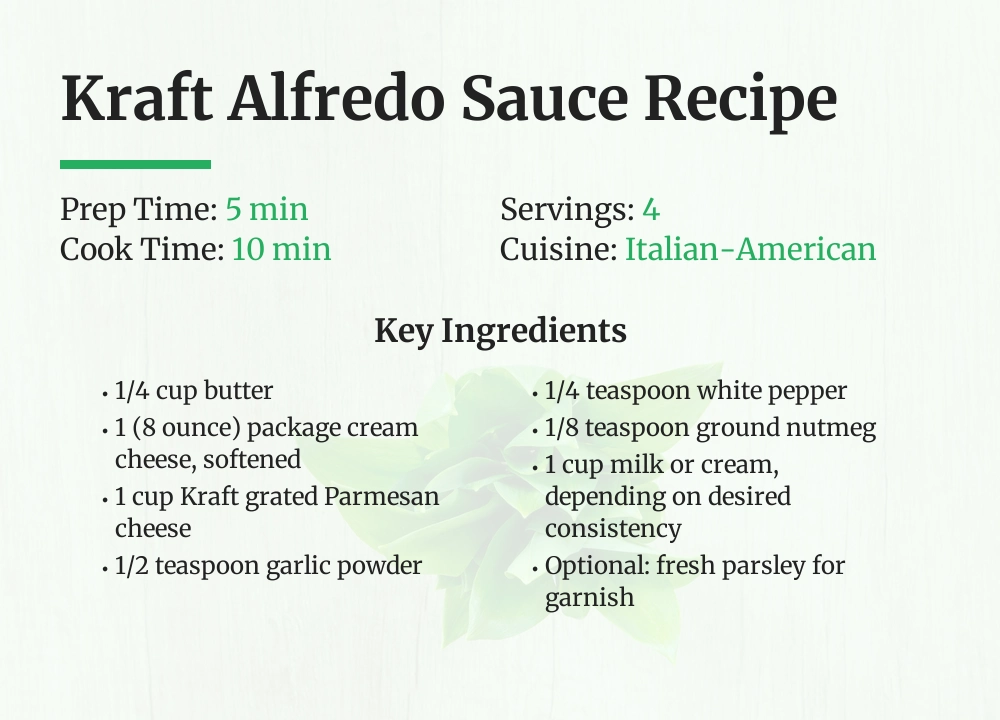
Recipe Details
- Prep Time: 5 min
- Cook Time: 10 min
- Servings: 4
- Course: Main
- Cuisine: Italian-American
- Diet: Vegetarian
Ingredients
- 1/4 cup butter
- 1 (8 ounce) package cream cheese, softened
- 1 cup Kraft grated Parmesan cheese
- 1/2 teaspoon garlic powder
- 1/4 teaspoon white pepper
- 1/8 teaspoon ground nutmeg
- 1 cup milk or cream, depending on desired consistency
- Optional: fresh parsley for garnish
Instructions
- Begin by melting the butter in a medium, nonstick saucepan over medium heat. Stir continuously to prevent burning.
- Add the softened cream cheese to the melted butter, whisking with a wire whisk until smooth and fully incorporated.
- Gradually pour in the milk or cream, stirring constantly to combine with the butter and cream cheese mixture.
- Mix in the garlic powder, white pepper, and ground nutmeg, ensuring even distribution of spices.
- Slowly add the grated Parmesan cheese, whisking as you go to help it melt smoothly into the sauce.
- Continue cooking for 5-7 minutes, stirring frequently, until the sauce thickens to your preferred consistency.
- If the sauce is too thick, add a splash more milk; if too thin, simmer a bit longer. Serve immediately over hot pasta.
Nutrition
- Calories: 210 kcal
- Protein: 10 g
- Fat: 19 g
- Saturated Fat: 12 g
- Carbohydrates: 3 g
- Sugar: 2 g
- Fiber: 0 g
- Sodium: 410 mg
- Cholesterol: 40 mg
Cooking Method
This recipe uses a stovetop method in a saucepan, which allows for controlled heat and easy stirring. The key is to maintain medium heat to avoid scorching the dairy components. Constant whisking helps emulsify the fats and liquids, creating a uniform texture.
You can adjust the cooking time based on how thick you prefer your sauce. For a thinner consistency, reduce the simmering time; for a richer sauce, extend it slightly. Always taste and adjust seasonings as needed during the process.
Tools Needed
- Medium, nonstick saucepan
- Wire whisk
- Measuring cups and spoons
- Spatula for scraping
- Grater if using block cheese
Ingredient Analysis
Understanding each component in this sauce helps you make informed substitutions and achieve better results. Here, I break down the primary ingredients based on their roles and attributes.
Butter
Butter serves as the fat base, providing richness and aiding in the emulsification process. Unsalted butter is preferable because it allows you to control the sodium level. The melting point of butter affects how quickly other ingredients integrate; too high heat can cause separation.
In this recipe, butter combines with cream cheese to form a smooth foundation. If you use salted butter, reduce added salt in other steps. The type of butter, such as European-style with higher fat content, can enhance creaminess but is not necessary for success.
Cheese
Kraft grated Parmesan cheese is specified for its convenience and consistent texture. Pre-grated cheese often contains anti-caking agents, which can affect melting. For a smoother sauce, consider grating your own Parmesan from a block, as it melts more evenly.
Parmesan adds umami and saltiness, balancing the creaminess. Its age influences flavor intensity; older cheese has a sharper taste. If you substitute with other hard cheeses like Pecorino Romano, adjust for salt content and melting properties.
Cream Cheese
Cream cheese contributes to the thick, velvety texture of the sauce. Its high fat content and emulsifiers help stabilize the mixture, preventing curdling. Softening the cream cheese before use is crucial for seamless blending with other ingredients.
Full-fat versions work best for richness, but reduced-fat options can be used with slight texture trade-offs. The tanginess of cream cheese complements the Parmesan, adding depth without overpowering the dish.
Garlic and Spices
Garlic powder is used here for its even distribution and mild flavor compared to fresh garlic. It dissolves easily into the sauce, providing a consistent taste. If you prefer a stronger garlic note, you can add minced fresh garlic during the butter melting step.
White pepper offers a subtle heat without dark specks, while nutmeg adds a warm, aromatic note that enhances the dairy flavors. These spices should be measured precisely to avoid bitterness or overwhelming the sauce.
Nutritional Insights
From a dietary perspective, this Alfredo sauce is calorie-dense due to its high fat content from butter, cream cheese, and Parmesan. A single serving provides approximately 210 calories, with 19 grams of fat, making it a rich addition to meals.
The protein content comes mainly from the dairy ingredients, offering about 10 grams per serving. Carbohydrates are low at 3 grams, with minimal sugar and no fiber. This profile makes it suitable for low-carb diets but high in saturated fat and sodium.
When considering a 2,000-calorie diet, this sauce contributes significantly to daily fat and sodium limits. To fit it into a balanced eating plan, pair it with vegetables and lean proteins. Moderation is key, especially for those monitoring cholesterol or blood pressure.
For specific health goals, you can modify the recipe using lower-fat dairy options or reduce portion sizes. The nutritional data here is based on standard ingredient amounts and may vary with substitutions.
Dietary Modifications
Adapting this recipe for different dietary needs is straightforward with a few swaps. Always test adjustments to ensure the sauce maintains its desired consistency and flavor.
Gluten-Free
This sauce is naturally gluten-free, but serve it with gluten-free pasta to avoid cross-contamination. Check that all packaged ingredients, like cheese, are certified gluten-free if needed.
Vegan
Replace butter with plant-based alternatives like olive oil or vegan butter. Use vegan cream cheese and Parmesan-style shreds made from nuts or soy. Opt for unsweetened plant-based milk, such as almond or oat, to achieve a similar creaminess.
Low-Fat
Substitute reduced-fat cream cheese and low-fat milk. Use less butter or a butter alternative. Note that lower fat content may result in a thinner sauce, so you might need to thicken it with a starch like cornstarch slurry.
Dairy-Free
Follow the vegan substitutions, ensuring all dairy components are replaced. Coconut cream can add richness, but it may impart a slight coconut flavor. Adjust seasonings to balance any taste differences.
The History of Alfredo Sauce
Alfredo sauce originated in early 20th-century Rome, created by restaurateur Alfredo Di Lelio. His original version was simpler, featuring butter and Parmesan cheese tossed with fresh fettuccine. The dish gained popularity after American tourists experienced it and brought the concept home.
In the United States, the recipe evolved to include cream and other ingredients, becoming the creamy version we know today. Kraft products helped democratize this dish by making it accessible for home cooks. This adaptation reflects how culinary traditions transform across cultures.
Understanding this history adds context to why certain ingredients are used. The classic Italian method emphasizes quality cheese and butter, while American variations often incorporate cream for extra richness. Both approaches have merits depending on your taste preferences.
Avoiding Common Mistakes
Many home cooks encounter issues when making Alfredo sauce, such as graininess or separation. Here are practical tips to ensure a smooth, cohesive result every time.
Preventing Grainy Texture
Graininess often occurs when cheese is added too quickly or at high heat. Always grate cheese finely and incorporate it gradually over low to medium heat. Stir constantly to encourage even melting and avoid clumping.
If using pre-grated cheese, note that anti-caking agents can hinder melting. Letting the cheese come to room temperature before use can improve integration. If the sauce still feels grainy, blending it briefly with an immersion blender can help.
Avoiding Sauce Separation
Separation happens when the emulsion of fats and liquids breaks, usually due to excessive heat or rapid temperature changes. Cook the sauce over consistent, medium heat and avoid boiling. If separation occurs, remove from heat and whisk in a tablespoon of cold milk or cream to re-emulsify.
Adding ingredients in the correct order is vital; start with melted butter and cream cheese before introducing liquids. This step-by-step approach stabilizes the base before incorporating more volatile components.
Balancing Flavors
Overseasoning with garlic or spices can overpower the delicate dairy notes. Measure spices accurately and taste as you go. If the sauce tastes bland, add a pinch of salt or more Parmesan instead of doubling spices.
Freshness of ingredients matters; older cheese or stale spices can lead to off-flavors. Use within their recommended dates for the best outcome. Garnishing with fresh herbs like parsley can enhance the final presentation and taste.
Serving and Storage Tips
This Alfredo sauce pairs well with fettuccine, but it is versatile enough for other pasta shapes or as a base for casseroles. For a complete meal, add grilled chicken, shrimp, or steamed vegetables like broccoli. The richness of the sauce balances well with acidic sides, such as a simple salad.
To store leftovers, cool the sauce completely and transfer it to an airtight container. Refrigerate for up to 3 days. Reheat gently on the stove over low heat, stirring frequently. Avoid microwaving, as it can cause separation.
For longer storage, freeze the sauce in portion-sized containers for up to 2 months. Thaw in the refrigerator overnight before reheating. Note that freezing may slightly alter the texture, so whisk well during reheating to restore smoothness.
The Science of Emulsification
Alfredo sauce relies on emulsification, where fat molecules disperse evenly in a liquid. In this recipe, butter and cream cheese act as emulsifiers, helping bind the fats from cheese and milk. Constant whisking introduces air and shear force, which stabilizes the mixture.
Heat plays a critical role; too much can break the emulsion, while too little may not melt the cheese properly. The ideal temperature is just below simmering, around 160-180°F. Understanding this process allows you to troubleshoot issues like oiliness or thinning.
Ingredients like cream cheese contain stabilizers that aid emulsification, making this version more forgiving than traditional methods. This scientific insight explains why certain steps, such as gradual addition of cheese, are essential for success.
Frequently Asked Questions
What is the Kraft Alfredo Sauce recipe?
It is a method for making creamy Alfredo sauce using Kraft grated Parmesan cheese and cream cheese for convenience and consistent results. This recipe simplifies the process while maintaining a rich texture and flavor.
Why is this recipe important for home cooks?
It offers a quick, reliable way to create a classic sauce without specialized skills. Using accessible ingredients reduces preparation time and ensures repeatable outcomes, making it ideal for busy households.
How can I prevent the sauce from curdling?
Cook over medium heat and avoid boiling. Add dairy ingredients gradually and stir constantly. If curdling occurs, remove from heat and whisk in a cold liquid to recombine the mixture.
Can I use fresh garlic instead of garlic powder?
Yes, but sauté minced fresh garlic in the butter first to mellow its flavor. This prevents raw garlic taste and ensures even distribution in the sauce.
What pasta works best with this sauce?
Fettuccine is traditional, but any pasta with ridges or shapes that hold sauce, like penne or linguine, works well. Cook pasta al dente and toss immediately with the sauce for best absorption.
How do I adjust the sauce for a thinner consistency?
Add more milk or cream in small increments while heating. Stir until desired thickness is achieved, keeping in mind that the sauce will thicken slightly upon standing.
Is this recipe suitable for freezing?
Yes, but the texture may change upon thawing. Reheat slowly and whisk vigorously to restore smoothness. For optimal results, use within two months of freezing.
What are some common variations of this recipe?
You can add ingredients like cooked bacon, mushrooms, or spinach for added flavor and nutrition. For a lighter version, use low-fat dairy products or incorporate vegetable purees.