
[META_KEYWORDS_START]krabby patty sauce, secret sauce recipe, burger condiment, homemade sauce, dietary adaptations[META_KEYWORDS_START]
Recreating a fictional sauce from a beloved cartoon might seem whimsical, but the pursuit of that perfect flavor is a common kitchen challenge. Many have attempted to decode the Krabby Patty sauce, often ending with imitations that miss the mark. After testing numerous combinations in my own kitchen, I found a balance that captures its essence while using accessible ingredients. This guide will walk you through making a version that elevates any burger or sandwich.
As a dietician, I appreciate how this sauce can transform simple meals into something special without excessive processed ingredients. The key lies in understanding each component’s role, from tangy lemon juice to savory garlic powder. Let me share the method that worked for me after several trials, ensuring you avoid the pitfalls I encountered initially.
You will notice this article goes beyond a basic recipe list. We will explore the nutritional aspects, historical roots of similar condiments, and ways to adapt it for various diets. Whether you are a home cook or a SpongeBob enthusiast, this comprehensive approach ensures your sauce turns out consistently well.
How to Make Krabby Patty Sauce Recipe
This section provides the core recipe for the sauce. Follow these steps precisely for a smooth, flavorful result that pairs wonderfully with burgers or as a dip. The measurements are calibrated to achieve a harmony of tangy, creamy, and spicy notes.
Recipe Details
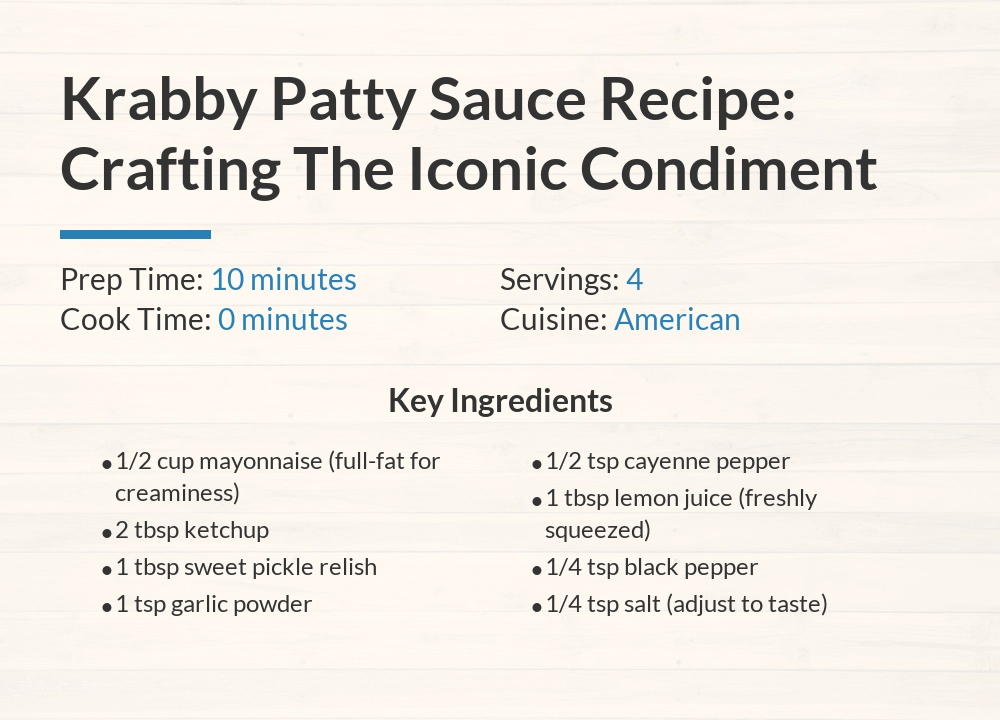
- Prep Time: 10 minutes
- Cook Time: 0 minutes
- Servings: 4
- Course: Condiment
- Cuisine: American
- Diet: Vegetarian
Ingredients
- 1/2 cup mayonnaise (full-fat for creaminess)
- 2 tbsp ketchup
- 1 tbsp sweet pickle relish
- 1 tsp garlic powder
- 1 tsp onion powder
- 1/2 tsp cayenne pepper
- 1 tbsp lemon juice (freshly squeezed)
- 1/4 tsp black pepper
- 1/4 tsp salt (adjust to taste)
Instructions
- Gather all ingredients and ensure they are at room temperature for easy mixing. This prevents clumping and ensures a uniform texture.
- In a small bowl, combine the mayonnaise and ketchup. Use a whisk to blend them until smooth, which forms the base of your sauce.
- Add the sweet pickle relish, garlic powder, onion powder, cayenne pepper, lemon juice, black pepper, and salt. Stir thoroughly to incorporate all elements.
- Taste the mixture and adjust seasoning if needed. For a thinner consistency, add another tablespoon of lemon juice or a splash of water.
- Cover the bowl with plastic wrap and refrigerate for at least 30 minutes. Chilling allows the flavors to meld together effectively.
- Serve chilled with your preferred dishes, such as burgers, fries, or salads. Store any leftovers in an airtight container in the refrigerator for up to five days.
Nutrition
- Calories: 120 kcal
- Protein: 0.5 g
- Fat: 12 g
- Carbohydrates: 3 g
- Sugar: 2 g
- Fiber: 0 g
- Sodium: 150 mg
- Cholesterol: 10 mg
Cooking Method
This sauce requires no heat application. It is prepared using a mixing technique that emulsifies the ingredients cold. The absence of cooking preserves the fresh flavors of components like lemon juice and spices.
Emulsification occurs when the oil in mayonnaise binds with water-based elements such as ketchup and lemon juice. Whisking vigorously helps create a stable mixture that does not separate easily. Always mix in a circular motion to achieve the best consistency.
Tools Needed
- Small mixing bowl: Opt for a 2-cup capacity bowl to allow ample space for stirring without spillage.
- Whisk or fork: A whisk is ideal for smooth blending, but a fork can work if whisked thoroughly.
- Measuring spoons and cups: Accurate measurements are crucial for flavor balance.
- Airtight container: For storage, use glass or plastic containers with secure lids.
Ingredient Analysis and Selection
Each component in this sauce contributes to its overall profile. Understanding their attributes helps in making informed substitutions or adjustments. Let us break down the primary ingredients and their roles.
Mayonnaise: The Creamy Foundation
Mayonnaise acts as the base, providing richness and a smooth texture. Made from oil, egg yolks, and vinegar, it emulsifies the other liquids. Full-fat versions offer a denser mouthfeel, but light mayo can be used for fewer calories.
When selecting mayonnaise, check for stabilizers like xanthan gum if you prefer a thicker sauce. Homemade mayo allows control over salt and acidity levels. In terms of nutrition, it contributes most of the fat and calories in this recipe.
Garlic Powder: Concentrated Savory Notes
Garlic powder is dehydrated garlic ground into a fine powder. It delivers a consistent, mild garlic flavor without the pungency of fresh garlic. This form blends seamlessly into cold sauces without leaving chunks.
Compared to fresh garlic, powder has a longer shelf life and disperses evenly. It contains allicin, a compound with potential health benefits, though in smaller amounts than fresh. Store it in a cool, dark place to prevent clumping.
Cayenne Pepper: Heat and Complexity
Cayenne pepper adds a subtle heat that enhances the other flavors. Made from dried and ground red chili peppers, it ranges from 30,000 to 50,000 Scoville heat units. The amount used here provides a mild kick without overwhelming the palate.
This spice contains capsaicin, which may boost metabolism. For less heat, reduce it to 1/4 teaspoon or substitute with paprika. Always add cayenne gradually and taste as you go to avoid excessive spiciness.
Lemon Juice: Acidity and Brightness
Fresh lemon juice introduces acidity that cuts through the richness of mayonnaise. It also acts as a natural preservative. The citric acid helps balance the sweetness from ketchup and relish.
Bottled lemon juice can be used, but fresh juice offers a brighter flavor. Nutritionally, it adds vitamin C and enhances iron absorption from other foods. Adjust the quantity based on your preference for tanginess.
Nutritional Breakdown and Health Insights
This sauce is a condiment, meaning it should be used in moderation. A single serving contains approximately 120 calories, primarily from fats. The macronutrient profile includes 12 grams of fat, 3 grams of carbohydrates, and minimal protein.
Saturated fat comes from the mayonnaise, contributing to about 9 grams per serving. Using low-fat mayo can reduce this to 4-5 grams. Cholesterol is present at 10 mg per serving, mainly from egg-based mayonnaise.
Sodium levels are manageable at 150 mg, but this can increase if additional salt is added. For those monitoring intake, consider low-sodium ketchup and mayo. The sauce provides no significant fiber or sugar, making it suitable for low-carb diets.
From a dietician’s perspective, this recipe can fit into a balanced diet when portion-controlled. Pair it with fiber-rich foods like whole-grain buns or vegetable sides to create a more nutritious meal. The fats involved are mostly unsaturated if using oils like canola or olive in mayonnaise.
Dietary Adaptations for Various Needs
Adapting this sauce for specific diets is straightforward with simple ingredient swaps. Here are practical variations to accommodate common dietary restrictions.
Vegan and Dairy-Free Version
Replace regular mayonnaise with vegan mayo made from plant-based oils and proteins. Ensure the ketchup and relish are free from animal-derived ingredients. The flavor profile remains nearly identical, with no compromise on texture.
Nutritionally, vegan mayo often has similar fat content but no cholesterol. Check labels for added sugars if you are avoiding them. This version suits lactose-intolerant individuals as well.
Low-Sodium and Heart-Healthy Option
Use low-sodium mayonnaise and ketchup to reduce salt intake. Omit added salt and increase herbs like dill or celery seed for flavor. Lemon juice can be heightened to compensate for reduced saltiness.
This adaptation lowers sodium to under 100 mg per serving. It aligns with diets for hypertension or heart conditions. Always consult with a healthcare provider for personalized advice.
Gluten-Free and Allergen-Friendly
The base recipe is naturally gluten-free, but verify that all packaged ingredients like ketchup are certified gluten-free. For egg allergies, use egg-free mayo alternatives.
Cross-contamination is rare in this cold preparation. Serve with gluten-free buns or crackers if needed. This makes the sauce accessible for those with celiac disease or sensitivities.
Cultural and Historical Context of the Sauce
The Krabby Patty sauce is a fictional element from the animated series SpongeBob SquarePants, first aired in 1999. It represents the secret formula that makes the Krabby Patty burger unique in the show’s universe. While not based on a real historical recipe, it draws inspiration from classic American condiments like tartar sauce and cocktail sauce.
Tartar sauce, originating in France, typically includes mayonnaise, pickles, and capers. Cocktail sauce, often paired with seafood, combines ketchup, horseradish, and lemon juice. This recipe blends elements from both, creating a versatile sauce that complements burgers and seafood alike.
In popular culture, attempts to recreate fictional foods have become a trend, with this sauce being a prominent example. It symbolizes nostalgia and the joy of bringing cartoon fantasies to life. The DIY movement around it reflects a broader interest in homemade versions of commercial products.
Common Mistakes and Expert Tips for Perfection
Avoid these common errors to ensure your sauce turns out ideal every time. Overmixing can incorporate too much air, leading to a foamy texture. Mix gently until just combined for a creamy result.
Using ingredients straight from the refrigerator may cause separation. Let them sit at room temperature for 10-15 minutes before mixing. This helps achieve a smoother emulsion.
Skipping the chilling step reduces flavor depth. The resting period allows the spices to hydrate and meld. If short on time, chill for at least 15 minutes, though longer is better.
For a more complex flavor, add 1/3 part diced onion or celery during mixing. Ensure they are finely minced to avoid chunkiness. This variation adds texture and freshness, reminiscent of relish.
Storage mistakes include leaving the sauce at room temperature for extended periods. Always refrigerate and consume within five days. Freezing is not recommended as it can alter the texture upon thawing.
Serving, Pairing, and Storage Guidelines
This sauce is versatile and can enhance various dishes. Traditionally, it is served with Krabby Patty-style burgers on toasted buns. Add lettuce, tomato, and cheese for a complete meal.
It pairs well with fried foods like mozzarella sticks or chicken wings. The acidity cuts through the richness of fried items. Use it as a dip for vegetables or breadsticks for a lighter option.
For storage, transfer the sauce to an airtight container immediately after preparation. Label it with the date to track freshness. If separation occurs, stir well before serving to reconstitute.
Leftovers can be repurposed in salads or as a sandwich spread. Avoid using it in cooked dishes where high heat might cause curdling. Always use clean utensils to scoop out portions to prevent contamination.
The Science Behind Sauce Emulsification
Emulsification is the process of combining two immiscible liquids, like oil and water. In this sauce, mayonnaise acts as an emulsifier due to its lecithin content from egg yolks. This stabilizes the mixture of oil-based mayo and water-based ingredients.
Lemon juice and ketchup introduce acidity, which helps maintain the emulsion by lowering the pH. Whisking creates mechanical agitation that disperses fat droplets evenly. If the sauce breaks, adding a teaspoon of hot water and whisking vigorously can often restore it.
Understanding this science allows for better troubleshooting. For instance, adding liquids slowly while whisking prevents separation. Temperature fluctuations can affect stability, so keep ingredients consistent.
Frequently Asked Questions
What is the Krabby Patty sauce made of?
The sauce typically includes mayonnaise, ketchup, sweet pickle relish, garlic powder, onion powder, cayenne pepper, and lemon juice. These ingredients create a creamy, tangy, and slightly spicy condiment.
Can I make this sauce ahead of time?
Yes, preparing it a day in advance allows flavors to develop fully. Store it in the refrigerator in a sealed container. It keeps well for up to five days.
Is there a low-calorie version of this recipe?
Use light mayonnaise and reduced-sugar ketchup to lower calories. Replace sweet relish with diced cucumbers for fewer sugars. This can reduce calories to around 80 per serving.
How can I adjust the spiciness?
Reduce cayenne pepper to 1/4 teaspoon for mild heat or omit it entirely. For extra spice, add a dash of hot sauce or increase cayenne to 1 teaspoon.
What dishes pair best with this sauce?
It complements burgers, fish sandwiches, chicken tenders, and fries. It also works as a dip for vegetables or a spread for wraps and sandwiches.
Can I use fresh garlic instead of garlic powder?
Yes, but mince it finely to avoid chunks. Use one small clove of fresh garlic per teaspoon of powder. Note that fresh garlic has a stronger, more pungent flavor.
Why did my sauce separate?
Separation can occur if ingredients are too cold or mixed too vigorously. To fix it, let the sauce come to room temperature and whisk again. Adding a bit more mayonnaise can help rebind it.
Is this sauce suitable for children?
Yes, but reduce or omit cayenne pepper for milder taste. The sweet elements from ketchup and relish make it appealing to kids. Always check for allergies to ingredients like eggs.
How does this compare to tartar sauce?
Traditional tartar sauce uses mayonnaise, pickles, and capers, while this recipe includes ketchup and spices for a sweeter, spicier profile. Both are creamy, but this version has more complexity.
Can I freeze this sauce?
Freezing is not recommended as it can cause the emulsion to break and texture to become grainy. For best quality, prepare fresh and refrigerate for short-term storage.