
Finding a balanced meal that pleases everyone at the table often feels like a puzzle. You want something quick, nutritious, and full of flavor without spending hours in the kitchen. This Kikkoman stir fry sauce chicken recipe solves that problem elegantly. It brings together simple ingredients into a dish that feels both familiar and exciting.
I first prepared this stir-fry for a weeknight dinner when time was short and hunger was high. The sizzle of chicken hitting the hot wok, the aroma of garlic and ginger filling the kitchen, it transformed a routine evening into something special. My family now requests this meal regularly, and it has become a staple in our home cooking rotation.
In this guide, I will walk you through every step to master this recipe. You will learn not just how to make it, but why each component works so well together. We will explore the nutritional benefits, historical background, and practical adaptations to suit various diets. By the end, you will have all the knowledge to create a stir-fry that rivals any takeout.
How to Make kikkoman stir fry Sauce chicken recipe
This section provides the complete recipe with precise measurements and steps. Follow these instructions for a consistent and delicious outcome every time. The method focuses on achieving a perfect sear on the chicken and crisp-tender vegetables.
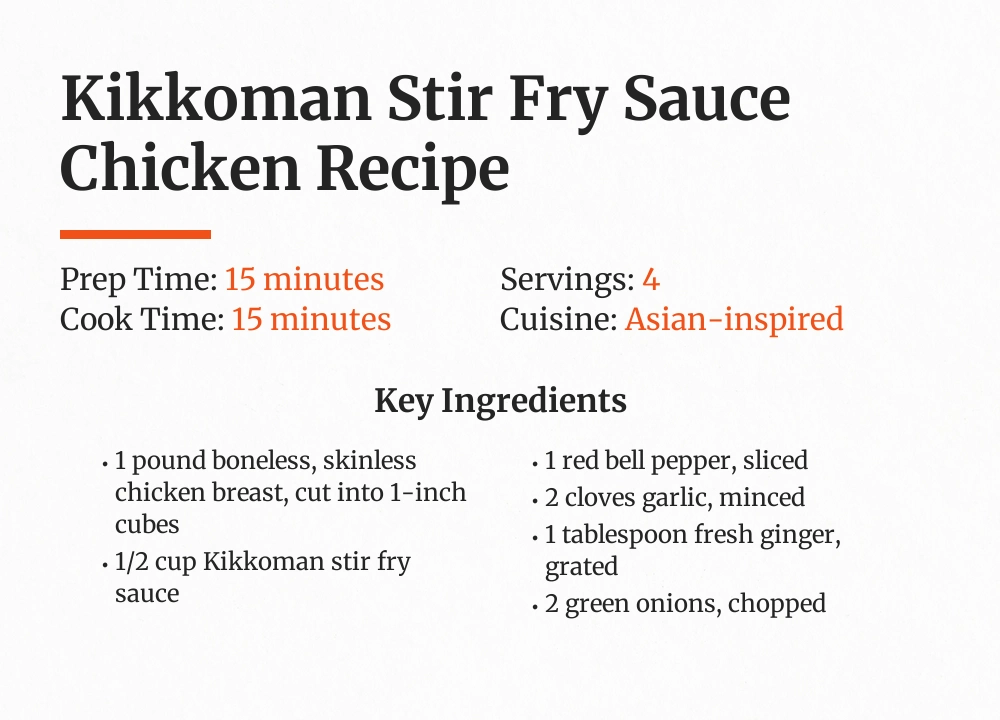
Recipe Details
- Prep Time: 15 minutes
- Cook Time: 15 minutes
- Servings: 4
- Course: Main Course
- Cuisine: Asian-inspired
- Diet: Gluten-Free adaptable
Ingredients
- 1 pound boneless, skinless chicken breast, cut into 1-inch cubes
- 1/2 cup Kikkoman stir fry sauce
- 1 tablespoon Kikkoman soy sauce
- 2 tablespoons cornstarch
- 3 cups broccoli florets
- 1 red bell pepper, sliced
- 2 cloves garlic, minced
- 1 tablespoon fresh ginger, grated
- 2 green onions, chopped
- 1 tablespoon canola oil
- 1/4 cup water or chicken stock
Instructions
- Place the cubed chicken in a large bowl. Add 1 tablespoon of Kikkoman soy sauce and 1 tablespoon of cornstarch. Toss to coat evenly and let it marinate for 10 minutes.
- While the chicken marinates, prepare the vegetables. Cut the broccoli into florets, slice the red bell pepper, and mince the garlic and ginger.
- Heat a large frying pan or wok over medium-high heat. Add the canola oil and swirl to coat the surface.
- Add the marinated chicken to the hot pan. Cook for 5-6 minutes, stirring occasionally, until the chicken is browned and cooked through. Remove the chicken from the pan and set aside.
- In the same pan, add the broccoli and red bell pepper. Stir-fry for 3-4 minutes until they start to soften but remain crisp.
- Push the vegetables to the side and add the minced garlic and ginger to the center of the pan. Cook for 1 minute until fragrant.
- Return the chicken to the pan. Pour in the Kikkoman stir fry sauce and water or chicken stock. Bring the mixture to a boil.
- In a small bowl, mix the remaining 1 tablespoon of cornstarch with 2 tablespoons of water to create a slurry. Stir this into the pan to thicken the sauce.
- Cook for another 2-3 minutes until the sauce coats the chicken and vegetables evenly. Garnish with chopped green onions before serving.
Nutrition
- Calories: 250 kcal
- Protein: 28 g
- Fat: 8 g
- Carbohydrates: 15 g
- Sugar: 6 g
- Fiber: 3 g
- Sodium: 900 mg
- Cholesterol: 70 mg
Cooking Method
This recipe uses the stir-frying technique, which involves cooking ingredients quickly in a small amount of oil over high heat. The high temperature sears the chicken, locking in juices, while the vegetables retain their texture and nutrients. Constant stirring ensures even cooking and prevents burning.
Tools Needed
- Large frying pan or wok
- Cutting board and sharp knife
- Measuring cups and spoons
- Mixing bowls
- Wooden spoon or spatula
Understanding the Ingredients
Each component in this dish plays a specific role in flavor, texture, and nutrition. Knowing why you use certain items can help you make informed substitutions and improvements. Let us break down the key elements.
Chicken
Chicken breast is lean and high in protein, making it a healthy base for this meal. It absorbs marinades well and cooks quickly, which is ideal for stir-frying. You can also use chicken thighs for a richer flavor and more tender result. Always cut the chicken into uniform pieces to ensure even cooking.
Kikkoman Stir Fry Sauce
Kikkoman stir fry sauce is a blend of soy sauce, vinegar, sugar, and spices. It provides a balanced umami taste with hints of sweetness and acidity. This sauce simplifies the cooking process by combining multiple seasonings into one bottle. Its consistency helps create a glossy glaze that clings to the chicken and vegetables.
Broccoli
Broccoli adds crunch, color, and a wealth of nutrients like vitamin C and fiber. Cutting it into florets allows for quick cooking while maintaining a crisp texture. You can blanch it briefly before stir-frying to reduce cooking time and enhance green color. This vegetable pairs well with the savory notes of the sauce.
Garlic and Ginger
Fresh garlic and ginger are essential for building depth of flavor. Garlic contributes a pungent, aromatic quality, while ginger adds a warm, slightly spicy note. Mincing or grating them ensures they disperse evenly throughout the dish. These ingredients also offer anti-inflammatory benefits and aid digestion.
Nutritional Insights
This stir-fry is not only tasty but also nutritionally balanced. The combination of lean protein, vegetables, and controlled sodium makes it a smart choice for health-conscious individuals. Let us examine how each part contributes to your dietary needs.
Chicken provides high-quality protein necessary for muscle repair and satiety. Using breast meat keeps the fat content low, which supports heart health. Broccoli and bell peppers are rich in vitamins A and C, antioxidants that boost immunity. The fiber in these vegetables promotes digestive regularity.
The sauce contributes most of the sodium, so measuring it precisely helps manage intake. Cornstarch thickens the sauce without adding significant calories, creating a satisfying texture. Overall, this meal offers a good ratio of macronutrients with minimal empty calories. It fits well into a balanced eating plan.
Adapting the Recipe for Different Diets
Many people have dietary restrictions or preferences, and this recipe is flexible enough to accommodate them. With simple swaps, you can create versions that are gluten-free, vegan, or lower in sodium. Here are some practical adjustments.
Gluten-Free Option
Use Kikkoman gluten-free tamari soy sauce instead of regular soy sauce. Ensure the stir fry sauce is certified gluten-free, as some varieties may contain wheat. This substitution maintains the authentic flavor while making the dish safe for those with celiac disease or gluten sensitivity.
Vegan Variation
Replace chicken with firm tofu or tempeh, cubed and marinated similarly. Increase the amount of vegetables like mushrooms or carrots for heartiness. Use vegetable stock instead of chicken stock to keep it plant-based. The sauce and cooking method remain the same, delivering a satisfying vegan meal.
Low-Sodium Version
Opt for Kikkoman’s less sodium soy sauce and reduce the amount of stir fry sauce by half. Enhance flavor with extra garlic, ginger, or a splash of rice vinegar. Adding more fresh herbs like cilantro or basil can also compensate for reduced saltiness without increasing sodium levels.
The Origins of Stir-Fry and Soy Sauce
Stir-frying is a cooking technique that originated in China over a thousand years ago. It was developed as a fast, fuel-efficient method to prepare food in a wok over high heat. This approach preserves the color, texture, and nutrients of ingredients, making it both practical and healthy.
Kikkoman soy sauce has a history dating back to the 17th century in Japan. It is brewed naturally through fermentation, which develops its complex umami flavor. The company modernized production while maintaining traditional methods, ensuring consistency and quality. Soy sauce became a global staple due to its versatility in enhancing various dishes.
Combining these elements in a stir-fry reflects a blend of cultural influences. This recipe embodies the simplicity and efficiency of Asian cooking traditions, adapted for contemporary kitchens. Understanding this background adds appreciation for the dish beyond its taste.
Avoiding Common Errors
Even simple recipes can have pitfalls that affect the final result. Being aware of these mistakes helps you achieve a better outcome. Here are typical issues and how to prevent them.
Overcrowding the pan is a frequent error. Adding too much food at once lowers the temperature, causing the chicken to steam rather than sear. Cook in batches if necessary to maintain high heat. This ensures a crispy exterior and juicy interior.
Underseasoning the chicken before cooking can lead to blandness. The marinade with soy sauce and cornstarch not only adds flavor but also tenderizes the meat. Do not skip this step, as it forms the foundation of the dish’s taste profile.
Overcooking vegetables makes them mushy and dull. Broccoli and bell peppers should remain slightly crisp to provide texture contrast. Add them at the right stage and monitor their doneness closely. A quick stir-fry retains their vibrant color and nutrients.
Enhancing Your Meal Experience
How you serve and store this stir-fry can elevate it from good to great. Pairing it with complementary sides and proper storage techniques ensures enjoyment beyond the initial preparation. Consider these suggestions for a complete dining experience.
Serve the stir-fry over cooked rice, such as jasmine or brown rice, to absorb the sauce. Quinoa or noodles also work well for variety. Garnish with additional green onions, sesame seeds, or a squeeze of lime for extra freshness. This makes the meal more filling and visually appealing.
Leftovers can be stored in an airtight container in the refrigerator for up to three days. Reheat gently in a pan over medium heat to maintain texture. Avoid microwaving for too long, as it can make the chicken rubbery and the vegetables soggy. You can also freeze portions for up to a month, though the vegetables may soften upon thawing.
The Principles of High-Heat Cooking
Stir-frying relies on scientific principles to achieve its characteristic results. High heat causes the Maillard reaction, which browns the chicken and develops complex flavors. This reaction requires temperatures above 300°F and dry heat, which is why oil is used to facilitate even contact.
The cornstarch in the marinade and sauce acts as a thickening agent through gelatinization. When heated with liquid, starch granules swell and burst, creating a viscous sauce that clings to ingredients. This process happens quickly at boiling temperatures, making it ideal for fast-cooking methods like stir-frying.
Understanding these concepts can help you troubleshoot issues. For example, if the sauce does not thicken, the heat may be too low, or the cornstarch might not be fully dissolved. Adjusting these factors ensures consistent success.
Frequently Asked Questions
What is Kikkoman stir fry sauce chicken recipe?
It is a dish made by stir-frying cubed chicken and vegetables in a sauce based on Kikkoman stir fry sauce. The recipe typically includes marinating the chicken, cooking it quickly over high heat, and combining it with broccoli, bell peppers, and aromatics like garlic and ginger.
Why is this recipe important for busy families?
This recipe offers a quick, nutritious meal that can be prepared in under 30 minutes. It uses readily available ingredients and minimizes cleanup, making it practical for weeknights. The balanced nutrition supports health without sacrificing flavor.
How can I make this recipe gluten-free?
Substitute Kikkoman gluten-free tamari for the regular soy sauce and verify that the stir fry sauce is gluten-free. These swaps maintain the taste while adhering to dietary needs. Always check labels to ensure compliance.
Can I use other proteins instead of chicken?
Yes, beef, shrimp, or tofu work well. Adjust cooking times accordingly; shrimp cook faster than chicken, while beef may take slightly longer. Marinate the alternative protein similarly to infuse flavor.
What if I do not have a wok?
A large frying pan with high sides is an excellent substitute. The key is to use a pan that distributes heat evenly and allows for quick stirring. Non-stick or cast iron pans both perform well for this purpose.
How do I prevent the sauce from becoming too salty?
Measure the soy sauce and stir fry sauce accurately, and consider using low-sodium versions. Balancing with a bit of sweetness, like a teaspoon of honey, or acidity from vinegar can counteract saltiness without diluting flavor.
Is it possible to prepare this dish ahead of time?
You can marinate the chicken and chop vegetables in advance, storing them separately in the refrigerator for up to a day. Cook just before serving to maintain texture and freshness. Reheating is best done on the stovetop.
What are the best vegetables to add?
Broccoli, bell peppers, carrots, snap peas, and mushrooms are all suitable. Choose vegetables that cook quickly and have firm textures. Avoid watery ones like zucchini unless added at the very end to prevent sogginess.
How does marinating affect the chicken?
Marinating with soy sauce and cornstarch tenderizes the chicken by breaking down proteins slightly. The cornstarch also helps create a protective layer that seals in moisture during cooking, resulting in a juicier final product.
Can I freeze the completed stir-fry?
Freezing is possible, but the vegetables may lose their crispness upon thawing. For best results, freeze without vegetables and add fresh ones when reheating. Store in freezer-safe containers for up to one month.