
There is a certain magic in a spaghetti sauce that has been passed down through generations, a recipe that feels like home with every spoonful. When I first tasted Jim’s Spaghetti Sauce during a visit to Huntington, West Virginia, I knew I had to bring that experience into my own kitchen. This sauce, with its rich history and balanced flavors, has become a staple in my household, and I want to share how you can recreate it.
Jim’s Spaghetti Sauce recipe originates from Jim’s Steak and Spaghetti House, an institution in downtown Huntington since 1944. For over 78 years, this dish has been a favorite, often described as the best spaghetti sauce by those who have tried it. The key lies in its simplicity and depth, using ingredients like ground chuck and canned tomato sauce to build a robust base.
In this article, I will guide you through making this sauce, from selecting the right ingredients to understanding its nutritional benefits. Whether you are cooking for a family dinner or preparing a batch for the freezer, this recipe offers a reliable way to enjoy a classic American-Italian dish. Let’s start with the core recipe to get you cooking right away.
How to Make Jim’s Spaghetti Sauce Recipe
This section provides the complete recipe for Jim’s Spaghetti Sauce, including details on preparation, ingredients, and step-by-step instructions. Follow these guidelines to achieve the authentic taste that has made this sauce a legend.
Recipe Details
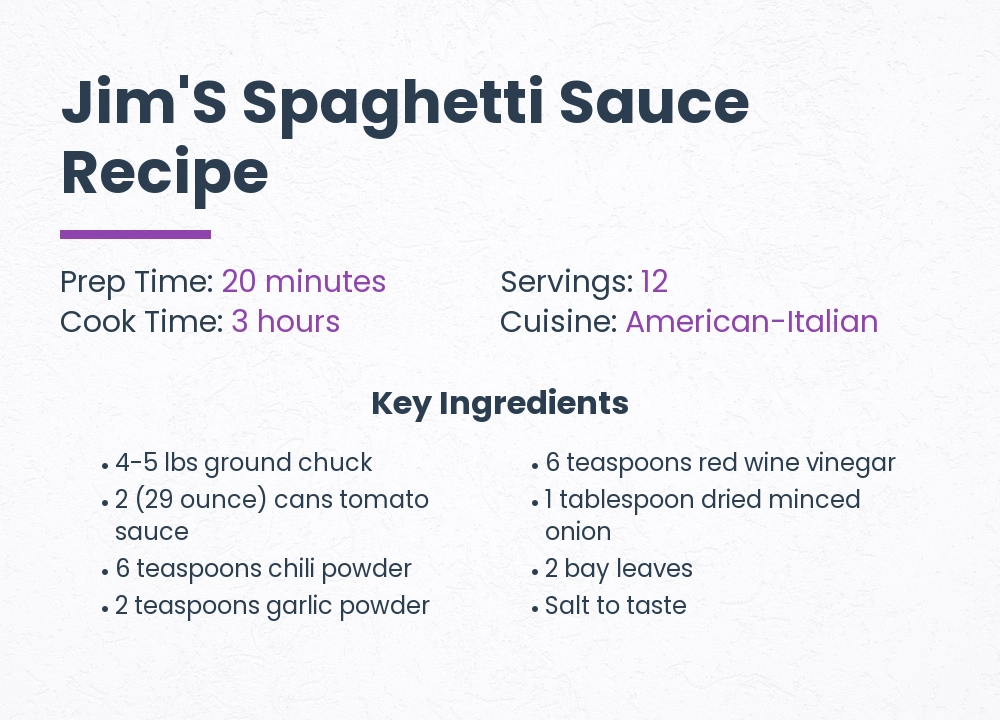
- Prep Time: 20 minutes
- Cook Time: 3 hours
- Servings: 12
- Course: Main Course
- Cuisine: American-Italian
- Diet: Omnivore
Ingredients
- 4-5 lbs ground chuck
- 2 (29 ounce) cans tomato sauce
- 6 teaspoons chili powder
- 2 teaspoons garlic powder
- 1 teaspoon black pepper
- 6 teaspoons red wine vinegar
- 1 tablespoon dried minced onion
- 2 bay leaves
- Salt to taste
Instructions
- Place the ground chuck in a large pot or Dutch oven over medium heat. Do not brown the meat; instead, break it up with a spoon and let it cook gently until it changes color, which should take about 10 minutes. This method helps retain moisture and flavor.
- Add the tomato sauce, chili powder, garlic powder, black pepper, red wine vinegar, dried minced onion, and bay leaves to the pot. Stir all ingredients until well combined.
- Reduce the heat to low and let the sauce simmer uncovered. Allow it to cook for about 3 hours, stirring occasionally to prevent sticking. The sauce will thicken and develop a deep, rich color as it simmers.
- After 3 hours, remove the bay leaves. If you prefer a smoother texture, use an immersion blender to blend the sauce briefly. For a chunkier consistency, leave it as is.
- Taste the sauce and adjust seasoning with salt if needed. Serve immediately over cooked spaghetti, or let it cool for storage.
Nutrition
- Calories: 320 kcal
- Protein: 25 g
- Fat: 18 g
- Carbohydrates: 12 g
- Sugar: 8 g
- Fiber: 3 g
- Sodium: 650 mg
- Cholesterol: 85 mg
Cooking Method
This sauce uses a slow simmering technique to meld flavors without browning the meat first. Cooking on low heat for an extended period allows the ingredients to integrate fully, resulting in a harmonious blend. The method emphasizes patience, as the sauce develops its character over time.
Tools Needed
- Large pot or Dutch oven
- Wooden spoon or spatula
- Immersion blender (optional)
- Measuring spoons and cups
- Good quality ziplock freezer bags for storage
Ingredient Analysis
Understanding each component of Jim’s Spaghetti Sauce helps in appreciating why this recipe stands out. Below, I break down the primary ingredients, their roles, and how they contribute to the final dish.
Ground Chuck
Ground chuck is a cut of beef from the shoulder area, known for its ideal fat content of about 15-20%. This fat level provides richness and moisture without making the sauce greasy. In this recipe, the chuck is not browned, which preserves its tenderness and allows it to absorb the tomato base better. Choosing high-quality chuck ensures a flavorful foundation.
Canned Tomato Sauce
The recipe calls for two 29-ounce cans of tomato sauce, which form the liquid base of the sauce. Tomato sauce offers a smooth texture and consistent flavor, unlike crushed or whole tomatoes. It cooks down well during simmering, thickening naturally. Opt for no-salt-added versions if you are monitoring sodium intake, as this allows better control over seasoning.
Chili Powder
Chili powder here refers to a blend of ground chilies and spices, not pure chili flakes. It adds a mild heat and depth, with notes of cumin and garlic often present. The six teaspoons used provide a subtle warmth that complements the tomatoes without overpowering them. For a milder version, reduce the amount slightly.
Red Wine Vinegar
Red wine vinegar introduces acidity that balances the sweetness of the tomatoes. The six teaspoons help brighten the sauce and enhance other flavors. Vinegar also acts as a tenderizer for the meat, contributing to the sauce’s overall texture. If unavailable, you can substitute with white wine vinegar or lemon juice.
Dried Minced Onion
Dried minced onion offers convenience and a consistent onion flavor without the texture of fresh onions. It rehydrates during cooking, blending seamlessly into the sauce. This choice reflects the recipe’s no-frills approach, focusing on ease and reliability. Fresh onions can be used, but they may alter the sauce’s traditional profile.
Nutritional Breakdown
From a dietary perspective, this sauce provides a balanced mix of macronutrients. The ground chuck is a good source of protein and iron, essential for muscle maintenance and energy. Tomatoes contribute vitamins A and C, along with lycopene, an antioxidant linked to heart health.
The fat content primarily comes from the chuck, which includes saturated fats. Moderation is key, as excessive intake can impact cholesterol levels. Using leaner cuts or draining excess fat after cooking can make this dish healthier. The carbohydrates are mainly from the tomato sauce, offering dietary fiber that aids digestion.
Sodium levels can be managed by selecting low-sodium tomato products and adjusting salt added during cooking. For those with dietary restrictions, this sauce can be adapted to fit various needs, which I will cover in the next section.
Dietary Adaptations
Jim’s Spaghetti Sauce can be modified to suit different dietary preferences without losing its essence. Here are practical swaps for common needs.
Gluten-Free Version
This recipe is naturally gluten-free as written. Serve it with gluten-free pasta or zucchini noodles to maintain a gluten-free meal. Always check labels on canned tomato sauce to ensure no gluten-containing additives are present.
Vegan or Vegetarian Adaptation
Replace the ground chuck with plant-based ground meat alternatives, such as lentils or textured vegetable protein. Use the same cooking method, simmering for about an hour to allow flavors to develop. For a richer taste, add a tablespoon of olive oil during cooking.
Low-Sodium Option
Choose no-salt-added tomato sauce and reduce or omit added salt. Increase herbs like oregano or basil to enhance flavor without sodium. This adjustment helps manage blood pressure and overall sodium intake.
Dairy-Free and Other Modifications
The original recipe contains no dairy, so it is already dairy-free. For lower fat, use ground turkey or chicken instead of chuck, and simmer for a similar duration to achieve tenderness.
Cultural and Historical Context
Jim’s Spaghetti Sauce has roots in Huntington, West Virginia, where Jim’s Steak and Spaghetti House opened in 1944. This establishment became a local landmark, serving meals that blended Italian influences with American tastes. The sauce reflects a post-war era when canned goods simplified home cooking, yet families valued hearty, slow-cooked dishes.
Over the decades, the recipe has been passed down, with many families adapting it for home use. It represents a piece of regional culinary history, often evoking nostalgia for those who grew up with it. The use of accessible ingredients like canned tomato sauce and ground chuck made it a practical choice for households across the country.
Common Mistakes and Expert Tips
Avoiding common errors ensures your sauce turns out perfectly every time. Here are insights based on my experience and feedback from others who have made this recipe.
Do Not Brown the Meat
One of the most emphasized steps is not browning the ground chuck before adding other ingredients. Browning can make the meat tough and greasy. Instead, cook it gently to retain moisture and integrate it smoothly into the sauce.
Simmering Time
Do not rush the simmering process. The full 3 hours allow flavors to meld and the sauce to thicken properly. If you shorten this time, the sauce may taste underdeveloped and watery. Stir occasionally to prevent burning on the bottom.
Ingredient Measurements
Use precise measurements for spices like chili powder and vinegar. Deviating too much can alter the balance of flavors. If doubling the recipe for a larger batch, maintain the same ratios to preserve the original taste.
Storage and Freezing
This sauce freezes well for up to 3 months. Use good quality ziplock freezer bags or airtight containers. Label them with the date, and thaw in the refrigerator before reheating. Leftovers can be refrigerated for up to 5 days.
Serving, Pairing, and Storage
Jim’s Spaghetti Sauce is versatile and can be enjoyed in various ways. Serve it over al dente spaghetti for a classic meal, or use it as a base for lasagna or other pasta dishes. Pair it with a simple green salad and garlic bread to round out the meal.
For wine pairings, a medium-bodied red like Chianti or Sangiovese complements the tomato and meat flavors. If you prefer non-alcoholic options, sparkling water with a squeeze of lemon works well.
Store any unused sauce in the refrigerator for short-term use. For longer storage, freeze in portion-sized containers. Reheat gently on the stove, adding a splash of water if the sauce has thickened too much.
The Science Behind the Sauce
The slow simmering process in this recipe involves Maillard reaction and hydrolysis, which break down proteins and carbohydrates into more complex flavors. The acidity from the tomato sauce and vinegar helps tenderize the meat, while the fat from the chuck emulsifies with the liquids, creating a cohesive texture.
Using dried minced onion instead of fresh avoids excess water content, which can dilute the sauce. The chili powder not only adds heat but also contains capsaicin, which can enhance metabolism and add a subtle kick without overwhelming the palate.
Frequently Asked Questions
What is Jim’s Spaghetti Sauce Recipe?
Jim’s Spaghetti Sauce Recipe is a classic American-Italian sauce originating from Jim’s Steak and Spaghetti House in Huntington, West Virginia. It features ground chuck, canned tomato sauce, chili powder, and other spices, simmered for hours to develop a rich, hearty flavor.
Why is this recipe important?
This recipe holds cultural significance as a family favorite since 1944, representing a piece of regional history. Its simplicity and reliability make it a go-to for home cooks seeking a dependable spaghetti sauce that appeals to all ages.
How does this recipe work?
The recipe works by slowly simmering ingredients without browning the meat first, allowing flavors to blend seamlessly. The extended cook time thickens the sauce and enhances its depth, while spices like chili powder add complexity.
Can I use fresh onions instead of dried minced onion?
Yes, you can substitute one medium finely chopped onion for the dried minced onion. Sauté it lightly before adding the meat to soften it, but note that this may change the texture slightly from the original recipe.
How can I make this sauce less spicy?
Reduce the chili powder to 3-4 teaspoons for a milder version. You can also omit it entirely and add extra black pepper or a pinch of sugar to balance the tomatoes’ acidity.
Is this sauce suitable for freezing?
Absolutely. This sauce freezes well for up to 3 months. Portion it into freezer-safe bags or containers, and thaw in the refrigerator before reheating on the stove.
What can I serve with this spaghetti sauce?
Beyond spaghetti, try it with other pasta shapes, over polenta, or as a topping for meatballs. It pairs well with steamed vegetables or a crisp salad for a complete meal.
How do I adjust the recipe for a smaller group?
Halve all ingredients for about 6 servings. Maintain the same cook time, but check for consistency after 2.5 hours, as smaller batches may thicken faster.
Can I use other types of meat?
Yes, ground turkey, chicken, or pork can be used instead of chuck. Adjust cooking times as needed, as leaner meats may cook faster and require less simmering to stay tender.
What if I don’t have an immersion blender?
If you prefer a smoother sauce and lack an immersion blender, you can carefully transfer small batches to a standard blender. Blend on low speed to avoid splatters, then return to the pot.