
That moment when you bite into a sandwich and the sauce transforms it from ordinary to exceptional is what many seek but few achieve. I first experienced this with Ike’s Godfather Sauce during a visit to their San Francisco location, where the creamy, tangy condiment made a lasting impression. Recreating this signature sauce at home became a personal mission, and after numerous tests, I perfected a version that captures its essence. This guide will walk you through every step, from ingredient selection to nutritional insights, ensuring you can replicate that iconic flavor in your own kitchen.
Ike’s Godfather Sauce is a creamy, versatile condiment known for its balance of richness and zest, often featured in sandwiches like The Matt Cain. Its importance lies in its ability to elevate simple ingredients, making it a staple for home cooks and sandwich enthusiasts. By understanding its components and methods, you can customize it to fit various dietary needs while maintaining its characteristic depth. Let’s begin with the core recipe, followed by a detailed exploration of its elements.
How to Make Ike’s Godfather Sauce Recipe
This section provides the foundational recipe for Ike’s Godfather Sauce, designed for clarity and ease. Follow these steps to create a batch that mirrors the original, with notes on consistency and flavor adjustments.
Recipe Details
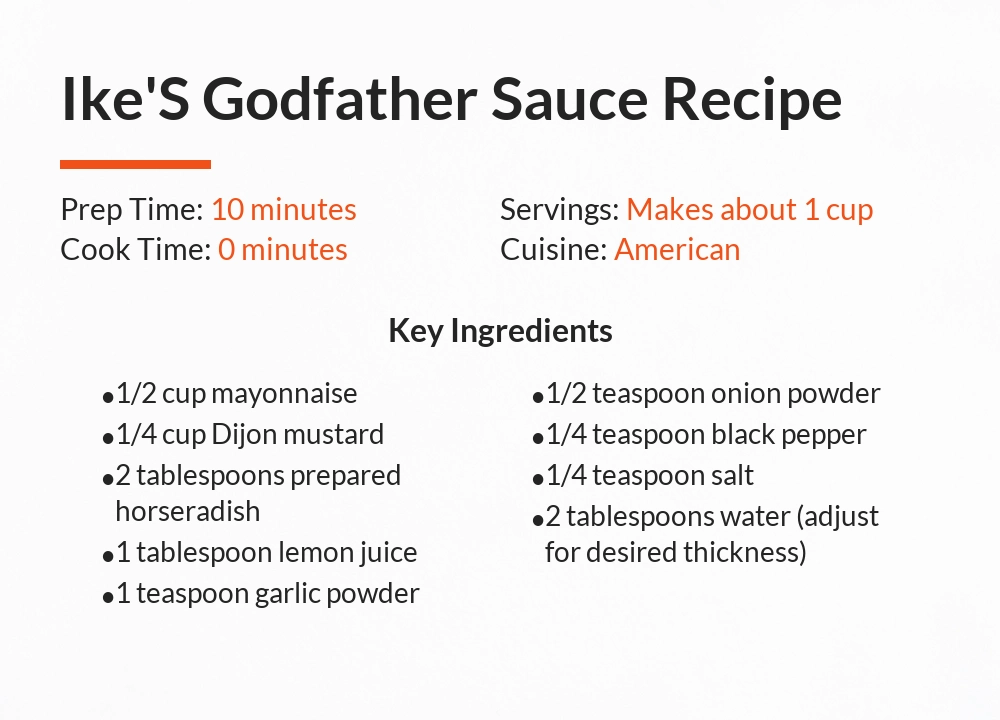
- Prep Time: 10 minutes
- Cook Time: 0 minutes
- Servings: Makes about 1 cup
- Course: Condiment
- Cuisine: American
- Diet: Contains dairy and eggs
Ingredients
- 1/2 cup mayonnaise
- 1/4 cup Dijon mustard
- 2 tablespoons prepared horseradish
- 1 tablespoon lemon juice
- 1 teaspoon garlic powder
- 1/2 teaspoon onion powder
- 1/4 teaspoon black pepper
- 1/4 teaspoon salt
- 2 tablespoons water (adjust for desired thickness)
Instructions
- Combine the mayonnaise, Dijon mustard, and prepared horseradish in a medium mixing bowl.
- Whisk these base ingredients until smooth and fully incorporated.
- Add the lemon juice, garlic powder, onion powder, black pepper, and salt to the mixture.
- Stir vigorously to ensure all spices are evenly distributed.
- Gradually incorporate the water while whisking to achieve a pourable consistency.
- Taste the sauce and adjust seasoning if needed, adding more salt or pepper to preference.
- Transfer the sauce to an airtight container and refrigerate for at least 30 minutes before use.
Nutrition
- Calories: 65 kcal
- Protein: 0.5 g
- Fat: 6 g
- Carbohydrates: 2 g
- Sugar: 0.5 g
- Fiber: 0.3 g
- Sodium: 180 mg
- Cholesterol: 5 mg
Cooking Method
This recipe requires no heating; it relies on emulsification through whisking. The process involves blending wet and dry ingredients to form a stable, creamy mixture. Proper technique ensures the sauce does not separate, resulting in a smooth texture.
Tools Needed
- Medium mixing bowl
- Whisk or fork
- Measuring spoons and cups
- Airtight container for storage
Ingredient Analysis and Selection
Each component in Ike’s Godfather Sauce contributes to its unique profile. Understanding these ingredients allows for informed substitutions and enhancements.
Mayonnaise
Mayonnaise serves as the creamy base, providing richness and emulsification. Traditional versions use egg yolks and oil, which add fat and stability. For best results, select a full-fat mayonnaise with simple ingredients to avoid off-flavors. Low-fat options can be used but may alter the texture, making it less creamy.
The oil content in mayonnaise influences the sauce’s mouthfeel; higher oil varieties yield a thicker consistency. If you prefer a lighter version, Greek yogurt can partially replace mayonnaise, though this changes the flavor slightly. Always check for freshness, as old mayonnaise can develop a sour taste.
Dijon Mustard
Dijon mustard introduces tanginess and complexity, derived from brown mustard seeds and white wine. Its smooth texture blends seamlessly without gritty bits. The acidity in Dijon helps balance the richness of mayonnaise, preventing the sauce from feeling heavy.
When selecting Dijon, opt for brands with minimal additives for a purer taste. If unavailable, yellow mustard can substitute, but it lacks the depth of Dijon. For a spicier kick, incorporate whole-grain mustard in small amounts.
Horseradish
Prepared horseradish adds a pungent, spicy note that defines the sauce’s character. It is typically made from grated horseradish root mixed with vinegar and salt. The vinegar acts as a preservative and enhances the sauce’s acidity.
Freshness matters with horseradish; older products lose their potency. For maximum heat, use freshly grated horseradish, but be cautious as it can be overwhelming. Vegan versions often use horseradish without dairy additives, making it suitable for various diets.
Lemon Juice
Lemon juice provides brightness and cuts through the fat, contributing to the sauce’s balanced flavor. Freshly squeezed juice is preferable over bottled versions, which may contain preservatives affecting taste. The citric acid also helps preserve the sauce slightly.
If lemons are not available, white vinegar or apple cider vinegar can serve as alternatives. Adjust the quantity based on desired tartness; too much can make the sauce overly acidic.
Garlic and Onion Powders
These powders offer concentrated flavor without the moisture of fresh ingredients, ensuring the sauce remains thick. Garlic powder delivers a subtle, sweet garlic note, while onion powder adds umami depth. If you prefer fresh garlic, mince it finely to avoid chunks.
For a stronger garlic presence, roasted garlic paste can be incorporated. Be mindful that fresh garlic may reduce the sauce’s shelf life due to higher water content.
Nutritional Insights and Health Impact
This sauce is calorie-dense primarily from fats in mayonnaise, but it can fit into a balanced diet when used in moderation. The following breakdown highlights key nutritional aspects.
Caloric and Macronutrient Profile
A single tablespoon contains approximately 65 calories, with fat comprising most of the energy. The majority of fats are unsaturated from oils in mayonnaise, which can support heart health in controlled amounts. Carbohydrates are low, mainly from mustard and horseradish, with minimal sugar content.
Protein is negligible, so pair the sauce with protein-rich foods like chicken or beef for a balanced meal. The sodium level is moderate, but those monitoring intake should reduce added salt or use low-sodium ingredients.
Dietary Considerations
For individuals with dietary restrictions, this sauce can be adapted. Vegan diets can use egg-free mayonnaise and ensure all components are plant-based. Gluten-free needs are typically met as the ingredients are naturally free from gluten, but check labels for cross-contamination.
Low-fat versions may substitute mayonnaise with avocado or silken tofu for creaminess. However, these changes affect flavor and texture, so adjustments in seasoning may be necessary.
Healthier Modifications
To reduce calorie density, replace half the mayonnaise with plain Greek yogurt, which adds protein. For lower sodium, omit added salt and rely on the natural salts in mustard and horseradish. Incorporating herbs like dill or parsley can enhance flavor without extra calories.
If concerned about preservatives, make homemade mayonnaise using olive oil and eggs. This allows control over ingredient quality and fat types.
Historical and Cultural Background
Ike’s Love and Sandwiches, founded in San Francisco, is known for its creative sandwich combinations and signature sauces. The Godfather Sauce is part of their “dirty sauce” lineup, which often includes creamy, zesty blends. This sauce gained popularity through sandwiches like The Matt Cain, named after the baseball player, featuring turkey, salami, and provolone.
The term “Godfather” may reference its robust, authoritative flavor profile, commanding attention in any dish. Ike’s approach to naming sauces and sandwiches after celebrities and local icons adds a cultural layer, connecting food to community identity. Over time, fans have sought to replicate these sauces at home, leading to widespread interest in copycat recipes.
Understanding this context enriches the cooking experience, as the sauce is not just a condiment but a piece of culinary culture. It reflects American sandwich trends, where bold, customizable flavors drive consumer appeal.
Common Preparation Errors and Solutions
Many home cooks encounter issues when making this sauce, but these can be avoided with simple tips.
Inconsistent Texture
If the sauce separates or becomes too thick, it often results from improper emulsification. Whisk ingredients gradually, starting with the mayonnaise base, and add liquids slowly. If separation occurs, whisk in a teaspoon of water or lemon juice to recombine.
Over-mixing can incorporate too much air, making the sauce frothy. Use a steady, gentle whisking motion for a smooth result. Refrigeration helps ingredients bind, so always chill before serving.
Flavor Imbalance
Too much horseradish can overpower other elements. Start with the recommended amount and adjust after tasting. If the sauce is too tangy, add a pinch of sugar or more mayonnaise to mellow it. For excessive saltiness, dilute with additional mayonnaise or water.
Freshness of ingredients is crucial; stale spices or old horseradish can lead to flat flavor. Store components properly and use within their shelf life.
Storage Mistakes
This sauce should be kept in an airtight container in the refrigerator and consumed within 5-7 days. Do not leave it at room temperature for extended periods, as dairy-based ingredients can spoil. Freezing is not recommended, as it may cause texture changes upon thawing.
If mold or off-odors develop, discard the sauce immediately. Always use clean utensils to prevent contamination.
Serving Suggestions and Food Pairings
Ike’s Godfather Sauce excels as a sandwich spread, but its uses extend to dips, dressings, and marinades. Here are practical ways to incorporate it into meals.
Sandwich Applications
Spread it on Dutch crunch bread with chicken strips, provolone cheese, and avocado for a classic Ike’s-style sandwich. It pairs well with beef in cheesesteaks or with vegetarian options like artichoke hearts. The creamy texture complements crispy elements like beer-battered onion rings.
For a breakfast twist, use it on eggs or breakfast sandwiches. Its bold flavor cuts through richer ingredients like bacon or sausage.
Beyond Sandwiches
As a dip, serve it with fried chicken, vegetable sticks, or potato wedges. Thin it with a little milk or vinegar to create a dressing for salads, such as Caesar or garden varieties. It can also be used as a marinade for meats; the acidity helps tenderize while adding flavor.
When pairing with beverages, light beers or iced tea work well to balance the sauce’s richness. Avoid overly sweet drinks that might clash with its tangy notes.
The Science of Emulsification in Sauces
Emulsification is key to this sauce’s stability, where oil-based and water-based ingredients combine without separating. Mayonnaise acts as an emulsifier due to lecithin in egg yolks, which bonds oil and water molecules. Whisking introduces mechanical energy, helping form a stable mixture.
If the sauce breaks, it often means the emulsion has failed. To fix this, start with a small amount of the broken sauce and slowly whisk in new mayonnaise or mustard, which can rebind the ingredients. Temperature plays a role; ingredients at room temperature emulsify more easily than cold ones.
Understanding this process allows for better troubleshooting and consistency in homemade versions.
Frequently Asked Questions
What is Ike’s Godfather Sauce made of?
Ike’s Godfather Sauce typically includes mayonnaise, Dijon mustard, horseradish, lemon juice, and spices like garlic and onion powder. It is a creamy, tangy condiment used primarily in sandwiches.
Can I make a vegan version of this sauce?
Yes, replace mayonnaise with vegan mayo and ensure all other ingredients are plant-based. Horseradish and mustards are usually vegan, but check labels for additives.
How long does homemade Godfather Sauce last?
When stored in an airtight container in the refrigerator, it lasts 5-7 days. Do not freeze it, as this can alter the texture.
What sandwiches pair well with this sauce?
It complements sandwiches with turkey, salami, provolone, chicken, or beef. Vegetarian options include those with avocado or artichoke. Dutch crunch bread is a popular choice.
Is this sauce spicy?
It has a mild spice from horseradish and mustard, but the level can be adjusted by reducing or increasing those ingredients. For less heat, use less horseradish.
Can I use fresh garlic instead of garlic powder?
Yes, mince fresh garlic finely and use it in place of powder. Start with half the amount, as fresh garlic can be more potent, and adjust to taste.
What if my sauce is too thin?
Add more mayonnaise or a small amount of Dijon mustard to thicken it. Alternatively, refrigerate it for longer, as chilling can help firm up the consistency.
How does this sauce compare to other Ike’s sauces?
Godfather Sauce is part of the “dirty sauce” category, which often includes creamy, garlicky blends. It differs from buffalo wing sauce or BBQ sauce by being less sweet and more tangy.
Can I add other ingredients to customize it?
Absolutely. Incorporate herbs like parsley, spices like paprika, or even a touch of BBQ sauce for variation. Adjust based on your preference for sweetness or heat.
Is this sauce high in sodium?
It has moderate sodium, primarily from mustard and added salt. To reduce sodium, use low-sodium ingredients and limit or omit extra salt.