
I first tasted this sauce at a HuHot Mongolian Grill during a family trip years ago. The experience of watching the cooks prepare food on the large circular grill was memorable. The sauce I created that day became the star of the meal, a perfect balance of sweet and savory with a distinct garlic note.
When I returned home, I was determined to recreate that flavor in my own kitchen. This recipe is the result of many tests and adjustments. It captures the essence of the restaurant’s Samurai Teriyaki Sauce, allowing you to bring that experience to your table.
This guide provides the complete formula for the sauce you remember. We will explore its ingredients, nutritional aspects, and methods for adapting it to various dietary needs. You can achieve a result that is very close to the original, if not identical.
How to Make HuHot Teriyaki Sauce Recipe
This section contains the complete recipe for you to follow. The instructions are designed for clarity and repeatable success. Please read through all steps before you begin cooking.
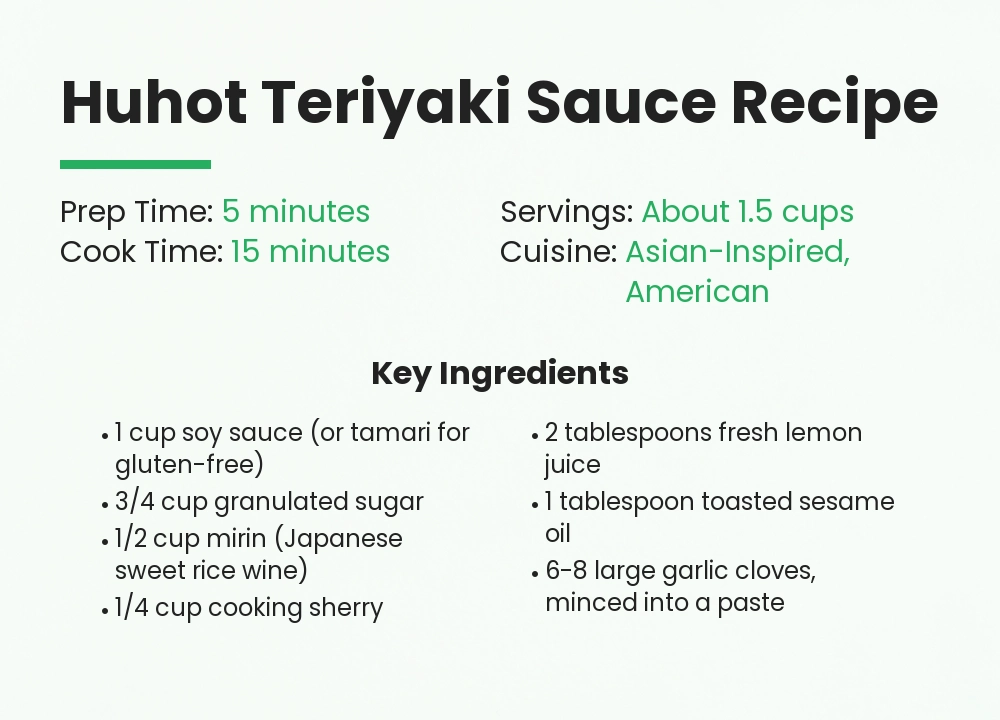
Recipe Details
- Prep Time: 5 minutes
- Cook Time: 15 minutes
- Servings: About 1.5 cups
- Course: Sauce, Condiment
- Cuisine: Asian-Inspired, American
- Diet: Gluten-Free Adaptable
Ingredients
- 1 cup soy sauce (or tamari for gluten-free)
- 3/4 cup granulated sugar
- 1/2 cup mirin (Japanese sweet rice wine)
- 1/4 cup cooking sherry
- 3 tablespoons rice vinegar
- 2 tablespoons fresh lemon juice
- 1 tablespoon toasted sesame oil
- 6-8 large garlic cloves, minced into a paste
- 2 teaspoons fresh ginger, grated
- 2 tablespoons cornstarch
- 1/4 cup cold water
Instructions
- Combine the soy sauce, sugar, mirin, sherry, and rice vinegar in a medium saucepan.
- Whisk the ingredients together over medium heat until the sugar has completely dissolved.
- Add the lemon juice, sesame oil, garlic paste, and grated ginger to the saucepan.
- Bring the mixture to a gentle simmer, then reduce the heat to low. Allow it to simmer for 8-10 minutes, stirring occasionally.
- In a separate small bowl, create a slurry by whisking the cornstarch into the cold water until smooth.
- While continuously whisking the simmering sauce, slowly drizzle in the cornstarch slurry.
- Continue to cook for another 2-3 minutes, whisking constantly, until the sauce thickens to a glossy, coating consistency.
- Remove the saucepan from the heat and let the sauce cool. It will thicken further as it cools.
- Transfer the finished sauce to a clean jar or bottle. Store it in the refrigerator.
Nutrition
- Calories: 45 kcal
- Protein: 1 g
- Fat: 0.5 g
- Carbohydrates: 9 g
- Sugar: 8 g
- Fiber: 0.1 g
- Sodium: 720 mg
- Cholesterol: 0 mg
These values are estimates per tablespoon serving. Actual nutrition can vary based on specific ingredients used.
Cooking Method
The primary method for this sauce is a stovetop reduction and thickening. You begin by dissolving sugars and blending flavors over heat. The final step involves incorporating a starch slurry to achieve the desired viscosity.
Constant whisking during the slurry addition is critical. This prevents the formation of lumps and ensures a smooth, professional-quality texture. The entire process happens in one saucepan for simplicity.
Tools Needed
- Medium saucepan (2-quart capacity is ideal)
- Whisk
- Measuring cups and spoons
- Microplane or fine grater for ginger and garlic
- Small bowl for making the cornstarch slurry
- Jar or bottle with a lid for storage
Understanding the Core Ingredients
Each component in this formula serves a specific purpose. Knowing the role of each one helps you make informed substitutions and understand the final product.
Soy Sauce and its Alternatives
Soy sauce provides the foundational salty and umami character. It is a fermented product made from soybeans, wheat, salt, and a culture mold. The type you select will influence the final taste.
For a gluten-free version, tamari is the most effective substitute. It is a Japanese soy sauce typically made with little or no wheat. Coconut aminos can also be used, though it will result in a sweeter, less salty profile.
The Role of Sweeteners
Granulated sugar is used here for its neutral sweetness and ability to create a glossy sauce. It balances the high sodium content from the soy sauce and the acidity from the vinegar and lemon.
You can substitute with brown sugar for a deeper, molasses-like flavor. For a lower-glycemic option, allulose or monk fruit sweetener blends work well, as they mimic the texture and browning properties of sugar.
Acidic Components: Vinegar and Lemon Juice
Rice vinegar contributes a mild, clean acidity. Lemon juice introduces a brighter, sharper sour note that lifts the other flavors. The combination prevents the sauce from tasting overly sweet or heavy.
Fresh lemon juice is superior to bottled, as it lacks the preservative aftertaste. If you must substitute, use an equal amount of additional rice vinegar, though the citrus high note will be absent.
Aromatics: Garlic and Ginger
Fresh garlic is non-negotiable for an authentic result. The instruction to mince it into a paste is important. This maximizes the surface area, releasing more allicin and ensuring its flavor permeates the entire sauce.
Fresh ginger provides a warm, spicy undertone. Grating it allows its fibers and juices to integrate seamlessly. Powdered ginger is not a suitable replacement, as it can impart a dusty texture and muted flavor.
Nutritional Information and Health Considerations
As a condiment, this sauce is used in moderation. Understanding its nutritional profile helps you incorporate it into a balanced eating pattern.
Sodium Content Analysis
Soy sauce is the primary source of sodium in this preparation. One tablespoon of the finished product contains a significant amount of your daily value. This is typical for concentrated sauces.
To reduce sodium, you can use a reduced-sodium soy sauce. Another method is to dilute the finished sauce with a small amount of water or unsalted chicken broth when using it as a marinade or glaze.
Sugar and Carbohydrates
The sugar content is high, which is necessary for the classic teriyaki glaze consistency and flavor balance. Most of the carbohydrates in the sauce come from these added sugars.
If you are monitoring carbohydrate intake, be mindful of portion size. Using a sugar alternative, as mentioned previously, can effectively reduce the net carbs to nearly zero.
Fat and Protein Content
This sauce is very low in fat and protein. The minimal fat comes from the sesame oil, which is a source of polyunsaturated and monounsaturated fats. It contributes no cholesterol.
It is not a significant source of vitamins or minerals. Its purpose is to enhance the flavor of other foods, such as lean proteins and vegetables, which provide the main nutritional value of a meal.
Dietary Adaptations and Modifications
This recipe is highly adaptable. With a few simple changes, you can accommodate most dietary restrictions without sacrificing flavor.
Creating a Gluten-Free Version
To make this sauce gluten-free, replace the standard soy sauce with tamari. Always check the label to confirm the tamari is certified gluten-free, as some brands may still use wheat in small amounts.
Also, verify that your mirin is gluten-free. Some cheaper mirin brands may contain additives derived from gluten grains. A safe alternative is to use a dry sherry, which is typically gluten-free.
Low-Sugar and Sugar-Free Options
For a sugar-free teriyaki sauce, replace the granulated sugar with a zero-calorie sweetener that measures like sugar, such as erythritol or allulose. These sweeteners will not caramelize exactly like sugar, but they will provide the sweetness.
You can also reduce the amount of sweetener by one-third and compensate with a splash of unsweetened apple juice or pineapple juice for natural fruit sugars and flavor complexity.
Alcohol-Free Substitutions
The sherry and mirin both contain alcohol, which cooks off but leaves behind their distinct flavors. For an alcohol-free version, substitute the mirin with a mixture of 1/2 cup rice vinegar and 2 tablespoons of sugar.
Replace the sherry with an equal amount of non-alcoholic wine or simply use additional vegetable broth. The flavor will be slightly different but still enjoyable.
The History and Evolution of Teriyaki
Teriyaki is a Japanese cooking technique, not just a sauce. The name comes from “teri,” meaning luster, and “yaki,” meaning to grill or broil. It traditionally describes foods glazed with a sweetened soy-based sauce while being cooked.
The technique was developed in the 17th century after soy sauce became more widely available in Japan. The original glazes were simpler, often just soy sauce and mirin. The version we know today, thickened with sugar or starch, is a more modern interpretation.
In the United States, teriyaki became popular after World War II, particularly on the West Coast. American versions, like the one served at HuHot, often feature a thicker, sweeter sauce and a wider array of ingredients like garlic and other spices not always found in traditional Japanese recipes.
Expert Tips for Perfect Results
Avoiding common errors will ensure your sauce turns out correctly every time. These insights come from professional kitchen experience and food science.
Avoiding a Burnt or Bitter Flavor
Do not walk away from the saucepan once the sugar has been added. Sugar can easily burn if left unattended over medium heat. A burnt sugar taste will ruin the entire batch.
Use a heavy-bottomed saucepan to distribute heat evenly. If you see dark bits forming on the bottom of the pan, immediately remove it from the heat and transfer the sauce to a new pan to continue cooking.
Achieving the Correct Thickness
The sauce will seem thin when you first add the cornstarch slurry. It requires a full boil to activate the starch’s thickening power. Whisk for the full 2-3 minutes until you see a clear change in viscosity.
Remember that the sauce will continue to thicken as it cools. If it becomes too thick upon refrigeration, you can thin it with a teaspoon of warm water at a time until it reaches a pourable consistency.
Maximizing Garlic and Ginger Flavor
To get the most flavor from your garlic, crush the cloves with the flat side of a knife before mincing. This breaks down the cell walls and releases more of the flavorful compounds.
For ginger, peel it with a spoon to minimize waste. Grating it over a microplane captures both the juice and the pulp, ensuring no flavor is lost.
Serving Suggestions and Storage
This sauce is versatile. Its uses extend far beyond a simple glaze for grilled chicken, though it excels in that role.
Primary Uses
Use it as a marinade for beef, chicken, pork, or firm tofu for at least 30 minutes before cooking. It acts as a stir-fry sauce; add it during the last few minutes of cooking to coat vegetables and protein.
As a dipping sauce, serve it alongside potstickers, egg rolls, or steamed dumplings. You can also brush it over salmon fillets or meatballs during the last 10 minutes of baking.
Ideal Food Pairings
This sauce pairs well with steamed white or brown rice. It complements the mild flavor of the rice. For vegetables, broccoli, bell peppers, onions, and snap peas are excellent choices.
For a complete HuHot-style meal, serve the sauce with a base of rice noodles, your choice of grilled meat, and a variety of sautéed vegetables. Allow everyone to customize their own bowl.
Storage and Shelf Life
Store the cooled sauce in an airtight container in the refrigerator. It will keep for up to two weeks. The high sugar and salt content act as natural preservatives.
You can also freeze this sauce for up to three months. Freeze it in ice cube trays for convenient portioning. Thaw overnight in the refrigerator or gently in a saucepan over low heat.
Frequently Asked Questions
What is HuHot teriyaki sauce made of?
The primary components are soy sauce, sugar, mirin, and sherry. It is characterized by a strong garlic presence and a balance of sweet and sour notes from lemon juice and vinegar. This copycat recipe replicates that specific flavor profile.
Can I make this sauce without alcohol?
Yes, you can create an alcohol-free version. Replace the mirin with a mix of rice vinegar and a bit of sugar. Substitute the sherry with vegetable broth or non-alcoholic wine. The flavor will be slightly less complex but still very good.
Why did my teriyaki sauce turn out too thick?
This usually happens if too much cornstarch was used or if the sauce was reduced for too long after adding the slurry. You can fix it by whisking in a small amount of warm water, one tablespoon at a time, until it reaches your desired consistency.
Is HuHot’s teriyaki sauce gluten-free?
At the restaurant, it is unlikely to be gluten-free due to the use of standard soy sauce which contains wheat. However, this homemade version can easily be made gluten-free by using certified gluten-free tamari and verifying your other ingredients.
How can I reduce the sugar in this recipe?
You can reduce the granulated sugar by up to one-third, but the sauce will be less glossy and more salty. For a better low-sugar result, use a sugar substitute like allulose or erythritol that is designed for cooking and can mimic sugar’s properties.
What is the difference between this and traditional Japanese teriyaki?
Traditional Japanese teriyaki sauce is typically simpler, often just soy sauce, mirin, and sugar, with less emphasis on garlic. The Americanized version, like this one, is usually thicker, sweeter, and includes additional aromatics like garlic and ginger.
Can I use bottled minced garlic?
You can use it in a pinch, but the flavor will be less potent and fresh. Jarred minced garlic often has a milder, sometimes slightly pickled taste. For the most authentic result, fresh garlic is strongly recommended.