 Reina
Reina 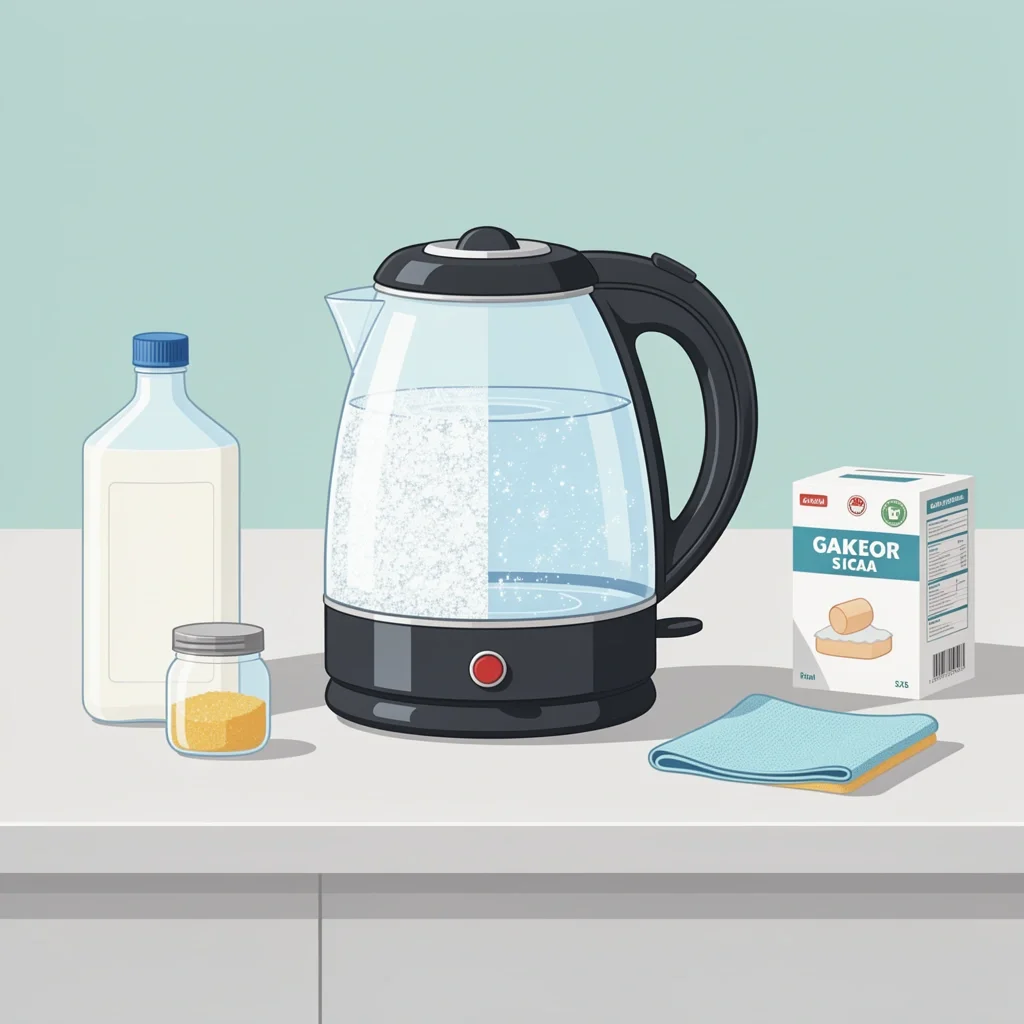
As an Amazon Associate, I may earn a small commission from qualifying purchases at no extra cost to you. This helps me create more valuable, tested content for you.
I have cleaned dozens of glass electric kettles over the years, both my own and for friends who handed me a foggy, crusty kettle and said “fix this.” The biggest lesson I learned is that glass kettles are not the same as stainless steel ones. When you have a clear body, every bit of scale stares back at you. The metal heating plate at the bottom builds up a thick, crusty deposit. The glass walls develop a stubborn, translucent film that a simple vinegar soak often misses.
Most guides tell you to boil vinegar and water, let it sit, and rinse. That works for light buildup on stainless steel. But for a glass kettle that has been neglected for months, that method leaves the glass hazy and the bottom element still looking rough. I discovered this the hard way when my first attempt left a white, cloudy residue that made the kettle look worse than before.
This guide covers the exact two-part protocol I use now. It handles heavy scale on the metal heating element separately from the glass film. By the end, your kettle will look like you just pulled it out of the box.
Why Glass Kettles Need a Different Cleaning Approach
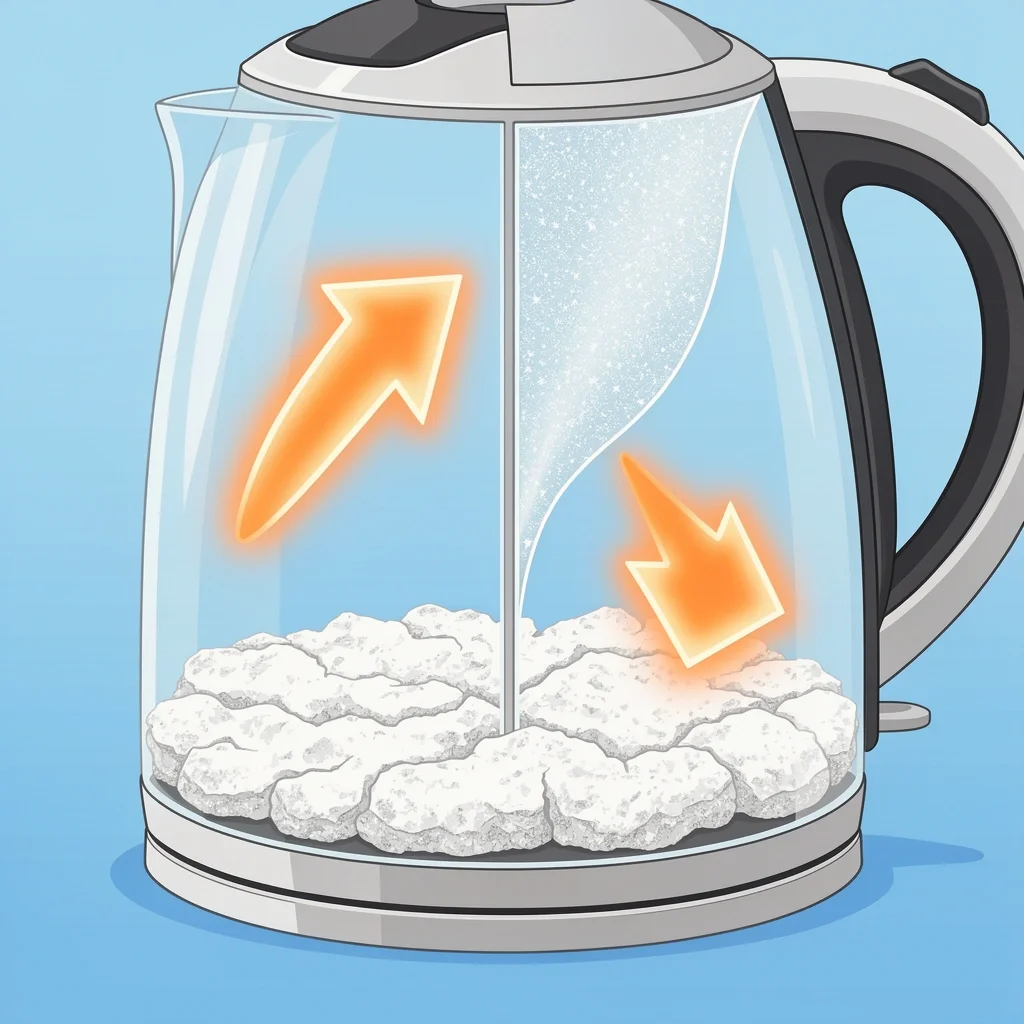
Here is the reality that most cleaning guides ignore. Your glass electric kettle has two distinct surfaces that accumulate minerals differently. The metal heating plate gets a thick, crusty calcium deposit that feels rough to the touch. The glass body gets a thin, translucent film that scatters light and makes the kettle look permanently dirty.
A single soak in acidic solution loosens the crust on the metal well enough, but it does not fully remove the glass film. That film is made of calcium carbonate mixed with silica and other minerals that redeposit onto the glass as the solution cools. You need to physically wipe it off after the acid soak.
There is also the risk of thermal shock. Glass expands and contracts with temperature changes. Pouring cold water into a hot glass kettle can cause cracks. Always let the kettle cool down before you rinse it with cold water.
Gather Your Supplies
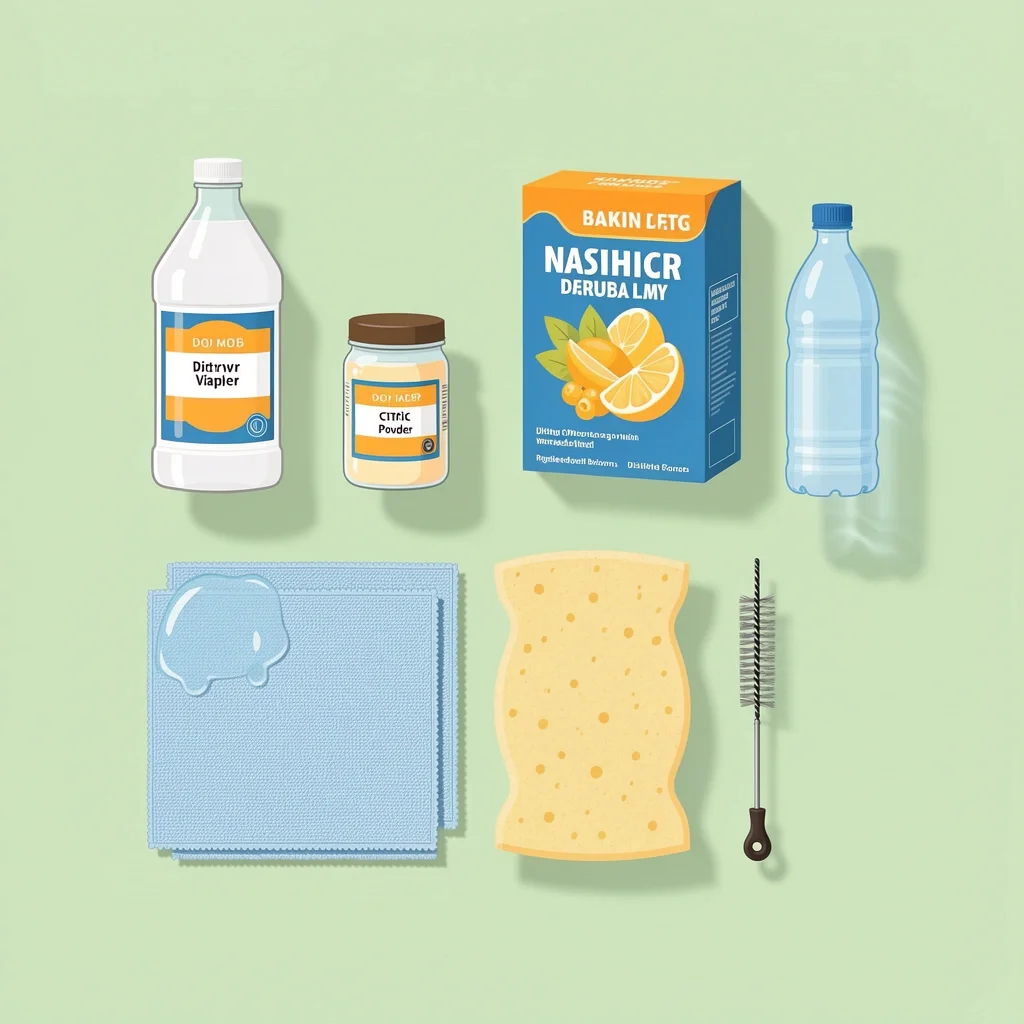
Do not use scrubbing pads or abrasive sponges on glass. They leave micro-scratches that become permanent cloudy areas. Here is what I keep on hand:
- White distilled vinegar — the standard acid for dissolving calcium carbonate. It is cheap and works well for light to moderate scale.
- Citric acid powder — better than vinegar for heavy scale and iron-based stains that cause a yellow or rust tint. No lingering smell.
- Baking soda — not for descaling, but for making a gentle paste to wipe the glass walls after the acid soak.
- Distilled water — for the final rinse. Tap water leaves new spots almost immediately.
- Microfiber cloths — lint-free and non-abrasive for wiping glass.
- Bottle brush — for the spout if it has a narrow opening.
- Soft sponge — for wiping the metal heating plate gently.
I learned the hard way that using tap water for the final rinse creates instant water spots that undo the fresh look. Distilled water makes a noticeable difference.
The Deep Clean Protocol
This process has four stages. Do not skip or combine them. Each one targets a specific problem.
Step 1: Rescuing the Metal Heating Element
The heating plate takes the brunt of mineral buildup. If your kettle has light scale — just a thin white coating — use the maintenance clean. If the bottom looks like a crusty moonscape with chunks of scale, move to the rescue clean.
If you’re constantly battling hard water buildup, choosing one of the best electric tea kettles for hard water can save you a lot of scrubbing time and frustration.
Maintenance Clean: Fill the kettle with a mixture of one part white vinegar to three parts water. I use half a cup of vinegar to one and a half cups of water for a standard one-liter kettle. Boil the solution, then turn off the kettle and let it sit for 20 minutes. Dump it out and rinse with fresh water.
Rescue Clean: For heavy buildup, one boil is not enough. Fill the kettle with the same one-to-three vinegar-to-water ratio. Boil it, turn it off, and let it sit for 20 minutes. Dump that out without rinsing. Then refill with the same solution again and boil again. After the second boil, let it sit overnight. The extended soak dissolves thick crusts that a short soak cannot touch.
I once left a kettle with thick scale to soak overnight with vinegar water and came back the next morning to find the crust had softened so much that it rinsed away with just a gentle wipe from a soft sponge. Do not scrub the heating element hard. You can damage it.
One warning: never let the liquid boil dry onto the heating element. The concentrated acid can pit the metal. Keep an eye on the kettle while it boils.
Step 2: Erasing the Cloudy Glass Film
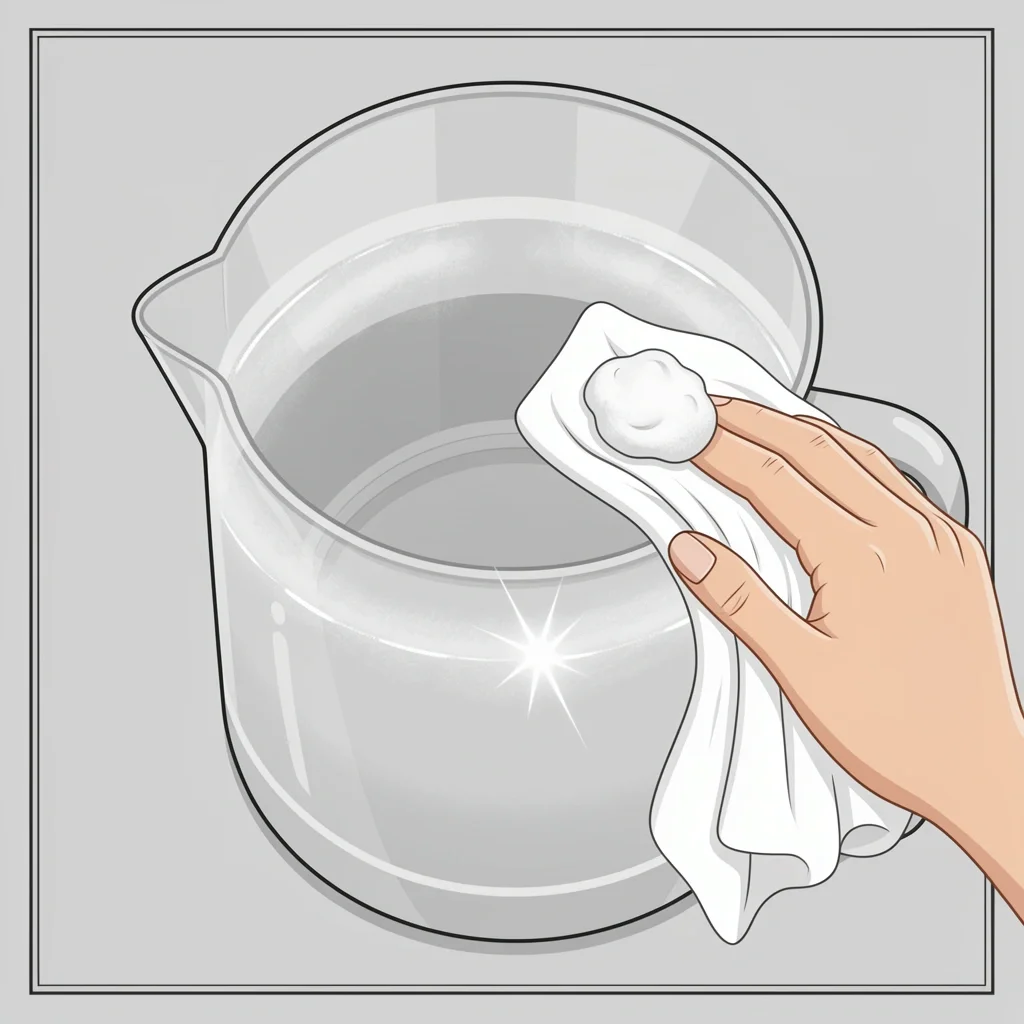
After the acid soak, the glass walls will look slightly better but still hazy. The acid loosens the mineral film, but without agitation, the loosened minerals can re-deposit as a fine white haze. This is the step that most guides miss.
Dump out the vinegar solution completely. Let the kettle cool down to room temperature so you do not risk thermal shock from the next step. Once cool, make a paste of baking soda and a few drops of water. The consistency should be like thin toothpaste.
Dip a microfiber cloth into the paste and gently wipe the inside of the glass walls. Use circular motions. You will feel the slight grit of the baking soda lifting the film. The glass will start to look clearer almost immediately. Work in small sections, then rinse the cloth and repeat.
After you wipe all the glass, rinse the kettle with fresh water to remove all baking soda residue. Do not skip this. Baking soda left inside will react with the next vinegar step and create foam.
I tried skipping the wipe step on my own kettle once, thinking the soak alone was enough. The glass had a uniform haze that made the water look cloudy even after boiling fresh water. A quick wipe with baking soda paste fixed it in two minutes.
Step 3: Flushing the Spout and Filter
The spout and any built-in filter collect mineral grit that can clog the pour. If your kettle has a removable mesh filter, pop it out and soak it in undiluted white vinegar for 30 minutes. Scrub it gently with an old toothbrush, then rinse.
For fixed spouts that you cannot remove, use a bottle brush. Dip the brush in the vinegar solution left over from Step 1 and push it through the spout from both ends if possible. This dislodges grit that otherwise stays hidden.
I discovered this step after pouring a cup of tea and noticing white flecks floating on top. They came from scale trapped in the spout. A quick brush fixed it permanently.
Step 4: The Perfect Rinse
The goal here is to remove every trace of vinegar or baking soda so your water tastes clean. Do not rely on a single rinse. Fill the kettle with fresh water, boil it, and dump it. Repeat this two more times. For the final boil, use distilled water instead of tap.
Boiling distilled water for the last cycle prevents new mineral spots from forming immediately. I fill the kettle to the minimum line with distilled water, boil it, and then use that water to make a cup of tea. The taste is neutral and clean.
After the final boil, let the kettle cool, then dry the interior with a lint-free microfiber cloth. Any standing water inside will leave spots as it evaporates.
Polishing the Exterior for a Streak-Free Shine
The outside of a glass kettle picks up fingerprints, water drips, and cooking grease. Wipe it down with a microfiber cloth dampened with a drop of dish soap and water. Wring the cloth well so it is damp, not wet. Do not spray any liquid near the power base or the opening where the lid hinges.
After wiping with soapy water, use a separate dry microfiber cloth to buff the glass dry. This stops streaks from forming. I keep a dedicated cloth just for this job to avoid lint transfer.
Never submerge the kettle base in water or run it through the dishwasher. The electronics are sealed but not waterproof. A damp cloth wipe is all you need.
The Most Common Mistakes That Ruin Glass Kettles
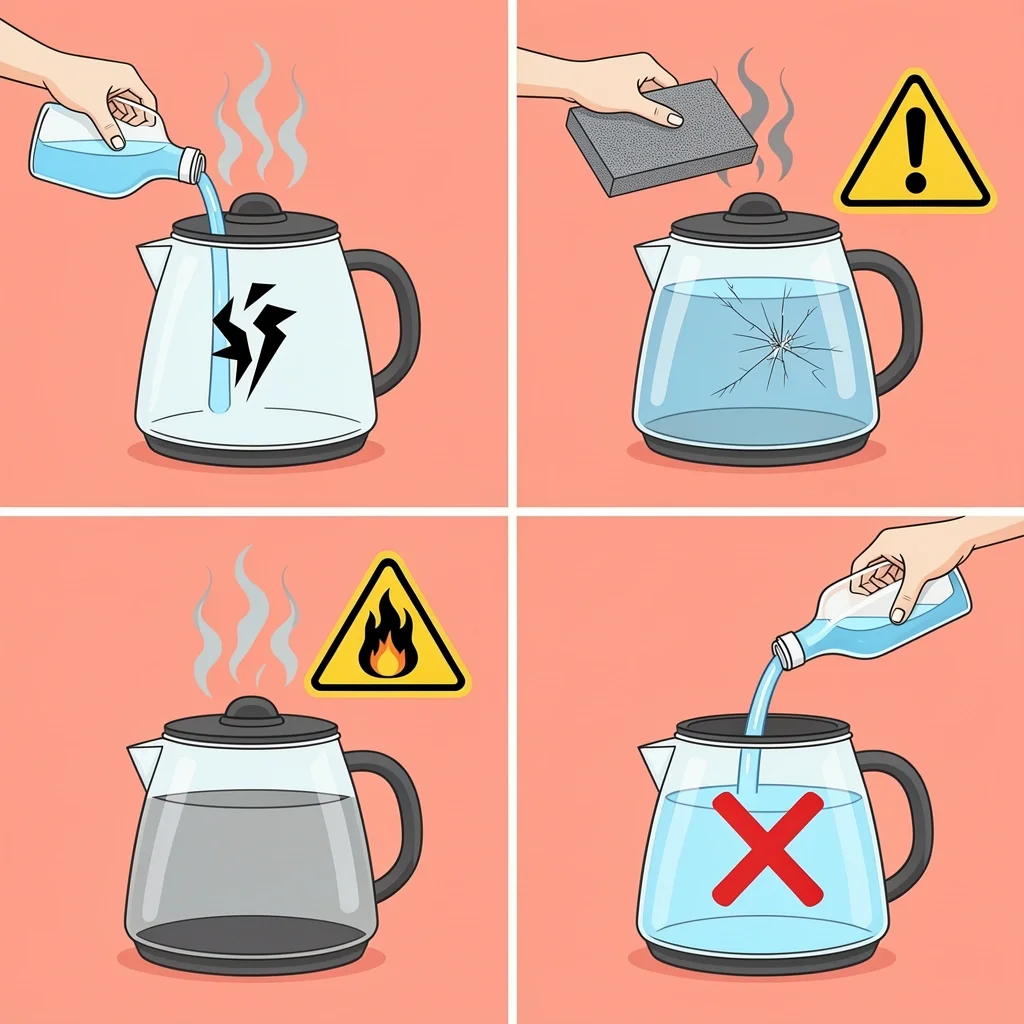
I have made almost every mistake on this list at least once. Learn from my errors.
Adding cold water to a hot kettle. This causes thermal shock that can crack the glass. Always let the kettle cool to room temperature before adding cold liquid.
Using dish soap inside the kettle. Soap leaves a residue that is hard to rinse completely. It can also damage the rubber seals inside the lid or around the heating element. Stick to vinegar and baking soda.
Abrasive sponges or steel wool. These scratch the glass permanently. Once scratched, the glass develops a permanent cloudy appearance that cannot be fixed. Use only soft microfiber cloths or soft sponges.
Boiling the kettle dry. Running the kettle with no water inside damages the heating element and can create a burnt smell that never goes away. Always check the water level before turning it on.
Ignoring the filter for too long. Scale builds up inside the mesh filter and restricts water flow. Clean the filter every time you descale.
How Often Should You Clean It
The right frequency depends entirely on your water hardness. If you live in an area with hard water, you will see white scale forming within a few weeks. If your water is soft, the buildup takes months.
The best visual cue is the kettle itself. When you can see a visible white coating on the heating element or a general haze on the glass, it is time to descale. Do not wait until the kettle starts making noise or the water tastes off.
For most households, a monthly descale using the maintenance method keeps the kettle in good shape. If you use the kettle several times a day, move to every two weeks. A quarterly deep clean with the full rescue protocol handles any scale that slipped through.
When the kettle is clean, the water boils faster and the kettle uses less energy. That is a practical reason to stay on schedule, beyond just the look.
Frequently Asked Questions
Can I clean a glass electric tea kettle with baking soda?
Yes, but only as a paste for wiping the glass walls after an acid soak. Baking soda does not dissolve thick mineral buildup on the heating element. Use vinegar or citric acid for descaling first, then baking soda for the final shine.
Is it safe to use bleach or dish soap inside the kettle?
No. Bleach is corrosive to the metal heating element and can leave harmful residues. Dish soap creates foam that can damage the seals and leaves a lingering taste that is hard to rinse out. Stick to vinegar, citric acid, or baking soda.
Why does my glass kettle smell like plastic or metal?
That smell often comes from very hard water or a brand-new kettle that still has manufacturing residues. Boil a solution of water and sliced lemons for 10 minutes, then let it sit for an hour. The lemon neutralizes the odor. Rinse well with fresh water afterward.
What if my glass kettle has a yellow or rust tint?
That tint usually comes from iron in the water supply. Citric acid powder works better than vinegar for iron-based stains. Mix one tablespoon of citric acid powder per cup of water, boil, and let sit for 30 minutes. Rinse thoroughly.
How do I clean the outside without getting streaks?
Use a microfiber cloth dampened with a drop of dish soap and water, then dry immediately with a separate clean microfiber cloth. Do not use paper towels, which leave lint and streaks. Keep liquid away from the power base at the bottom.
Can I descale with citric acid instead of vinegar?
Yes, and I prefer it for heavy scale. Citric acid powder is more acidic than vinegar at the same concentration, so it dissolves thick crusts faster. It also has no smell. Use a ratio of one tablespoon of citric acid powder per cup of water. Boil and let soak as you would with vinegar.

