
I first encountered Chick-fil-A’s honey roasted BBQ sauce during a lunch break with colleagues. The balance of sweet and smoky notes stood out from typical condiments. After moving to an area without a nearby location, I started experimenting to replicate that distinct flavor in my kitchen. This guide shares the results of those tests, offering a reliable method for creating this sauce at home.
You might have tried store-bought versions that miss the mark on authenticity. My approach focuses on simple ingredients combined in precise ratios. I will walk you through each step, from selecting components to achieving the ideal consistency. This recipe captures the essence of the original while allowing for personal adjustments based on your taste preferences.
Beyond the basic formula, we will examine the nutritional profile and explore adaptations for various diets. Whether you use it as a dip for nuggets or a glaze for grilled chicken, this sauce elevates everyday meals. Let’s begin with the core preparation process before diving into detailed analysis.
How to Make Honey Roasted BBQ Sauce Chick-fil-A Recipe
This section provides the complete recipe for recreating the signature sauce. Follow these steps for consistent results every time. The method requires no cooking, making it accessible for all skill levels.
Recipe Details
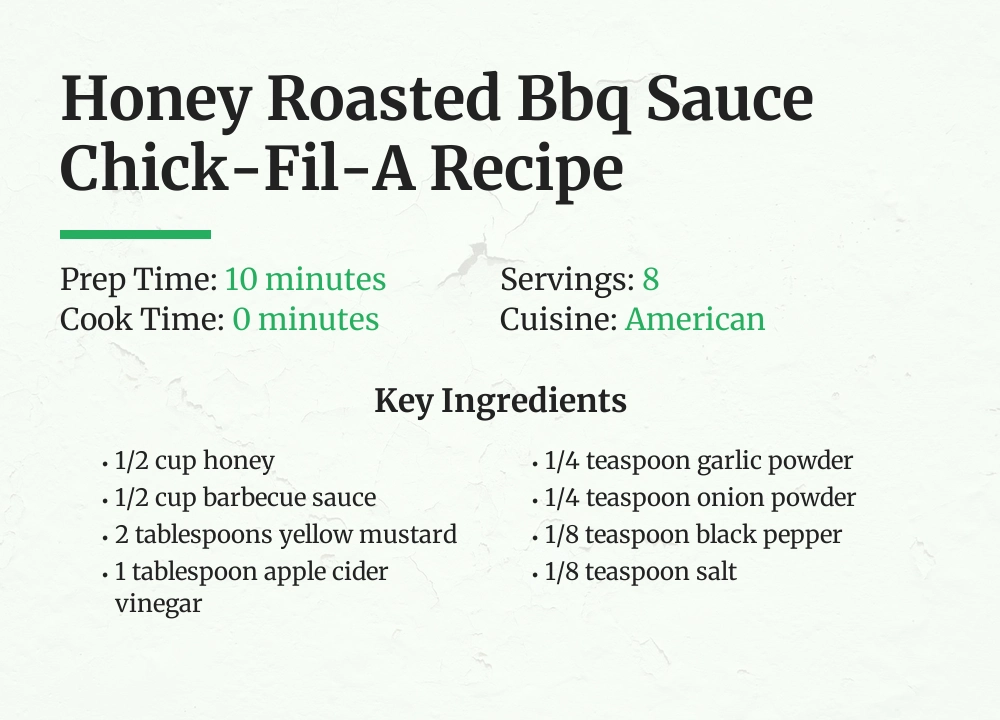
- Prep Time: 10 minutes
- Cook Time: 0 minutes
- Servings: 8
- Course: Condiment
- Cuisine: American
- Diet: Gluten-Free
Ingredients
- 1/2 cup honey
- 1/2 cup barbecue sauce
- 2 tablespoons yellow mustard
- 1 tablespoon apple cider vinegar
- 1/2 teaspoon smoked paprika
- 1/4 teaspoon garlic powder
- 1/4 teaspoon onion powder
- 1/8 teaspoon black pepper
- 1/8 teaspoon salt
Instructions
- Gather all ingredients and measuring tools. Ensure your work surface is clean and dry.
- Combine honey and barbecue sauce in a medium mixing bowl. Use a whisk to blend them thoroughly.
- Add yellow mustard and apple cider vinegar. Stir until the mixture becomes smooth.
- Sprinkle in smoked paprika, garlic powder, onion powder, black pepper, and salt. Whisk vigorously to incorporate all elements.
- Let the sauce rest for 10 minutes. This allows the flavors to meld together properly.
- Transfer to an airtight container or squeeze bottle. Store in the refrigerator until ready to use.
Nutrition
- Calories: 75 kcal
- Protein: 0.3 g
- Fat: 0.1 g
- Carbohydrates: 19 g
- Sugar: 17 g
- Fiber: 0.2 g
- Sodium: 180 mg
- Cholesterol: 0 mg
Cooking Method
This recipe involves no heat application. The preparation relies on mechanical mixing to emulsify ingredients. You can optionally warm the sauce slightly before serving if desired.
Tools Needed
- Medium mixing bowl
- Whisk or silicone spatula
- Measuring cups and spoons
- Airtight container or plastic squeeze bottle
Core Components of the Sauce
Understanding each ingredient’s role helps in making informed substitutions. The synergy between these elements creates the final product’s character.
Honey Selection and Properties
Honey serves as the primary sweetener and contributes viscosity. Raw honey contains natural enzymes that can alter flavor over time. Processed honey offers more consistent results in this application.
The floral source affects the sauce’s aromatic qualities. Clover honey provides a mild sweetness that doesn’t overpower other ingredients. Orange blossom honey introduces subtle citrus notes that complement the smoky elements.
Honey’s hygroscopic nature helps maintain moisture in dishes where the sauce is used as a glaze. Its antioxidant properties contribute to the sauce’s shelf stability. Always check for crystallization before use, as this indicates age.
Barbecue Sauce Foundation
The barbecue sauce forms the base layer of flavor. Tomato-based varieties work best for achieving the familiar profile. Look for sauces with balanced sweetness and acidity.
Smoke flavoring in the barbecue sauce determines the sauce’s depth. Liquid smoke or chipotle additions can enhance this aspect. Avoid sauces with excessive sugar content, as this creates an overly sweet result.
Consistency varies between barbecue sauce brands. Thicker sauces may require additional vinegar to achieve the proper texture. Thin sauces might need reduction or extra honey for body.
Mustard Varieties and Impact
Yellow mustard provides tanginess without overwhelming heat. Its turmeric content gives the sauce its characteristic yellow hue. Dijon mustard can substitute for a more complex flavor profile.
The acidity in mustard helps balance the sweetness from honey. It acts as an emulsifier, keeping the mixture stable. Prepared mustard works better than powder in this application.
Mustard’s enzymatic activity can cause slight thinning over time. This doesn’t affect safety but may change texture. Fresh mustard ensures the brightest flavor contribution.
Nutritional Profile Analysis
This section breaks down the health implications of consuming the sauce. We examine macronutrients and micronutrients in detail.
Caloric Density and Sources
Each serving contains approximately 75 calories, primarily from carbohydrates. Honey contributes the majority of these calories through simple sugars. The sauce contains minimal fat and protein.
Understanding caloric density helps with portion control. Using the sauce as a condiment rather than a main component keeps intake moderate. Those monitoring energy consumption can adjust serving sizes accordingly.
The absence of saturated fats makes this a heart-friendly option. The low protein content means it should be paired with protein sources for balanced nutrition.
Sugar Content Considerations
Natural and added sugars combine to create the sweet profile. Honey contains fructose and glucose, which metabolize differently than sucrose. The glycemic index of the sauce falls in the medium range.
Individuals with blood sugar concerns should account for this in meal planning. The sauce’s sugar content comes from natural sources rather than refined additions. Pairing with fiber-rich foods can help moderate blood glucose response.
Reducing the honey quantity lowers the sugar content but affects flavor balance. Alternative sweeteners like stevia or monk fruit can maintain sweetness with fewer calories.
Sodium Levels and Management
Commercial barbecue sauces often contain significant sodium. This recipe uses minimal added salt to control levels. Mustard and barbecue sauce contribute the majority of sodium content.
Those on sodium-restricted diets can select low-sodium barbecue sauce. Homemade barbecue sauce allows complete control over salt addition. The sauce’s sodium level compares favorably to many commercial condiments.
Sodium acts as a flavor enhancer and preservative. Reducing it too much may result in a flat taste profile. Herbs and spices can help compensate for reduced sodium.
Dietary Modifications
This recipe adapts well to various dietary needs. Below are practical adjustments for common restrictions.
Gluten-Free Preparation
The base recipe is naturally gluten-free when using verified ingredients. Check barbecue sauce labels for hidden gluten sources. Many brands use wheat-derived thickeners or flavorings.
Mustard typically contains no gluten, but cross-contamination can occur. Select brands that certify their products gluten-free. All other ingredients inherently lack gluten proteins.
Preparation surfaces must be clean to avoid cross-contact. Dedicated utensils prevent transfer from other gluten-containing products. These precautions ensure safety for those with celiac disease.
Vegan and Dairy-Free Versions
Traditional honey isn’t considered vegan. Maple syrup or agave nectar can replace honey in equal measure. These alternatives provide similar sweetness and viscosity.
Barbecue sauce often contains animal products like anchovies or honey. Read labels carefully or make your own vegan barbecue sauce. Mustard and vinegar are typically plant-based.
The resulting sauce maintains the desired flavor profile without animal derivatives. Texture might vary slightly depending on sweetener choice. Adjust seasoning to account for flavor differences in substitutes.
Low-Sugar Adaptations
Reduce honey by half and supplement with sugar-free sweeteners. Liquid stevia works well but requires dosage adjustment. Erythritol provides bulk without calories but may crystallize.
Select barbecue sauce with no added sugar or make your own. Tomato paste mixed with vinegar and spices creates a suitable base. Increase mustard and vinegar to maintain tanginess.
The sauce will be thinner with reduced sweeteners. Xanthan gum can add body without affecting flavor. Start with 1/8 teaspoon and whisk thoroughly.
Historical Context of Barbecue Sauces
Barbecue sauces have evolved through centuries of culinary development. Understanding this background enriches appreciation for the recipe.
American Barbecue Traditions
Regional variations developed based on available ingredients and cooking methods. Tomato-based sauces dominate in western regions, while vinegar sauces prevail in the east. Mustard-based sauces characterize South Carolina barbecue.
The addition of sweeteners like honey or molasses became common in the 20th century. Commercial production standardized flavors across the country. Fast food chains later popularized specific variants like this honey roasted version.
Chick-fil-A introduced their honey roasted BBQ sauce as part of their condiment lineup. It represents a modern interpretation of classic sweet and tangy profiles. The sauce’s popularity reflects consumer preference for balanced flavors.
Global Influences on Sauce Development
Mustard originated in ancient Roman cuisine and spread through Europe. Honey has been used as a sweetener since prehistoric times. The combination reflects multicultural culinary exchange.
Vinegar preservation techniques came from European traditions. Tomato integration arrived through Mediterranean trade routes. These elements fused in American kitchens to create distinctive sauces.
Modern food science has optimized stability and flavor delivery. Emulsifiers and preservatives allow mass production while maintaining quality. Home recipes skip these additives for simpler formulations.
Practical Preparation Guidance
Avoid common errors by following these evidence-based recommendations. These insights come from repeated testing and refinement.
Ingredient Temperature Effects
Cold honey doesn’t mix well with other components. Let it reach room temperature before combining. This improves incorporation and prevents separation.
If ingredients separate during storage, whisk again before use. Temperature fluctuations can cause minor oil separation in some barbecue sauces. This doesn’t indicate spoilage but affects appearance.
Storing the sauce at consistent refrigerator temperature maintains emulsion. Avoid freezing, as this can alter texture upon thawing. Ice crystals disrupt the homogeneous mixture.
Flavor Development Over Time
The sauce tastes different immediately after mixing versus after resting. Allowing 10 minutes for hydration and flavor melding is crucial. Overnight refrigeration further enhances depth.
Spice powders need time to rehydrate and release flavors. Garlic and onion powders become more pronounced after several hours. The sweetness mellows as the sauce settles.
For best results, prepare the sauce at least one hour before serving. Maximum flavor development occurs within 24 hours. The sauce remains usable for up to two weeks when properly stored.
Serving Applications and Storage
This versatile sauce works in numerous culinary contexts. Proper handling ensures optimal quality throughout its shelf life.
Pairing Suggestions
Chicken nuggets and sandwiches are classic applications. The sauce complements the savory notes of fried or grilled poultry. It can also serve as a dipping sauce for vegetables or fries.
As a glaze, brush it on chicken during the last minutes of cooking. The sugar content means it can burn if applied too early. Thin with vinegar if using for basting to improve adhesion.
Mix with mayonnaise for a creamy salad dressing alternative. Combine with Greek yogurt for a protein-rich dip. The possibilities extend beyond traditional uses.
Storage Methods and Duration
An airtight container prevents contamination and moisture loss. Glass jars with tight lids work better than plastic containers. Squeeze bottles allow convenient dispensing but must be cleaned thoroughly.
Refrigeration at 40°F or below is essential for safety. The high sugar content inhibits microbial growth to some extent. Still, discard any sauce that develops off odors or mold.
For long-term storage, freezing is possible but not recommended. Texture changes upon thawing make the sauce less appealing. Fresh preparation yields superior results.
Frequently Asked Questions
What makes this sauce different from regular BBQ sauce?
This version incorporates honey for distinctive sweetness and mustard for tanginess. The combination creates a balanced profile that enhances without overwhelming. It specifically mimics the Chick-fil-A formulation that many find appealing.
Can I use this sauce if I have diabetes?
Consult your healthcare provider regarding carbohydrate counting. The sauce contains significant sugars from honey. Portion control and pairing with low-glycemic foods can help manage blood sugar response.
How long does homemade sauce last in the refrigerator?
Properly stored in an airtight container, it remains safe for about two weeks. Signs of spoilage include mold growth, off smells, or separation that doesn’t recombine. Always use clean utensils when serving to extend freshness.
Is there a way to make the sauce spicier?
Add cayenne pepper or hot sauce to taste. Start with 1/8 teaspoon and adjust upward. Chipotle powder introduces smoke and heat simultaneously without altering the base flavor significantly.
What can I substitute if I don’t have apple cider vinegar?
White vinegar or lemon juice work as alternatives. The acidity level remains similar, though flavor notes differ slightly. Reduce quantity by half if using lemon juice to avoid excessive tartness.
Why did my sauce become watery after storage?
Ingredients may separate naturally over time. Whisking typically restores the emulsion. If excess liquid persists, the barbecue sauce might have high water content. Using thicker barbecue sauce next time prevents this issue.
Can I use this recipe for canning or preserving?
This formulation isn’t suitable for traditional canning methods. The pH level and sugar content don’t provide adequate preservation for shelf-stable storage. Always refrigerate and use within the recommended timeframe.
What’s the best way to clean squeeze bottles after use?
Rinse immediately with warm water before residue dries. Use a bottle brush with soapy water for thorough cleaning. Occasionally soak in vinegar solution to remove any stubborn buildup.