
Many home cooks find themselves hesitant when it comes to making a cream sauce from scratch. The fear of lumps, separation, or a bland result can be a significant barrier. I have tested numerous methods to perfect a reliable, velvety cream sauce base, and the approach used by Hello Fresh provides an excellent foundation.
This recipe demystifies the process, offering a straightforward technique that yields consistent results. You will learn not only how to replicate this base but also how to adapt it for various dishes and dietary needs. My own kitchen experiments have shown that mastering this sauce can elevate simple ingredients into memorable meals.
We will cover every aspect, from the science of the roux to historical context and nutritional insights. This guide is designed to be your complete resource for the Hello Fresh cream sauce base, ensuring you gain the confidence to make it a staple in your cooking repertoire.
How to Make Hello Fresh Cream Sauce Base Recipe
This section provides the core recipe for the cream sauce base. Follow these steps carefully to achieve a smooth, rich sauce that serves as a versatile component for many dishes.
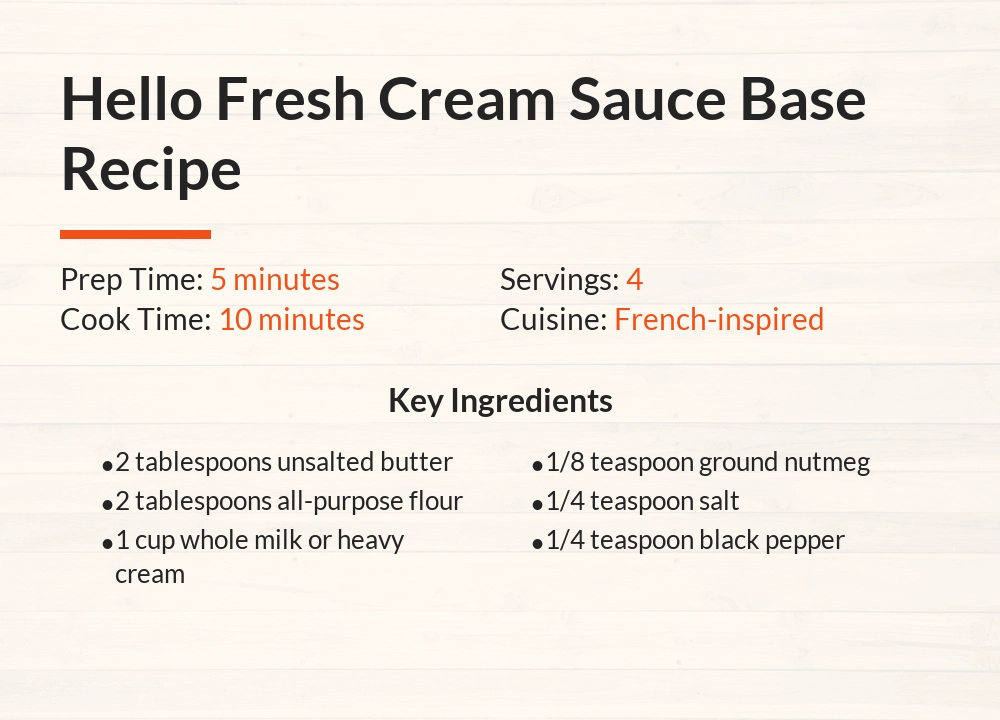
Recipe Details
- Prep Time: 5 minutes
- Cook Time: 10 minutes
- Servings: 4
- Course: Sauce
- Cuisine: French-inspired
- Diet: Vegetarian
Ingredients
- 2 tablespoons unsalted butter
- 2 tablespoons all-purpose flour
- 1 cup whole milk or heavy cream
- 1/8 teaspoon ground nutmeg
- 1/4 teaspoon salt
- 1/4 teaspoon black pepper
Instructions
- Place a medium saucepan over medium heat. Add the butter and allow it to melt completely, swirling the pan to coat the bottom evenly.
- Once the butter is melted and begins to foam slightly, add the flour all at once. Use a whisk to blend it into the butter, creating a uniform butter-flour mixture known as a roux. Cook this for about 1 to 2 minutes, stirring constantly, until it becomes fragrant and takes on a pale golden color. Do not let it brown.
- Slowly begin to add the milk or cream to the saucepan, pouring in a thin, steady stream. Whisk continuously and vigorously as you pour to incorporate the liquid and prevent lumps from forming.
- Continue to cook the sauce, whisking often, for 5 to 7 minutes. It will gradually thicken to a consistency that coats the back of a spoon. If you draw a line with your finger on the spoon, the line should hold.
- Remove the saucepan from the heat. Stir in the ground nutmeg, salt, and black pepper. Taste and adjust the seasoning if necessary. Use immediately or follow storage instructions for later use.
Nutrition
- Calories: 130 kcal
- Protein: 3 g
- Fat: 10 g
- Carbohydrates: 8 g
- Sugar: 4 g
- Fiber: 0 g
- Sodium: 180 mg
- Cholesterol: 30 mg
Cooking Method
This sauce is prepared using the stovetop method. The process involves creating a roux, which is a cooked mixture of fat and flour, and then gradually adding liquid while agitating to form a stable emulsion. Constant attention and controlled heat are required to achieve the desired consistency without scorching.
Tools Needed
- Medium saucepan (2-quart capacity is ideal)
- Whisk
- Measuring spoons and cups
- Wooden spoon or spatula for occasional stirring
Core Components of the Sauce
Understanding each ingredient’s role is fundamental to mastering the cream sauce base. These elements work together to create texture, flavor, and stability.
Butter
Butter serves as the primary fat in this recipe. It contributes richness and aids in carrying flavor compounds. European-style butter, with a higher fat content around 82%, can produce a silkier sauce than standard American butter. The milk solids in butter brown if overheated, so maintaining medium heat is vital to preserve its delicate taste.
From a dietary perspective, butter provides fat-soluble vitamins like A and E. However, its saturated fat content means moderation is advised for those monitoring cholesterol intake. In sauce making, the emulsifying properties of butter help bind the flour and liquid into a cohesive mixture.
Flour
All-purpose flour acts as the thickening agent. When mixed with butter and heated, the starch granules in flour swell and absorb liquid, creating viscosity. The brief cooking of the roux eliminates the raw flour taste and allows the starch to reach its full thickening potential. Using a precise ratio of flour to fat prevents a pasty or gritty texture.
For those with gluten sensitivity, the protein in wheat flour can be problematic. The roux cooking process does not break down gluten, so alternatives must be considered for adaptations. The type of flour used directly influences the sauce’s final clarity and mouthfeel.
Cream and Milk
Whole milk or heavy cream provides the liquid base and creamy character. Heavy cream, with a fat content of 36% or more, yields a richer, more decadent sauce that is less prone to breaking. Whole milk, at around 3.5% fat, creates a lighter version but requires careful temperature control to avoid curdling.
The proteins and fats in dairy contribute to the emulsion’s stability. Heating the dairy too quickly can cause the proteins to denature and separate, leading to a grainy appearance. Gradual incorporation and constant whisking are non-negotiable steps for a smooth outcome.
Nutritional Perspective
Analyzing this sauce from a dietary standpoint reveals both benefits and considerations. The primary energy source is fat, followed by carbohydrates from the flour, with protein playing a minor role.
The sauce provides a concentrated source of calories, making portion control important in a balanced diet. Using whole milk instead of cream reduces saturated fat intake, while the small amount of nutmeg may offer trace minerals like manganese. For individuals managing conditions like hypertension, the sodium content can be adjusted by reducing or omitting added salt.
Integrating this sauce into meals with lean proteins and vegetables can enhance palatability and nutrient absorption. For example, pairing it with chicken and spinach adds iron and vitamins, creating a more rounded nutritional profile.
Modifications for Specific Diets
Adapting this recipe allows it to fit various dietary requirements without sacrificing quality. Each substitution impacts flavor and texture, so testing is recommended.
Gluten-Free Adaptation
Replace all-purpose flour with an equal amount of cornstarch or a gluten-free flour blend. Cornstarch requires a different technique: mix it with a small amount of cold milk to form a slurry before adding it to the heated butter. This prevents clumping and ensures even thickening. Rice flour or tapioca starch are other effective alternatives.
Vegan and Dairy-Free Adaptation
Substitute butter with vegan margarine or coconut oil. For the liquid, use unsweetened almond milk, soy milk, or cashew cream. Cashew cream, made by blending soaked cashews with water, provides a remarkably similar richness to dairy cream. Be aware that some plant-based milks may curdle at high heat, so gentle warming is essential.
Lower-Fat Version
Use a butter alternative with reduced fat content and opt for low-fat milk. The sauce will be thinner, so you might increase the flour slightly or add a teaspoon of cornstarch slurry at the end to achieve the desired consistency. Flavor can be boosted with herbs or a dash of lemon juice to compensate for reduced richness.
Historical Roots of Cream Sauces
Cream-based sauces have a long history in European cuisines, particularly in French cooking. The technique of using a roux as a thickener dates back to the 17th century, often credited to François Pierre de la Varenne, a chef who systematized French sauces.
Bechamel sauce, a close relative of this cream base, was named after Louis de Béchamel, a financier who served under Louis XIV. Originally, it was a vehicle for showcasing expensive spices and dairy. Over time, it evolved into a fundamental component of many dishes, from gratins to pasta sauces.
The Hello Fresh version simplifies this classical approach, making it accessible for modern home kitchens. Understanding this background enriches the cooking experience, connecting today’s meals to centuries of culinary tradition.
Achieving Perfect Consistency and Flavor
Several factors influence the final quality of your cream sauce. Paying attention to these details can prevent common issues and ensure excellent results.
Controlling Heat
Medium heat is crucial throughout the process. Too high, and the butter will burn or the dairy may scorch, imparting a bitter taste. Too low, and the sauce will take too long to thicken, potentially resulting in a floury aftertaste. Use a heavy-bottomed saucepan to distribute heat evenly and reduce hot spots.
Preventing Lumps
Lumps form when flour hydrates unevenly. The key is to add the liquid slowly while agitating constantly with a whisk. If lumps do appear, you can often salvage the sauce by straining it through a fine-mesh sieve. Another method is to use an immersion blender to puree it smooth.
Enhancing Flavor Depth
While the base recipe is simple, you can build more complex flavors. Sautéing finely chopped onion and garlic in the butter before adding the flour adds aromatic depth. A bay leaf simmered in the sauce and removed before serving introduces a subtle herbal note. For a tangy twist, a splash of balsamic vinegar can be stirred in at the end.
Application in Complete Dishes
This cream sauce base is incredibly versatile. It can transform simple ingredients into cohesive, satisfying meals.
With Poultry and Meat
For a chicken penne dish, cook diced chicken until golden, then remove from the pan. Prepare the cream sauce in the same pan to capture the fond, those browned bits left behind, which add immense flavor. Stir the cooked chicken and pasta into the finished sauce. Chicken sausage and spinach work similarly, with the spinach wilting into the hot sauce.
With Vegetables
Steamed or roasted vegetables like bell peppers, broccoli, or mushrooms can be tossed with the cream sauce for a creamy side dish. For a main course, combine it with pasta and vegetables for a vegetarian option. The sauce clings to the surfaces, making even simple vegetables feel indulgent.
As a Casserole Base
Mix the cream sauce with cooked pasta, protein, and vegetables, top with cheese and breadcrumbs, and bake until bubbly and crispy on top. This method is perfect for making dishes like a chicken souvlaki-inspired bake or a beef and pasta gratin.
Storing and Reheating
Proper storage maintains the sauce’s quality for later use. Allow the sauce to cool completely before transferring it to an airtight container. It can be refrigerated for up to 3 days. The sauce will thicken significantly when cold.
To reheat, place it in a saucepan over low heat, adding a tablespoon or two of milk or water to thin it to the desired consistency. Whisk frequently as it warms. Avoid boiling, as this can cause separation. For best results, reheat gently and slowly.
Freezing is not generally recommended for dairy-based sauces, as they can separate and become grainy upon thawing. If you must freeze it, stir well after reheating to re-emulsify the components.
Underlying Food Science
The creation of this sauce is a practical lesson in emulsion and starch gelatinization. An emulsion is a stable mixture of two immiscible liquids, like fat and water. The roux acts as an emulsifier, with the starch molecules helping to suspend fat droplets within the water-based milk.
Starch gelatinization occurs when the flour is heated in the presence of liquid. The starch granules absorb water, swell, and release amylose and amylopectin molecules, which thicken the liquid. The cooking time for the roux ensures that these starch granules are fully hydrated and activated, preventing a raw taste and achieving maximum thickening power.
Understanding these principles allows you to troubleshoot effectively. If a sauce is too thin, the starch may not have been cooked long enough. If it is too thick, additional liquid can be incorporated off the heat.
Frequently Asked Questions
What is the Hello Fresh cream sauce base?
The Hello Fresh cream sauce base is a simple, versatile white sauce made from butter, flour, and milk or cream. It serves as a foundational element for many recipes, providing a creamy texture and neutral flavor that can be customized with herbs, spices, and other ingredients.
Why does my cream sauce become lumpy?
Lumps typically form when the liquid is added too quickly to the roux, or when the mixture is not whisked vigorously enough. To prevent this, ensure you add the milk in a slow, steady stream while continuously whisking. If lumps occur, strain the sauce or blend it smooth.
Can I make this sauce in advance?
Yes, you can prepare the sauce ahead of time. Cool it completely, then store it in a covered container in the refrigerator for up to three days. Reheat it gently on the stovetop, adding a little extra milk to restore the desired consistency.
What can I use instead of flour for thickening?
For a flour-free variation, cornstarch is an effective substitute. Mix one tablespoon of cornstarch with two tablespoons of cold milk to create a slurry, then whisk it into the heated sauce after the butter has melted. Cook until thickened, which usually happens faster than with flour.
How can I make a richer cream sauce?
To achieve a richer sauce, use heavy cream instead of milk and increase the butter slightly. You can also stir in a tablespoon of cream cheese or grated Parmesan cheese at the end of cooking, which will melt into the sauce and enhance its creaminess and flavor depth.
Is this sauce the same as bechamel?
This cream sauce base is very similar to a basic bechamel sauce. Traditional bechamel is made with milk, a roux, and aromatics like onion and bay leaf. The Hello Fresh version is a simplified, modern adaptation that omits the aromatics for speed and versatility, making it a quick and easy bechamel-style sauce.
Why did my sauce separate?
Sauce separation usually happens due to excessive heat or rapid temperature changes. If the sauce boils or is reheated too aggressively, the emulsion can break. To fix a separated sauce, remove it from the heat and whisk in a small amount of cold milk or cream until it becomes smooth again.