
I first encountered hawthorn berry tea during a visit to a traditional herbalist’s shop years ago. The proprietor, an elderly woman with decades of experience, prepared a simple brew to soothe my occasional digestive discomfort after a heavy meal. That initial cup, with its unique tartness and gentle warmth, left a lasting impression on me. It was not just a drink but a functional remedy, and I have incorporated it into my routine ever since.
This recipe provides a straightforward method to prepare hawthorn berry tea at home. It uses dried berries simmered in water to create a base infusion. You can customize it with additions like honey or hibiscus. The process is simple and requires only basic kitchen tools. Below, I will guide you through each step, drawing from my professional background and personal trials.
Beyond the basic instructions, this article delves into the nutritional science, cultural history, and practical adaptations of this herbal preparation. My goal is to offer a complete resource that answers every question you might have before, during, and after making this tea.
How to Make hawthorn berry tea recipe
This section details the core method for preparing a standard cup of hawthorn berry tea. The process is a gentle decoction, which optimally extracts the beneficial compounds from the dried fruit. I have tested this method numerous times to ensure consistent results and a balanced flavor profile.
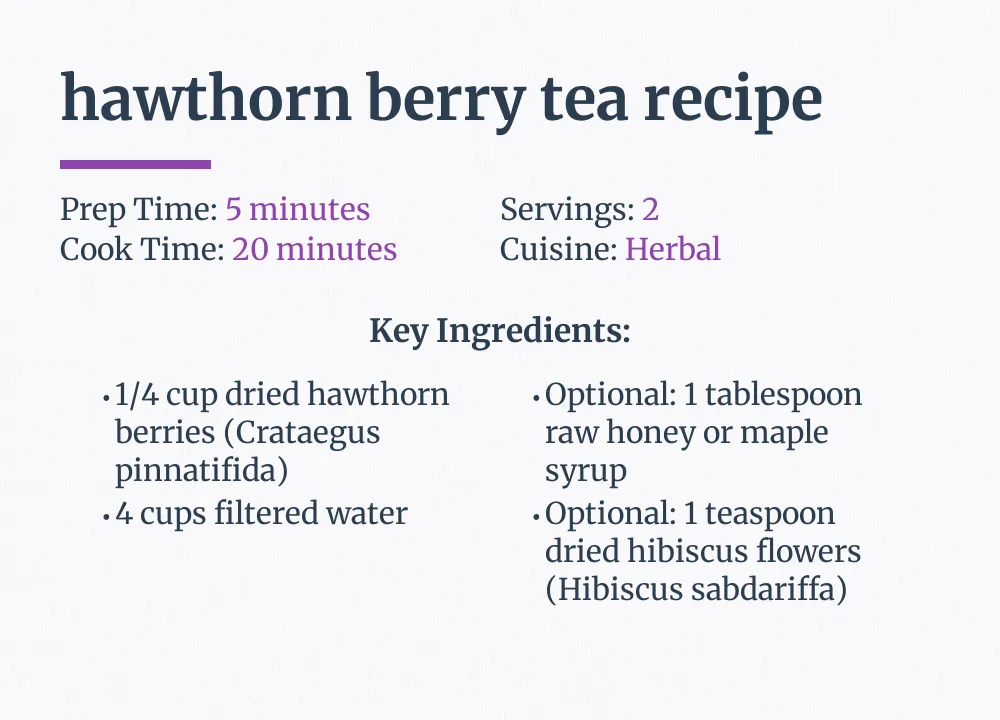
Recipe Details
- Prep Time: 5 minutes
- Cook Time: 20 minutes
- Servings: 2
- Course: Beverage
- Cuisine: Herbal
- Diet: Vegan, Gluten-Free
Ingredients
- 1/4 cup dried hawthorn berries (Crataegus pinnatifida)
- 4 cups filtered water
- Optional: 1 tablespoon raw honey or maple syrup
- Optional: 1 teaspoon dried hibiscus flowers (Hibiscus sabdariffa)
Instructions
- Place the dried hawthorn berries in a fine-mesh strainer and rinse them briefly under cool running water to remove any dust.
- Transfer the cleaned berries to a medium-sized saucepan and add the four cups of water.
- Place the saucepan over medium-high heat and bring the water to a rolling boil.
- Once boiling, reduce the heat to low, allowing the liquid to maintain a gentle simmer. Partially cover the pan with a lid.
- Let the berries simmer for 15 to 20 minutes. The liquid will reduce slightly and take on a deep red or amber color.
- If using hibiscus, add it in the last 5 minutes of simmering to preserve its bright flavor and color.
- After simmering, remove the pan from the heat source. Let the mixture steep, covered, for an additional 5 to 10 minutes.
- Strain the liquid into a teapot or directly into mugs, pressing gently on the berries to extract all the liquid.
- Stir in honey or your preferred sweetener while the tea is still warm, ensuring it dissolves completely.
- Serve immediately. The tea can be enjoyed hot or allowed to cool for an iced version.
Nutrition
- Calories: 15 kcal
- Protein: 0 g
- Fat: 0 g
- Carbohydrates: 4 g
- Sugar: 2 g
- Fiber: 1 g
- Sodium: 5 mg
- Cholesterol: 0 mg
These values are approximate and for the base tea without added sweeteners. The nutritional content can vary based on the specific berries used.
Cooking Method
This preparation uses a decoction, which is a method ideal for extracting compounds from harder plant materials like roots, barks, and berries. Simmering the hawthorn berries for an extended period breaks down their cellular structure. This process releases flavonoids, oligomeric procyanidins, and triterpenoid acids into the water. A gentle heat is crucial to preserve these heat-sensitive nutrients.
Tools Needed
- A 2-quart saucepan with a lid
- A fine-mesh strainer or cheesecloth
- Measuring cups and spoons
- A heat-resistant spoon for stirring
Understanding Hawthorn Berry Tea
Hawthorn berry tea is an herbal infusion made from the dried fruit of the hawthorn shrub, a plant in the Rosaceae family. It is not a true tea from the Camellia sinensis plant. This beverage has been a cornerstone of traditional medicine systems, particularly in Europe and Asia, for centuries. Its use is documented in ancient texts for supporting cardiovascular function and digestive health.
The plant itself, Crataegus, produces small, red berries that are typically harvested in the late summer and early autumn. These berries are dense with bioactive compounds. In the context of this recipe, we are specifically preparing a water-based extract to access these compounds in a palatable, daily form.
What Makes Hawthorn Berry Tea So Special
This infusion stands out due to its dual role as a pleasant beverage and a functional herbal remedy. Its unique composition of antioxidants supports various body systems. Unlike many herbal teas that target a single issue, hawthorn is known for its broad-spectrum supportive qualities, particularly for the heart and circulatory system.
The flavor is another distinguishing factor. It is not overly bitter or grassy like some medicinal herbs. Instead, it offers a pleasant tartness, similar to a mild apple or rosehip, which makes it easy to incorporate into a daily routine without relying on excessive sweeteners.
Traditional Origins & Cultural Significance
The use of hawthorn dates back to ancient Greece, where physician Dioscorides recorded its applications. In Traditional Chinese Medicine, the berry is known as Shan Zha. It has been used for millennia to support digestion, especially for addressing stagnation from rich foods. European herbalists have long valued the flowers, leaves, and berries for cardiovascular tonics.
In many cultures, the hawthorn tree itself is steeped in folklore. It was often planted as a protective hedge and featured in various myths. This deep cultural embedding speaks to the long-standing recognition of the plant’s value beyond its immediate physical benefits.
Nutritional and Health Perspectives
From a dietary standpoint, this tea is a low-calorie, sugar-free beverage that provides a host of phytonutrients. It is a valuable addition to a balanced diet, not a replacement for medical treatment. The benefits attributed to it are primarily due to its high concentration of specific plant compounds.
Hawthorn Berries for Heart Health
The most researched area regarding hawthorn is its potential to support cardiovascular function. The berries contain flavonoids like vitexin and oligomeric procyanidins. These compounds are believed to support healthy blood flow and blood pressure already within normal ranges. They may do this by promoting the dilation of coronary blood vessels.
It is crucial to understand that this tea is a dietary supplement for general wellness. It is not a medicine for treating heart conditions. If you have a diagnosed cardiovascular issue, consult your healthcare provider before making significant changes to your diet or herbal regimen.
Supporting Digestion and Reducing Inflammation
Hawthorn berries possess mild digestive properties. They contain organic acids and fiber that can stimulate digestive enzymes. This can be particularly helpful after meals that are high in fat or protein. The anti-inflammatory effects of its antioxidant compounds may also contribute to overall systemic comfort.
The fiber content, though modest in a strained tea, includes pectin, which is a soluble fiber. This can have a gentle, soothing effect on the digestive tract. The tea’s warm temperature also aids in relaxation and can ease minor digestive discomfort.
Ingredient Deep Dive
Every component in this recipe plays a specific role, from providing the base flavor to offering optional enhancements. Understanding these ingredients allows for better customization and appreciation of the final brew.
Analyzing Dried Hawthorn Berries
The quality of your dried hawthorn berries is the most critical factor. Look for berries that are whole, deep red in color, and free from moisture or signs of mold. They should have a slightly tart and fruity aroma. The species Crataegus monogyna or Crataegus laevigata are commonly used in the West, while Crataegus pinnatifida is prevalent in Asian markets.
These berries are a rich source of vitamin C, B vitamins, and various antioxidants. The drying process concentrates their flavors and preserves their nutritional profile, making them suitable for long-term storage and use in decoctions.
The Role of Water and Heat
Using filtered water is recommended to avoid any chlorine or mineral tastes that can interfere with the delicate flavor of the berries. The volume of water determines the strength of the tea; four cups is a standard ratio for a moderate strength. The application of heat through boiling and subsequent simmering is non-negotiable for a proper decoction.
Boiling water initiates the extraction process, while a sustained, low simmer ensures that the tougher berry skins and seeds release their compounds without destroying heat-sensitive vitamins and antioxidants. This controlled heat application is what differentiates a decoction from a simple infusion.
Optional Flavor Enhancers: Hibiscus and Honey
Hibiscus flowers contribute a vibrant crimson color and a sharp, cranberry-like tartness. They are also rich in vitamin C and antioxidants. Adding them in the last few minutes of simmering prevents their more volatile compounds from dissipating.
Honey is a traditional sweetener that complements the tart notes of the hawthorn. Raw honey also contains its own enzymes and antioxidants. It should be added after the tea is removed from the heat to preserve these beneficial properties. For a vegan version, maple syrup is an excellent alternative.
Dietary Adaptations and Variations
This basic recipe is highly adaptable to suit various dietary needs and taste preferences. The core method remains the same, but you can modify the ingredients to create different versions of the tea.
Low-Sugar and Diabetic-Friendly Version
For those monitoring sugar intake, the tea is perfectly enjoyable without any added sweeteners. The natural tartness of the berries is quite palatable on its own. You can also enhance the flavor with a cinnamon stick during the simmering process, which adds warmth and sweetness without sugar.
Creating an Iced Tea for Summer
To make a refreshing cold drink, prepare the tea as directed and allow it to cool to room temperature. Then, refrigerate it for at least one hour. Serve over ice with a slice of lemon or a sprig of fresh mint. The cold preparation does not significantly alter the nutritional profile, making it a healthy summer drink option.
Herbal Synergy: Blending with Other Plants
You can create more complex herbal blends by adding other supportive herbs. For example, adding a slice of fresh ginger root during simmering can enhance the digestive benefits. A small piece of licorice root can provide natural sweetness and support respiratory health. Always research potential interactions when combining herbs.
Common Mistakes and Expert Tips
Over years of preparing this tea, I have identified a few common pitfalls that can affect the final outcome. Avoiding these will help you achieve a perfect cup every time.
One frequent error is using too high a heat after the initial boil. A vigorous boil can make the tea taste bitter and may degrade some delicate compounds. Always maintain a gentle simmer once the water has boiled.
Another mistake is not simmering the berries long enough. A quick steep is insufficient for hard berries. The 15 to 20 minute simmer is essential for a full extraction. Conversely, simmering for much longer than 30 minutes can concentrate tannins, leading to excessive astringency.
Storing prepared tea correctly is also important. While the dried berries have a long shelf life, the prepared tea should be consumed within 24 hours if kept at room temperature or up to 3 days if refrigerated in a sealed container.
Serving, Pairing, and Storage Guidance
This tea is versatile and can be integrated into your day in several ways. It pairs well with light meals and can be a calming ritual in the morning or evening.
I often enjoy a cup in the afternoon as a caffeine-free alternative to coffee or black tea. Its mild digestive properties make it an excellent beverage to have after lunch or dinner. It pairs nicely with simple foods like oatmeal, salads, or lightly seasoned poultry.
For storage, keep your dried hawthorn berries in an airtight container in a cool, dark place. They will retain their potency for up to a year. Prepared tea is best consumed fresh, but any leftovers can be stored in the refrigerator. You can also freeze the tea in ice cube trays for later use in smoothies or as iced tea bases.
Frequently Asked Questions
What is hawthorn berry tea?
Hawthorn berry tea is an herbal infusion made by simmering the dried fruit of the hawthorn plant in water. It is a traditional beverage valued for its potential health-supporting properties and unique tart flavor.
What are the primary health benefits of this tea?
The tea is primarily associated with supporting cardiovascular wellness and healthy digestion. Its antioxidant content may help reduce oxidative stress and inflammation in the body, contributing to overall health.
Can I use fresh hawthorn berries instead of dried?
Yes, you can use fresh berries. However, you may need to use a larger quantity, about 1/2 cup, as they contain more water. The simmering time might also need to be slightly extended to achieve a similar strength of flavor and nutrient extraction.
Are there any side effects or people who should avoid it?
Hawthorn berry tea is generally considered safe for most people. However, individuals on medication for heart conditions or blood pressure should consult a doctor before consumption, as it can potentially interact with these drugs. Pregnant or breastfeeding women should also seek medical advice.
How does the decoction method work?
The decoction method uses sustained, gentle heat to break down the tough cellular walls of hard plant materials like berries. This process efficiently releases water-soluble vitamins, minerals, and antioxidants that a simple steep in hot water would not fully extract.
Why does my tea taste bitter?
A bitter taste usually results from simmering the berries at too high a heat or for too long. Tannins are released more readily under these conditions. To correct this, ensure your heat is at a low simmer and stick to the recommended 15-20 minute cooking time.
Can I sweeten this tea with sugar?
Yes, you can use granulated sugar, though honey or maple syrup are more traditional and add their own subtle flavors and trace nutrients. The choice of sweetener depends entirely on personal preference and dietary needs.
How long can I store the prepared tea?
For the best flavor and nutritional value, drink the tea within 24 hours. If refrigerated in a sealed jar, it will remain safe to consume for up to 72 hours. Always check for any off odors or signs of spoilage before drinking.