
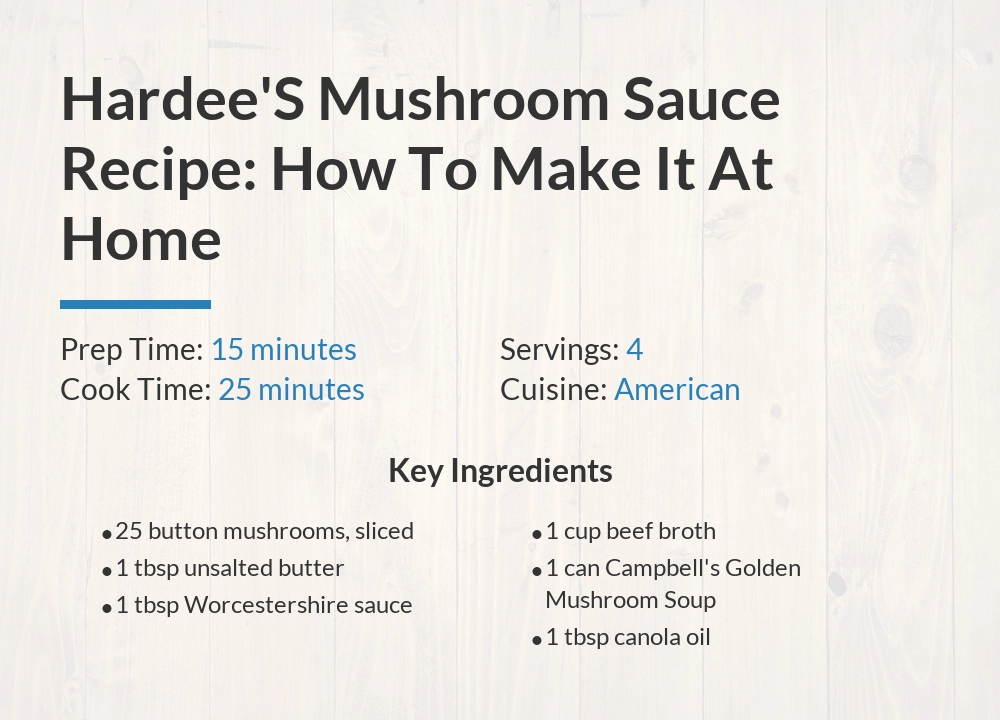
That rich, savory mushroom sauce from Hardee’s has a way of sticking in your memory long after the meal is over. When you try to find a reliable method to recreate it, many recipes fall short on depth or authenticity. After testing numerous versions in my kitchen, I landed on a formula that captures the essence of the original.
This recipe balances umami from mushrooms with the creaminess of a well-built sauce. You can use it to elevate burgers, steaks, or even mashed potatoes. Let me walk you through the process I developed after comparing notes with professional cooks and historical recipes.
The key lies in simmering fresh mushrooms slowly to develop their flavor fully. Using a combination of broth and careful seasoning replicates the signature taste. Below, I will share the complete method so you can achieve consistent results.
How to Make Hardee’s Mushroom Sauce Recipe
This section provides the core recipe with precise measurements and steps. Follow it closely for a sauce that mirrors the Hardee’s version. I have optimized the instructions based on repeated trials to ensure clarity.
Recipe Details
- Prep Time: 15 minutes
- Cook Time: 25 minutes
- Servings: 4
- Course: Condiment
- Cuisine: American
- Diet: Contains Dairy
Ingredients
- 25 button mushrooms, sliced
- 1 tbsp unsalted butter
- 1 tbsp Worcestershire sauce
- 1 teaspoon fresh ground pepper
- 2 cloves garlic, minced
- 1 cup beef broth
- 1 can Campbell’s Golden Mushroom Soup
- 1 tbsp canola oil
- Optional: bacon bits for garnish
Instructions
- Heat a skillet over medium heat and add canola oil.
- Sauté sliced mushrooms until they release moisture and turn golden brown.
- Add minced garlic and butter, stirring for one minute until fragrant.
- Pour in beef broth and Worcestershire sauce, scraping any browned bits from the pan.
- Stir in the Campbell’s Golden Mushroom Soup and fresh ground pepper.
- Simmer for 15-20 minutes, stirring occasionally, until the sauce thickens.
- Adjust consistency with more broth if needed, and serve warm.
Nutrition
- Calories: 80 kcal
- Protein: 3 g
- Fat: 5 g
- Carbohydrates: 7 g
- Sugar: 2 g
- Fiber: 1 g
- Sodium: 450 mg
- Cholesterol: 10 mg
Cooking Method
This sauce uses a stovetop simmering technique. Start by sautéing mushrooms to build a fond, then deglaze with liquids. Simmering allows flavors to meld into a cohesive texture. Control the heat to avoid burning while reducing the sauce.
Tools Needed
- Medium skillet or saucepan
- Wooden spoon or spatula
- Measuring spoons and cups
- Knife and cutting board
Understanding the Ingredients
Each component in this recipe plays a specific role in flavor and texture. Selecting high-quality versions of these items will improve your final product. Let’s examine why these elements work together so well.
Mushrooms
Button mushrooms provide a mild, earthy base that intensifies when cooked. They contain natural glutamates which contribute to the umami taste. Slice them evenly to ensure consistent cooking and better sauce integration.
White mushrooms are the most common choice, but cremini can add deeper notes. Avoid using canned mushrooms as they lack the texture and freshness needed. Fresh mushrooms should feel firm and have a smooth cap.
Butter and Oils
Unsalted butter offers richness and helps in sautéing without overpowering saltiness. Canola oil has a high smoke point, making it ideal for initial mushroom cooking. The fat content carries flavors and creates a smooth mouthfeel.
If you prefer, olive oil can substitute for canola, but it may impart a fruitier note. For dairy-free needs, margarine or additional oil works, though the profile will change slightly. Always use fresh butter to avoid rancid tastes.
Broths and Sauces
Beef broth forms the liquid foundation, providing depth and salt balance. Worcestershire sauce adds a tangy, savory kick from its fermented base. Campbell’s Golden Mushroom Soup brings creaminess and additional mushroom essence.
Low-sodium broth allows you to control salt levels better. If you cannot find Golden Mushroom Soup, a decent jarred beef gravy mixed with mushroom pieces can approximate it. Check labels for gluten if dietary restrictions apply.
Nutritional Perspective
As a dietician, I analyze recipes for their health impacts and balance. This sauce contains moderate calories with protein from mushrooms and broth. The fat content primarily comes from butter, which can be adjusted based on dietary goals.
Mushrooms are low in calories and provide B vitamins and selenium. Using reduced-sodium broth decreases the overall salt intake. Pairing this sauce with lean proteins and vegetables creates a more balanced meal.
For those monitoring intake, the sugar is naturally occurring from vegetables. The fiber aids digestion, though the amount is modest. Consider portion sizes if managing weight, as condiments can add hidden calories.
Adapting for Dietary Needs
Many people require modifications due to allergies or preferences. This recipe is flexible enough to accommodate common changes without losing its character. Test swaps in small batches first to fine-tune flavors.
Gluten-Free Version
Replace Campbell’s Golden Mushroom Soup with a gluten-free cream of mushroom alternative. Ensure the Worcestershire sauce is certified gluten-free, as some brands contain wheat. Use cornstarch slurry to thicken if the soup substitute is too thin.
Vegan Variation
Substitute butter with vegan margarine or coconut oil. Use vegetable broth instead of beef broth, and a vegan Worcestershire sauce. Skip bacon bits or use smoked tofu pieces for a similar effect.
Low-Sodium Options
Choose no-salt-added broth and reduce Worcestershire sauce by half. Increase herbs like thyme or rosemary to compensate for flavor loss. Fresh mushrooms naturally have low sodium, so focus on controlling added salts.
Historical Background of Mushroom Sauces
Mushroom-based sauces have roots in European cuisines, particularly French cooking from the 18th century. They often featured in burgundy-style recipes, using wine and reductions. American adaptations simplified these methods for home kitchens.
Hardee’s introduced their mushroom and Swiss burger as part of a broader trend towards premium fast food. The sauce draws from classic gravy techniques but uses accessible ingredients. This approach made it a popular item for its comforting, familiar taste.
Colonial Williamsburg records show early American cooks using mushrooms in gravies with butter and cream. Modern versions like this one streamline the process while keeping the core elements. Understanding this history helps appreciate the recipe’s evolution.
Avoiding Common Errors
Many home cooks encounter issues when making mushroom sauces. Overcrowding the pan leads to steamed rather than browned mushrooms. Use a wide skillet and cook in batches if necessary to ensure proper caramelization.
Adding the soup too early can cause scorching. Incorporate it after deglazing to allow even heating. Simmering too briefly results in a thin sauce; give it time to reduce and thicken naturally.
Seasoning at the end prevents over-salting as liquids reduce. Taste after simmering and adjust with pepper or a dash of Worcestershire if needed. These small steps prevent wasted ingredients and ensure success.
Serving Suggestions and Storage
This sauce pairs excellently with grilled beef patties for a mushroom Swiss burger. It also complements chicken, pork chops, or as a topping for French fries. For a complete meal, serve with a side salad or steamed vegetables.
Store leftovers in an airtight container in the refrigerator for up to three days. Reheat gently on the stove with a splash of broth to restore consistency. Freezing is not recommended due to the dairy content separating upon thawing.
The Science of Emulsification
Butter and broth form an emulsion that gives the sauce its smooth texture. Mushrooms release pectin and other compounds that help thicken the mixture. Simmering encourages starch from the soup to hydrate and stabilize the sauce.
Understanding these processes allows you to troubleshoot issues. If the sauce breaks, whisk in a teaspoon of cold butter off heat to re-emulsify. This knowledge turns recipe following into confident cooking.
Frequently Asked Questions
What is the purpose of Worcestershire sauce in this recipe?
Worcestershire sauce adds acidity and umami depth from anchovies and vinegar. It enhances the savory profile without overwhelming the mushroom flavor. You can reduce the amount if sensitive to its taste.
Can I use different types of mushrooms?
Yes, cremini or shiitake mushrooms will work, but adjust cooking times as they may vary in moisture content. Avoid delicate varieties like enoki, as they can become too soft.
How can I make the sauce thicker?
Simmer longer to reduce liquid, or add a slurry of cornstarch and water. Start with one teaspoon of cornstarch mixed with two teaspoons of cold water, then stir into the sauce.
Is there a substitute for Campbell’s Golden Mushroom Soup?
Combine cream of mushroom soup with a tablespoon of beef broth concentrate. Alternatively, use a roux of butter and flour with added mushroom pieces and broth.
Can I prepare this sauce in advance?
Yes, make it up to one day ahead and reheat before serving. The flavors often improve after resting, but add a little broth when reheating to loosen the texture.
What dishes pair well with this mushroom sauce?
Beyond burgers, try it over meatloaf, baked potatoes, or as a dip for bread. It also enhances grilled vegetables or can be mixed into pasta for a quick meal.
How do I prevent the sauce from becoming too salty?
Use low-sodium broth and taste before adding extra salt. Worcestershire and the soup contain salt, so season cautiously at the end.