
The first time I encountered this vibrant blue and red cocktail, I was at a small bar near a concert venue. The bartender, a man with a well-worn Grateful Dead shirt, crafted it with a practiced rhythm. The resulting drink was both visually striking and complex in flavor, a true conversation piece that transcended typical bar offerings.
This grateful dead drink recipe combines multiple spirits with citrus and raspberry notes, finished with the dark effervescence of cola. Its unique character comes from the careful balance of its components. Understanding each element and their interaction is crucial to mastering this modern classic.
Through extensive testing in my own kitchen and consultation with professional bartenders, I’ve developed a comprehensive approach to this cocktail. This guide covers everything from selecting quality ingredients to understanding its nutritional profile as a dietitian.
How to Make grateful dead drink recipe
This section provides the complete formula and method for constructing the cocktail. Precision in measurement and order of operations significantly impacts the final result. Follow these steps exactly for a balanced, professional-quality drink.
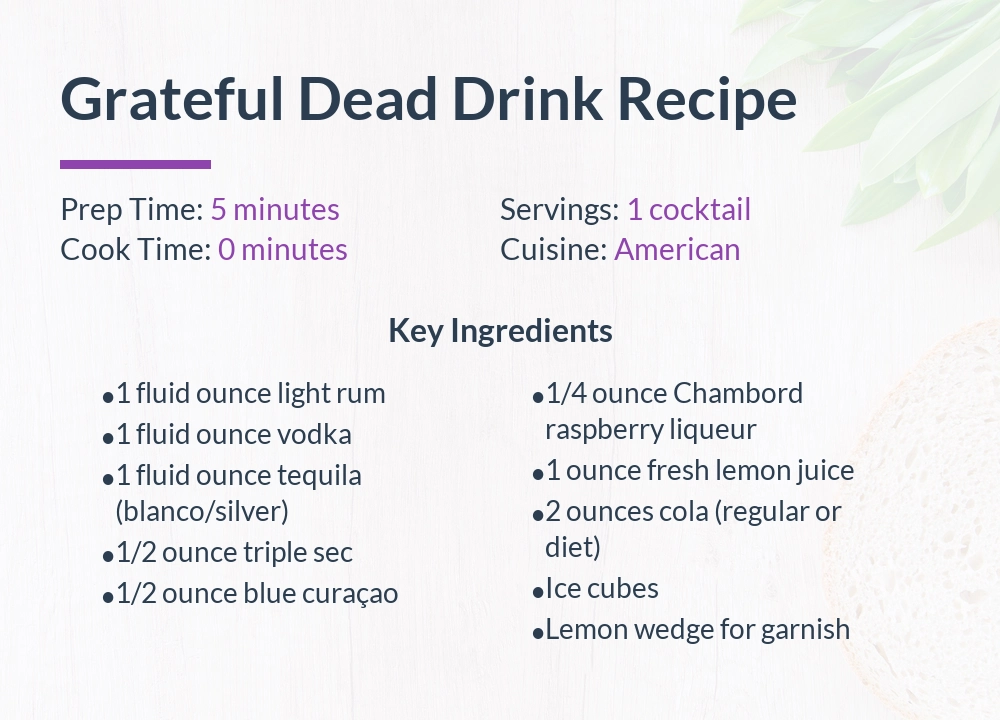
Recipe Details
- Prep Time: 5 minutes
- Cook Time: 0 minutes
- Servings: 1 cocktail
- Course: Beverage
- Cuisine: American
- Diet: Gluten Free
Ingredients
- 1 fluid ounce light rum
- 1 fluid ounce vodka
- 1 fluid ounce tequila (blanco/silver)
- 1/2 ounce triple sec
- 1/2 ounce blue curaçao
- 1/4 ounce Chambord raspberry liqueur
- 1 ounce fresh lemon juice
- 2 ounces cola (regular or diet)
- Ice cubes
- Lemon wedge for garnish
- Fresh raspberries for garnish (optional)
Instructions
- Chill a highball glass by filling it with ice water while you prepare the drink.
- Fill a cocktail shaker halfway with fresh ice cubes.
- Pour the light rum, vodka, tequila, triple sec, blue curaçao, Chambord, and fresh lemon juice into the shaker.
- Secure the shaker lid tightly and shake vigorously for 12-15 seconds until the outside frosts.
- Empty the chilling water from your highball glass and fill it with fresh ice.
- Strain the shaken mixture into the prepared glass over the fresh ice.
- Top with 2 ounces of cola, allowing it to settle naturally through the cocktail.
- Garnish with a lemon wedge on the rim and fresh raspberries if desired.
- Serve immediately with a straw to integrate the layers.
Nutrition
- Calories: 328 kcal
- Protein: 0 g
- Fat: 0 g
- Carbohydrates: 24 g
- Sugar: 22 g
- Fiber: 0 g
- Sodium: 8 mg
- Cholesterol: 0 mg
Cooking Method
This cocktail employs the shaking method to properly chill, dilute, and integrate the multiple spirits and citrus components. The cola is added afterward to preserve its carbonation. Proper technique ensures the ingredients emulsify correctly without becoming watery.
Tools Needed
- Cocktail shaker (Boston or Cobbler style)
- Jigger for precise measurement
- Highball glass (12-16 ounce capacity)
- Fine strainer (if using a Boston shaker)
- Bar spoon (for optional gentle stirring)
- Cutting board and paring knife for garnish
Understanding the Grateful Dead Cocktail
The grateful dead drink stands as a modern classic in the cocktail canon. It belongs to the family of Long Island Iced Tea variations, characterized by multiple spirit bases and citrus components. Its distinctive blue and red layered appearance makes it immediately recognizable.
This cocktail achieves complexity through strategic ingredient pairing rather than relying on a single dominant flavor. The combination creates what mixologists call a “rollercoaster profile” where different notes emerge throughout the drinking experience.
Historical Context and Origin
Despite its name referencing the famous band, the cocktail’s origins remain somewhat obscure. It likely emerged in the 1980s or 1990s during the cocktail renaissance period. Bartenders began experimenting with colorful liqueurs to create visually striking drinks.
The name probably references both the band’s popularity and the drink’s potent alcohol content. Multiple spirits combined can have a powerful effect if consumed without caution. This connection to music culture made it popular in bars near concert venues.
Ingredient Analysis and Selection
Each component in this recipe serves a specific functional and flavor purpose. Understanding these roles helps in making informed substitutions when necessary. Quality ingredients directly correlate with the final drinking experience.
Alcohol Base Components
The triple-spirit foundation provides complexity that a single base spirit cannot achieve. Light rum contributes subtle sweetness and botanical notes. Vodka adds clean ethanol without competing flavors, while blanco tequila provides peppery agave notes.
Select a light rum from Puerto Rico or Barbados for their cleaner profiles. A neutral vodka from Poland or Russia works well. For tequila, ensure it’s 100% agave to avoid harshness from mixto products.
Liqueurs and Modifiers
Triple sec provides orange flavor and additional sweetness to balance the citrus. Blue curaçao offers both color and a distinctive bitter-orange note. Chambord contributes deep raspberry flavor and the red layer that gives the drink its distinctive appearance.
Quality matters particularly with the liqueurs. Premium triple sec has more natural orange flavor than generic alternatives. Authentic blue curaçao from the Caribbean island provides better flavor than artificially colored imitations.
Fresh Citrus Importance
Freshly squeezed lemon juice is non-negotiable for this recipe. Bottled juice contains preservatives that create off-flavors when shaken. The acidity cuts through the sweetness and provides necessary balance to prevent the drink from becoming cloying.
Select firm, heavy lemons with smooth skin, which typically contain more juice. Roll them on the counter with pressure before cutting to maximize yield. Strain the juice to remove pulp and seeds that could clog the shaker.
Cola Selection and Impact
The cola topping adds both sweetness and effervescence while contributing to the layered appearance. Its caramel notes complement the other ingredients without dominating. The carbonation lifts the aromatics toward the nose with each sip.
Traditional cola sweetened with cane sugar provides the most authentic flavor profile. Diet cola can substitute for reduced sugar content, though it may alter the mouthfeel slightly. The amount can be adjusted based on personal preference for sweetness.
Nutritional Considerations
As a dietitian, I analyze all recipes through a nutritional lens. This cocktail contains significant calories primarily from alcohol and added sugars. Understanding its composition helps with informed consumption decisions.
Calorie Sources and Distribution
The total calorie count derives approximately 55% from alcohol and 45% from carbohydrates. Each gram of alcohol provides 7 calories, while sugars contribute 4 calories per gram. The lack of protein or fat makes these “empty calories” from a nutritional standpoint.
The sugar content comes primarily from the liqueurs and cola. While the fresh lemon juice contains natural sugars, its contribution is minimal compared to the other sweet components. The total carbohydrate count represents approximately 8% of a 2000-calorie diet’s recommended daily value.
Alcohol Content and Moderation
This recipe contains approximately 2.5 standard alcoholic drinks based on US measurements. The multiple spirits accumulate to create a potent beverage. Consumption should be paced accordingly, especially considering the sweet profile can mask the alcohol presence.
The American Dietary Guidelines recommend no more than one drink daily for women and two for men. This cocktail exceeds those guidelines in a single serving, making it appropriate for occasional consumption rather than regular intake.
Dietary Adaptations
Several modifications can accommodate different dietary needs without sacrificing flavor. The basic structure of the cocktail remains flexible to various ingredient substitutions.
Reduced Sugar Version
Replace regular triple sec with a sugar-free orange liqueur alternative. Use diet cola instead of the regular version. Select a Chambord alternative with reduced sugar content or decrease the amount used. These changes can reduce the sugar content by approximately 60%.
Gluten-Free Considerations
The standard recipe is naturally gluten-free since distilled spirits typically test below gluten detection thresholds. Ensure the specific brands used confirm gluten-free status during production. Some vodkas distilled from wheat may cause sensitivity in individuals with celiac disease.
Lower Alcohol Variation
Reduce each spirit to 3/4 ounce instead of 1 ounce. Increase the fresh lemon juice to 1.5 ounces. Top with additional cola to maintain volume. This modification decreases alcohol content by approximately 25% while maintaining the flavor balance.
Technical Execution and Technique
Proper technique separates an average cocktail from an exceptional one. Several key steps impact the final texture, temperature, and integration of flavors.
Shaking Methodology
Vigorous shaking serves multiple purposes beyond simple cooling. It properly dilutes the cocktail with meltwater from the ice, essential for balance. The action temporarily emulsifies the citrus oils with the alcohol, creating a smoother mouthfeel.
Shake until the shaker becomes almost too cold to hold comfortably. This typically takes 12-15 seconds with fresh ice. Strain immediately to prevent over-dilution from continued melting.
Layering and Presentation
The distinctive appearance comes from the natural separation of ingredients. The heavier cola sinks through the lighter alcohol mixture, creating a gradient effect. The Chambord, being denser, settles at the bottom creating the “dead” portion of the presentation.
Pour the cola slowly over the back of a bar spoon to achieve a cleaner layer separation. Avoid stirring after adding the cola to maintain the visual effect. The garnishes provide both aroma and visual appeal.
Common Preparation Errors
Several frequent mistakes can compromise the final result. Awareness of these pitfalls helps achieve consistency across multiple preparations.
Ingredient Measurement
Free-pouring spirits leads to inconsistent balance and potentially excessive alcohol content. Always use a jigger for precise measurement. The multiple components require exact proportions to achieve the intended flavor profile.
Variation of even 1/4 ounce in any component can throw off the delicate balance. This is particularly important with the liqueurs, which provide both sweetness and specific flavor notes.
Ice Quality and Temperature
Using old or freezer-burned ice introduces off-flavors to the cocktail. Always use fresh, clean-tasting ice for both shaking and serving. The serving glass should be properly chilled to maintain temperature without excessive dilution.
Shaking with insufficient ice results in inadequate chilling and dilution. Fill the shaker at least halfway with solid, dry ice cubes. Wet or partially melted ice dilutes the cocktail too quickly.
Serving Recommendations
Context and presentation enhance the drinking experience. Several factors contribute to optimal enjoyment of this complex cocktail.
Glassware Selection
The highball glass serves both functional and presentation purposes. Its height showcases the color layers effectively. The capacity accommodates the volume while leaving space for ice and garnish.
Alternative glassware like a Collins glass works similarly. Avoid wide-mouth glasses that allow carbonation to dissipate too quickly. The slender shape helps maintain temperature and effervescence.
Food Pairings
The sweet and citrus-forward profile pairs well with spicy or salty foods. Consider serving with Mexican-style appetizers or Asian-inspired dishes. The acidity cuts through rich, fatty foods effectively.
For dessert pairings, choose options less sweet than the cocktail itself. Citrus-based desserts or dark chocolate complement rather than compete with the flavor profile. Cheese plates with sharp varieties provide contrast.
Occasion and Timing
This cocktail works well as a conversation starter at social gatherings. Its visual appeal makes it suitable for parties and special occasions. The potency suggests consumption later in the evening rather than as a first drink.
Consider the context when serving to guests unfamiliar with its alcohol content. Providing information about its strength demonstrates responsible hosting. Always offer water alongside alcoholic beverages.
Storage and Batch Preparation
While ideally served immediately, certain components can be prepared in advance for efficiency when serving multiple guests.
Advance Preparation
The spirits and liqueurs can be pre-mixed in larger quantities and stored at room temperature. Keep the lemon juice separate until serving time to preserve freshness. Chill all ingredients before use to minimize ice meltage.
For parties, pre-measure the alcohol mixture into bottles. Shake individual servings with ice and lemon juice, then top with cola. This maintains quality while streamlining service.
Leftover Considerations
This cocktail does not store well once prepared. The ice continues to melt, diluting the drink excessively. The carbonation dissipates, leaving a flat texture. The colors may bleed together over time, diminishing the visual appeal.
Prepare only what will be consumed immediately. The components keep indefinitely when stored separately, allowing fresh preparation for each serving.
Variations and Related Cocktails
Several related drinks share similar construction methods or flavor profiles. Understanding these connections provides context for this recipe’s place in mixology.
Blue Motorcycle Comparison
The Blue Motorcycle cocktail shares identical ingredients except for substituting sour mix for fresh lemon juice. This creates a sweeter, less complex profile. The grateful dead version offers better balance through fresh citrus acidity.
Long Island Iced Tea Relationship
Both cocktails use multiple spirits and cola, though the Long Island Iced Tea omits the blue curaçao and Chambord. The grateful dead represents a more modern, visually-driven evolution of the classic formula.
Adjusted Flavor Profiles
For a less sweet version, increase the lemon juice to 1.5 ounces and reduce the triple sec to 1/4 ounce. For enhanced berry notes, float an additional 1/4 ounce of Chambord after adding the cola. These modifications create personalized variations while maintaining the drink’s essential character.
Frequently Asked Questions
What is the grateful dead drink recipe?
The grateful dead drink is a cocktail containing light rum, vodka, tequila, triple sec, blue curaçao, Chambord raspberry liqueur, fresh lemon juice, and cola. It’s characterized by its layered blue and red appearance and balanced sweet-tart flavor profile with significant alcohol content.
Why does this cocktail use so many different spirits?
Multiple spirits create complexity that a single base cannot achieve. Each contributes unique flavor notes that combine to form a more complete profile. The combination follows the tradition of Long Island-style cocktails while incorporating modern liqueurs for color and flavor variation.
Can I make a non-alcoholic version of this drink?
Yes, substitute the spirits with non-alcoholic alternatives where available. Use orange juice instead of triple sec, blue sports drink instead of curaçao, and raspberry syrup instead of Chambord. Increase the lemon juice and cola proportions to maintain volume.
What type of cola works best in this recipe?
Traditional cola sweetened with cane sugar provides the most authentic flavor profile. The caramel notes complement the other ingredients without dominating. Diet cola works for reduced sugar content, though it may slightly alter the mouthfeel and aftertaste.
How can I achieve the perfect layer separation?
Proper density differences create natural layering. Pour the cola slowly over the back of a spoon to disperse the impact. The Chambord, being heaviest, will settle at the bottom. Avoid stirring after assembly to maintain the distinct color zones.
Is this cocktail typically sweet or sour?
It achieves balance between both profiles. The liqueurs and cola provide sweetness, while fresh lemon juice contributes acidity. The result is neither cloying nor excessively tart when properly prepared. Adjustments can tilt the balance toward either profile based on preference.
What’s the alcohol content in one serving?
This recipe contains approximately 3 ounces of 80-proof spirits plus liqueurs, totaling roughly 2.5 standard US drinks. The exact alcohol by volume falls between 18-22% depending on specific brands used and final dilution from ice meltage.
Can I prepare multiple servings in advance for a party?
Pre-mix the spirits and liqueurs without ice or lemon juice. Store at room temperature in a sealed container. When serving, shake individual portions with fresh lemon juice and ice, then top with cola. This maintains quality while streamlining service.
Why is fresh lemon juice important instead of bottled?
Fresh juice provides brighter acidity without preservative aftertastes. The volatile oils in fresh lemon contribute aromatic complexity that bottled products lack. This freshness balances the sweetness from the liqueurs more effectively.
What’s the origin of the cocktail’s name?
The name likely references the Grateful Dead band and the drink’s potent effect. While exact origins are unclear, it emerged during the 1980s-90s cocktail renaissance. The connection to music culture made it popular in bars near concert venues.