
The first time I tasted the original sauce from Gates Bar-B-Q, the complexity of flavors was immediately apparent. It was not merely sweet or smoky, but a carefully orchestrated balance of tang, heat, and spice that defines Kansas City barbecue. Recreating this signature condiment at home became a personal mission.
After numerous tests and a bit of reverse engineering, I developed a formula that captures the essence of that iconic flavor. This guide will walk you through each step, from selecting the right apple cider vinegar to understanding the role of celery seed. You will learn how to build a sauce that can transform brisket, chicken, or even a simple plate of fries.
This is more than a list of ingredients; it is a detailed exploration of a culinary landmark. We will examine the history behind the recipe, break down the nutritional components, and provide adaptations for various dietary needs. By the end, you will possess not just a bottle of sauce, but a deeper appreciation for a classic American food.
How to Make gates bbq Sauce recipe
This process involves simmering a base of tomato sauce and vinegar with a carefully measured blend of spices. The goal is to allow the flavors to meld together into a harmonious whole. Patience during the cooking phase is crucial for developing the proper texture and depth.
Recipe Details
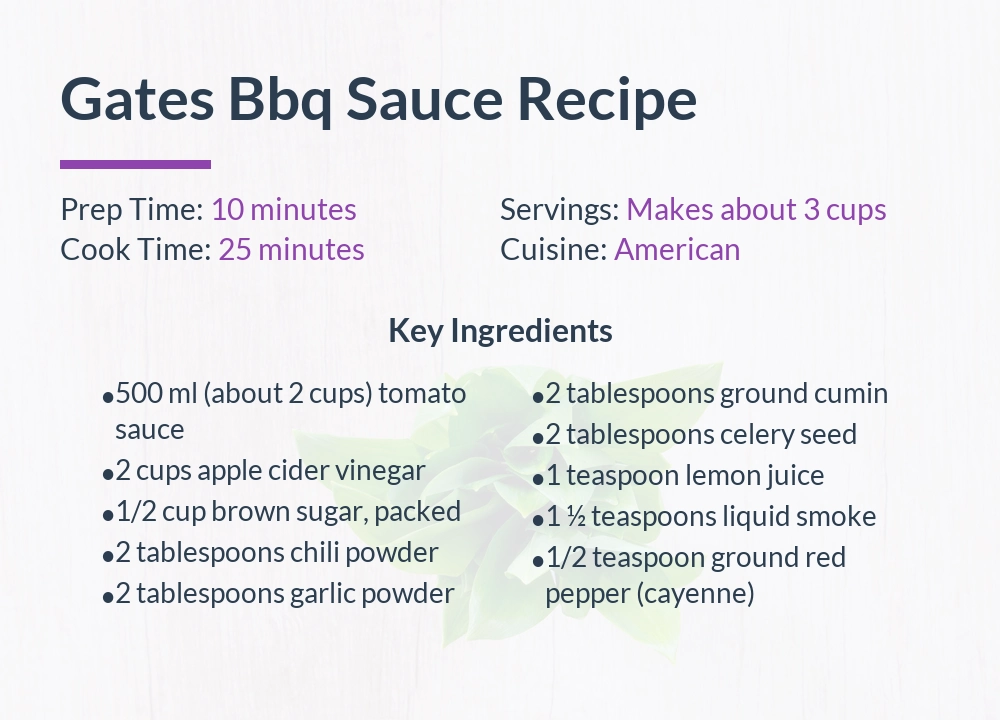
- Prep Time: 10 minutes
- Cook Time: 25 minutes
- Servings: Makes about 3 cups
- Course: Condiment
- Cuisine: American
- Diet: Vegetarian
Ingredients
- 500 ml (about 2 cups) tomato sauce
- 2 cups apple cider vinegar
- 1/2 cup brown sugar, packed
- 2 tablespoons chili powder
- 2 tablespoons garlic powder
- 2 tablespoons ground cumin
- 2 tablespoons celery seed
- 1 teaspoon lemon juice
- 1 ½ teaspoons liquid smoke
- 1/2 teaspoon ground red pepper (cayenne)
- 1/4 teaspoon salt
- 1/4 teaspoon black pepper
Instructions
- Gather all your ingredients. Using measuring spoons like Cuisipro stainless steel sets ensures accuracy for the spice blends.
- In a large pan, combine the tomato sauce, apple cider vinegar, and brown sugar. Place the pan over medium heat.
- Stir the mixture continuously until the sugar has completely dissolved into the liquid.
- Add the chili powder, garlic powder, ground cumin, celery seed, salt, and black pepper to the pan. Whisk thoroughly to incorporate the dry ingredients and prevent clumping.
- Bring the sauce to a gentle simmer, then immediately reduce the heat to low. You do not want a rolling boil.
- Allow the sauce to cook for 20-25 minutes, stirring occasionally. It will gradually thicken as the vinegar reduces.
- Remove the pan from the heat. Stir in the lemon juice, liquid smoke, and ground red pepper.
- Let the sauce cool to room temperature before transferring it to a clean, empty bottle or a tightly covered container.
Nutrition
- Calories: 25 kcal
- Protein: 0.5 g
- Fat: 0.3 g
- Carbohydrates: 5 g
- Sugar: 4 g
- Fiber: 0.6 g
- Sodium: 150 mg
- Cholesterol: 0 mg
Cooking Method
This recipe uses a stovetop simmering method. The consistent, moderate heat allows the vinegar to mellow and the spices to fully hydrate and release their oils. This process creates a stable emulsion where the flavors are fully integrated, rather than a simple mixture of separate components.
Tools Needed
- A large pan or saucepan
- Whisk and wooden spoon
- Measuring cups and spoons
- A fine-mesh sieve is optional for a smoother texture
- Cleaned, empty BBQ sauce bottles or glass jars for storage
The Story of Gates Bar-B-Q
The legacy of this sauce is inextricably linked to Ollie Gates and his family. His father, George Gates, started the business in Kansas City in the mid-20th century. Ollie Gates built upon that foundation, expanding the chain and solidifying its place in the city’s culinary identity.
Kansas City-style barbecue is known for its thick, sweet, and tomato-based sauces. Gates’ version stands out with its pronounced tanginess and a noticeable kick of heat. This signature profile has made it a benchmark for the region, as noted by culinary historians like Adrian Miller, author of “Black Smoke.”
The sauce’s influence has even traveled far beyond its home, with stories of it being shipped to places like Cabo San Lucas by devoted fans. This global reach speaks to the powerful and memorable flavor that we are working to replicate in your kitchen.
Understanding the Core Ingredients
Each component in this formula has a specific role. Altering one can shift the entire balance of the final product. Knowing why each ingredient is present will help you make informed adjustments to suit your personal taste.
Tomato Sauce
This forms the thick, sweet base of the sauce. It provides body and a fundamental fruity acidity that underpins the other flavors. Using a plain, unseasoned tomato sauce is critical, as pre-flavored versions can introduce unwanted herbs like basil or oregano.
Apple Cider Vinegar
The two cups of apple cider vinegar are what give this sauce its characteristic tang. This amount might seem high, but the prolonged simmering tames the sharpness. The vinegar acts as a flavor brightener and a natural preservative, ensuring your homemade batch lasts.
The Spice Foundation
The combination of garlic powder, chili powder, and cumin creates the savory backbone. Garlic powder offers a consistent, mellow garlic flavor without the risk of burning. Chili powder provides earthy warmth and color, while cumin adds a distinctive, smoky note that is essential to the profile.
Celery Seed
This is a quiet but essential player. Celery seed contributes a subtle, bitter, and aromatic flavor that cannot be replicated with fresh celery. It adds a layer of complexity that makes the sauce taste more complete and less one-dimensional.
Cayenne Pepper
The ground red pepper, or cayenne, is responsible for the heat. Starting with 1/2 teaspoon provides a gentle warmth. You can adjust this amount upward if you prefer a spicier sauce, but it is best to add it at the end to control the perceived heat level accurately.
Brown Sugar and Liquid Smoke
Brown sugar caramelizes slightly during cooking, contributing to the sauce’s deep color and sticky-sweet finish. The liquid smoke is a modern convenience that imparts a smoky flavor reminiscent of slow-cooked barbecue, bridging the gap between stovetop and pit.
Nutritional Perspective
As a condiment, this sauce is intended to be used in moderation. A two-tablespoon serving provides a small amount of calories, primarily from carbohydrates and sugar. The sodium content is something to be mindful of, especially for those monitoring their intake.
From a positive standpoint, the spices like cumin and chili powder contain beneficial compounds. Cumin may aid digestion, and capsaicin from the cayenne pepper can have a slight metabolic effect. The sauce contains no cholesterol and negligible fat, making it a suitable addition to various meal plans when used consciously.
You can alter the nutritional profile by reducing the brown sugar or using a sugar substitute. Be aware that this will change the viscosity and the traditional sweet-tangy balance that defines the Kansas City style.
Adapting the Recipe for Your Needs
This basic formula is quite adaptable. Whether you have dietary restrictions or simply want to experiment, here are some practical modifications.
Lower-Sodium Version
To reduce sodium, simply omit the added salt. The other ingredients, particularly the tomato sauce and celery seed, provide enough inherent savoriness. You can also look for a no-salt-added tomato sauce to further decrease the total sodium content.
Controlling Sugar and Spice
For a less sweet sauce, reduce the brown sugar to 1/4 cup. The result will be a tarter, more vinegar-forward condiment. To increase the heat, double the amount of cayenne pepper or add a few dashes of a hotter sauce, like a habanero-based blend, at the end of cooking.
Gluten-Free and Vegan Considerations
This recipe is naturally vegan and gluten-free. Always check the labels on your tomato sauce and apple cider vinegar to confirm they do not contain any hidden gluten or animal-derived additives. Most major brands are safe, but verification is a good practice.
Common Preparation Mistakes
Avoiding a few key errors will ensure your sauce turns out perfectly every time.
Do not boil the sauce vigorously after adding the spices. High heat can cause the spices to become bitter. A gentle simmer is all that is required to meld the flavors and achieve the right thickness.
Measuring the dry ingredients accurately is non-negotiable. Spoons like the Cuisipro stainless steel set are reliable. An extra teaspoon of cumin or a miscalculation with the chili powder can overpower the entire batch.
Allow the sauce to cool completely before bottling. Trapping steam in a sealed container can lead to condensation, which may dilute the sauce and reduce its shelf life. Storing it in a tightly covered container in the refrigerator is essential for preservation.
Serving and Application Ideas
This sauce is incredibly versatile beyond its classic role in barbecue.
Use it as a baste for chicken during the last few minutes of grilling. The sugar content means it can burn easily, so apply it late in the cooking process. It works wonderfully as a dipping sauce for french fries, onion rings, or sweet potato fries.
Mix a small amount into ground beef for burgers to add moisture and flavor. You can also stir a spoonful into a bowl of coleslaw to create a uniquely flavored side dish that pairs beautifully with smoked meats.
For storage, keep the sauce in the refrigerator. It will maintain its best quality for up to three weeks. For longer storage, you can freeze it in airtight containers for several months. Thaw it in the refrigerator before use.
Frequently Asked Questions
What is the Gates BBQ sauce recipe?
The Gates BBQ sauce recipe is a homemade copycat version of the signature sauce from Gates Bar-B-Q in Kansas City. It is a tomato-based sauce characterized by a pronounced tang from apple cider vinegar, a sweet note from brown sugar, and a complex spice blend featuring cumin, celery seed, and cayenne pepper.
Can I make a smaller batch of this sauce?
Yes, you can easily halve all the ingredients to make a smaller batch. Use a medium saucepan instead of a large pan to ensure the sauce reduces properly. The cooking time may be slightly shorter, so watch for a thickness that coats the back of a spoon.
What can I use if I don’t have liquid smoke?
If you do not have liquid smoke, the sauce will lack that specific smoky dimension. You can try adding an extra 3/4 teaspoon of smoked paprika along with the other dry ingredients to introduce a subtle smokiness, though the flavor profile will be different.
How can I make the sauce smoother?
For an exceptionally smooth texture, you can pour the cooled sauce through a fine-mesh sieve to remove the celery seeds and any other tiny spice particles. Alternatively, an immersion blender or standard countertop blender will create a perfectly uniform emulsion.
Is this sauce very spicy?
As written, the sauce has a mild to moderate level of heat from the 1/2 teaspoon of cayenne. The sweetness helps balance the spice. For a completely mild sauce, you can omit the cayenne entirely. For more heat, increase it to 1 teaspoon or more according to your preference.
What is the best way to store homemade BBQ sauce?
Store the sauce in a clean glass jar or a repurposed, cleaned BBQ sauce bottle with a tight-fitting lid. Keep it refrigerated. Properly stored, it will last for several weeks. Always use a clean utensil when dipping into the container to prevent contamination.
How does this compare to other regional BBQ sauces?
This recipe is a classic example of a Kansas City-style sauce, which is thick, sweet, and tomato-based. It differs significantly from the vinegar-forward sauces of the Carolinas or the white, mayonnaise-based sauces of Alabama. The balance of sweet, tangy, and spicy is the hallmark of the KC region.