
Walking into a Pollo Tropical restaurant, the aroma of grilled chicken and vibrant sauces always catches your attention. Among them, the garlic cilantro sauce stands out for its creamy texture and zesty kick. After many trips and experiments in my kitchen, I developed a version that mirrors the original.
This sauce has become a staple in my home, perfect for adding a burst of flavor to simple dishes. In this article, I will share the step-by-step process to recreate it, along with insights into its ingredients and uses.
You will find everything from the basic recipe to advanced tips for customization. Whether you are new to this condiment or a long-time fan, this guide aims to cover all aspects thoroughly.
How to Make Garlic Cilantro Sauce Pollo Tropical Recipe
This section provides the core recipe to help you make the sauce efficiently. Follow these steps for a result that closely matches the Pollo Tropical experience.
Recipe Details
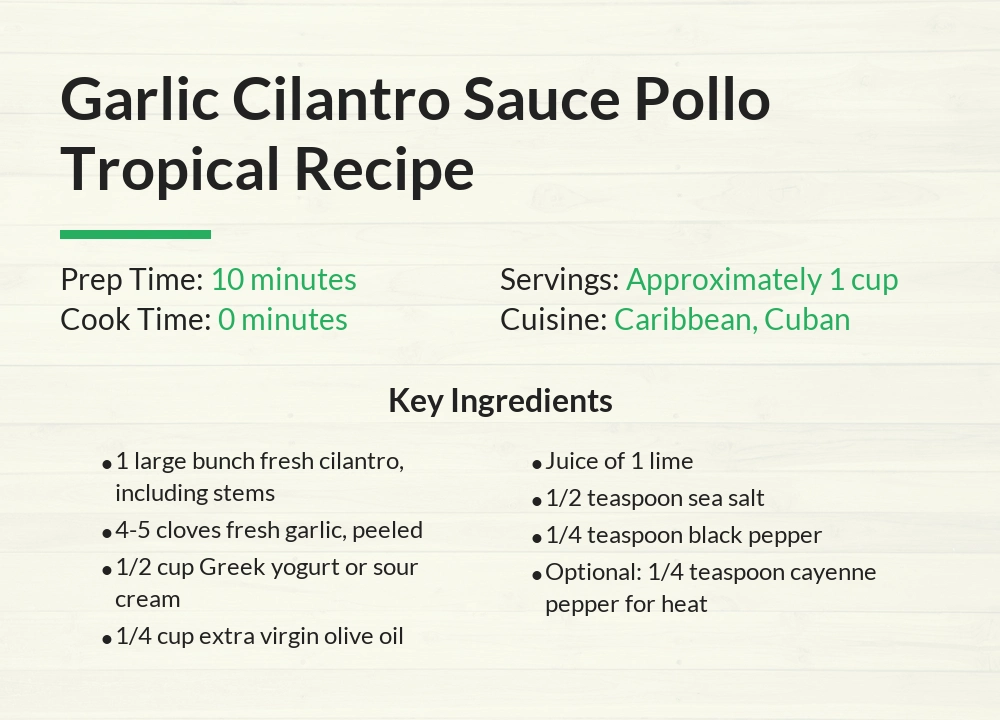
- Prep Time: 10 minutes
- Cook Time: 0 minutes
- Servings: Approximately 1 cup
- Course: Condiment
- Cuisine: Caribbean, Cuban
- Diet: Gluten-Free
Ingredients
- 1 large bunch fresh cilantro, including stems
- 4-5 cloves fresh garlic, peeled
- 1/2 cup Greek yogurt or sour cream
- 1/4 cup extra virgin olive oil
- Juice of 1 lime
- 1/2 teaspoon sea salt
- 1/4 teaspoon black pepper
- Optional: 1/4 teaspoon cayenne pepper for heat
Instructions
- Rinse the cilantro under cold water to remove any dirt, then pat it dry with a paper towel. Leaving the stems on adds depth to the flavor.
- Peel the garlic cloves if not already done. Using fresh garlic ensures a robust taste without bitterness.
- Combine the cilantro, garlic, Greek yogurt, olive oil, lime juice, salt, and pepper in a food processor or blender.
- Secure the lid and blend on high speed for 1-2 minutes. Pause occasionally to scrape down the sides with a spatula.
- Check the consistency; it should be smooth and creamy. If too thick, add a tablespoon of water or more lime juice.
- Taste the mixture and adjust seasoning if needed. For a spicier version, blend in the cayenne pepper.
- Transfer the sauce to an airtight container, such as a mason jar. Refrigerate for at least 30 minutes before serving to allow flavors to meld.
Nutrition
- Calories: 45 kcal per 2-tablespoon serving
- Protein: 2 g
- Fat: 4 g
- Carbohydrates: 2 g
- Sugar: 1 g
- Fiber: 0 g
- Sodium: 120 mg
- Cholesterol: 3 mg
Cooking Method
This recipe involves no heat application. It relies on raw ingredients blended together to create a fresh, emulsified sauce. The method preserves the vibrant colors and nutrients of the cilantro and garlic.
Tools Needed
- Food processor or high-speed blender
- Measuring cups and spoons
- Knife and cutting board for prepping garlic
- Airtight container for storage, like a glass jar
Exploring the Core Ingredients
Understanding each component helps in selecting quality items and making informed substitutions. Here, we break down the primary elements of this sauce.
Cilantro
Cilantro, also known as coriander leaves, brings a citrusy, slightly peppery note. Freshness is key; look for bright green leaves without wilting. The stems contain intense flavor, so including them enhances the sauce’s depth.
This herb is rich in antioxidants and vitamins A and K. Its volatile oils contribute to the distinct aroma that defines many Latin American and Caribbean dishes.
Garlic
Garlic provides a pungent, earthy base. Using fresh cloves rather than pre-minced versions avoids preservatives and ensures a cleaner taste. Varieties like Spanish or California garlic work well for their mild heat.
Allicin, a compound in garlic, offers antimicrobial benefits. Crushing or blending it releases this compound, amplifying both flavor and health properties.
Dairy and Alternatives
Greek yogurt adds creaminess and a tangy contrast. Full-fat versions yield a richer texture, while low-fat options reduce calories. For dairy-free needs, unsweetened almond or cashew yogurt can replicate the consistency.
Sour cream is another common base, contributing a slightly thicker result. Both ingredients help emulsify the oil and lime juice, creating a stable sauce.
Nutritional Insights
This sauce is not only flavorful but also nutritionally balanced when made with mindful ingredients. The combination offers a mix of macronutrients and micronutrients.
Cilantro and garlic are low in calories but high in beneficial compounds like flavonoids. These support inflammation reduction and heart health.
Greek yogurt introduces protein and probiotics, aiding digestion. Olive oil provides monounsaturated fats, which are heart-healthy. Using minimal salt keeps sodium levels manageable.
For those monitoring intake, the recipe can be adjusted. Reducing oil lowers fat content, while increasing cilantro boosts fiber and vitamins without adding calories.
Customizing for Dietary Needs
Adapting this sauce to fit various diets is straightforward with simple swaps. Below are practical modifications for common dietary restrictions.
Vegan and Dairy-Free
Replace Greek yogurt with an equal amount of plant-based yogurt. Cashew or coconut-based varieties work best due to their neutral taste and creamy texture. Ensure they are unsweetened to avoid altering the flavor profile.
Low-Sodium Version
Omit added salt and rely on the natural savoriness of garlic and lime. You can add a dash of citrus zest or a pinch of nutritional yeast for umami without sodium.
Nut-Free Adaptation
If using nut-based yogurts, switch to seed options like sunflower seed yogurt. Always check labels for cross-contamination if allergies are a concern.
Background and Influence
Pollo Tropical is a fast-food chain rooted in Caribbean traditions, particularly Cuban cuisine. Their menu emphasizes grilled meats and zesty sauces, reflecting the region’s love for bright, herbaceous flavors.
The garlic cilantro sauce draws from mojos and cremas common in Latin American cooking. These condiments often feature citrus, garlic, and herbs as accompaniments to proteins and grains.
This style of sauce has evolved from homemade recipes passed through generations. It highlights the importance of fresh, accessible ingredients in creating memorable meals.
Avoiding Common Errors
Many home cooks encounter issues when making this sauce. Here are tips to prevent mistakes and achieve consistent results.
Over-blending can incorporate too much air, making the sauce frothy. Pulse the food processor in short bursts until just combined.
Using old or wilted cilantro results in a bitter taste. Always select vibrant, fresh bunches and store them properly before use.
Inconsistent garlic sizing may lead to uneven flavor. Mince the garlic roughly before blending to ensure it integrates smoothly.
If the sauce separates, whisk it vigorously or re-blend with a teaspoon of water. Chilling it before serving often helps stabilize the emulsion.
Serving Ideas and Preservation
This versatile sauce complements a wide range of dishes. Use it as a dip for vegetables or drizzled over grilled chicken, fish, or tacos. It pairs well with grain bowls, arepas, or even as a spread on burgers.
For storage, keep it in an airtight container in the refrigerator. It typically lasts up to 5 days. Freezing is not recommended, as it can alter the texture and cause separation upon thawing.
To maintain freshness, avoid leaving the sauce at room temperature for extended periods. Stir it well before each use if any liquid has settled.
Emulsion Principles
The sauce’s creamy consistency comes from emulsifying oil and water-based ingredients. Lime juice and yogurt contain water, while olive oil is lipid-based.
Blending forces these elements to combine temporarily. The proteins in yogurt act as emulsifiers, helping to stabilize the mixture. Acid from lime juice also aids in this process by reducing surface tension.
For a more stable emulsion, add oil slowly while blending. This technique is common in mayonnaise-making and can be applied here for a thicker result.
Frequently Asked Questions
What is garlic cilantro sauce from Pollo Tropical?
It is a creamy condiment made with fresh cilantro, garlic, dairy, and citrus. It is known for its tangy, herbaceous flavor and is often served with grilled meats and sides.
Why is this sauce important in Caribbean cuisine?
It embodies the bright, fresh flavors characteristic of the region, using local herbs and citrus. It enhances dishes without overpowering them, making it a versatile staple.
How does the recipe work without cooking?
Raw ingredients are blended to create an emulsion. The acid in lime juice and the creaminess of yogurt bind the components, resulting in a smooth sauce.
Can I use a blender instead of a food processor?
Yes, a high-speed blender can achieve a similar consistency. You may need to scrape the sides more frequently to ensure even blending.
What can I substitute for Greek yogurt?
Sour cream, plain yogurt, or dairy-free alternatives like almond yogurt work well. The key is to use a creamy base with a mild tang.
How long does homemade garlic cilantro sauce last?
When stored properly in the fridge, it remains fresh for up to 5 days. Discard if you notice any off smells or discoloration.
Is this sauce suitable for a low-carb diet?
Yes, it is naturally low in carbohydrates. Most carbs come from the cilantro and lime, which are minimal per serving.
Can I make a larger batch for events?
Absolutely. Double or triple the ingredients, but blend in batches to avoid overfilling your equipment. Store in multiple containers for easy access.
What dishes pair best with this sauce?
It excels with grilled or roasted vegetables, chicken, fish, burritos, and tacos. It can also be used as a dressing for salads or grain bowls.
How can I adjust the consistency if it’s too thick?
Add a tablespoon of water, lime juice, or broth and blend again. Adjust gradually until you reach the desired thickness.