
That first bite of a warm, golden-brown frying saucer takes me straight back to summer fairs, where the air was thick with the scent of sugar and frying oil. I spent years perfecting this recipe to capture that crisp exterior and soft, chewy center you love. In this guide, I will walk you through every step to create these irresistible treats in your own kitchen.
Frying saucers are a type of fried dough, often called elephant ears, shaped into large disks and cooked until crunchy. They are a staple at festivals and a comfort food many grew up with. This version uses simple ingredients like flour and yeast for an authentic result. Let us get started on making your own batch.
How to Make frying Saucer recipe
This section provides the complete recipe for frying saucers. Follow these steps closely for the best outcome, and refer to later sections for deeper insights into ingredients and techniques.
Recipe Details
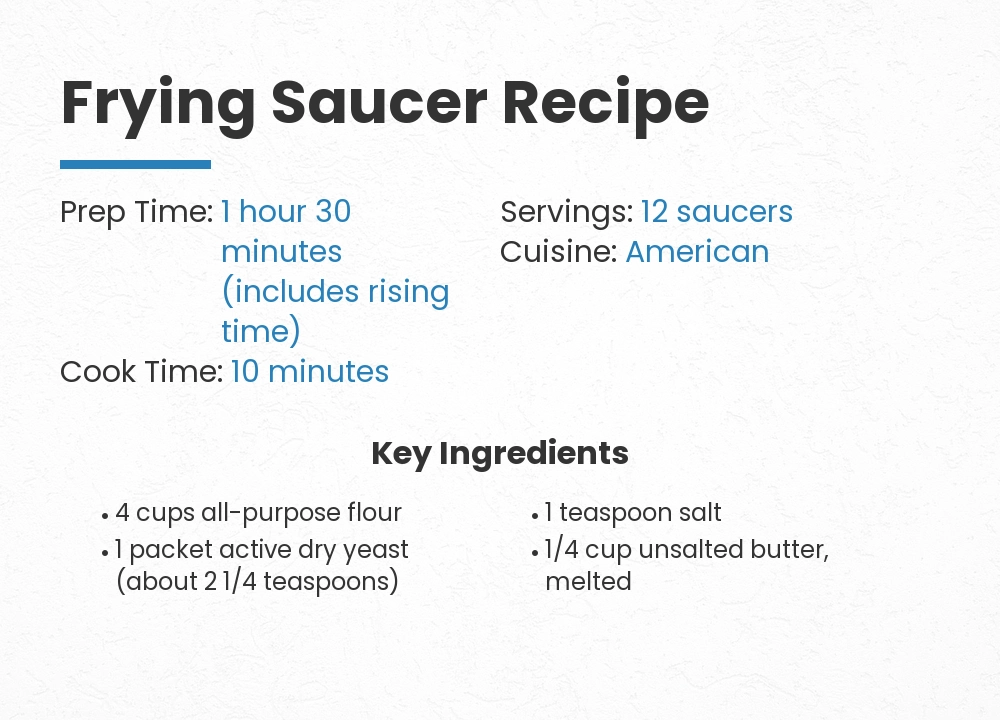
- Prep Time: 1 hour 30 minutes (includes rising time)
- Cook Time: 10 minutes
- Servings: 12 saucers
- Course: Appetizer, Snack
- Cuisine: American
- Diet: Vegetarian
Ingredients
- 4 cups all-purpose flour
- 1 packet active dry yeast (about 2 1/4 teaspoons)
- 1 cup warm water (around 112°F)
- 2 tablespoons granulated sugar
- 1 teaspoon salt
- 1/4 cup unsalted butter, melted
- Vegetable oil for frying (about 6 cups)
- Optional: Cinnamon sugar for coating
Instructions
- In a large mixing container, combine warm water, sugar, and yeast. Let it sit for 5-10 minutes until foamy.
- Add flour, salt, and melted butter to the yeast mixture. Stir until a soft dough forms.
- Knead the dough on a floured pastry board for 5-7 minutes until smooth and elastic.
- Place the dough in a greased bowl, cover with a cloth, and let rise in a warm area for 1 hour or until doubled in size.
- Punch down the dough and divide into 12 equal portions, each about 4½ ounces.
- Roll each portion into a ball, then flatten into a circle about 6 inches in diameter on a floured surface.
- Heat oil in a deep fryer or large pot to 375°F. Carefully fry each disk for 2-3 minutes per side until golden brown.
- Remove with a slotted spoon and drain on paper towels. Sprinkle with cinnamon sugar if desired while warm.
Nutrition
- Calories: 180 kcal
- Protein: 4 g
- Fat: 7 g
- Carbohydrates: 25 g
- Sugar: 2 g
- Fiber: 1 g
- Sodium: 195 mg
- Cholesterol: 10 mg
Cooking Method
This recipe uses deep-frying to achieve a crispy texture. The dough is fried in hot oil, which quickly cooks the exterior while keeping the inside soft. Maintaining a consistent oil temperature is crucial to prevent burning or greasiness.
Tools Needed
- Large mixing bowl
- Measuring cups and spoons
- Rolling pin
- Deep fryer or heavy-bottomed pot
- Slotted spoon
- Paper towels
- Thermometer for oil temperature
What Are Frying Saucers?
Frying saucers are a popular fair food made from a simple yeast dough that is rolled flat and fried. They are known for their round shape, similar to a large disk, and are often dusted with sugar or cinnamon. Unlike other fried treats, they have a distinct chewiness and light crunch.
These snacks are sometimes called elephant ears due to their size and appearance. They originated in American carnival culture and have roots in various European fried dough traditions. The name “frying saucer” comes from their saucer-like shape when cooked.
Key Ingredients and Their Roles
Each ingredient in this recipe plays a specific role in texture, flavor, and structure. Understanding these elements helps you make informed substitutions or adjustments.
Flour
All-purpose flour provides the structure for the dough. Its protein content creates gluten, which gives the saucers their chewy texture. Using bread flour can make them denser, while cake flour results in a lighter product.
For a whole-grain variation, substitute up to half with whole wheat flour. This adds fiber but may make the dough heavier. Always sift flour to avoid lumps and ensure even mixing.
Yeast
Active dry yeast is responsible for the dough’s rise, creating air pockets that make the saucers light. It activates in warm water, feeding on sugar to produce carbon dioxide. If the water is too hot, it can kill the yeast, leading to flat results.
Instant yeast can be used as a substitute without proofing. Ensure your yeast is fresh by checking the expiration date; old yeast may not rise properly.
Frying Oil
Vegetable oil with a high smoke point, like avocado or canola oil, is ideal for frying. It heats evenly and does not impart strong flavors. The oil should be maintained at 375°F to cook the dough quickly without absorbing excess grease.
Avocado oil is a healthier choice due to its monounsaturated fats. Avoid olive oil for deep-frying, as it can burn at high temperatures and affect taste.
Nutritional Analysis
As a dietician, I emphasize balance in enjoying fried foods. This recipe provides carbohydrates for energy but is high in calories and fat due to frying. One serving offers about 180 calories, with most coming from carbs and fats.
The protein content is modest, primarily from the flour. To boost nutrition, consider serving with fruit or a protein-rich dip. The sugar content is low if no toppings are added, making it adaptable for lower-sugar diets.
Frying adds saturated fat, so moderation is key. Air frying is an alternative method that reduces oil use, as discussed in dietary adaptations. Always drain saucers well to minimize fat absorption.
Dietary Modifications
This recipe can be adjusted for various dietary needs without sacrificing flavor. Here are practical swaps based on common restrictions.
Gluten-Free Version
Replace all-purpose flour with a gluten-free blend containing xanthan gum. Use 1:1 ratio, but note the dough may be stickier. Add an extra tablespoon of water if needed, and handle gently to prevent breakage.
Vegan Adaptation
Substitute butter with vegan margarine or avocado oil. Ensure the sugar is vegan-friendly, as some sugars are processed with bone char. The yeast is typically vegan, but check labels for any additives.
Low-Sugar Option
Omit the sugar in the dough and skip cinnamon sugar topping. Use a sugar substitute like stevia if desired, but adjust amounts as they can be sweeter. The dough will still rise without sugar, but may take longer.
Historical and Cultural Background
Frying saucers have a rich history in American fair culture, dating back to the early 20th century. They evolved from European fried doughs like Dutch oliebollen or Italian zeppole. The name “elephant ears” became popular due to their resemblance to the animal’s ear when fried.
In Hawaii, similar treats are known as “flying saucers,” often made with local twists like coconut toppings. This recipe captures the classic version found at midwestern fairs, where they are a low-cost, high-profit item for vendors.
The communal aspect of making and sharing these saucers adds to their charm. Families often pass down variations, making each batch unique. Understanding this history enriches the cooking experience.
Avoiding Common Errors
Many home cooks face issues like dense dough or greasy saucers. Here is how to prevent these problems and achieve perfect results every time.
Dough Not Rising
If the dough does not double in size, the yeast may be inactive or the environment too cold. Use a warm place, like an oven with the light on, and ensure water temperature is correct. Do not rush the rising process.
Oil Temperature Fluctuations
Inconsistent oil heat leads to uneven cooking. Use a thermometer to monitor temperature, and fry in small batches to avoid cooling the oil. If the oil smokes, it is too hot and can burn the saucers.
Breakage During Frying
Thin or overhandled dough can tear in the oil. Roll portions evenly and handle gently. If the dough sticks, dust with more flour, but avoid excess, which can make the saucers tough.
Serving Ideas and Storage
Frying saucers are best served warm, right after cooking. Pair them with savory dips like cheese sauce or sweet spreads like fruit preserves. For a balanced meal, add a side salad or grilled vegetables.
Store leftovers in an airtight container at room temperature for up to 2 days. Reheat in an oven or air fryer to restore crispiness. Avoid microwaving, as it can make them soggy.
To freeze, place cooled saucers in a single layer on a tray, then transfer to a freezer bag. They last up to 3 months. Reheat from frozen in a 350°F oven for 5-7 minutes.
The Science of Frying Dough
Frying involves cooking food in hot oil, which transfers heat rapidly and creates a crispy crust through Maillard reaction. The steam from the dough’s moisture pushes out, preventing oil absorption if the temperature is correct.
Yeast fermentation produces gases that expand in the heat, giving the saucers their light texture. Using the right flour protein level ensures the gluten network traps these gases effectively during frying.
Frequently Asked Questions
What is a frying saucer recipe?
A frying saucer recipe involves making a yeast-based dough, shaping it into disks, and deep-frying until golden. It results in a crispy, chewy treat often associated with fairs and festivals.
Why is this recipe important?
This recipe preserves a cultural tradition and allows you to create a beloved snack at home. It teaches fundamental skills like dough handling and frying, which can be applied to other recipes.
How does the frying process work?
Frying cooks the dough quickly by submerging it in hot oil, which seals the exterior and cooks the interior through conduction. The high heat creates a crisp layer while keeping the inside soft.
Can I bake instead of fry?
Yes, baking is an option. Roll the dough and bake at 400°F for 10-12 minutes until golden. However, the texture will be more bread-like and less crispy compared to frying.
How do I prevent the saucers from absorbing too much oil?
Maintain oil temperature at 375°F and do not overcrowd the fryer. Drain saucers on paper towels immediately after frying to remove excess oil.
What are some topping variations?
Beyond cinnamon sugar, try powdered sugar, honey, or savory options like grated cheese and herbs. Experiment with different flavors to suit your taste.
Is this recipe suitable for beginners?
Yes, with careful attention to instructions, beginners can succeed. Start with a small batch and practice rolling and frying techniques.
How can I make this recipe healthier?
Use air frying with a light oil spray to reduce fat. Substitute part of the flour with whole grains and limit sugary toppings for a lower-calorie version.