
You may have heard whispers about Essiac tea, a traditional herbal blend with a storied past, especially if you’re exploring complementary health approaches.
I first encountered this formula while researching historical remedies, and its persistence in modern discussions piqued my professional curiosity.
Today, I will guide you through the original preparation method, drawing from publicly available documents and my own experience in herbal nutrition.
This article provides the complete Essiac tea recipe, its background, and a detailed analysis to help you make informed decisions.
How to Make Essiac Tea Recipe Original PDF
Preparing Essiac tea requires precision, as the original formula is specific in its ingredients and process.
I have made this tea myself to understand its preparation and nuances, which I will share with you step by step.
Always consult with a healthcare provider before using herbal remedies, particularly if you have existing health conditions.
Recipe Details
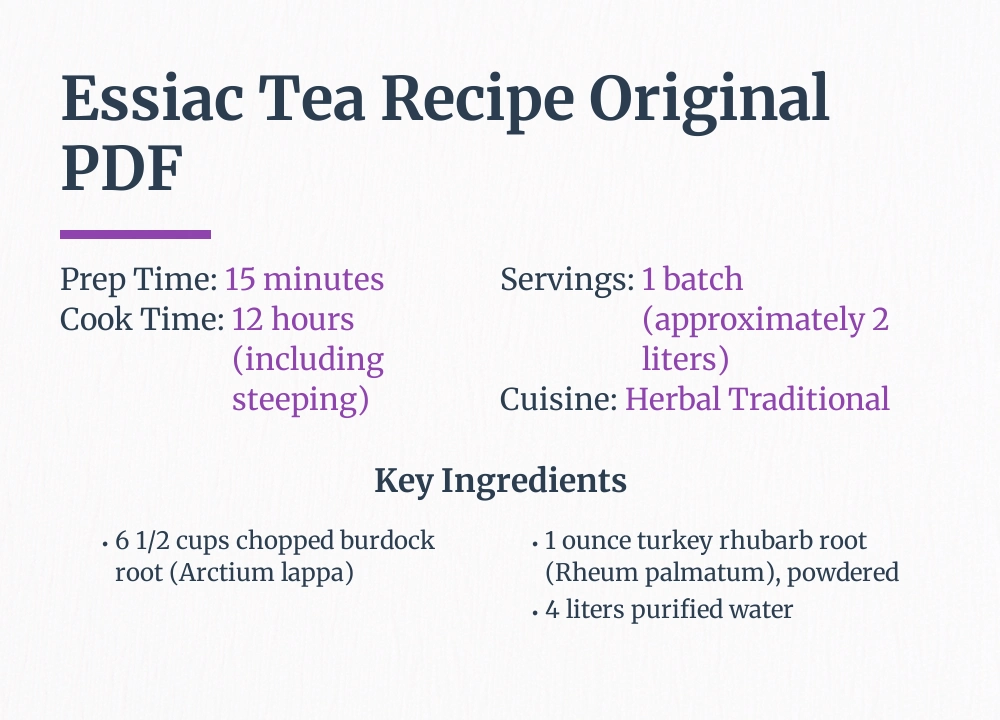
- Prep Time: 15 minutes
- Cook Time: 12 hours (including steeping)
- Servings: 1 batch (approximately 2 liters)
- Course: Beverage
- Cuisine: Herbal Traditional
- Diet: Vegan
Ingredients
- 6 1/2 cups chopped burdock root (Arctium lappa)
- 1 pound sheep sorrel herb (Rumex acetosella), dried and powdered
- 1/4 cup slippery elm bark (Ulmus rubra), powdered
- 1 ounce turkey rhubarb root (Rheum palmatum), powdered
- 4 liters purified water
Instructions
- Combine the burdock root and sheep sorrel in a large, stainless steel pot.
- Add the 4 liters of purified water to the pot, ensuring all herbs are submerged.
- Bring the mixture to a vigorous boil, then reduce heat to a simmer for 10 minutes.
- Stir in the slippery elm bark and turkey rhubarb root, simmering for an additional 5 minutes.
- Remove the pot from heat, cover it, and let it steep at room temperature for 10-12 hours.
- After steeping, reheat the tea until it is warm but not boiling, then strain it through a fine mesh or cheesecloth.
- Transfer the liquid into sterilized glass bottles and store it in the refrigerator.
- Shake the bottle well before each use, as sediment may settle at the bottom.
Nutrition
- Calories: 5 kcal
- Protein: 0 g
- Fat: 0 g
- Carbohydrates: 1 g
- Sugar: 0 g
- Fiber: 0 g
- Sodium: 2 mg
- Cholesterol: 0 mg
Cooking Method
The Essiac tea preparation involves decoction and prolonged steeping to extract compounds from the roots and herbs.
This method helps release polysaccharides and antioxidants that are central to its traditional use.
Using stainless steel equipment prevents reactions with the herbal constituents, preserving the blend’s integrity.
Tools Needed
- Large stainless steel pot with lid
- Long-handled wooden spoon for stirring
- Fine mesh strainer or cheesecloth
- Glass bottles or jars with airtight lids
- Measuring cups and spoons
Understanding Essiac Tea
Essiac is an herbal tea that originated in Canada, developed by nurse Rene Caisse in the 1920s.
The name “Essiac” is Caisse spelled backward, reflecting her personal connection to the formula.
It was traditionally used as an alternative or complementary therapy, often by individuals seeking to support general wellness.
Many people turn to it hoping it might help with symptoms or conditions, though scientific evidence is limited.
Historical Background
Rene Caisse claimed to have learned the formula from a patient who attributed it to Ojibwe herbal traditions.
She administered it for decades, and it gained attention for its use in cases involving cancer and other ailments.
Despite its popularity, it remains an unproven treatment, and its efficacy is not supported by rigorous clinical trials.
This history is why the original recipe is often sought in PDF or document form for authenticity.
Core Components and Their Roles
Each herb in Essiac tea contributes specific attributes, which I have studied from a nutritional standpoint.
Burdock root is known for its detoxifying properties and contains inulin, a type of prebiotic fiber.
Sheep sorrel is rich in antioxidants and has been traditionally used for its potential anti-inflammatory effects.
Slippery elm bark provides mucilage, which may soothe the digestive tract, while turkey rhubarb root has laxative qualities.
Burdock Root Analysis
Burdock root (Arctium lappa) is a biennial plant native to Europe and Asia, now cultivated worldwide.
It contains polyacetylenes, flavonoids, and phenolic acids, which are studied for their antioxidant capacity.
In herbal medicine, it is often employed to support liver function and promote skin health.
Sheep Sorrel Insights
Sheep sorrel (Rumex acetosella) is a common weed with high oxalate content, which requires caution in certain diets.
Its leaves and stems are used, and it is a source of vitamins A and C, as well as various minerals.
Some laboratory studies on its extracts have shown effects on certain cancer cells, but human data is lacking.
Nutritional and Health Perspectives
From a dietary viewpoint, Essiac tea is low in calories and macronutrients, making it a negligible source of energy.
Its potential benefits are attributed to phytochemicals like polyphenols and polysaccharides present in the herbs.
These compounds may interact with bodily systems, such as the immune response or digestive processes.
However, it is not a substitute for conventional treatments, and any use should be discussed with a doctor.
Mechanisms of Action
The herbs in Essiac tea may work through antioxidant pathways, reducing oxidative stress in the body.
Some research suggests that components like those in burdock root could influence cytochrome P450 enzymes, affecting drug metabolism.
This is why caution is advised if you are taking prescription medications, including cancer drugs.
In cases like breast cancer or other advanced cancers, it is vital to rely on evidence-based therapies.
Claims Versus Evidence
Anecdotal evidence often praises Essiac tea for improving appetite or reducing abdominal pain in cachexia.
Clinical studies are sparse, and most available research is from in vitro or animal models, not human trials.
For example, one study on breast cancer cells showed some inhibition, but this does not translate to a cure in people.
Always approach such therapies with a critical mind and prioritize treatments validated by clinical trials.
Practical Preparation Tips
Making Essiac tea correctly ensures you get the intended herbal extraction without compromising safety.
I have found that using high-quality, organic herbs reduces the risk of contaminants like pesticides.
Measure ingredients precisely, as deviations can alter the concentration of active compounds.
Store the prepared tea in the refrigerator and use it within a few weeks to maintain potency.
Common Errors to Avoid
One mistake is boiling the tea too vigorously after adding slippery elm bark, which can degrade its mucilage.
Another is using aluminum or non-stick cookware, as metals can leach into the tea and cause chemical interactions.
Do not skip the steeping phase, as it is crucial for full extraction of water-soluble components.
If you experience any adverse effects, such as bowel changes or discomfort, discontinue use and seek medical advice.
Dietary Adaptations
The original Essiac tea recipe is naturally vegan and gluten-free, but always check herb sources for cross-contamination.
For those with sensitivities, ensure that the sheep sorrel is free from other plant materials that might cause reactions.
If you prefer a less potent version, you can dilute the tea with water, but this may reduce its traditional strength.
No sugar or additives are needed, as the herbs provide a mild, earthy flavor on their own.
Serving and Storage Guidance
Essiac tea is typically consumed in small doses, such as one ounce diluted in warm water, two to three times daily.
It is best taken on an empty stomach to enhance absorption, according to traditional practices.
Pair it with a balanced diet rich in fruits and vegetables to support overall wellness.
Keep unused portions in dark glass bottles away from light to preserve the herbal integrity.
Long-Term Storage
For extended storage, you can freeze the tea in ice cube trays and thaw portions as needed.
Always label containers with the preparation date to track freshness and avoid using degraded products.
If the tea develops an off odor or color, discard it immediately to prevent potential damage from spoilage.
Scientific and Medical Context
Essiac tea falls under complementary and alternative therapies (CAM), which are used alongside conventional care.
It is not recognized as a standalone cancer treatment by major health organizations, and its status remains that of an unproven therapy.
Research into Essiac is limited, with most data coming from anecdotal reports rather than controlled clinical trials.
If you are considering it, have an open conversation with your healthcare provider about your goals and any potential risks.
Interactions with Conventional Treatments
Some herbs in Essiac may interact with chemotherapy or other cancer treatments, altering their efficacy.
For instance, burdock root might affect liver enzymes involved in drug metabolism, leading to unpredictable outcomes.
This is why detailed information sharing with your doctor is essential to avoid complications.
In cases where conventional treatments cannot cure the cancer, some seek alternatives for symptom management.
Frequently Asked Questions
What is the original Essiac tea recipe?
The original Essiac tea recipe is a herbal blend of burdock root, sheep sorrel, slippery elm bark, and turkey rhubarb root, prepared as a decoction.
Why is the original Essiac tea recipe PDF important?
It provides a standardized formula based on historical documents, helping users avoid modified Essiac products that may differ in composition.
How does Essiac tea work in the body?
Its herbs contain compounds that may support antioxidant activity and immune function, but mechanisms are not fully understood and lack robust evidence.
Can Essiac tea cure cancer?
No, Essiac tea is not a proven cure for cancer. It is used as a complementary therapy for symptom relief, not as a replacement for conventional treatments.
Are there any side effects of Essiac tea?
Possible side effects include abdominal pain, diarrhea, or allergic reactions. Consult a doctor before use, especially if you have kidney issues or are on medication.
How should I store prepared Essiac tea?
Store it in sterilized glass bottles in the refrigerator for up to three weeks, or freeze it for longer preservation.
Is Essiac tea safe during chemotherapy?
It may not be safe due to potential interactions with cancer drugs. Always discuss with your oncologist before integrating it into your regimen.
Where can I find the original Essiac tea recipe in PDF format?
It is available in public domain sources, such as archives related to Rene Caisse, but ensure you verify the authenticity to avoid inaccuracies.