
Many home baristas struggle with inconsistent results when making espresso drinks. I faced this issue early in my career, leading me to develop a systematic approach to recipe documentation. An espresso drink recipes PDF serves as a personalized guide containing measured formulas for beverages like lattes, cappuccinos, and americanos.
This digital resource ensures reproducibility and allows for easy adjustments based on ingredient availability or dietary needs. You can create your own version by following the detailed framework provided here. The sample recipe below demonstrates the precision required for optimal flavor and texture.
How to Make Espresso Drink Recipes PDF
This section outlines the process for compiling a classic latte recipe into your PDF. Each element must be recorded accurately to maintain consistency across preparations.
Recipe Details
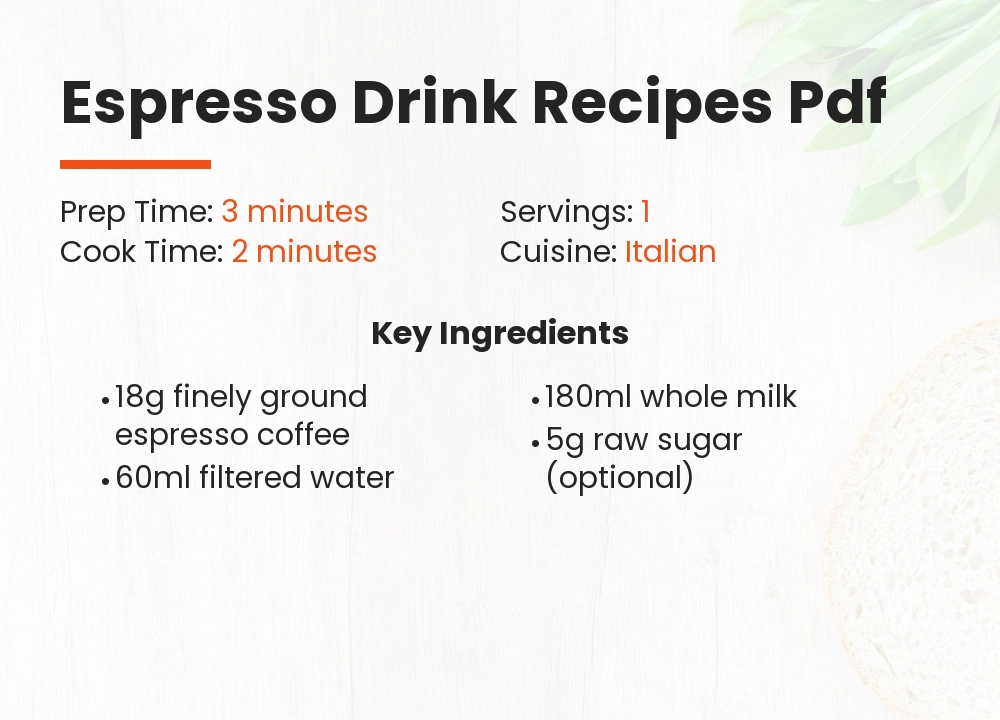
- Prep Time: 3 minutes
- Cook Time: 2 minutes
- Servings: 1
- Course: Beverage
- Cuisine: Italian
- Diet: Vegetarian
Ingredients
- 18g finely ground espresso coffee
- 60ml filtered water
- 180ml whole milk
- 5g raw sugar (optional)
Instructions
- Heat your espresso machine portafilter by running hot water through it.
- Distribute ground coffee evenly in the portafilter basket and tamp at 15kg pressure.
- Brew espresso directly into a pre-warmed cup for 25-30 seconds until reaching 60ml yield.
- Steam milk to 65°C while creating microfoam with a swirling motion.
- Pour steamed milk slowly over espresso, holding back foam with a spoon.
- Top with remaining foam and add sweetener if desired.
Nutrition
- Calories: 128 kcal
- Protein: 7 g
- Fat: 5 g
- Carbohydrates: 14 g
- Sugar: 13 g
- Fiber: 0 g
- Sodium: 105 mg
- Cholesterol: 20 mg
Cooking Method
Espresso extraction occurs through pressurized water forced through compacted grounds. Milk transformation involves steam injection that denatures proteins and emulsifies fats. The combination creates a stable colloidal suspension between coffee oils and milk components.
Tools Needed
- Espresso machine with steam wand
- Burr grinder
- Digital scale
- Thermometer
- Milk pitcher
- Tamper
Essential Components for Recipe Documentation
Creating an effective recipes PDF requires understanding each ingredient’s properties. These elements determine the beverage’s structural and sensory characteristics.
Coffee Beans Selection
Arabica beans from Ethiopia offer floral notes while Brazilian varieties provide chocolate undertones. Roast level affects solubility; medium roasts extract better for espresso. The grind size must match your machine’s pressure system.
Freshness impacts crema formation. Use beans within 3 weeks of roasting and grind immediately before brewing. Storage in airtight containers prevents oxidation that causes bitter flavors.
Milk Chemistry
Whole milk contains 3.5% fat which creates silky texturing. Proteins whey and casein unfold at 60°C during steaming. Lactose caramelization begins at 68°C, contributing sweetness.
Alternative milks behave differently due to varying protein content. Oat milk maintains stability while almond milk may separate. The PDF should note these variations for substitution purposes.
Water Quality
Mineral content between 50-100 ppm hardness optimizes extraction. Calcium enhances body while magnesium highlights acidity. Filtered water prevents scale buildup in machines.
Temperature stability at 93°C ensures proper compound dissolution. Volatile aromatics extract within the first 10 seconds of brewing.
Nutritional Considerations
Espresso drinks contribute to daily nutrient intake based on their composition. Understanding these values helps in meal planning and dietary management.
Macronutrient Distribution
The sample latte provides balanced energy from milk sugars and fats. Protein content supports satiety while the modest calorie count fits within most dietary plans.
Caffeine content ranges from 60-80mg per shot, affecting metabolic rate. Chlorogenic acids in coffee may influence glucose metabolism when consumed without sweeteners.
Micronutrient Profile
Milk contributes calcium and vitamin D while coffee provides manganese and potassium. These micronutrients support bone health and electrolyte balance.
Antioxidants like cafestol remain present in unfiltered espresso. These compounds demonstrate anti-inflammatory properties in research studies.
Customizing for Dietary Requirements
Recipe modifications ensure accessibility for various nutritional needs. These adjustments maintain sensory qualities while accommodating restrictions.
Dairy-Free Alternatives
Soy milk mimics dairy’s protein content for similar foaming characteristics. Coconut milk adds richness but requires stabilization with gellan gum.
Record the specific brand used in your PDF since formulations vary widely. Steaming temperatures might need reduction to prevent curdling in plant-based options.
Sugar Reduction Methods
Monk fruit sweetener provides sweetness without calories for keto diets. Erythritol blends resist crystallization in hot beverages.
Spices like cinnamon or nutmeg enhance perception of sweetness. These can be listed as optional additions in your recipe documentation.
Historical Development of Espresso Culture
Modern espresso machines evolved from 19th century steam-powered devices. The first patent filed by Angelo Moriondo in 1884 established the basic principle.
Milanese cafes popularized the quick service model that gave espresso its name. These establishments standardized shot volumes and serving temperatures.
Global adaptation introduced variations like the Australian flat white. Your PDF can include historical notes explaining each drink’s origin and traditional preparation methods.
Technical Execution and Problem Solving
Consistent results require addressing common preparation errors. These solutions help troubleshoot issues during recipe development.
Extraction Variables
Channeling occurs when water bypasses coffee grounds unevenly. Distribution tools and proper tamping prevent this issue. The PDF should specify tamping pressure precisely.
Shot timing affects bitterness; longer extractions pull more solubles. Use a digital scale to measure yield rather than relying solely on time.
Milk Texturing Techniques
Aeration time determines foam density. For latte art, incorporate air within the first 3 seconds of steaming. Position the wand tip just below the milk surface.
Temperature accuracy impacts sweetness. Use an instant-read thermometer until you recognize the correct pitcher warmth through practice.
Serving and Preservation Methods
Espresso drinks degrade quickly after preparation. Serve immediately in preheated vessels to maintain optimal temperature.
For batch preparation in commercial settings, hold espresso for no more than 10 seconds before combining with milk. Steamed milk retains quality for approximately 2 minutes.
PDF recipes should include serving vessel specifications. Ceramic cups maintain heat better than glass or paper alternatives.
Scientific Principles of Coffee Preparation
Espresso extraction represents a complex interplay of physical and chemical processes. Understanding these mechanisms improves recipe accuracy.
Pressure and Flow Dynamics
9 bars of pressure create emulsion between coffee oils and water. This pressure range optimizes extraction efficiency without excessive channeling.
Flow rate stabilization ensures even saturation. Machines with rotary pumps provide more consistent pressure than vibratory pump models.
Maillard Reaction and Caramelization
Roasting generates melanoidins that contribute to body and color. These compounds continue developing during espresso extraction.
Milk sugars undergo caramelization during steaming. Controlling temperature prevents burned flavors while developing sweetness.
Frequently Asked Questions
What is an espresso drink recipes PDF?
It is a digital document containing standardized formulas for espresso-based beverages. This format allows for easy printing, sharing, and systematic improvement of recipes.
Why create a PDF instead of using apps?
PDFs remain accessible without internet connection and aren’t subject to software updates. The static format ensures recipe consistency over time.
How do I format recipes for Breville machines?
Note specific portafilter sizes and pressure settings in your documentation. Breville’s 54mm baskets require slightly different dosing than commercial 58mm standards.
Can I include Nespresso pod conversions?
Yes, document the equivalent pod types for each recipe. Note that capsule coffee typically extracts faster than freshly ground beans.
Where to find Starbucks-style recipe cards?
Study publicly available training materials and adapt proportions. Remember that commercial machines operate at different parameters than home models.
How to calculate nutritional information?
Use database values for ingredients and adjust for your specific brands. Digital scales provide precise measurements for accurate calculations.
What is the best way to organize the PDF?
Group recipes by milk type, caffeine content, or preparation difficulty. Include cross-references for similar techniques and alternative ingredients.
How often should I update my recipes PDF?
Review quarterly when changing coffee sources or equipment. Seasonal variations in milk composition may require slight adjustments.
Can I share my PDF commercially?
Ensure you have rights to all content and images. Consider consulting legal advice if adapting recipes from protected sources.
What is the ideal water temperature?
Maintain 90-96°C at the group head. This range optimizes extraction without scalding the coffee grounds.