
Finding a cocktail that balances visual appeal with refreshing taste can elevate any social event. The distinct blue color of drinks made with blue curacao often becomes the centerpiece of summer parties or tropical-themed gatherings.
I prepared this recipe in my home bar to ensure each step is practical and the results are consistent. The Blue Lagoon cocktail served as my base due to its popularity and simplicity.
This guide will provide the exact recipe first, followed by detailed analysis of ingredients, nutritional aspects, and adaptable variations. You will learn how to replicate this drink with confidence.
How to Make a Blue Curacao Drink
This section outlines the complete process for creating a Blue Lagoon cocktail. Follow these steps for a balanced and visually striking result.
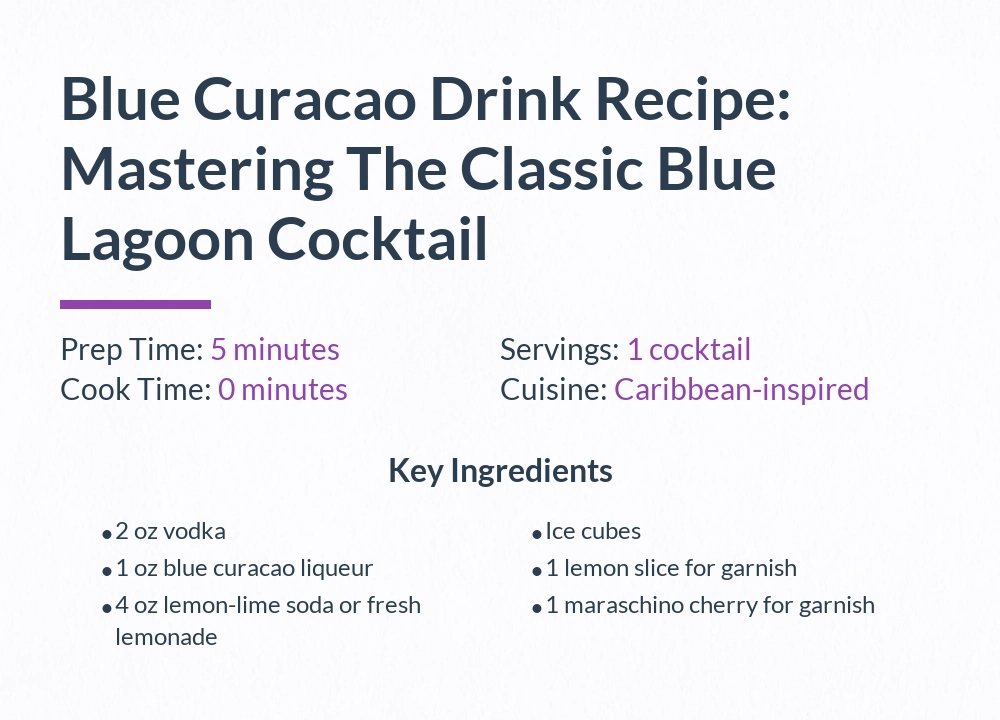
Recipe Details
- Prep Time: 5 minutes
- Cook Time: 0 minutes
- Servings: 1 cocktail
- Course: Beverage
- Cuisine: Caribbean-inspired
- Diet: Contains alcohol
Ingredients
- 2 oz vodka
- 1 oz blue curacao liqueur
- 4 oz lemon-lime soda or fresh lemonade
- Ice cubes
- 1 lemon slice for garnish
- 1 maraschino cherry for garnish
Instructions
- Chill a highball or hurricane glass by filling it with ice and setting it aside.
- Add vodka, blue curacao, and lemon-lime soda to a cocktail shaker.
- Fill the shaker two-thirds full with ice cubes.
- Securely close the shaker and shake vigorously for 15 seconds.
- Discard the ice from the prepared glass and strain the mixture into it.
- Garnish with a lemon slice and maraschino cherry on a skewer.
Nutrition
- Calories: 210 kcal
- Protein: 0 g
- Fat: 0 g
- Carbohydrates: 18 g
- Sugar: 17 g
- Fiber: 0 g
- Sodium: 10 mg
- Cholesterol: 0 mg
Cooking Method
This recipe uses the shaking method to chill and dilute the cocktail properly. Shaking incorporates air and creates a slight froth, enhancing the texture.
Tools Needed
- Cocktail shaker
- Jigger for measuring
- Strainer
- Highball or hurricane glass
- Skewer for garnish
Understanding Blue Curacao Liqueur
Blue curacao is a key component in many colorful cocktails. Knowing its background helps in appreciating its role in mixology.
What is Blue Curacao?
Blue curacao is a liqueur made from the dried peel of the Laraha citrus fruit, which is native to the Caribbean island of Curacao. It is sweetened and colored with artificial blue dye.
The flavor profile is primarily orange with bitter undertones. Its high sugar content makes it a common sweetener in mixed drinks.
Most brands contain around 15-20% alcohol by volume. It is often used in small quantities due to its intense color and sweetness.
Historical Origins
The Laraha fruit was discovered by Spanish explorers in the 19th century. It is a descendant of Valencia oranges brought to Curacao.
Local producers found the fruit too bitter to eat fresh but ideal for creating liqueurs. The blue color was added later for marketing appeal.
This innovation led to its use in tropical cocktails from the mid-20th century, such as the Blue Hawaii and Blue Lagoon.
Why the Blue Color?
The vibrant blue shade comes from food coloring, typically FD&C Blue No. 1. This additive has no flavor but creates a dramatic visual effect.
Originally, the liqueur was clear or orange. The blue version gained popularity in the 1960s for its ability to make drinks resemble the Caribbean sea.
When mixed with acidic ingredients like lemon juice, the color can shift toward green, which is a natural reaction.
Nutritional Analysis of Blue Curacao Cocktails
From a dietary perspective, these drinks are high in sugars and low in essential nutrients. Moderation is key for balanced consumption.
Caloric Density
A single Blue Lagoon cocktail contains approximately 210 calories, primarily from alcohol and added sugars. The blue curacao contributes about 100 calories per ounce.
Vodka adds calories without carbohydrates, while mixers like lemon-lime soda increase sugar content. This makes the drink energy-dense but nutritionally sparse.
For comparison, a creamy piña colada can exceed 300 calories due to coconut cream and added sweeteners.
Sugar Content and Health Implications
The sugar in blue curacao drinks comes from the liqueur and any sweetened mixers. A standard serving has 17 grams of sugar, similar to many soft drinks.
High sugar intake can lead to energy spikes and crashes. It may also contribute to long-term health issues if consumed frequently.
Using diet soda or reducing the liqueur portion can lower the sugar amount. Fresh citrus juice instead of pre-made mixers offers more control over sweetness.
Variations and Related Drinks
Blue curacao is versatile and appears in numerous cocktails. Exploring alternatives allows for creativity and personalization.
Blue Hawaiian Cocktail
This drink combines blue curacao with light rum, pineapple juice, and cream of coconut. It has a creamy texture and tropical flavor.
The addition of pineapple provides vitamin C, but the coconut cream increases fat and calorie content. Shake all ingredients with ice and serve in a tall glass.
Garnish with a pineapple wedge and a drink umbrella for presentation. It is sweeter and more filling than the Blue Lagoon.
Blue Mojito Recipe
A twist on the classic mojito, this version includes blue curacao for color. Muddle fresh mint leaves and lime wedges with sugar in a glass.
Add white rum, blue curacao, and crushed ice. Top with club soda for a fizzy finish. The mint adds a refreshing note without extra calories.
This drink is lighter in sugar if you control the amount of added sweetener. It works well as a summer refresher.
Blue Cosmopolitan Cocktail
Replace triple sec with blue curacao in a traditional cosmo for a colorful variation. Combine vodka, blue curacao, cranberry juice, and fresh lime juice.
Shake with ice and strain into a chilled martini glass. The tartness of cranberry balances the sweetness of the liqueur.
This option has a more complex flavor profile due to the fruit juices. It is often served at formal events or cocktail parties.
Dietary Adaptations
Modifying the recipe to meet specific dietary needs is straightforward with a few substitutions.
Non-Alcoholic Version
Use blue curacao syrup instead of the liqueur, which is available in some specialty stores. Combine with lemon-lime soda or a splash of orange juice.
This reduces the alcohol content to zero while maintaining the color and sweetness. Adjust the amount of syrup to control sugar levels.
Serve over ice with the same garnishes for a family-friendly option. The taste will be similar but less complex.
Low-Sugar Options
Replace lemon-lime soda with sparkling water and a squeeze of fresh lemon or lime. Use a sugar-free blue curacao alternative if available.
This cuts the sugar content significantly while keeping the beverage refreshing. The calorie count may drop by half depending on modifications.
Consider adding a few drops of natural orange extract to enhance flavor without sweetness. Monitor portions to avoid overconsumption.
Vegan and Gluten-Free Considerations
Most blue curacao liqueurs are vegan and gluten-free, but check labels for additives. Vodka is typically gluten-free, though some brands use wheat-based spirits.
Opt for potato or grape-based vodka if gluten is a concern. Garnishes like cherries should be free from animal-derived colorings.
This recipe naturally aligns with vegan diets as it contains no dairy or animal products. Always verify ingredient sources if allergies exist.
Common Mistakes and Expert Tips
Avoiding typical errors ensures your cocktail turns out perfectly every time.
Overpouring the Liqueur
Using too much blue curacao can make the drink excessively sweet and overpower other flavors. Measure ingredients with a jigger for accuracy.
The recommended ratio is one part blue curacao to two parts vodka and four parts mixer. Adjust based on personal preference but start with standard measurements.
This balance prevents the cocktail from tasting syrupy. It also controls the intensity of the blue color.
Inadequate Shaking
Shaking for less than 15 seconds may not chill the drink sufficiently. Proper shaking dilutes the alcohol slightly and integrates the ingredients.
Use a firm grip on the shaker and shake until the outside feels cold. Strain immediately to prevent over-dilution from melting ice.
This step is crucial for achieving the right temperature and texture. A well-shaken cocktail has a slight froth on top.
Garnish Placement
Skewering the lemon slice and cherry together keeps the garnish secure and visually appealing. Place it on the rim of the glass for easy access.
Avoid overcrowding the drink with too many garnishes, as it can distract from the presentation. Simple touches often have the most impact.
Fresh fruit garnishes add a subtle aroma that enhances the drinking experience. Replace them if they appear wilted or discolored.
Serving and Pairing Suggestions
Context matters when serving cocktails. Pairing with complementary foods can enhance both the drink and the meal.
Ideal Occasions
Blue curacao drinks are well-suited for pool parties, beach gatherings, or summer barbecues. Their bright color makes them popular for festive events.
Serve in clear glasses to showcase the vibrant hue. Tulip or hurricane glasses are traditional choices that allow for ample ice and garnish.
These cocktails are best enjoyed chilled and immediately after preparation. Prolonged exposure to heat can alter the flavor and appearance.
Food Pairings
The citrus notes in blue curacao pair well with light appetizers like shrimp cocktail, cheese boards, or fresh fruit platters.
Avoid heavy, greasy foods that may clash with the drink’s sweetness. Salty snacks like nuts or crackers can balance the sugar content.
For a full menu, consider Caribbean-inspired dishes such as grilled fish or tropical salads. The drink’s acidity can cut through richer flavors.
Storage and Batch Preparation
This cocktail is not ideal for long-term storage due to carbonation loss in mixers. Prepare it fresh for each serving.
For large events, mix the vodka and blue curacao in advance and store in a sealed container. Add soda and ice just before serving to maintain fizz.
Leftovers can be refrigerated for up to 24 hours but may lose their vibrant color and carbonation. Stir before serving if separation occurs.
The Science of Cocktail Creation
Understanding the principles behind mixing drinks can improve your results and allow for experimentation.
Role of Acidity and Sweetness
Blue curacao provides sweetness, while citrus elements like lemonade add acidity. This balance prevents the drink from tasting cloying.
The human palate perceives sweet and sour flavors in contrast, which makes the cocktail more refreshing. Adjusting the ratio can tailor the drink to individual tastes.
Acidic ingredients also help preserve the blue color by maintaining a specific pH level. Too much acidity can shift the color toward green.
Impact of Dilution
Shaking with ice dilutes the alcohol by about 20%, making the drink smoother and less harsh. It also lowers the temperature quickly.
Proper dilution integrates the flavors and reduces the intensity of the spirits. Under-dilution can result in a unbalanced, overly strong cocktail.
The amount of ice and shaking time directly affect this process. Use fresh, solid ice cubes for consistent results.
Color Stability
The blue color from curacao is stable in most conditions but can fade under direct sunlight or when mixed with highly acidic components.
Storage in dark bottles or away from light sources helps maintain vibrancy. In drinks, the color is most vivid when served cold and fresh.
This property is due to the synthetic dyes used, which are designed to withstand typical mixing processes. Natural alternatives may not offer the same consistency.
Frequently Asked Questions
What is blue curacao made from?
Blue curacao is made from the dried peel of the Laraha citrus fruit, alcohol, sugar, and artificial blue coloring. The base spirit is typically neutral grain alcohol.
Can I use blue curacao in non-alcoholic drinks?
Yes, blue curacao syrup or non-alcoholic versions are available. These provide the same color and flavor without the alcohol content.
Why does my blue curacao drink taste bitter?
Bitterness can come from over-extraction of citrus peels or using too much liqueur. Ensure you measure ingredients and use fresh mixers to balance flavors.
How long does blue curacao last after opening?
An opened bottle of blue curacao can last up to two years if stored in a cool, dark place. The alcohol acts as a preservative, but flavor may diminish over time.
What are some common blue curacao cocktails?
Popular options include the Blue Lagoon, Blue Hawaiian, Blue Mojito, and Blue Cosmopolitan. Each varies in ingredients and preparation methods.
Is blue curacao gluten-free?
Most blue curacao liqueurs are gluten-free, but always check the label for specific production processes or additives that may contain gluten.
Can I make blue curacao at home?
Yes, by infusing neutral spirits with dried orange peels, sugar, and blue food coloring. However, achieving the exact flavor and color consistency of commercial products requires precision.
What is the difference between blue curacao and triple sec?
Both are orange liqueurs, but blue curacao is colored blue and often sweeter. Triple sec is typically clear and used in drinks like margaritas.
How can I reduce the sugar in blue curacao drinks?
Use sugar-free mixers, reduce the amount of blue curacao, or opt for a diet version of the liqueur. Adding more citrus juice can also offset sweetness.
What glassware is best for serving blue curacao cocktails?
Highball, hurricane, or martini glasses are ideal. Clear glassware showcases the color, and the shape can influence the drinking experience.