
There is something special about recreating a taste from the past in your own kitchen. For many, the distinct flavor of Dog n Suds coney sauce brings back memories of roadside stands and family outings. When I first attempted to make this sauce at home, I knew it had to capture that unique balance of savory and slightly sweet notes.
This recipe is not just about mixing ingredients. It is about achieving a consistency and depth that makes it stand out. After several tests and adjustments, I found a method that works reliably. You can use this guide to make a version that might even rival the original.
In this article, I will walk you through each step of the process. We will cover everything from selecting the right ground beef to simmering the sauce to perfection. By the end, you will have a comprehensive understanding of how to prepare this classic topping.
How to Make Dog n Suds Coney Sauce Recipe
This section provides the core recipe for Dog n Suds coney sauce. Follow these instructions closely for best results. The key is patience during the simmering phase to develop flavors fully.
Recipe Details
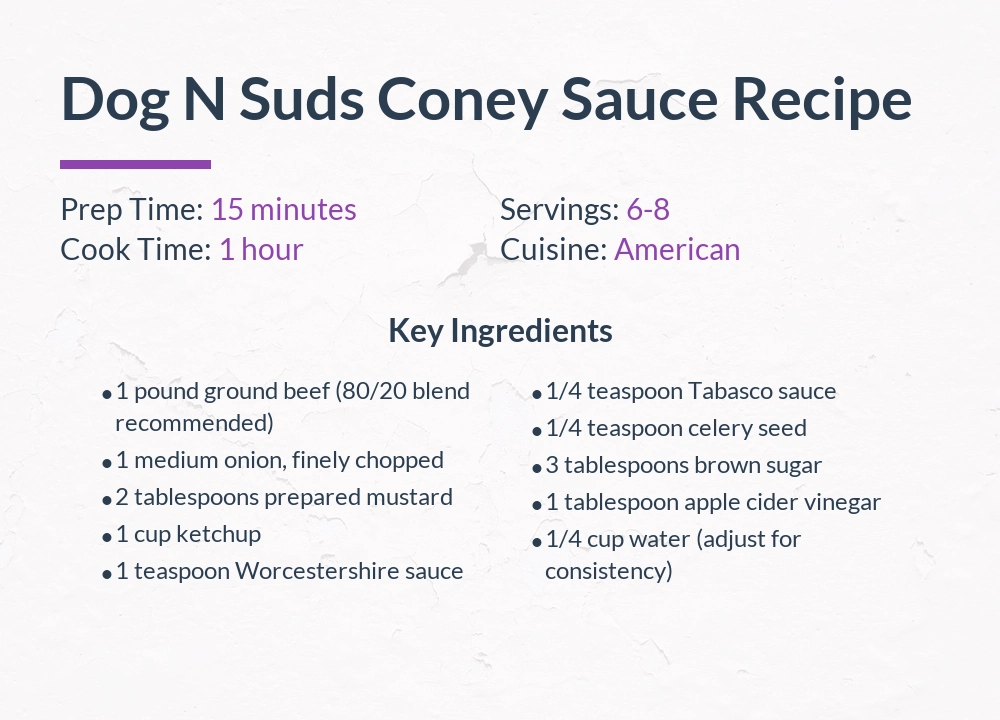
- Prep Time: 15 minutes
- Cook Time: 1 hour
- Servings: 6-8
- Course: Main Course, Topping
- Cuisine: American
- Diet: Omnivore
Ingredients
- 1 pound ground beef (80/20 blend recommended)
- 1 medium onion, finely chopped
- 2 tablespoons prepared mustard
- 1 cup ketchup
- 1 teaspoon Worcestershire sauce
- 1/4 teaspoon Tabasco sauce
- 1/4 teaspoon celery seed
- 3 tablespoons brown sugar
- 1 tablespoon apple cider vinegar
- 1/4 cup water (adjust for consistency)
- Pinch of allspice (optional)
Instructions
- Place a skillet over medium heat and add the ground beef. Cook until browned, breaking it up with a fork as it cooks.
- Drain the excess fat from the skillet using a spoon or strainer. This step is crucial for preventing a greasy sauce.
- Add the chopped onions to the skillet and cook for 3-4 minutes until softened. Stir occasionally to avoid burning.
- Incorporate the mustard, ketchup, Worcestershire sauce, Tabasco, celery seed, brown sugar, and apple cider vinegar. Mix thoroughly until all ingredients are combined.
- Pour in the water and bring the mixture to a gentle simmer. Reduce the heat to low and cover the skillet.
- Let the sauce simmer for about 1 hour, stirring every 15 minutes. Check the consistency and add more water if it becomes too thick.
- After simmering, perform a taste test. Adjust seasonings like salt or sugar if needed. The sauce should have a rich, balanced flavor.
- Remove from heat and serve warm over hot dogs or store as directed in later sections.
Nutrition
- Calories: 180 kcal
- Protein: 12 g
- Fat: 8 g
- Carbohydrates: 15 g
- Sugar: 12 g
- Fiber: 1 g
- Sodium: 450 mg
- Cholesterol: 40 mg
Cooking Method
This sauce uses a stovetop simmering method. Browning the beef first ensures a deep base flavor. Simmering for an hour allows the ingredients to meld together. The low heat prevents burning and helps achieve a smooth texture.
Tools Needed
- Large skillet or frying pan
- Wooden spoon or spatula
- Measuring cups and spoons
- Strainer for draining fat
- Knife and cutting board for onion preparation
The Origins of Dog n Suds and Coney Culture
Dog n Suds was a popular drive-in restaurant chain that started in the mid-20th century. It was known for its root beer and hot dogs topped with a signature coney sauce. This sauce became a regional favorite, especially in the Midwest.
The term “coney” refers to a style of hot dog topping that originated in American diners. It often includes a meat-based sauce with spices and tomatoes. Understanding this background helps appreciate why the recipe has specific ingredient ratios.
Over time, many variations emerged, but the Dog n Suds version maintained a loyal following. People often seek out copycat recipes to recreate the experience at home. This recipe aims to honor that tradition while allowing for personal tweaks.
Ingredient Analysis and Selection
Each component in this sauce plays a role in the final product. Choosing high-quality ingredients can elevate the flavor. Let us break down why certain items are essential.
Ground Beef
Ground beef forms the base of the sauce. An 80/20 blend provides enough fat for richness without making it overly greasy. Draining the fat after browning is critical. This step removes excess oil and prevents the sauce from separating.
Leaner beef can be used, but it might result in a drier texture. The beef should be cooked until no pink remains. Breaking it into small pieces ensures even distribution throughout the sauce.
Onions
Onions add sweetness and aroma when cooked. Finely chopping them allows them to dissolve into the sauce during simmering. Yellow onions are ideal for their balanced flavor. They caramelize slightly, contributing to the depth of the sauce.
If you prefer a smoother consistency, you can grate the onions. This variation integrates them more seamlessly. Avoid using raw onions as they can overpower the other flavors.
Mustard and Ketchup
Prepared mustard introduces tanginess and helps emulsify the sauce. Ketchup provides sweetness and tomato base. The combination creates a familiar flavor profile that complements the beef.
Some recipes suggest using “enough ketchup” to achieve the desired consistency. Start with one cup and adjust based on thickness preferences. Mustard should be added early to blend well with other ingredients.
Worcestershire and Tabasco Sauces
Worcestershire sauce adds umami and complexity from its fermented ingredients. A teaspoon is typically sufficient. Tabasco sauce brings a subtle heat. The 1/4 teaspoon measurement can be increased for more spice.
These sauces are potent, so measure carefully. They enhance the savory notes without dominating the overall taste. If unavailable, soy sauce or hot sauce can serve as substitutes.
Celery Seed and Spices
Celery seed offers a mild, earthy flavor that pairs well with beef. It is often used in small quantities, like 1/4 teaspoon. Allspice, if added, provides a warm, aromatic note. These spices should be ground or used whole for easy incorporation.
Avoid overusing spices as they can become bitter during long cooking. A pinch is enough to add depth without overwhelming the sauce.
Sugar and Vinegar
Brown sugar sweetens the sauce and balances acidity. Three tablespoons is standard, but you can reduce it for a less sweet version. Apple cider vinegar adds a slight tang that cuts through the richness.
The vinegar also helps tenderize the meat during simmering. If you do not have apple cider vinegar, white vinegar can work. Adjust the amount based on your taste preference.
Nutritional Insights
This coney sauce is a protein-rich topping due to the ground beef. A serving provides about 12 grams of protein, which supports muscle maintenance. The fat content comes primarily from the beef, contributing to satiety.
Carbohydrates are present from ketchup and sugar, offering quick energy. However, the sugar content is moderate, so monitor intake if you have dietary restrictions. Sodium levels can be high due to condiments like Worcestershire and ketchup.
To make it healthier, use lean beef and low-sodium ketchup. Adding vegetables like grated carrots can increase fiber. Always drain fat thoroughly to reduce overall fat intake.
Dietary Modifications
This recipe can be adapted for various dietary needs. Simple swaps allow you to enjoy the sauce without compromising on flavor.
Gluten-Free Version
Most ingredients are naturally gluten-free, but check labels on Worcestershire and ketchup. Some brands contain gluten. Use certified gluten-free products to ensure safety. The cooking method remains the same.
Low-Sodium Options
Reduce sodium by using low-sodium ketchup and omitting added salt. Worcestershire sauce can be replaced with a low-sodium alternative. Taste as you go to adjust seasonings without increasing salt content.
Vegan and Vegetarian Swaps
Replace ground beef with plant-based crumbles or lentils. Use vegan Worcestershire sauce and ensure ketchup is animal-product-free. Simmer as directed, but may require less time since plant proteins cook faster.
Avoiding Common Mistakes
Many home cooks rush the simmering process. Simmering for the full hour is essential for flavor development. Skipping this step can result in a bland sauce. Stir regularly to prevent sticking or burning.
Do not forget to drain the beef fat. Excess fat can make the sauce oily and affect consistency. If the sauce is too thin, simmer uncovered to thicken. If too thick, add water in small increments.
Taste testing at the end is crucial. Adjust sweetness, saltiness, or spiciness to your liking. Remember, flavors intensify over time, so let it cool slightly before final adjustments.
Serving and Storage Recommendations
Serve this sauce warm over grilled hot dogs or burgers. It also pairs well with fries or as a dip. For a complete meal, add coleslaw or potato salad on the side.
Store leftover sauce in an airtight container in the refrigerator for up to 5 days. Reheat gently on the stove or in the microwave. You can freeze it for up to 3 months; thaw in the refrigerator before reheating.
If the sauce separates after storage, stir it well before using. Adding a splash of water while reheating can restore the original consistency.
The Science of Simmering
Simmering allows flavors to meld by breaking down ingredients slowly. The heat causes proteins in the beef to denature, releasing juices. Sugars caramelize, and acids from vinegar tenderize the meat.
This process also reduces water content, concentrating flavors. Covering the skillet traps steam, which helps cook the onions thoroughly. Understanding this can help you avoid undercooking or overcooking.
Frequently Asked Questions
What is Dog n Suds coney sauce?
Dog n Suds coney sauce is a meat-based topping originally served at the Dog n Suds drive-in chain. It features ground beef, onions, ketchup, mustard, and spices, simmered to a thick consistency.
Why is this recipe important?
This recipe preserves a piece of American culinary history. It allows people to recreate a classic flavor at home, especially if they no longer have access to the original restaurants.
How does the recipe work?
The recipe works by browning beef to develop base flavors, then simmering with other ingredients to blend and thicken. The hour-long cooking time ensures all components integrate smoothly.
Can I make this sauce ahead of time?
Yes, this sauce can be made a day in advance. Store it in the refrigerator and reheat before serving. Flavors often improve after resting overnight.
What if I do not have celery seed?
If celery seed is unavailable, use a pinch of celery salt or omit it. The sauce will still be flavorful, but may lack a subtle earthy note.
How can I reduce the sugar content?
To reduce sugar, use less brown sugar or a sugar substitute. You can also increase the amount of onions for natural sweetness without added sugar.
Is this sauce spicy?
The sauce has mild heat from Tabasco, but it is not overly spicy. Adjust the amount of Tabasco to control the heat level based on your preference.
Can I use other types of meat?
Ground turkey or chicken can substitute for beef. The cooking time may vary, and the flavor will be lighter. Drain fat as directed to maintain consistency.
How do I know when the sauce is done?
The sauce is done when it has thickened to your liking and the flavors are balanced. It should coat a spoon without dripping too quickly. Taste testing is the best indicator.
What are the best hot dogs to use with this sauce?
All-beef hot dogs work well due to their robust flavor. However, any type of hot dog or sausage can be used. Grill or boil them according to package instructions before topping.