
You have probably encountered hot sauces that deliver pure fire without much else. This sauce is different. The first time I tasted a true datil pepper sauce, it was during a food festival in St. Augustine, Florida. The vendor drizzled it over a grilled fish taco, and the complexity stopped me mid-bite. It was not just heat; it was a melody of sweet fruitiness, sharp vinegar, and a slow-building warmth that lingered pleasantly.
I knew I needed to recreate that experience at home. After many batches and adjustments, I developed a recipe that captures the essence of that memory. This guide will walk you through every step, from selecting the right peppers to understanding the science behind the perfect consistency. We will explore its nutritional profile, cultural roots, and the many ways you can use this versatile condiment in your kitchen.
This datil pepper sauce recipe is more than a list of ingredients. It is a method for creating a balanced, flavorful hot sauce that enhances food without overwhelming it. The process is straightforward, but the details make all the difference. Let us begin with the core recipe so you can see how simple it is to bring this Florida original to your table.
How to Make Datil Pepper Sauce Recipe
This section provides the complete formula for creating your own datil pepper sauce. Follow these steps precisely for a sauce with a deep, complex flavor and a smooth, pourable texture. The key is patience during the cooking process to allow the flavors to fully develop and meld together.
Recipe Details
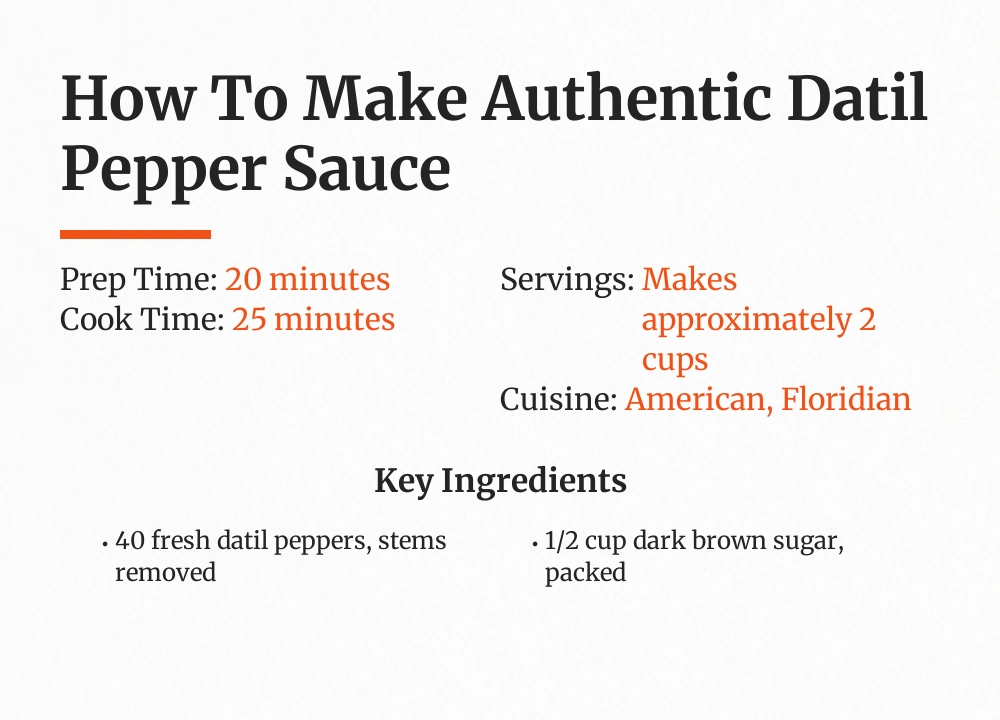
- Prep Time: 20 minutes
- Cook Time: 25 minutes
- Servings: Makes approximately 2 cups
- Course: Condiment
- Cuisine: American, Floridian
- Diet: Vegan, Gluten-Free
Ingredients
- 40 fresh datil peppers, stems removed
- 1 large red bell pepper, seeded and chopped
- 6 cloves garlic, peeled
- 1 cup apple cider vinegar
- 1/2 cup filtered water
- 1/2 cup dark brown sugar, packed
- 2 tbsp Worcestershire sauce (use a vegan brand to maintain diet)
- 1 tbsp course sea salt
- 1 1/2 tsp black pepper, freshly ground
- 1/2 tsp allspice
- 1/2 tsp coriander seeds
Instructions
- Prepare your workspace by wearing gloves to handle the datil peppers. Combine the datil peppers, chopped red bell pepper, garlic, apple cider vinegar, and water in a medium sauce pan.
- Place the sauce pan over medium-high heat and bring the mixture to a boil. Once boiling, reduce the heat to low, cover, and let it simmer for 20 minutes. The peppers should become very soft.
- Carefully transfer the cooked pepper mixture to a large blender. Add the dark brown sugar, Worcestershire sauce, sea salt, black pepper, allspice, and coriander seeds.
- Secure the blender lid tightly. Start blending on a low speed, then gradually increase to high. Blend for 1-2 minutes until the sauce is completely smooth and uniform.
- For a smoother consistency, you can strain the sauce through a fine-mesh sieve to remove any remaining seeds or pulp, though this is optional.
- Allow the sauce to cool to room temperature before funneling it into clean glass bottles. Store the finished sauce in the refrigerator.
Nutrition
- Calories: 25 kcal
- Protein: 0.5 g
- Fat: 0.1 g
- Carbohydrates: 6 g
- Sugar: 5 g
- Fiber: 0.5 g
- Sodium: 290 mg
- Cholesterol: 0 mg
These values are per tablespoon and are approximate. They can vary based on specific ingredient brands and exact measurements.
Cooking Method
The primary method for this sauce is simmering. This gentle cooking technique in a sauce pan serves a very specific purpose. It softens the tough cellular walls of the peppers and garlic, making them easier to blend. More importantly, it allows the sugars in the peppers and brown sugar to caramelize slightly, contributing to a deeper flavor profile that raw blending cannot achieve.
Tools Needed
- A medium sauce pan with a lid
- A large blender or food processor
- Cutting board and sharp knife
- Kitchen gloves
- Measuring cups and spoons
- A funnel for bottling
- Glass bottles or jars for storage
Understanding the Core Ingredients
Every component in this recipe plays a critical role in the final product. Selecting high-quality ingredients and understanding their function will elevate your sauce from good to exceptional. Let us break down the key elements and their attributes.
Datil Peppers: The Star of the Show
Datil peppers are a unique chili variety with a strong connection to St. Augustine, Florida. They are similar in heat to a Scotch Bonnet or Habanero, typically ranging from 100,000 to 300,000 Scoville Heat Units. However, their flavor profile is distinct, offering notes of tropical fruit and a subtle smokiness alongside their significant burn. Their thin flesh and high seed content make them ideal for creating a potent sauce.
Finding fresh datil peppers can be a challenge outside of Florida. You may need to source them from specialty online retailers or farmers’ markets in the southeastern United States. If you cannot find them, a common substitution is a combination of Habanero peppers for heat and a small, sweet pepper like a ripe Fresno for fruitiness.
Apple Cider Vinegar: Acidity and Balance
Apple cider vinegar is not merely a liquid base; it is a fundamental flavor agent. Its sharp acidity cuts through the oiliness of foods, making it an excellent marinade and basting sauce for grilled meats. In this recipe, it also acts as a natural preservative, extending the shelf life of the finished product. The slight apple undertone from the cider vinegar complements the fruity notes of the datil peppers.
You can experiment with other vinegars. White vinegar will provide a cleaner, sharper acidity, while red wine vinegar will add its own fruity complexity. The choice of vinegar directly influences the final character of your hot sauce.
Aromatics and Spices: Building Depth
Garlic provides a pungent, savory base note that grounds the fiery heat of the peppers. The red bell pepper is not just a filler; it adds a sweet, vegetal flavor and body, helping to achieve a smoother consistency and a more vibrant color. The spices—allspice and coriander—are subtle but essential.
These spices introduce an extra depth of flavor, with allspice offering warm notes reminiscent of clove and cinnamon, and coriander contributing a mild, citrusy aroma. Toasting the coriander seeds lightly in a dry pan before adding them can unlock even more of their essential oils and flavor.
Nutritional Science of Hot Sauce
From a dietary perspective, this condiment can be a healthy addition to many meals when used in moderation. It is low in calories and fat, and it contains several beneficial compounds derived from its plant-based ingredients.
Capsaicin and Metabolism
The primary active component in chili peppers like the datil is capsaicin. This compound is responsible for the sensation of heat. Research suggests that capsaicin may have a mild thermogenic effect, meaning it can temporarily increase your metabolic rate. It can also promote feelings of fullness, which may help with portion control during meals.
The capsaicin content is concentrated in the ribs and seeds of the pepper. For a slightly milder sauce that retains the datil flavor, you can remove some of the seeds before cooking. However, remember that this will also slightly alter the final heat level and consistency.
Vitamins and Antioxidants
Both datil and bell peppers are excellent sources of Vitamin C, a powerful antioxidant that supports immune function and skin health. The cooking process does degrade some Vitamin C, but a significant amount remains. The sauce also provides Vitamin A from the peppers, along with small amounts of minerals like potassium from the apple cider vinegar.
The garlic contributes allicin, a compound with noted antimicrobial properties. While you are not consuming the sauce in medicinal quantities, these components contribute to the overall nutritional value of your diet.
Dietary Adaptations and Variations
This base recipe is naturally vegan and gluten-free, provided you select a Worcestershire sauce that aligns with those diets. However, you can easily modify it to suit other dietary needs or personal taste preferences.
Reducing Sugar and Sodium
For a low-sugar version, you can reduce or omit the dark brown sugar. Be aware that this will make the sauce significantly more acidic and sharp. To compensate, you could add a natural, non-caloric sweetener like a few drops of liquid stevia, or increase the amount of red bell pepper for natural sweetness.
To lower the sodium content, simply reduce the amount of course sea salt. Start with half the quantity and adjust after blending, tasting as you go. The other ingredients provide so much flavor that you may not miss the full saltiness.
Exploring Flavor Profiles
The beauty of a homemade sauce is its adaptability. For a smokier version, you could replace the red bell pepper with a fire-roasted one. A couple of drops of liquid smoke can also achieve this effect. For a fruitier twist, consider adding a quarter cup of chopped mango or pineapple during the simmering stage.
If you enjoy fermented foods, you can create a fermented datil pepper sauce. This involves submerging the chopped peppers and other vegetables in a saltwater brine for one to two weeks before blending. This process develops an extra depth of flavor and beneficial probiotics.
The History of Datil Pepper Sauce in Florida
The story of this sauce is inextricably linked to the city of St. Augustine, the oldest continuously inhabited European-established settlement in the United States. The origins of the datil pepper itself in Florida are somewhat shrouded in legend, with tales tracing back to Minorcan settlers in the 18th century.
These settlers are said to have brought the pepper seeds with them, and the plant thrived in the local climate. Over generations, the cultivation and use of the datil pepper became a unique culinary tradition in the St. Augustine area. It was used in everything from minorcan chowders to the iconic datil pepper hot sauce.
The sauce evolved from a simple homemade condiment into a symbol of local identity. Today, numerous small businesses in the region produce and sell their own versions of datil hot sauces, each with a slightly different recipe and character, continuing this flavorful legacy.
Avoiding Common Preparation Errors
Even with a straightforward recipe, small mistakes can affect the final outcome. Here are the most frequent errors and how to sidestep them for a perfect sauce every time.
Managing Consistency and Heat
A common issue is a sauce that is too thin or too thick. If your sauce is too thin after blending, you can return it to the sauce pan and simmer it uncovered for an additional 5-10 minutes to reduce and thicken. If it is too thick, simply whisk in extra vinegar or water, one tablespoon at a time, until it reaches your desired consistency.
Controlling the heat level is crucial. The number of peppers directly correlates to the spiciness. If you are sensitive to heat, start with 20-25 datil peppers instead of 40. You can always add more in a future batch, but you cannot remove the capsaicin once it is infused into the liquid.
Blending and Safety
Always allow the cooked pepper mixture to cool for a few minutes before blending. Blending a very hot liquid can create steam pressure that blows the blender lid off, creating a dangerous situation and a messy kitchen. Start on a low speed and hold the lid down firmly with a towel.
Do not underestimate the importance of wearing gloves. The capsaicin oils can transfer to your skin and cause a burning sensation, especially if you touch your eyes or face. Wash all utensils and surfaces that contacted the peppers thoroughly with soap and water.
Serving and Storing Your Homemade Sauce
Your datil pepper sauce is incredibly versatile. Its balanced flavor makes it suitable for more than just drizzling on eggs or burgers.
Pairing with Food
Use it as a marinade and basting sauce for grilled beef, chicken, or shrimp. The sugar content helps create a beautiful caramelized glaze. It is excellent stirred into soups and chowders for a kick of heat and flavor. Try a few drops in a Bloody Mary for a sophisticated twist on the classic cocktail.
It can also be used as a finishing sauce for tacos, mixed into mayonnaise for a spicy sandwich spread, or even as a dip for fried foods. Its complexity allows it to enhance a wide variety of dishes.
Maximizing Shelf Life
This sauce will keep in the refrigerator for up to 3 months. The high acidity from the vinegar acts as a natural preservative. Always use a clean spoon when serving to prevent contamination. For longer storage, you can process the bottles in a water bath canner.
To can the sauce for pantry storage, fill sterilized jars leaving 1/4 inch of headspace, seal with lids, and process in a boiling water bath for 10 minutes. This will create a vacuum seal, allowing the sauce to be stored at room temperature for up to a year until opened.
Frequently Asked Questions
What exactly is a datil pepper?
A datil pepper is a specific variety of chili pepper that is closely associated with St. Augustine, Florida. It is a small, yellow-orange pepper known for its unique fruity flavor and a heat level comparable to a Habanero.
How long will this homemade hot sauce last?
When stored in a sealed bottle in the refrigerator, this datil pepper sauce will maintain its quality for approximately 3 months. The high vinegar and salt content act as effective preservatives.
Can I use dried datil peppers instead of fresh?
Yes, you can use dried datil peppers. Rehydrate them by soaking in hot water for 20-30 minutes until softened before using them in the recipe. Use about one-third the weight of fresh peppers, as drying concentrates the flavor and heat.
Is this sauce suitable for a vegan diet?
Yes, this recipe is vegan as written, provided you use a Worcestershire sauce that does not contain anchovies. Many brands offer vegan versions made without animal products.
My sauce turned out too acidic. How can I fix it?
If your sauce is too sharp or vinegary, you can balance it by stirring in a small additional amount of brown sugar or a natural sweetener. Alternatively, simmering it for a few more minutes can help mellow the acidity.
What is the best way to control the spiciness?
The heat is primarily determined by the number of datil peppers and whether you include the seeds. For a milder sauce, use fewer peppers and remove all the seeds before cooking. For more heat, include all the seeds or add an extra pepper or two.
Can I substitute another type of pepper?
If datil peppers are unavailable, a combination of Habanero or Scotch Bonnet peppers for heat and a small, sweet pepper like a ripe cherry pepper or even a small piece of carrot for sweetness can create a reasonable facsimile of the flavor profile.