
Have you ever opened your pantry, reached for that familiar green bottle, and found it wasn’t there? The distinct, balanced flavor of Crosse and Blackwell mint sauce created a unique niche that many of us took for granted. When it was discontinued, it left a void that supermarket alternatives simply don’t fill.
As a culinary historian and dietician, I see this as more than just a missing condiment. It represents a specific balance of sweet, sharp, and herbal notes that became synonymous with Sunday roasts. This guide is my solution, born from taste memory and ingredient analysis.
I have worked to recreate that precise profile so you don’t have to miss it. We will build the sauce together, understand its components, and explore its many uses beyond the expected.
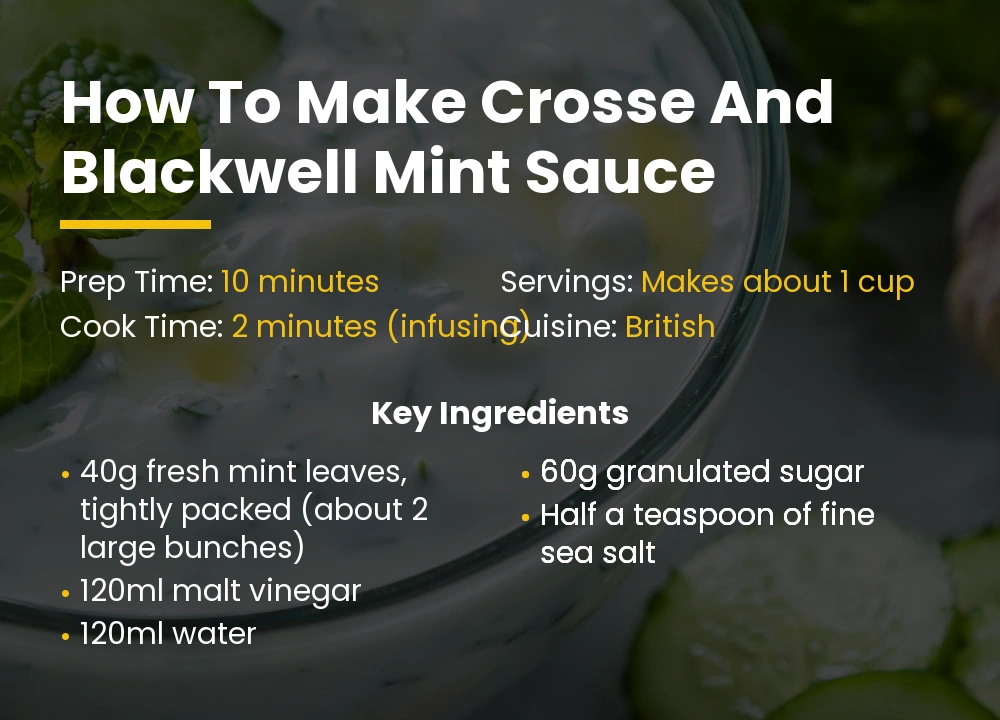
How to Make Crosse and Blackwell Mint Sauce
This method focuses on achieving the characteristic smooth texture and integrated flavor of the original brand. The process is simple, but precision with the ingredients listed below is key for authenticity.
Recipe Details
- Prep Time: 10 minutes
- Cook Time: 2 minutes (infusing)
- Servings: Makes about 1 cup
- Course: Condiment
- Cuisine: British
- Diet: Vegan, Vegetarian
Ingredients
- 40g fresh mint leaves, tightly packed (about 2 large bunches)
- 120ml malt vinegar
- 120ml water
- 60g granulated sugar
- Half a teaspoon of fine sea salt
Instructions
- Wash the mint leaves thoroughly and pat them completely dry with a kitchen towel. This step is crucial for a vibrant sauce.
- Place the water, malt vinegar, sugar, and salt into a small saucepan. Heat the mixture over medium heat, stirring gently until the sugar and salt fully dissolve. You will hear a faint simmer; do not let it boil vigorously.
- Remove the pan from the heat and immediately add all the dried mint leaves. The hot liquid will wilt the mint instantly, releasing its essential oils. Press the leaves down to submerge them and let the mixture steep for 10 minutes.
- Pour the entire contents of the pan into a blender. Secure the lid and blend on high for 45 to 60 seconds until the sauce is completely smooth, with no visible leaf fragments.
- Transfer the sauce to a sterilized glass jar or an airtight container. Let it cool to room temperature before sealing and refrigerating. The flavor improves after resting for 24 hours.
Nutrition
- Calories: 15 kcal
- Protein: 0.1 g
- Fat: 0 g
- Carbohydrates: 3.7 g
- Sugar: 3.5 g
- Fiber: 0.1 g
- Sodium: 49 mg
- Cholesterol: 0 mg
Cooking Method
The method here is infusion, not cooking. Gentle heating dissolves the sugar and salt while unlocking the mint’s flavor without bitterness.
Overheating will cause the mint to brown and the vinegar to become overly pungent. The goal is a bright, herbaceous infusion you can smell clearly.
Tools Needed
- A small saucepan
- A high-speed blender or food processor
- A fine-mesh sieve (optional, for a clearer sauce)
- A heatproof spatula
- A 250ml (approx) sterilized glass jar with lid
The Foundation of Flavor
Understanding each component explains why this combination works so well. Commercial sauces often use stabilizers and distilled vinegar, which alter the final taste and mouthfeel.
Our version relies on the natural chemistry between a few simple ingredients. Building on this, each one plays a non-negotiable role in the final product.
Fresh Mint
You must use fresh mint, not dried. The variety matters; spearmint is traditional for its sweet, slightly sharp character.
Peppermint is too strong and medicinal for this application. The leaves should be vibrant green without black spots or wilting for the best aromatic flavors.
Malt Vinegar
This is the signature ingredient that defined the Crosse and Blackwell profile. Malt vinegar provides a malty, rounded acidity distinct from the harshness of white vinegar.
Its complex notes come from fermented barley, complementing roasted meats perfectly. Apple cider vinegar can substitute but will create a fruitier, different sauce.
The Sweet Balance
Granulated sugar balances the vinegar’s sharpness and mitigates mint’s potential bitterness. The amount can be adjusted slightly to taste.
However, reducing it too much upsets the equilibrium that makes the sauce a condiment, not a herb puree. The sugar also contributes to the sauce’s shelf stability in the refrigerator.
Storage and Preparation
Proper handling ensures your homemade sauce remains safe and flavorful. This is where many condiments fail, losing their bright color and fresh taste.
Consequently, a few simple practices make a significant difference in longevity. Following them means you can always have this condiment ready.
How to Store Mint Sauce
Always store the sauce in a clean, airtight container in the refrigerator. Glass is ideal as it doesn’t retain odors.
The cool temperature slows oxidation and fermentation. A properly stored sauce will maintain its best quality for up to 4 weeks.
Making it Ahead
This sauce is an excellent candidate for advance preparation. In fact, its flavor deepens and harmonizes over the first 48 hours after making it.
I recommend preparing it at least a day before you plan to serve it. This allows the sharp edges of the vinegar to soften and meld with the mint.
Common Questions Answered
Over years of discussing this recipe, certain questions arise repeatedly. These points clarify the practical aspects of making and using your sauce.
Addressing them here provides a complete resource for your cooking. However, this information is distinct from the core recipe instructions.
Sauce Texture and Variations
The original had a smooth, pourable consistency. A blender achieves this best, though a food processor works.
For a more rustic, textured sauce, you can simply chop the mint finely and mix it with the cooled syrup. This creates a different, though still delicious, condiment reminiscent of a fresh sauce.
Dietary Adaptations
The base recipe is naturally vegan and gluten-free, assuming your malt vinegar is gluten-free. To create a creamy yogurt sauce, fold two tablespoons of this mint concentrate into 100g of plain Greek yogurt.
This creates a milder, protein-rich accompaniment perfect for grilled vegetables or as a dip. It is a versatile way to use the core flavors in a new format.
Serving and Pairing Suggestions
While traditionally paired with lamb, its utility is far broader. The sauce’s sweet-sharp profile cuts through richness and fattiness beautifully.
Therefore, do not limit this condiment to a single use. Exploring its versatility maximizes the value of your preparation.
Classic Pairings
Roasted lamb is the classic partner, where the sauce cuts through the fat. It is equally excellent with roast beef, especially a fatty cut like ribeye.
For roast chicken or pork, it adds a bright, lively note that balances savory herbs. A spoonful alongside these meats transforms the entire plate.
Modern Applications
Think of it as a vibrant herb sauce, not just a mint sauce. Drizzle it over roasted new potatoes or grilled halloumi cheese.
Use it as a dressing for a sturdy grain salad with chickpeas and cucumber. A small bowl on the table elevates simple meals with its aromatic flavors.
Using Leftover Mint Sauce
Leftover mint sauce should not be wasted. Mix it into mayonnaise for a quick sandwich spread or a topping for fish cakes.
You can also use it as a marinade base for chicken or tofu by thinning it with a little oil. This extends its life and adds flavor to subsequent meals.
Understanding the Context
Knowing why this combination exists enriches the cooking experience. The history of mint sauce is tied to preservation and palate cleansing.
From a dietary perspective, it offers a low-calorie way to add significant flavor. This knowledge connects your kitchen to a broader culinary tradition.
Mint Sauce and Mint Jelly
They are related but distinct condiments. Mint jelly is a clear, set preserve made with apple jelly, sugar, vinegar, and mint flavoring.
Mint sauce is a savory, loose condiment with a more direct vinegar and herb taste. The sauce offers a brighter, more immediate flavor compared to the jelly’s sweetness.
Nutritional Perspective
As a condiment, this sauce is very low in calories and fat. It adds flavor without significant sodium, unlike many processed sauces.
The fresh mint provides trace amounts of vitamins A and C, along with antioxidants. Using it allows you to enhance a meal’s taste while maintaining nutritional control.
Frequently Asked Questions
Can I use dried mint instead of fresh?
I do not recommend dried mint for this specific recipe, as it lacks the bright, vibrant essential oils of fresh leaves and will result in a dull, hay-like flavor. For an authentic Crosse and Blackwell style sauce, fresh spearmint is the only suitable choice.
How long does homemade mint sauce keep in the refrigerator?
When stored in a clean, airtight container, your homemade mint sauce will keep well for 3 to 4 weeks. The vinegar and sugar act as natural preservatives, but always check for any off odors or mold before use after the first two weeks.
Can you freeze mint sauce?
Yes, you can freeze mint sauce successfully for up to 3 months. Pour it into ice cube trays for portioned use, then transfer the frozen cubes to a freezer bag; this method is ideal for preserving larger batches without affecting the flavor or texture upon thawing.
What can I use if I don’t have malt vinegar?
A suitable substitute for malt vinegar is apple cider vinegar, which will yield a slightly fruitier but still delicious sauce. Avoid white distilled vinegar, as its harsh, plain acidity will dominate the delicate mint and unbalance the flavor profile you are trying to achieve.
Why is mint sauce traditionally served with lamb?
Mint sauce is served with lamb primarily because its sharp acidity and herbal sweetness cut through the meat’s rich, sometimes gamey fat, creating a balanced and refreshing palate sensation. This pairing is a longstanding tradition in British and Irish cuisine that complements the strong flavor of the meat.
Are mint sauce and mint jelly the same thing?
Mint sauce and mint jelly are not the same; sauce is a savory, vinegar-based liquid with chopped or blended mint, while jelly is a sweet, clear, gel-like preserve made with pectin. They serve a similar purpose but offer distinctly different textures and levels of sweetness on the plate.
What is the best way to get a really smooth sauce?
The best way to achieve a perfectly smooth sauce is to use a high-powered blender and blend the steeped mixture for a full 60 seconds. For an ultra-smooth, professional consistency, you can then strain the sauce through a fine-mesh sieve to remove any remaining tiny particulate.