
Transforming basic pantry items into a sauce that balances heat and richness can elevate weeknight dinners. My first attempt at creamy diavolo sauce happened after a friend shared their version during a casual gathering. The silky texture and controlled spice made it an instant hit in my home. This recipe guides you through creating a robust sauce that clings perfectly to pasta.
You will find detailed steps to achieve a harmonious blend of tomatoes, cream, and chili. Beyond the method, I cover ingredient origins, nutritional science, and adaptable variations. Whether you are new to cooking or refining skills, this article serves as a complete resource.
Creamy diavolo sauce combines Italian traditions with modern creamy elements for a satisfying meal. Let’s build this dish from the ground up, ensuring every component is understood.
How to Make Creamy Diavolo Sauce Recipe
This section provides the core recipe with precise measurements and steps. Follow these instructions for a consistent outcome every time. The process involves sautéing aromatics, cooking proteins, and simmering the sauce to perfection.
Recipe Details
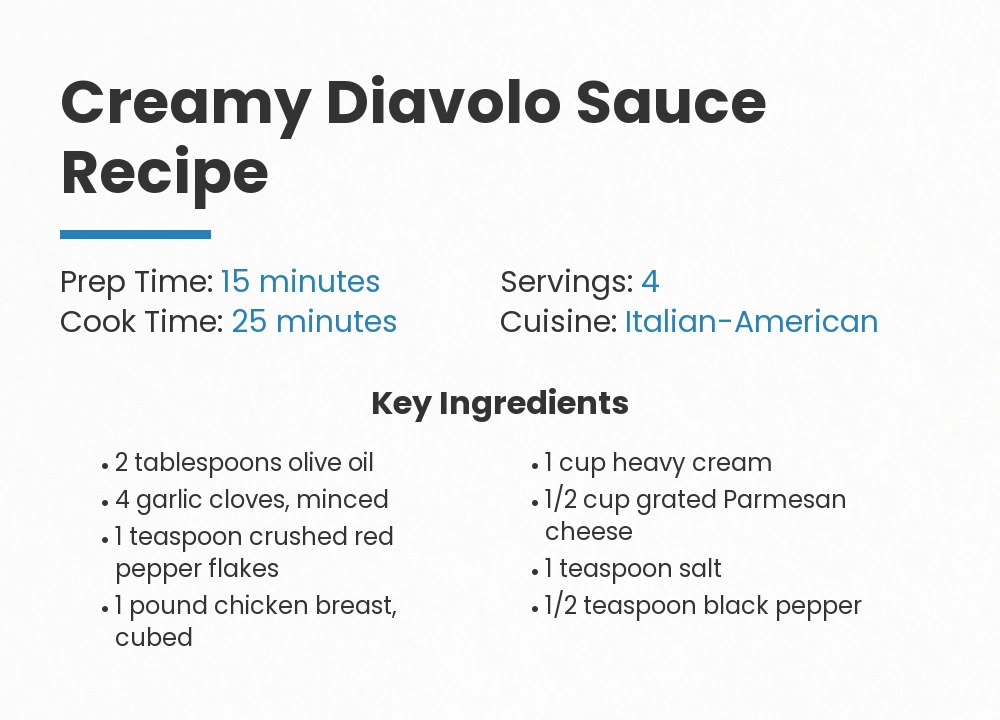
- Prep Time: 15 minutes
- Cook Time: 25 minutes
- Servings: 4
- Course: Main Course
- Cuisine: Italian-American
- Diet: Omnivore
Ingredients
- 2 tablespoons olive oil
- 4 garlic cloves, minced
- 1 teaspoon crushed red pepper flakes
- 1 pound chicken breast, cubed
- 1 can (28 ounces) crushed tomatoes
- 1 cup heavy cream
- 1/2 cup grated Parmesan cheese
- 1 teaspoon salt
- 1/2 teaspoon black pepper
- 1/4 cup fresh basil, chopped
- 1 pound penne pasta
Instructions
- Bring a large pot of salted water to boil. Add the penne and cook until al dente, following package directions. Drain the pasta and set it aside.
- Heat olive oil in a large sauté pan over medium heat. Add minced garlic and crushed red pepper flakes. Sauté for about 2 minutes until fragrant but not browned.
- Introduce cubed chicken to the pan. Cook for 5-7 minutes, stirring occasionally, until the chicken is fully cooked and lightly browned.
- Pour in the crushed tomatoes, stirring to combine with the chicken and aromatics. Allow the mixture to simmer for 10 minutes, letting the flavors meld.
- Reduce the heat to low. Slowly stir in the heavy cream and grated Parmesan cheese. Continue stirring until the sauce is smooth and uniformly creamy.
- Season with salt and black pepper. Let the sauce simmer for an additional 5 minutes to thicken slightly.
- Add the drained pasta to the sauce, tossing to coat every piece evenly. Garnish with fresh basil before serving.
Nutrition
- Calories: 610 kcal
- Protein: 38 g
- Fat: 22 g
- Carbohydrates: 65 g
- Sugar: 10 g
- Fiber: 6 g
- Sodium: 850 mg
- Cholesterol: 105 mg
Cooking Method
This recipe uses a combination of sautéing and simmering. Sautéing garlic and chili in oil releases their essential oils, building a flavor base. Simmering the tomatoes and cream allows the sauce to thicken and develop depth. The pasta is cooked separately to maintain texture before combining.
Tools Needed
- Large pot for boiling pasta
- Large sauté pan or skillet
- Wooden spoon or spatula
- Measuring cups and spoons
- Cheese grater
- Colander for draining pasta
Ingredient Profiles and Selection
Each component in creamy diavolo sauce contributes unique attributes. Understanding these helps in making informed substitutions and enhancing flavor. Below, I break down the primary ingredients based on culinary and nutritional perspectives.
Cream and Dairy Elements
Heavy cream provides the luxurious texture that defines this sauce. It contains about 36-40% milk fat, which emulsifies with tomato acids without curdling. For a lighter version, half-and-half can be used, though the sauce may be thinner. Parmesan cheese adds umami and saltiness, helping to thicken the sauce naturally.
When selecting cream, opt for pasteurized varieties without additives. Freshly grated Parmesan melts better than pre-shredded options, which often contain anti-caking agents. In terms of nutrition, cream offers saturated fats that carry fat-soluble flavors, but it also increases calorie density.
Garlic and Aromatics
Garlic cloves form the aromatic foundation, with allicin compounds releasing pungent notes when crushed. Fresh garlic is preferable to powdered forms for its vibrant taste. Sautéing it briefly in olive oil prevents bitterness while infusing the oil with flavor.
Yellow or white onions can be added for sweetness, diced finely to blend into the sauce. Olive oil should be extra-virgin for its fruity notes, which complement the chili heat. These elements create a layered base that supports the spicy and creamy components.
Chili Peppers and Heat Sources
Crushed red pepper flakes deliver a consistent, moderate heat that permeates the sauce. They are made from dried and crushed cayenne or similar peppers, with capsaicin content varying by brand. Cayenne pepper can be substituted for more intense spiciness, but start with half the amount.
Other options include chipotle peppers in adobo for smoky notes or fresh habanero for extreme heat. Balancing spice with cream is key; the fat in cream binds to capsaicin, reducing perceived heat on the palate. Adjust flakes to taste, considering that cooking mellows their intensity slightly.
Tomatoes and Acid Components
Canned crushed tomatoes offer convenience and consistent texture, with their natural sweetness balancing acidity. San Marzano tomatoes are ideal for their low seed count and rich flavor. Avoid tomato products with added sugars or preservatives to control the sauce’s purity.
Tomatoes contribute lycopene, an antioxidant that becomes more bioavailable when cooked. The acidity helps cut through the richness of the cream, preventing the sauce from feeling overly heavy. If using fresh tomatoes, blanch and peel them first for a smoother consistency.
Protein Choices
Chicken breast is lean and absorbs flavors well, making it a common choice. Cubing it ensures even cooking and integration into the sauce. Shrimp can be used as an alternative; add them later in the cooking process to avoid overcooking.
For plant-based versions, firm tofu or chickpeas work nicely. The protein element adds substance, turning the sauce into a complete meal. Always pat dry proteins before cooking to achieve better browning and flavor development.
Nutritional Evaluation
This sauce provides a balanced mix of macronutrients, with proteins, fats, and carbohydrates in each serving. The chicken contributes high-quality protein essential for muscle repair and satiety. Cream and cheese add fats that aid in absorbing fat-soluble vitamins from tomatoes and garlic.
Carbohydrates come primarily from the pasta and tomatoes, offering energy and dietary fiber. The red pepper flakes contain capsaicin, which may support metabolism and provide anti-inflammatory benefits. However, the sodium content can be high, so adjust salt based on dietary needs.
To reduce calories, use low-fat dairy or increase the proportion of vegetables. Adding spinach or bell peppers boosts fiber and micronutrients without significantly altering the flavor profile. This dish fits into a balanced diet when portioned appropriately.
Adapting for Dietary Requirements
Modifying this recipe allows it to suit various dietary preferences without sacrificing taste. Below are practical swaps for common needs.
Gluten-Free Adaptation
Use gluten-free pasta made from rice, corn, or legumes. Ensure that all other ingredients, like crushed tomatoes, are certified gluten-free. The sauce itself is naturally gluten-free, so focus on the pasta component.
Vegan and Dairy-Free Options
Replace heavy cream with coconut cream or cashew cream for richness. Nutritional yeast or vegan Parmesan can substitute for dairy cheese. For protein, use cubed tempeh or lentils instead of chicken.
Adjust cooking times for plant-based proteins to ensure they are tender. The sauce may require a splash of plant-based milk to achieve desired consistency if it thickens too much.
Low-Sodium and Heart-Healthy Versions
Omit added salt and use low-sodium canned tomatoes. Increase herbs like basil or oregano to enhance flavor without sodium. Lean proteins like turkey or extra vegetables can reduce saturated fat intake.
Incorporate avocado oil for its monounsaturated fats, which support heart health. These changes make the dish suitable for those monitoring blood pressure or cholesterol levels.
Origins and Cultural Significance
Diavolo sauce, meaning “devil” in Italian, refers to its spicy character rooted in Southern Italian cuisine. It traditionally features tomatoes, garlic, and chili peppers without cream. The creamy version likely emerged from Italian-American communities, incorporating dairy to appeal to local tastes.
Historically, spicy sauces were used to preserve meats and add flavor to simple ingredients. The addition of cream reflects adaptations in immigrant kitchens, where available resources inspired new creations. This evolution shows how culinary traditions blend and transform over time.
Understanding this background enriches the cooking experience, connecting modern dishes to their cultural roots. It also highlights the flexibility of Italian cooking, where regional variations are celebrated.
Avoiding Common Errors
Many home cooks encounter issues when making creamy sauces. Overheating the cream can cause it to separate, resulting in a grainy texture. Always add cream off the direct heat and stir continuously to maintain emulsion.
Undercooking the garlic leads to a harsh taste, while burning it makes the sauce bitter. Sauté garlic until fragrant but not browned, typically within two minutes. Using dried herbs instead of fresh basil can diminish the sauce’s brightness; fresh herbs added at the end preserve their flavor.
Not salting the pasta water adequately results in bland pasta. The water should taste like the sea to season the pasta from within. Finally, avoid overcrowding the pan when cooking chicken, as it steams instead of browns, reducing flavor development.
Serving Ideas and Storage Methods
Serve creamy diavolo sauce immediately over pasta for the best texture. Pair it with a side salad dressed in lemon vinaigrette to cut through the richness. Garlic bread or roasted vegetables complement the spicy notes well.
For storage, let the sauce cool completely before transferring it to an airtight container. Refrigerate for up to three days or freeze for three months. Reheat gently on the stove, adding a splash of water or cream to restore consistency if needed.
Leftovers can be repurposed into baked pasta dishes or as a topping for grilled meats. Always store pasta and sauce separately to prevent the pasta from becoming mushy upon reheating.
Frequently Asked Questions
What is creamy diavolo sauce?
Creamy diavolo sauce is a variation of traditional Italian diavolo sauce, incorporating heavy cream for a smooth texture. It typically includes tomatoes, garlic, chili peppers, and cream, often served with pasta and protein.
Can I make this sauce less spicy?
Yes, reduce or omit the crushed red pepper flakes. You can also add more cream or a teaspoon of sugar to balance any remaining heat. Start with a small amount of chili and adjust to taste.
What pasta shapes work best with this sauce?
Penne, rigatoni, or fettuccine are ideal because their surfaces hold the creamy sauce well. Avoid very delicate pasta like angel hair, as it may become overwhelmed by the thick sauce.
How can I make the sauce thicker?
Simmer the sauce longer to reduce it, or add a tablespoon of tomato paste during cooking. Alternatively, blend a portion of the sauce with an immersion blender for a smoother, thicker consistency.
Is it possible to prepare this sauce in advance?
Yes, you can make the sauce up to two days ahead and store it refrigerated. Reheat it gently before combining with freshly cooked pasta for the best results.
What are good protein substitutes for chicken?
Shrimp, sausage, or meatballs are excellent alternatives. For vegetarian options, use mushrooms, beans, or tofu. Adjust cooking times based on the protein’s density and moisture content.
Can I use milk instead of heavy cream?
Milk can be used, but it may curdle due to acidity from tomatoes. To prevent this, temper the milk by warming it separately before adding, or use a roux to stabilize the sauce.
How do I prevent the cream from curdling?
Add cream off the heat and stir constantly. Incorporating a starch like flour or cornstarch slurry can help stabilize the emulsion. Avoid boiling the sauce after adding dairy components.