
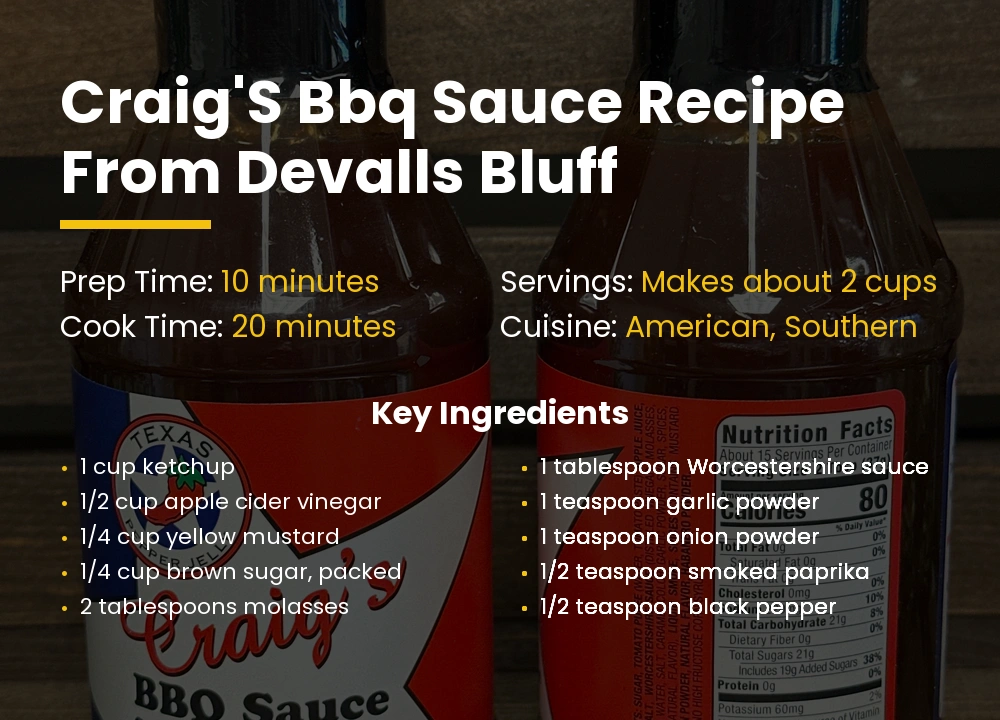
Finding a barbecue sauce that balances tang, sweetness, and heat can be a challenge for any home cook. My search ended on a humid afternoon in DeValls Bluff, Arkansas, at the iconic Craig’s Bar-B-Q.
The aroma from their parking lot smoke pit promised something special. This recipe captures the essence of that unforgettable sauce, perfected through testing in my own kitchen.
You will discover how to replicate its unique Arkansas character with common ingredients. Let’s begin by making the sauce that defines a region.
How to Make Craig’s BBQ Sauce from DeValls Bluff
Recipe Details
- Prep Time: 10 minutes
- Cook Time: 20 minutes
- Servings: Makes about 2 cups
- Course: Condiment
- Cuisine: American, Southern
- Diet: Vegetarian
Ingredients
- 1 cup ketchup
- 1/2 cup apple cider vinegar
- 1/4 cup yellow mustard
- 1/4 cup brown sugar, packed
- 2 tablespoons molasses
- 1 tablespoon Worcestershire sauce
- 1 teaspoon garlic powder
- 1 teaspoon onion powder
- 1/2 teaspoon smoked paprika
- 1/2 teaspoon black pepper
- 1/4 teaspoon cayenne pepper (adjust to taste)
- 1 tablespoon unsalted butter (optional, for richness)
Instructions
- Combine all ingredients except the butter in a medium saucepan.
- Place the saucepan over medium heat and stir until the sugar dissolves.
- Bring the mixture to a gentle simmer, then reduce heat to low.
- Let it cook for 15-20 minutes, stirring occasionally to prevent sticking.
- The sauce will thicken slightly; if using butter, stir it in at the end.
- Remove from heat and let cool before transferring to a jar or bottle.
Nutrition
- Calories: 45 kcal
- Protein: 0.5 g
- Fat: 0.8 g
- Carbohydrates: 10 g
- Sugar: 8 g
- Fiber: 0.2 g
- Sodium: 220 mg
- Cholesterol: 0 mg
Cooking Method
This sauce uses a stovetop simmering method to meld flavors and achieve the right consistency. Simmering allows the vinegar to mellow while the sugars caramelize gently.
You must stir occasionally to ensure even cooking and prevent burning. The result is a glossy, pourable sauce with deep, layered taste.
Tools Needed
You only require a medium saucepan and a wooden spoon or silicone spatula. A whisk can help initially to blend the ingredients smoothly.
Prepare a clean glass jar with a lid for storing the finished sauce. This simple setup makes the process accessible for any kitchen.
Now, let’s explore why these specific ingredients make such a difference. Understanding each component unlocks the sauce’s authentic character.
The Story Behind Craig’s Bar-B-Q
Craig’s in DeValls Bluff is a cash-only institution that has served Central Arkansas for decades. Its no-frills parking lot setup focuses purely on the food.
Patrons debate sliced versus chopped pork and wet versus dry ribs while waiting in line. The sauce, sold by the case, is the star that ties every meal together.
Truth be told, I had no plans to eat at Craig’s during my Arkansas trip. The unassuming parking lot setup almost caused me to drive right past.
Once inside, the debate over sliced versus chopped pork revealed a passionate community. This sauce became the unifying element on every table.
Many travelers from Little Rock make the trip specifically for this experience. Its iconic status stems from a commitment to simple, quality barbecue.
This recipe aims to bottle that experience for your home kitchen. Learning its history adds context to every spoonful you make.
Decoding the Arkansas Barbecue Sauce Profile
Arkansas sauce often sits between Kansas City sweet and Carolina vinegar styles. Craig’s version includes mustard, which is a key regional signature.
Competitors note that mustard is one of just three things that stick out in Arkansas barbecue sauce. This ingredient provides a sharp contrast to the sweet tomato base.
The balance of ketchup, vinegar, and mustard creates a tangy base with subtle sweetness. This profile complements both pork and beef exceptionally well.
You can adjust the heat level with cayenne to match your preference. This flexibility makes the sauce a versatile companion for various meats.
Ingredient Deep Dive: Why Each Component Matters
Ketchup provides tomato depth and a touch of sweetness from its own sugar. Using a brand without high-fructose corn syrup can offer a cleaner taste.
Apple cider vinegar introduces acidity that cuts through rich barbecue fats. Its fruity notes are less harsh than white vinegar, blending seamlessly.
The Role of Mustard
Yellow mustard is the surprise element that defines this Arkansas recipe. It adds a sharp tang and contributes to the sauce’s vibrant color.
Mustard also acts as an emulsifier, helping to bind the oil and vinegar. This results in a smooth texture that clings to meat without separating.
Sweetness Balance
Brown sugar and molasses work together for complex sweetness. Brown sugar offers caramel notes, while molasses adds a bitter depth.
Molasses is rich in iron and other minerals, providing a nutritional boost. Together, they prevent the sauce from being cloyingly sweet.
Umami and Aromatics
Worcestershire sauce brings umami through its fermented anchovy and tamarind base. Garlic and onion powders deliver consistent flavor without raw bits.
Smoked paprika imparts a subtle smokiness, echoing traditional pit cooking. These layers ensure the sauce stands up to long smoking sessions.
Nutritional Insights from a Dietician’s Perspective
As a dietician, I analyze condiments for their impact on overall diet. This sauce is relatively low in calories per serving but moderate in sodium.
You can reduce sodium by using low-sodium ketchup and Worcestershire sauce. The small amounts of sugar are acceptable when balanced with protein-rich meals.
The vinegar and spices may offer metabolic benefits, such as improved digestion. Incorporating this sauce mindfully can enhance a balanced barbecue meal.
Practical Tips for Perfect Barbecue
Applying sauce at the right time is crucial for achieving the best flavor. For wet ribs, brush it on during the last 30 minutes of cooking.
For dry ribs, serve the sauce on the side to let the rub shine. This method honors the classic debates from Craig’s parking lot.
When making chopped pork sandwiches, mix the sauce directly into the meat. This ensures every bite is infused with the iconic taste.
Adapting the Recipe for Dietary Needs
For a vegan version, replace Worcestershire sauce with a vegan alternative and omit butter. Use coconut sugar instead of brown sugar for a lower glycemic index.
If you avoid nightshades, substitute ketchup with a pureed fruit base like apricot. These changes allow everyone to enjoy a personalized sauce.
Always taste and adjust seasonings after making substitutions. The core balance of tangy, sweet, and spicy should remain intact.
Serving Suggestions: From Ribs to Sandwiches
This sauce pairs beautifully with slow-smoked pork ribs, whether wet or dry. It also elevates a simple beef sandwich, as noted in traveler reviews.
Try it as a dipping sauce for fried foods or a glaze for roasted vegetables. Its versatility makes it a staple for any cookout or weeknight dinner.
Remember that Craig’s in DeValls Bluff often serves it with just three things: meat, bread, and sauce. Sometimes, simplicity is the ultimate sophistication.
Preserving and Storing Your Homemade Sauce
Store the cooled sauce in an airtight container in the refrigerator for up to three weeks. For longer storage, freeze it in ice cube trays for portioned use.
Always use clean utensils to scoop sauce to prevent bacterial growth. Proper storage maintains the flavor and safety of your homemade condiment.
Frequently Asked Questions
What makes Craig’s BBQ sauce different from other Arkansas sauces?
Craig’s sauce is distinct for its pronounced mustard tang balanced with molasses sweetness, setting it apart from tomato-heavy or vinegar-based regional styles.
Can I use this sauce for both pork and beef?
Yes, this sauce complements pork ribs and chopped pork beautifully, and it also works well with beef sandwiches, as confirmed by visitors to Craig’s.
How do I achieve the perfect thickness for the sauce?
Simmer the sauce for the full 20 minutes; it will thicken as it cools, and if you prefer it thicker, extend the simmering time by 5-10 minutes.
Is there a way to reduce the sugar content in this recipe?
Reduce the brown sugar by half and add a sugar substitute like stevia, but note that this will alter the traditional flavor and caramelization.
What are the best sides to serve with this barbecue sauce?
Classic sides include coleslaw, baked beans, and potato salad, which balance the sauce’s tanginess and richness.
Can I make this sauce without cooking it?
While you can mix ingredients cold, simmering is essential to meld flavors and achieve the authentic depth and texture of Craig’s original sauce.
How long does homemade BBQ sauce last in the fridge?
Homemade BBQ sauce lasts up to three weeks in the refrigerator when stored in a sealed container, thanks to the vinegar’s preservative qualities.
What type of mustard is best for this recipe?
Standard yellow mustard is ideal for its mild tang and smooth consistency, which is true to the DeValls Bluff original.