
I still recall the first time I ordered this tea at a Cracker Barrel during a family trip. The crisp, tart-sweet flavor was unlike any other beverage I had tasted. As a dietician, I appreciated its simplicity. As a culinary historian, I was curious about its roots. This recipe replicates that experience at home.
You can make this tea with a few basic ingredients. It combines brewed tea, Granny Smith apples, and sweetener. The result is a refreshing drink that balances fruitiness with a robust tea base. Let me guide you through creating this classic.
This article covers everything from precise measurements to nutritional science. You will learn how to adjust the recipe for various diets. I will explain the historical context of this beverage. My goal is to provide a complete resource for your kitchen.
How to Make Cracker Barrel Granny Smith Apple Tea Recipe
This section provides the exact steps to prepare the tea. Follow these instructions for consistent results. The recipe is designed for home kitchens using standard tools.
Recipe Details
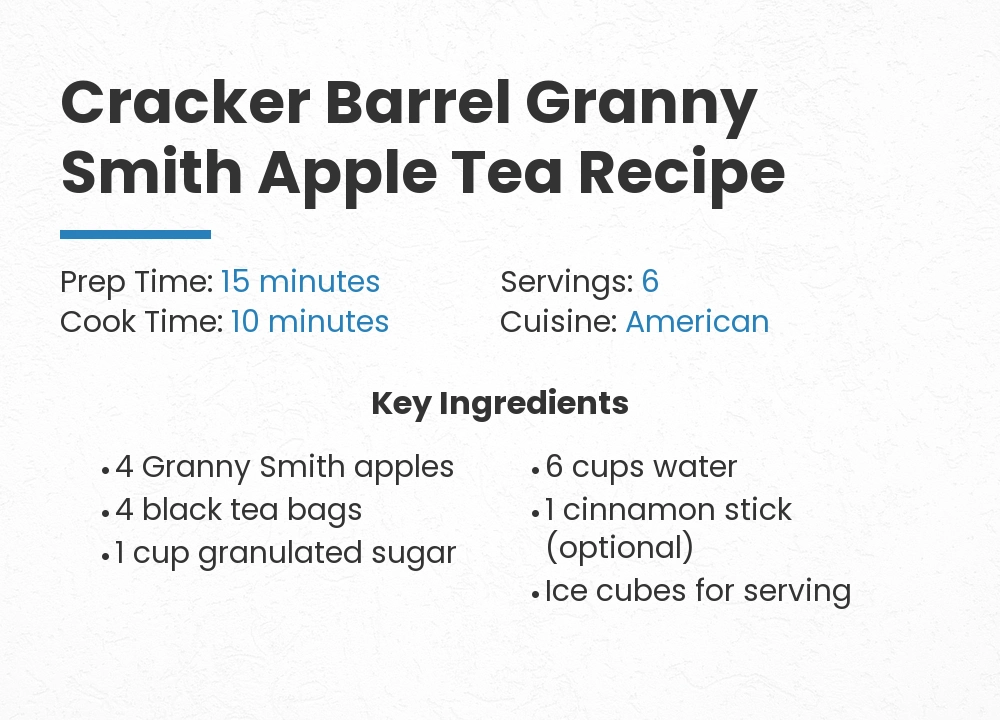
- Prep Time: 15 minutes
- Cook Time: 10 minutes
- Servings: 6
- Course: Beverage
- Cuisine: American
- Diet: Vegetarian
Ingredients
- 4 Granny Smith apples
- 4 black tea bags
- 1 cup granulated sugar
- 6 cups water
- 1 cinnamon stick (optional)
- Ice cubes for serving
Instructions
- Wash and core the apples. Slice them into thin wedges without peeling.
- In a medium saucepan, combine water, apple slices, and cinnamon stick. Bring to a boil over high heat.
- Reduce heat to low and simmer for 8 minutes until apples soften.
- Remove from heat and add tea bags. Steep for 5 minutes.
- Discard tea bags and cinnamon stick. Stir in sugar until fully dissolved.
- Strain the mixture to remove apple solids. Let it cool to room temperature.
- Chill in the refrigerator for at least 2 hours. Serve over ice.
Nutrition
- Calories: 160 kcal
- Protein: 0.5 g
- Fat: 0.2 g
- Carbohydrates: 42 g
- Sugar: 40 g
- Fiber: 2 g
- Sodium: 10 mg
- Cholesterol: 0 mg
Cooking Method
This recipe uses a stovetop infusion method. Simmering apples releases pectin and flavor. Steeping tea after heating prevents bitterness. The mixture is then chilled for service.
Tools Needed
- Medium saucepan
- Knife and cutting board
- Fine-mesh strainer
- Measuring cups and spoons
- Pitcher for storage
Understanding the Ingredients
Each component contributes to the final taste and health profile. Selecting high-quality ingredients ensures authenticity. Let’s examine their roles in detail.
Granny Smith Apples
Granny Smith apples originate from Australia in the 1860s. They have a bright green skin and firm texture. Their high malic acid content provides a sharp tartness. This acidity balances the sweetness in the tea.
These apples contain about 4 grams of fiber per medium fruit. They are rich in vitamin C and polyphenols. The skin holds most of the antioxidants. Leaving it on during cooking enhances nutritional value.
When heated, the apples’ cell walls break down. This process releases natural sugars and pectin. Pectin gives a slight thickness to the tea. It also acts as a prebiotic for gut health.
Tea Selection
Black tea serves as the base for this recipe. It is fully oxidized, yielding a robust flavor. Common varieties include Assam or Ceylon. These types withstand the apple infusion without becoming watery.
The caffeine content ranges from 40-70 mg per cup. Antioxidants like theaflavins support cardiovascular health. Steeping time affects tannin release. Over-steeping can make the tea astringent.
You may use decaffeinated black tea if preferred. The flavor profile remains similar. Green tea is not ideal due to its delicate nature. It can become bitter when combined with cooked apples.
Sweeteners and Alternatives
Granulated sugar is traditional in this preparation. It dissolves easily in warm liquid. Sugar caramelizes slightly during simmering. This adds a depth of flavor beyond mere sweetness.
Each tablespoon of sugar provides about 48 calories. It consists purely of carbohydrates. There are no vitamins or minerals in refined sugar. Consider alternatives for lower glycemic impact.
Honey or maple syrup can replace sugar. They introduce distinct flavor notes. Agave nectar blends smoothly but is high in fructose. Stevia or erythritol work for sugar-free versions.
Nutritional Insights
This beverage offers both benefits and considerations. Understanding its composition helps in making informed choices. I will break down the macro and micronutrients.
Caloric Density and Sugar Content
A serving contains approximately 160 calories. Most calories come from carbohydrates. The sugar content is high at 40 grams per serving. This is primarily from added sugar and natural fruit sugars.
The American Heart Association recommends limiting added sugar. Men should have no more than 36 grams daily. Women should cap at 25 grams. One serving of this tea approaches or exceeds these limits.
You can reduce the sugar by half without compromising taste. The apples contribute natural sweetness. Using unsweetened tea bases also helps. Monitor portion sizes if managing calorie intake.
Vitamin and Mineral Profile
Granny Smith apples provide vitamin C and potassium. Vitamin C supports immune function and collagen synthesis. Potassium aids in nerve function and fluid balance. The tea contributes manganese and fluoride.
Manganese is essential for bone health and metabolism. Fluoride strengthens tooth enamel. These micronutrients are present in trace amounts. The beverage is not a significant source of protein or fat.
Fiber content is modest at 2 grams per serving. Most fiber comes from apple skins. Soluble fiber helps regulate blood sugar levels. Insoluble fiber promotes digestive regularity.
Health Impacts and Moderation
Consuming this tea in moderation can be part of a balanced diet. The antioxidants from tea and apples reduce oxidative stress. However, high sugar intake may increase inflammation risk.
Pairing the tea with protein-rich foods mitigates blood sugar spikes. For example, serve it with a handful of nuts. The caffeine provides a mild energy boost. Avoid drinking it late in the day if sensitive to caffeine.
Hydration is another benefit. The water base helps meet daily fluid needs. Herbal variations without caffeine are suitable for evening consumption. Always consider individual health conditions.
Dietary Modifications
This recipe can adapt to various dietary needs. Simple swaps maintain the core flavor. Below are practical adjustments for common restrictions.
Vegan and Plant-Based Options
The standard recipe is already vegetarian. For strict vegan diets, ensure sugar is not processed with bone char. Many commercial sugars use animal-derived filters. Look for certified vegan sugar brands.
Agave syrup or maple syrup are plant-based sweeteners. They integrate well with the apple flavor. Adjust quantities since they are sweeter than granulated sugar. Start with three-quarters cup and taste.
Some tea bags may contain hidden non-vegan elements. Check for additives like honey powder. Choose plain black tea from reputable companies. Most major brands clearly label vegan products.
Low-Sugar and Diabetic-Friendly Versions
Reduce the sugar to one-quarter cup for a lighter drink. The apples’ natural sweetness compensates. Alternatively, use sugar substitutes like stevia or monk fruit.
Liquid stevia blends easily without grainy texture. It has zero calories and does not affect blood sugar. Erythritol provides bulk similar to sugar. It may have a cooling aftertaste in cold beverages.
Consider using apple juice concentrate as a sweetener. It adds fruit flavor without refined sugar. Dilute it to avoid overpowering the tea. Monitor total carbohydrate intake if managing diabetes.
Gluten-Free and Allergen Notes
All ingredients are naturally gluten-free. Cross-contamination is unlikely in home preparation. Verify tea bag packaging for gluten-free certification. Some facilities process barley or other grains.
Tree nut and soy allergies are not typically triggered by this recipe. Always check individual ingredient labels. Prepared versions at restaurants may have additives. Homemade preparation ensures control over allergens.
For those with apple allergies, pears can substitute. Choose firm varieties like Bosc. They offer a similar texture and mild sweetness. Adjust simmering time as pears may cook faster.
Historical Background
Cracker Barrel Old Country Store opened in 1969 in Lebanon, Tennessee. It aimed to evoke a nostalgic Southern experience. The menu often features classic American comfort foods.
Sweet tea has deep roots in the American South. It dates back to the 19th century when ice became more accessible. Adding fruit infusions like apple is a modern twist. This particular tea reflects a trend toward fruit-flavored beverages.
Granny Smith apples gained popularity in the United States in the late 20th century. Their tartness made them ideal for cooking and beverages. Cracker Barrel likely introduced this tea as a seasonal offering. It complements their apple-centric dishes like fried apples.
The recipe mimics the balance of sweet and tart found in traditional apple butter. It aligns with the chain’s focus on homestyle cooking. Understanding this context enriches the cooking experience.
Expert Tips and Common Errors
Small details significantly impact the final product. I have tested this recipe multiple times to identify key factors. Apply these suggestions for optimal results.
Apple Preparation Techniques
Slice apples uniformly to ensure even cooking. Uneven pieces may result in some bits being mushy. Others might remain hard. A sharp knife or mandoline ensures consistency.
Do not peel the apples unless necessary for texture preferences. The skin contains much of the flavor and nutrients. It also adds a slight rosy hue to the tea. If you peel them, simmer for a minute longer to extract more flavor.
Browning of cut apples is natural due to oxidation. It does not affect taste. To prevent it, toss slices in lemon juice. This step is optional and adds a citrus note.
Tea Steeping and Flavor Control
Steep tea after removing the pot from heat. Boiling water directly on tea bags releases tannins. This causes excessive bitterness. Five minutes is sufficient for full extraction.
Squeezing tea bags after steeping is not recommended. It forces out bitter compounds. Instead, let them drain naturally. Use quality tea bags without strings or staples if possible.
Cold brewing is an alternative method. Steep tea bags in cold water with apples for 12 hours. This yields a smoother, less astringent flavor. It requires planning ahead but reduces cooking time.
Sweetener Integration and Adjustments
Dissolve sugar completely while the liquid is warm. Undissolved sugar sinks to the bottom. It makes the last servings overly sweet. Stir continuously for even distribution.
Taste the tea before chilling. Flavors intensify when cold. Add more sweetener if needed at this stage. Remember that ice dilutes the drink upon serving.
For a syrup-based approach, make apple simple syrup separately. Cook equal parts sugar and water with apples. Strain and use this to sweeten brewed tea. It allows precise sweetness control.
Serving Suggestions and Storage
This tea pairs well with various foods. Proper storage maintains its freshness. Here are practical ideas for enjoyment and preservation.
Food Pairings
Serve with classic Southern dishes like buttermilk biscuits. The tea’s sweetness contrasts with savory items. It also complements spicy foods by cooling the palate. Try it with grilled chicken or pork chops.
For breakfast, pair with oatmeal or pancakes. The apple flavor enhances morning meals. As a snack, enjoy with cheese and crackers. The tartness cuts through rich dairy products.
Dessert pairings include apple pie or vanilla ice cream. The tea echoes the fruit notes in pastries. Avoid overly sweet desserts to prevent flavor overload. A simple shortbread cookie works well.
Storage Guidelines
Store leftover tea in a sealed pitcher in the refrigerator. It remains fresh for up to 5 days. Shake or stir before serving as separation may occur. The apple sediment settles at the bottom.
Freezing is not recommended due to texture changes. Ice crystals can make the tea watery upon thawing. If you must freeze, leave headspace in containers. Use within one month for best quality.
Glass containers prevent absorption of odors. Plastic may impart flavors over time. Label with the date to track freshness. Discard if you notice off smells or cloudiness.
The Science Behind the Flavor
Flavor development in this tea involves chemical reactions. Understanding these principles helps in troubleshooting. Let’s explore the key processes.
Maillard Reaction and Caramelization
Heating apples with sugar initiates caramelization. This occurs at temperatures above 160°C (320°F). It produces new flavor compounds like furans. These add depth and complexity to the tea.
The Maillard reaction between amino acids and sugars also occurs. It is responsible for browning and aroma development. Although minimal in this recipe, it contributes to the cooked apple flavor. Controlling heat prevents burning.
Pectin hydrolysis happens during simmering. Pectin breaks down into soluble fibers. This slightly thickens the tea and enhances mouthfeel. It also releases bound water, intensifying the apple taste.
Solubility and Infusion Dynamics
Water acts as a solvent for both tea polyphenols and apple compounds. Temperature affects extraction efficiency. Higher temperatures release more tannins and flavors. Balancing heat and time is crucial.
Sugar increases the solubility of certain aromatics. It helps carry apple essences into the liquid. This is why sweetened versions taste more fruity. Reduction of sugar may require longer infusion times.
Chilling the tea reduces perceived sweetness. Cold temperatures suppress taste bud sensitivity. Adjust recipes accordingly for iced service. Always taste after cooling for final adjustments.
Frequently Asked Questions
What is the origin of Granny Smith apples?
Granny Smith apples were first cultivated by Maria Ann Smith in Australia in 1868. They are a hybrid of European wild apples. Their tartness and firmness make them ideal for cooking.
Can I use green tea instead of black tea?
Green tea is not recommended for this recipe. It becomes bitter when simmered with apples. Black tea’s robust flavor stands up to the fruit infusion. Herbal teas like rooibos are suitable alternatives.
How can I reduce the sugar content without losing flavor?
Use ripe Granny Smith apples for natural sweetness. Simmer them longer to release more sugars. Add a pinch of salt to enhance perceived sweetness. Sugar substitutes like stevia also work well.
Is this tea suitable for children?
Yes, but consider the caffeine content from black tea. Use decaffeinated tea bags for kids. Reduce sugar to align with dietary guidelines for children. Always supervise consumption.
Can I make a large batch for events?
Double or triple the recipe for crowds. Use a stockpot for cooking. Keep the tea chilled in beverage dispensers. Serve with ice and apple slices for garnish.
What are the best apples for this recipe if Granny Smith are unavailable?
Honeycrisp or Braeburn apples are good substitutes. They offer a balance of sweet and tart. Avoid Red Delicious as they become mushy. Adjust sugar based on apple sweetness.
How long does homemade apple tea last in the fridge?
It stays fresh for up to 5 days when stored properly. Use airtight containers to prevent odor absorption. Discard if mold appears or flavor sours. Do not leave at room temperature for extended periods.
Can I add spices like nutmeg or cloves?
Yes, spices enhance the autumnal character. Add a pinch of nutmeg or two cloves during simmering. Remove them before serving to prevent overpowering. Experiment with small quantities first.