
My quest for the perfect barbecue sauce ended at a roadside stand in Texas, where Cooper’s signature blend coated slow-smoked brisket. The balance of sweet, tangy, and spicy notes inspired me to reverse-engineer their recipe at home.
After years of testing, I’ve refined a version that captures the essence of that original experience. This guide will walk you through every step, from selecting ingredients to understanding their roles in the sauce.
You’ll not only learn how to make Cooper’s BBQ sauce but also gain insights into its nutritional profile and historical roots. Let’s begin by gathering the core components for this versatile condiment.
How to Make Cooper’s BBQ Sauce Recipe
This recipe replicates the classic Cooper’s pit bar-b-que sauce with a balance of sweetness, tang, and mild heat. Follow these steps closely for authentic results that rival the original.
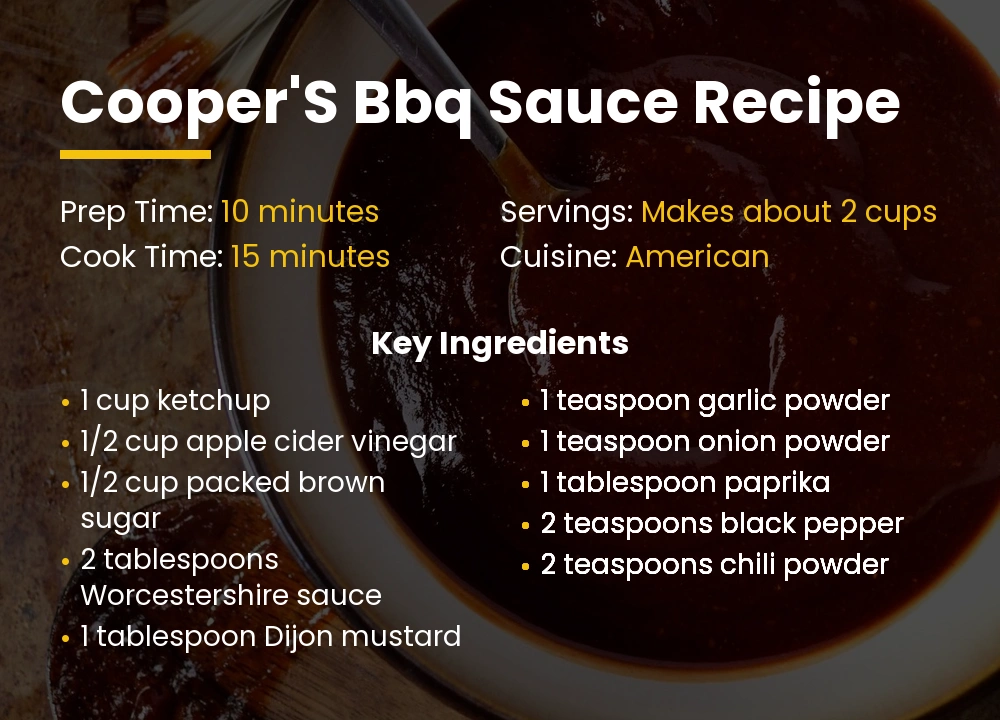
Recipe Details
- Prep Time: 10 minutes
- Cook Time: 15 minutes
- Servings: Makes about 2 cups
- Course: Condiment
- Cuisine: American
- Diet: Vegetarian (use anchovy-free Worcestershire sauce)
Ingredients
- 1 cup ketchup
- 1/2 cup apple cider vinegar
- 1/2 cup packed brown sugar
- 2 tablespoons Worcestershire sauce
- 1 tablespoon Dijon mustard
- 1 teaspoon garlic powder
- 1 teaspoon onion powder
- 1 tablespoon paprika
- 2 teaspoons black pepper
- 2 teaspoons chili powder
- 1 teaspoon cumin powder
- 2 tablespoons butter
- 1 medium onion, finely chopped
- 1 teaspoon hot sauce (like Tabasco)
- 1/2 teaspoon red pepper flakes
- Optional: 4 cloves garlic, minced
Instructions
- Melt butter in a medium saucepan over medium heat. Add the chopped onion and sauté until translucent, about five minutes.
- If using fresh garlic, add minced cloves to the pan and cook for another minute until fragrant. Stir constantly to prevent burning.
- Pour in the apple cider vinegar to deglaze the pan, scraping up any browned bits from the bottom. This adds depth to the sauce.
- Add ketchup, brown sugar, Worcestershire sauce, Dijon mustard, and hot sauce. Stir until the sugar dissolves and the mixture is smooth.
- Incorporate all dry spices: garlic powder, onion powder, paprika, black pepper, chili powder, cumin, and red pepper flakes. Whisk thoroughly to combine.
- Reduce heat to low and simmer for 10-15 minutes, stirring occasionally. The sauce will thicken slightly as it cooks.
- Remove from heat and let cool. The sauce will continue to thicken as it cools. Taste and adjust seasoning if needed.
- Transfer to a clean jar or bottle. Store in the refrigerator for up to two weeks.
Nutrition
Per 2 tablespoon serving:
- Calories: 45 kcal
- Protein: 0.5 g
- Fat: 1.5 g
- Carbohydrates: 8 g
- Sugar: 7 g
- Fiber: 0.3 g
- Sodium: 180 mg
- Cholesterol: 3 mg
Cooking Method
This sauce uses a stovetop simmering method that builds flavor through gradual reduction. The process starts with sautéing aromatics to release their natural sugars.
Simmering then melds the ingredients and develops a cohesive texture. The final consistency should coat the back of a spoon without being too thick.
Tools Needed
- Medium saucepan (2-quart capacity)
- Wooden spoon or whisk
- Measuring cups and spoons
- Cutting board and knife for chopping
- Airtight container for storage
Now that you have the basic recipe, let’s explore why each component is crucial. Understanding these elements allows you to customize the sauce to your preference.
Ingredient Roles and Substitutions
Ketchup provides the tomato base and initial sweetness due to its sugar and vinegar content. Choosing a brand without high fructose corn syrup offers a cleaner flavor profile.
For a homemade touch, use tomato paste mixed with water and a touch of sugar. This alternative reduces processed ingredients and allows control over sweetness.
Brown sugar adds molasses notes that white sugar lacks, contributing to the sauce’s caramelized character. You can substitute with coconut sugar for a lower glycemic index, but the flavor will shift slightly.
Apple cider vinegar introduces a fruity acidity that cuts through the richness of meats. White vinegar or lemon juice can work in a pinch, but they offer a sharper tang.
Worcestershire sauce brings umami depth from fermented anchovies and tamarind. For a vegetarian version, use soy sauce or tamari mixed with a bit of lime juice.
Dijon mustard adds a sharp, complex tang that balances the sweetness. Yellow mustard is milder and can be used if Dijon is unavailable.
Butter and sautéed onion create a savory foundation that enhances overall mouthfeel. Olive oil can replace butter for a dairy-free option, though it changes the richness.
Paprika, especially smoked paprika, contributes color and a subtle earthy sweetness. Hungarian sweet paprika is standard, but smoked paprika adds a barbecue pit aroma.
Black pepper, chili powder, cumin, and red pepper flakes build layers of heat and warmth. Adjust these spices to control the sauce’s intensity, from mild to extra spicy.
Fresh garlic, when used, offers a pungent kick that powder cannot replicate. Garlic powder is convenient and provides a more evenly distributed flavor.
Hot sauce like Tabasco injects a vinegary heat that permeates the entire batch. Other hot sauces can be used, but consider their additional flavors like chipotle or habanero.
Nutritional Insights
As a dietician, I analyze this sauce for its sugar and sodium content, which are common concerns. Each two-tablespoon serving contains about 7 grams of sugar, primarily from ketchup and brown sugar.
To reduce sugar, use no-added-sugar ketchup and decrease the brown sugar by half. The sauce will be tangier, but it can still be flavorful with adjusted spices.
Sodium comes mainly from ketchup, Worcestershire sauce, and added salts. Using low-sodium versions of these ingredients can cut sodium by up to 30%.
The small amount of fat from butter is minimal per serving and contributes to satiety. For a lower-fat version, omit the butter or use a light margarine.
This sauce is naturally vegetarian if Worcestershire sauce without anchovies is used. It is also gluten-free, but always check labels on processed ingredients like ketchup.
Incorporating this sauce into a balanced diet involves mindful portion control. Use it as a condiment rather than a main component to manage calorie intake.
Historical Context
Cooper’s Old Time Pit Bar-B-Que represents a tradition of Texas barbecue dating back decades. Their sauce likely evolved from early American barbecue sauces that used vinegar and pepper.
Barbecue sauces in the United States have regional variations, with Texas styles often emphasizing meaty flavors with minimal sauce. Cooper’s sauce, however, is a prominent feature, reflecting a balance between tradition and accessibility.
The use of ketchup and brown sugar points to the mid-20th century when these ingredients became pantry staples. This period saw the commercialization of barbecue sauces, moving from homemade to store-bought.
Understanding this history helps appreciate why certain ingredients are non-negotiable in the recipe. It also explains the sauce’s popularity as a dipping sauce for brisket and sausages.
Today, Cooper’s offers their sauce in bottles, allowing fans to enjoy it at home. This recipe captures that homemade quality, giving you control over freshness and customization.
Practical Applications and Variations
This sauce excels as a glaze for grilled chicken, pork ribs, or beef brisket. Brush it on during the last minutes of cooking to prevent burning from the sugar.
As a dipping sauce, serve it alongside onion rings, french fries, or chicken tenders. Its thick consistency clings well to foods without being too runny.
For a Cajun turkey injection sauce, thin the BBQ sauce with broth and add Cajun spices. Inject this mixture into turkey before roasting to infuse flavor and moisture.
To create a mop sauce for barbecuing, dilute with apple cider vinegar and water. Use a mop or brush to baste meat during long smoking sessions.
Vegetarian adaptations include using it as a topping for grilled vegetables or tofu. The bold flavors complement plant-based proteins effectively.
Storage in an airtight container in the refrigerator maintains quality for up to two weeks. For longer storage, freeze the sauce in ice cube trays for portioned use.
If the sauce becomes too thick after refrigeration, thin it with a little water or vinegar. Reheat gently on the stove or in the microwave, stirring to restore consistency.
Common mistakes include overcooking, which can make the sauce bitter from burned sugar. Always simmer on low heat and stir occasionally to avoid this issue.
Frequently Asked Questions
Can I make this sauce without sugar?
Yes, you can make a sugar-free version by using sugar substitutes like erythritol or stevia. However, the texture and caramelization will differ, so adjust cooking time accordingly.
How long does homemade BBQ sauce last?
Homemade BBQ sauce lasts up to two weeks in the refrigerator when stored in an airtight container. For extended storage, freeze it for up to three months.
What’s the difference between Cooper’s sauce and other BBQ sauces?
Cooper’s sauce is characterized by its balanced sweetness, tang from apple cider vinegar, and mild heat. Unlike some regional sauces, it uses a tomato base with a blend of spices rather than being mustard or vinegar-heavy.
Can I use this sauce for marinating?
This sauce works well as a marinade for meats due to its acidity from vinegar. For best results, marinate for at least 2 hours, but not overnight as the acid can toughen proteins.
Is this sauce gluten-free?
This sauce is gluten-free if you use gluten-free Worcestershire sauce and ketchup. Always check labels on processed ingredients to ensure they meet dietary requirements.
Can I adjust the heat level?
You can easily adjust the heat by increasing or decreasing the red pepper flakes and hot sauce. For a milder version, omit these; for extra heat, add cayenne pepper or more hot sauce.
What can I substitute for apple cider vinegar?
White vinegar or lemon juice can substitute for apple cider vinegar, but they offer a sharper acidity. Rice vinegar is a milder alternative that maintains some sweetness.
How can I make this sauce vegan?
To make this sauce vegan, use vegan Worcestershire sauce and replace butter with oil. Ensure the sugar is vegan, as some brown sugars are processed with bone char.