
Growing up in New England, holiday dinners always ended with banana fritters under a stream of warm, ruby-red claret sauce. That simple yet elegant sauce became my culinary touchstone, and I’ve spent years refining its balance of sweet wine and subtle thickness.
Today, I’ll guide you through every step of making authentic claret sauce, just as I do in my own kitchen. This recipe demystifies the process, ensuring you achieve a perfect sauce for desserts like ice cream or fritters.
We will explore the history, science, and variations behind this classic. By the end, you’ll possess not just a recipe, but comprehensive knowledge to make it your own.
How to Make Claret Sauce Recipe
This foundational recipe creates a slightly thickened, sweet wine sauce with minimal effort. Following these precise steps guarantees a consistent, glossy result every single time.
Remember, the quality of your wine directly influences the final flavor. We will delve into wine selection in detail shortly.
Recipe Details
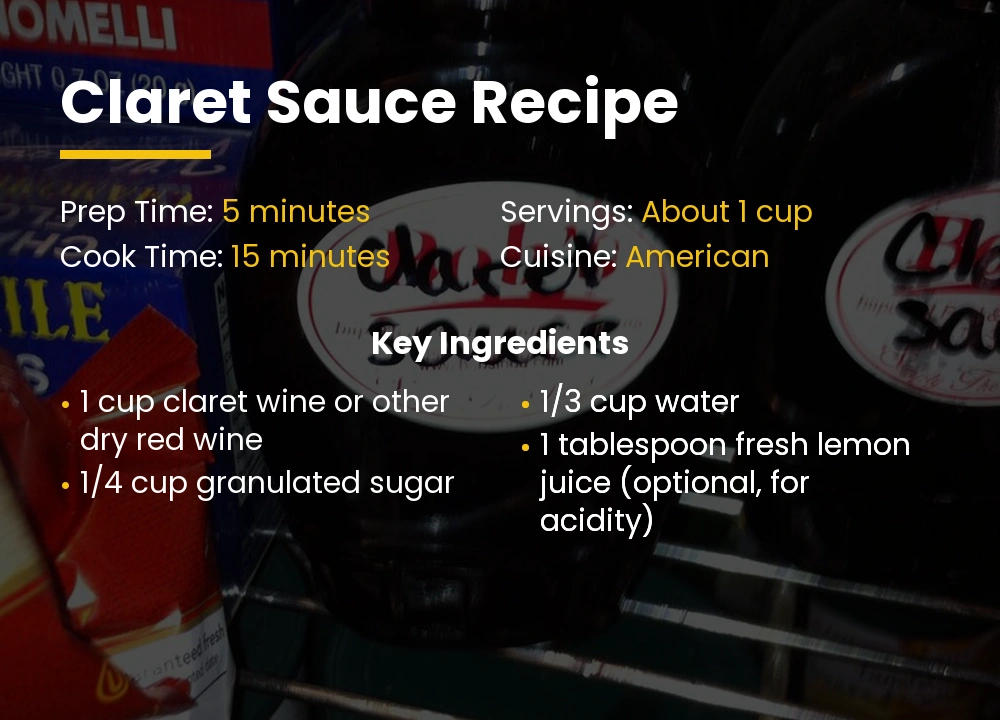
- Prep Time: 5 minutes
- Cook Time: 15 minutes
- Servings: About 1 cup
- Course: Dessert
- Cuisine: American
- Diet: Vegetarian
Ingredients
- 1 cup claret wine or other dry red wine
- 1/4 cup granulated sugar
- 1/3 cup water
- 1 tablespoon fresh lemon juice (optional, for acidity)
Instructions
- Place the wine, sugar, and water into a small, heavy-bottomed saucepan.
- Set the saucepan over medium heat and stir gently until the sugar completely dissolves.
- Once small bubbles form at the edges, reduce the heat to maintain a gentle simmer.
- Allow the mixture to simmer undisturbed for 8 to 10 minutes; it will reduce by about a third.
- You will know it’s ready when the sauce coats the back of a spoon without being syrupy.
- Remove the pan from heat and stir in the optional lemon juice for a bright note.
- Let the sauce cool for 5 minutes; it will continue to thicken slightly as it cools.
- Serve warm over your chosen dessert, using just a light drizzling for best results.
Nutrition
- Calories: 60 kcal
- Protein: 0 g
- Fat: 0 g
- Carbohydrates: 10 g
- Sugar: 10 g
- Fiber: 0 g
- Sodium: 5 mg
- Cholesterol: 0 mg
Cooking Method
This sauce employs the stovetop reduction method, which concentrates flavors through gentle evaporation. The process mellows the alcohol’s sharpness while intensifying the wine’s inherent fruity notes.
Constant boiling is unnecessary and can lead to a harsh flavor. A patient, low simmer is the key to a smooth, sophisticated sauce.
Tools Needed
- A small saucepan (1.5 to 2-quart capacity)
- A wooden spoon or silicone spatula
- Measuring cups and spoons
- A fine-mesh strainer (optional, for ultra-smooth texture)
The Origins of a New England Tradition
Claret sauce has deep roots in New England’s holiday cuisine, often paired with fried desserts like banana fritters. Its name derives from “claret,” the British term for red wines from France’s Bordeaux region, such as St-Emilion.
This sauce represents a practical yet creative use of wine, transforming it into a dessert topping. Its simplicity allowed home cooks to create something elegant with just a few pantry staples.
Building on this history, the sauce’s versatility became its hallmark. While traditional over ice cream or spumoni, a little imagination lets it enhance various dishes.
Consequently, understanding its past enriches your appreciation for each spoonful. This context turns a simple recipe into a connection to culinary heritage.
Choosing the Right Wine for Your Sauce
While the recipe calls for claret, many wonder if any red wine will work. The answer lies in the wine’s flavor profile, which forms the sauce’s entire character.
A dry, medium-bodied red wine with low tannins, like a Merlot or Cabernet Sauvignon blend, is ideal. These wines provide fruit-forward notes without excessive bitterness.
However, using a very sweet or heavily oaked wine will drastically alter the outcome. A sweet wine can make the sauce cloying, while strong oak can impart a woody, unbalanced taste.
Therefore, I recommend a standard dry red table wine for reliability. If you have a bottle of Bordeaux, that is the classic choice and will yield an authentic result.
Why Alcohol Content Matters
The simmering process evaporates most of the alcohol, leaving behind concentrated flavor. This makes the sauce suitable for most, though not all, of the alcohol cooks off.
For those avoiding alcohol entirely, a non-alcoholic red wine grape juice can be reduced, but the flavor will be distinctly different. The complexity from fermentation will be absent.
Nutritional Insights and Dietary Adaptations
As a dietician, I analyze the nutritional profile of every recipe. This sauce is primarily a source of simple carbohydrates from sugar, with minimal fat or protein.
The main consideration is its sugar content, which comes from both the added granulated sugar and the natural sugars in the wine. A two-tablespoon serving provides about 10 grams of sugar.
For diabetic diets or lower-sugar needs, you can reduce the granulated sugar by half. Be aware that this will also reduce the sauce’s body and glossy sheen.
Alternatively, a sugar substitute like erythritol can be used, but avoid artificial sweeteners that may break down under heat. Always taste and adjust after the reduction is complete.
Perfect Pairings and Creative Uses
This sauce’s slightly thickened, sweet profile makes it a versatile companion beyond the classic banana fritter. Its simplicity allows it to complement without overwhelming.
For a traditional serving, drizzle it warm over vanilla ice cream, spumoni, or bread pudding. The contrast between cold dessert and warm sauce is particularly satisfying.
Moving beyond sweets, consider it a glaze for roasted fruits like pears or peaches. A small amount can even accent certain savory dishes like pan-seared duck or pork.
This flexibility is why the sauce remains a favorite in my recipe collection. With a little imagination, it can elevate everything from breakfast dishes to holiday feasts.
Quick Banana Fritter Companion
To create a quick banana fritter, mix 1 2/3 cups of cornbread muffin mix with 2 tablespoons confectioners’ sugar and 1/4 teaspoon salt. Add one egg and enough water to form a thick batter, then coat banana slices and fry until golden.
These fritters paired with the claret sauce create a timeless dessert. The sauce’s wine notes cut through the fritter’s richness beautifully.
Mastering Texture and Avoiding Common Errors
The desired texture is a sauce that thinly coats the back of a spoon, not a thick syrup. Achieving this requires attention to heat and timing during the reduction.
A common mistake is rushing the process by using high heat, which can cause the sugar to caramelize too quickly or burn. This introduces a bitter flavor that overpowers the wine.
Another error is over-reducing the sauce, making it too thick and sticky as it cools. If this happens, simply whisk in a teaspoon of warm water at a time to loosen it.
Conversely, if your sauce seems too thin after cooling, you can return it to a low simmer for a few more minutes. Remember that it will thicken somewhat as it moves from pan to plate.
Storage and Make-Ahead Instructions
Cool the sauce completely before transferring it to an airtight container. It can be refrigerated for up to one week, making it an excellent component for meal preparation.
Reheat it gently in a saucepan over low heat or in short bursts in the microwave, stirring frequently. The sauce may separate slightly when cold; gentle reheating will restore its emulsion.
For longer storage, you can freeze the sauce in an ice cube tray for portioned use. Thaw overnight in the refrigerator and reheat as described above.
This make-ahead capability is perfect for holiday entertaining. Preparing it days in advance reduces last-minute stress in the kitchen.
Frequently Asked Questions
Can I use any red wine to make a claret sauce?
You can use any dry, medium-bodied red wine like Merlot or Cabernet Sauvignon, but the flavor will vary from the classic taste of a Bordeaux claret. Avoid very sweet, cheap, or heavily oaked wines for the best balanced sauce.
Does all the alcohol cook out of claret sauce?
Simmering for 8-10 minutes reduces but does not eliminate all alcohol; trace amounts remain. For a completely alcohol-free version, use a non-alcoholic wine reduction, though the flavor profile will be different.
How can I fix a claret sauce that is too thin?
Return the thin sauce to a low simmer and allow it to reduce further for 3-5 minutes, watching closely until it reaches a coating consistency. Alternatively, a small slurry of cornstarch and water can be whisked in for instant thickening.
What desserts pair best with claret sauce?
Beyond banana fritters and ice cream, this sauce excels with bread pudding, pound cake, cheese plates featuring blue cheese, or even simple poached pears. Its sweet-tart profile complements both creamy and fruity desserts.
Can I make claret sauce sugar-free?
Yes, by using a heat-stable sugar substitute like allulose or erythritol, but the texture and gloss may be slightly affected. The sauce will also be less viscous, so a slight reduction in the liquid amount may be necessary.
Is claret sauce served hot or cold?
Claret sauce is best served warm, not hot, to fully release its aroma and provide a pleasing contrast to cold desserts. Allowing it to cool for 5 minutes after cooking achieves the perfect serving temperature.
How long does homemade claret sauce last?
Stored in a sealed container in the refrigerator, homemade claret sauce maintains quality for up to 7 days. Always check for off odors or mold before using leftovers.