
Finding a recipe that captures the specific flavor of a regional specialty can be difficult. Many versions exist, but they often miss the mark on the unique balance of spices and texture that defines the original. This was my experience with Michigan sauce, a meaty topping legendary in Northern New York.
After tasting the real thing at a small stand years ago, I spent considerable time testing to recreate that authentic profile. The recipe attributed to Clare and Carl provides a reliable foundation for this distinct sauce. It is more than a condiment; it is a piece of local food history served over a steamed hot dog.
This guide will walk you through making Clare and Carl’s Michigan sauce with precision. We will examine its ingredients, nutritional profile, and the story behind this unique regional dish. You will learn how to achieve the perfect consistency and flavor at home.
How to Make Clare and Carl’s Michigan Sauce Recipe
This section provides the complete formula for creating the sauce. Follow these steps closely for a result that honors the traditional method. The process is straightforward but benefits from slow, gentle cooking.
Recipe Details
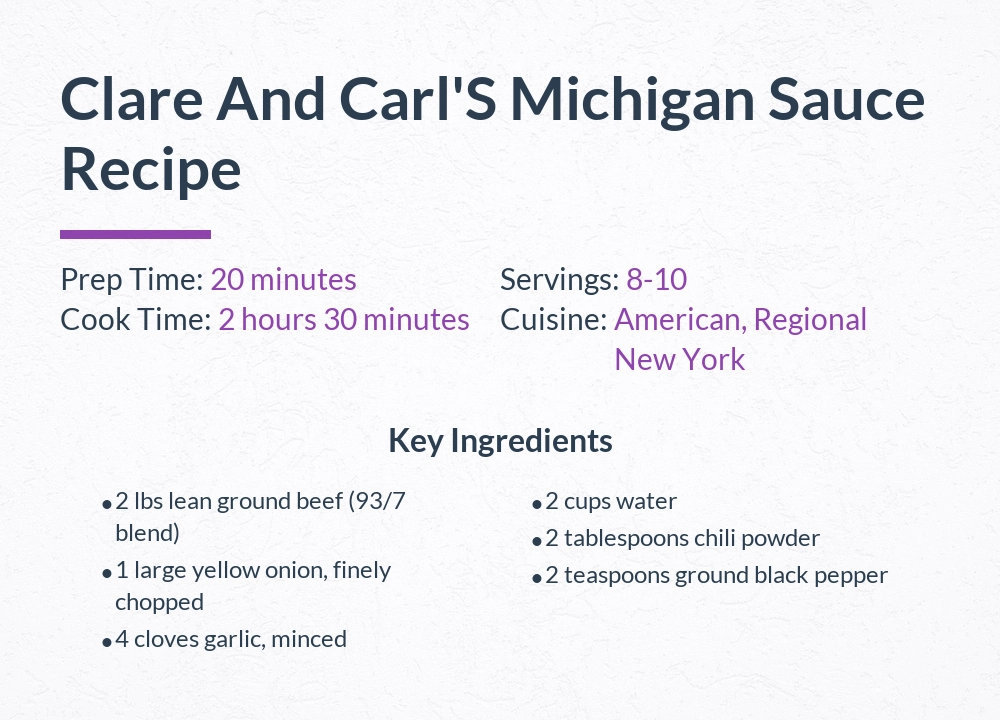
- Prep Time: 20 minutes
- Cook Time: 2 hours 30 minutes
- Servings: 8-10
- Course: Main Course, Sauce
- Cuisine: American, Regional New York
- Diet: Nut-Free
Ingredients
- 2 lbs lean ground beef (93/7 blend)
- 1 large yellow onion, finely chopped
- 4 cloves garlic, minced
- 2 (15 ounce) cans tomato sauce
- 1 (6 ounce) can tomato paste
- 2 cups water
- 2 tablespoons chili powder
- 2 teaspoons ground black pepper
- 2 teaspoons crushed red pepper flakes
- 2 teaspoons dried onion flakes
- 1 teaspoon paprika
- 1/2 teaspoon cayenne pepper (adjust to taste)
- 2 tablespoons white vinegar
- 1 tablespoon granulated sugar
- 2 teaspoons salt
Instructions
- Place a large pot or Dutch oven over medium heat. Add the ground beef and begin to cook, breaking it apart with a spoon.
- When the beef is partially cooked, add the finely chopped onion and minced garlic. Continue cooking until the beef is fully browned and the onions are soft.
- Drain any excess fat from the pot, leaving about a tablespoon for flavor.
- Add the tomato sauce, tomato paste, and water to the pot. Stir until the tomato paste is fully dissolved into the liquid.
- Incorporate all the remaining ingredients: chili powder, black pepper, red pepper flakes, dried onion flakes, paprika, cayenne, vinegar, sugar, and salt.
- Bring the mixture to a gentle simmer, then immediately reduce the heat to low. Cover the pot, leaving the lid slightly ajar to allow steam to escape.
- Let the sauce cook for at least 2 hours, stirring occasionally. The sauce will thicken and the flavors will meld together. Add a small amount of water if it becomes too thick.
- Taste and adjust seasoning with more salt or spices if desired before serving.
Nutrition
- Calories: 285 kcal
- Protein: 25 g
- Fat: 15 g
- Carbohydrates: 12 g
- Sugar: 8 g
- Fiber: 3 g
- Sodium: 980 mg
- Cholesterol: 75 mg
Cooking Method
The primary method for this sauce is a long, slow simmer on the stovetop. This technique allows the ground beef to become exceptionally tender while the liquids reduce and concentrate.
It is crucial to keep the heat low after reaching a simmer. A rapid boil can cause the tomato base to scorch and impart a bitter flavor. A heavy-bottomed pot is ideal for even heat distribution.
You can also adapt this recipe for a slow cooker. After browning the meat and onions, transfer everything to the appliance and cook on low for 6-8 hours. This method is useful for busy nights.
Tools Needed
- Large Dutch oven or heavy-bottomed pot
- Wooden spoon or spatula
- Can opener
- Measuring cups and spoons
- Chef’s knife and cutting board
Understanding Michigan Sauce
Michigan sauce is a meat sauce specific to Upstate New York, particularly the Plattsburgh and North Country area. Despite its name, it has no verified connection to the state of Michigan. The origin is a subject of local lore.
It is distinct from other meat sauces like Cincinnati chili or a standard sloppy joe. The flavor profile is built on a tomato base with a specific blend of spices, but it contains no beans. Its consistency is thicker than a soup but looser than a Bolognese.
The sauce is traditionally served over a steamed natural-casing hot dog, placed in a New England-style split-top bun. This specific combination is what defines a “Michigan dog” in its region of origin.
Ingredient Analysis
Each component in this recipe plays a specific role in building the final flavor and texture. Understanding these elements allows for more informed substitutions and adjustments.
Ground Beef
Using lean ground beef is recommended. A 93/7 blend provides sufficient fat for flavor without creating a greasy sauce. The beef is not finely crumbled; small chunks are desirable for an authentic texture.
Draining excess fat after browning is a key step. This prevents the sauce from separating and becoming oily. The remaining small amount of fat carries the fat-soluble flavors from the spices.
Tomato Foundation
The combination of tomato sauce and tomato paste is fundamental. Tomato sauce provides the liquid base, while tomato paste offers a concentrated tomato flavor and acts as a thickening agent.
Using plain, unseasoned canned tomato products gives you full control over the seasoning. The acidity from the tomatoes is balanced by the small amount of sugar added later in the recipe.
Spice Profile
The spice blend is what makes this sauce unique. Chili powder provides a warm base note, while black pepper and crushed red pepper flakes offer heat. The cayenne pepper adds a sharper, more direct spiciness.
Dried onion flakes contribute a subtle, sweet onion flavor that permeates the sauce throughout the long cooking time. Paprika adds color and a mild, sweet pepper note.
Vinegar and Sugar
White vinegar might seem unusual, but it is essential. It introduces a bright, acidic tang that cuts through the richness of the meat and tomato. This prevents the sauce from tasting flat or overly heavy.
The small quantity of granulated sugar does not make the sauce sweet. It serves to round out the sharp acidity from the tomatoes and vinegar, creating a more harmonious flavor profile.
Nutritional Perspective
From a dietary standpoint, this sauce is a significant source of high-quality protein from the lean ground beef. Protein is crucial for muscle repair and satiety, helping you feel full for longer after a meal.
The tomato base provides lycopene, an antioxidant linked to various health benefits. The cooking process actually increases the bioavailability of lycopene, making it easier for your body to absorb.
The primary considerations are sodium and saturated fat content. Using lean beef and controlling added salt can manage these levels. The fiber content is modest but present from the tomato products and onions.
Dietary Adaptations
This recipe can be modified to suit various dietary needs without sacrificing its core character. Here are practical and tested adjustments.
Gluten-Free
The sauce itself is naturally gluten-free. The critical point is the bun you serve it on. Ensure you use a certified gluten-free hot dog bun to make the entire dish safe for those with celiac disease or gluten sensitivity.
Lower Sodium
To reduce sodium, use no-salt-added tomato sauce and tomato paste. You can significantly cut back on or omit the added salt, relying on the other spices for flavor. A potassium-based salt substitute is another option.
Plant-Based Vegan
For a vegan adaptation, replace the ground beef with a plant-based ground meat alternative or cooked brown lentils. Use a rich vegetable broth instead of water to build depth of flavor missing from the beef.
History and Cultural Context
The history of the Michigan hot dog is deeply rooted in Upstate New York’s 20th-century diner culture. Establishments like Clare and Carl’s, and others such as McSweeney’s, became famous for their version of this dish.
The name “Michigan” is a mystery. One popular theory suggests it was a marketing tactic in the 1920s or 1930s to associate the sauce with something exotic and desirable from the American Midwest.
It remains a northern New York regional favorite, a comfort food that evokes a strong sense of place for those who grew up with it. The experience of eating one at a horseshoe counter is a cherished memory for many.
Common Mistakes and Expert Tips
Avoid rushing the browning process for the beef. Taking the time to cook it properly develops a deeper, richer flavor foundation for the entire sauce. Do not steam the meat.
Do not skip the step of draining the excess fat. A greasy sauce will overwhelm the other flavors and lead to a less pleasant texture. The goal is a sauce that clings to the hot dog, not one that pools oil.
Resist the urge to greatly increase the heat to reduce the sauce faster. A slow simmer is necessary to tenderize the meat and allow the spices to fully integrate. Patience is the most important ingredient.
For the best flavor, make the sauce a day ahead. Allowing it to cool and then reheating it the next day gives the flavors more time to meld and intensify, a phenomenon known as “resting.”
Serving and Storage Instructions
The traditional serving method is non-negotiable for an authentic experience. Start with a quality natural-casing hot dog, such as a brand like Bar-S for a budget-friendly option or a local butcher’s version.
Steam the hot dog until plump. Place it in a steamed New England-style hot dog bun. These buns are split on the top, not the side, and have soft, slightly sweet bread that holds the sauce well.
Ladle a generous amount of the warm Michigan sauce over the hot dog. Common toppings include a simple line of yellow mustard and a sprinkle of raw chopped onion. Cheese is not traditional.
Store any leftover sauce in an airtight container in the refrigerator for up to 4 days. You can also freeze it for up to 3 months. Thaw overnight in the refrigerator and reheat gently on the stovetop with a splash of water.
Frequently Asked Questions
What is the difference between Michigan sauce and chili?
Michigan sauce is a meat sauce with a tomato base and a distinct spice blend, but it never includes beans. Its texture is also generally smoother and saucier than most chilis, which are often chunkier and can include a wider variety of ingredients like beans and peppers.
Can I make this sauce in a slow cooker?
Yes, a slow cooker is an excellent tool for this recipe. After you have browned the ground beef and onions on the stovetop, transfer the mixture to the slow cooker. Add all other ingredients and cook on low for 6 to 8 hours.
What kind of hot dog should I use?
A natural-casing hot dog is preferred for an authentic Michigan dog. The casing provides a satisfying “snap” when you bite into it that contrasts nicely with the soft sauce and bun. Brands like Hoffmans or Sabrett are regional examples.
Why is it called a Michigan hot dog in New York?
The exact origin is lost to time, but the prevailing theory is one of marketing. In the early 20th century, naming a menu item after another state was a way to make it sound special, exotic, or indicative of a high-quality style, much like “French toast” or “Russian dressing.”
How can I make the sauce spicier or milder?
To increase the heat, add more cayenne pepper or include a dash of a hot sauce like Tabasco during cooking. To make it milder, reduce or omit the cayenne pepper and the crushed red pepper flakes. You can adjust these to your personal preference.
What is a New England-style bun?
A New England-style hot dog bun, also called a split-top bun, is characterized by a flat, square shape with the opening on the top rather than the side. The sides are soft and the top is often lightly toasted, making it ideal for holding a saucy hot dog without falling apart.