
The first time I served these wings at a backyard gathering, the reaction was immediate. Friends who usually reached for store-bought sauces kept asking how something so simple could taste so complex. That experience convinced me to document this method thoroughly.
You might have tried various wing sauces that left you disappointed with their artificial aftertaste or unbalanced heat. This recipe solves that by using Cholula’s distinct flavor as a foundation. It creates a sauce that clings perfectly to wings without overpowering them.
Beyond just the recipe, we will examine why each component matters from nutritional and culinary perspectives. You will learn how to adjust elements for different dietary needs and understand the science behind achieving the ideal texture.
How to Make Cholula Wing Sauce Recipe
This section provides the complete formula for creating the foundational sauce. Follow these measurements and steps precisely for consistent results every time. The process requires basic kitchen equipment and about thirty minutes from start to finish.
Recipe Details
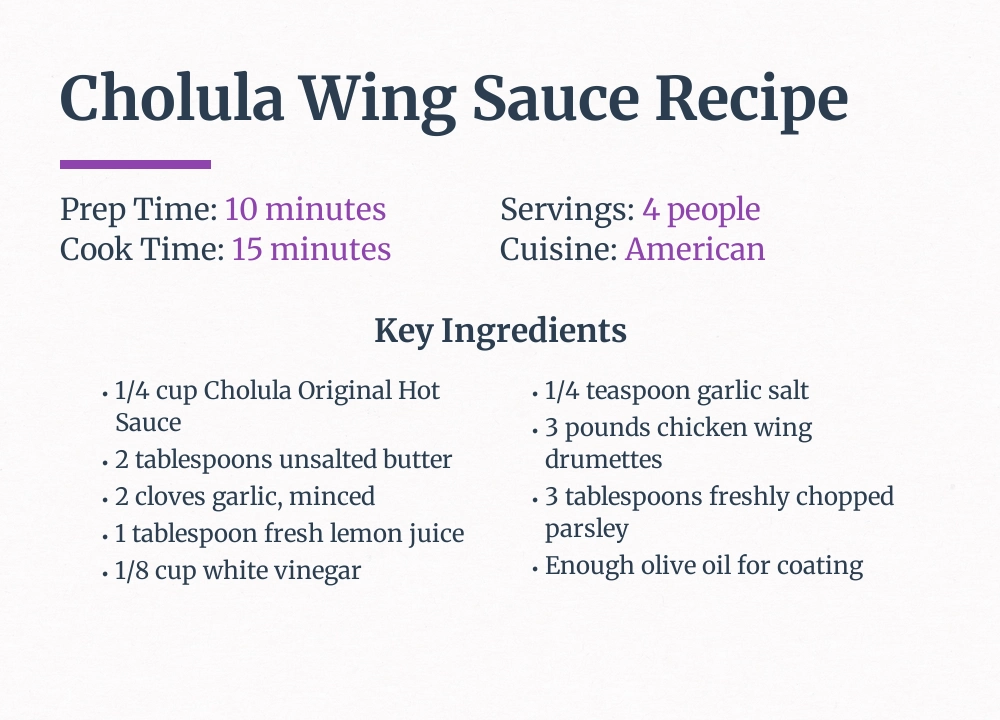
- Prep Time: 10 minutes
- Cook Time: 15 minutes
- Servings: 4 people
- Course: Appetizer
- Cuisine: American
- Diet: Omnivore
Ingredients
- 1/4 cup Cholula Original Hot Sauce
- 2 tablespoons unsalted butter
- 2 cloves garlic, minced
- 1 tablespoon fresh lemon juice
- 1/8 cup white vinegar
- 1/4 teaspoon garlic salt
- 3 pounds chicken wing drumettes
- 3 tablespoons freshly chopped parsley
- Enough olive oil for coating
Instructions
- Pat the chicken wing drumettes dry with paper towels. This step ensures crisp skin during cooking.
- Coat wings lightly with olive oil and season with garlic salt. Arrange them in a single layer on a baking sheet.
- Bake at 400°F for 25 minutes or until internal temperature reaches 165°F. Alternatively, grill over medium-high heat.
- Melt unsalted butter in a saucepan over low heat. Add minced garlic and cook until fragrant, about one minute.
- Whisk in Cholula hot sauce, white vinegar, and fresh lemon juice. Simmer for three minutes while stirring constantly.
- Transfer baked wings to a large bowl. Pour the prepared sauce over them and toss until evenly coated.
- Garnish with freshly chopped parsley before serving immediately.
Nutrition
- Calories: 280 kcal
- Protein: 22 g
- Fat: 18 g
- Carbohydrates: 4 g
- Sugar: 2 g
- Fiber: 0.5 g
- Sodium: 890 mg
- Cholesterol: 95 mg
Cooking Method
This sauce utilizes a stovetop reduction method that intensifies flavors through gentle heating. The key lies in maintaining low heat to prevent separating the butter from the liquid components. Constant whisking creates a stable emulsion that coats wings evenly.
For the wings themselves, baking provides consistent results for most home kitchens. However, grilling over charcoal imparts a smoky dimension that complements the sauce’s brightness. I recommend trying both methods to determine your preference.
Tools Needed
- Medium saucepan
- Whisk
- Large mixing bowl
- Baking sheet
- Measuring cups and spoons
- Grill brush (if grilling)
Ingredient Analysis
Understanding each component’s role helps in making informed substitutions and adjustments. These elements work together to create a balanced profile that highlights Cholula’s unique characteristics.
Cholula Original Hot Sauce
This Mexican hot sauce uses arbol and piquin peppers as its base. Unlike vinegar-forward sauces, Cholula incorporates spices like cumin and garlic directly into the blend. The moderate heat level allows other flavors to emerge without overwhelming the palate.
Its viscosity comes from a specific pepper-to-liquid ratio that differs from thinner alternatives. This thickness helps the sauce adhere to wings better during tossing. The wooden cap design actually serves a functional purpose beyond branding.
Unsalted Butter
Butter provides richness that counters the sauce’s acidity while helping carry flavors across the tongue. Using unsalted varieties prevents over-seasoning since other ingredients contribute sodium. The milk solids in butter create a smoother emulsion than oil-based alternatives.
Clarified butter works particularly well for higher heat applications if you plan to brush sauce directly onto grilling wings. Its higher smoke point prevents burning while maintaining the desired creamy texture.
Fresh Garlic
Fresh cloves offer brighter, more complex notes compared to pre-minced versions. The allicin compound released during chopping provides both flavor and potential health benefits. Cooking garlic briefly in butter tames its sharpness while preserving antimicrobial properties.
Elephant garlic can substitute for a milder effect, though you may need to increase the quantity. The timing of garlic addition significantly impacts the final flavor profile.
Nutritional Perspective
From a dietary standpoint, this recipe offers a balanced approach to enjoying wings moderately. The sauce contributes minimal calories compared to cream-based alternatives while providing capsaicin benefits.
Capsaicin from the peppers may temporarily increase metabolic rate and promote feelings of fullness. Using skin-on wings adds saturated fat, but baking instead of frying reduces overall fat absorption. The protein content supports muscle maintenance when consumed as part of active lifestyles.
Sodium levels remain manageable through controlled salting and fresh ingredient use. Those monitoring intake can reduce garlic salt and increase fresh herbs instead. The simple carbohydrate profile avoids hidden sugars common in commercial sauces.
Dietary Modifications
Several adaptations maintain the recipe’s integrity while accommodating different nutritional needs. These tested variations deliver similar results without compromising flavor.
Vegan Adaptation
Replace butter with plant-based alternatives like coconut oil or vegan butter. These substitutes mimic the emulsifying properties while maintaining richness. Increase lemon juice slightly to compensate for lost complexity from dairy fats.
For the wings themselves, cauliflower florets or seitan pieces make excellent substitutes. Adjust cooking times accordingly since these ingredients cook faster than poultry.
Reduced Sodium Version
Eliminate garlic salt entirely and rely on fresh garlic and herbs for seasoning. Use low-sodium Cholula if available, or reduce the hot sauce quantity by half and supplement with smoked paprika. The parsley garnish becomes crucial for boosting flavor without salt.
Marinating wings in vinegar and herbs before cooking enhances depth without adding sodium. This technique works particularly well for grilled preparations.
Gluten-Free Consideration
Cholula hot sauce is naturally gluten-free, but always verify labels since formulations can change. Use tamari instead of soy-based sauces if incorporating additional ingredients. Ensure all spices come from certified gluten-free sources when making custom blends.
Cross-contamination represents the biggest risk for those with celiac disease. Prepare sauce in thoroughly cleaned containers and use separate utensils for tossing.
Historical Background
Buffalo wings originated in 1964 at the Anchor Bar in Buffalo, New York. The creation used Frank’s RedHot sauce mixed with margarine, establishing the basic formula still followed today. Cholula entered the market later but gained popularity for its distinctive flavor profile.
Mexican hot sauces traditionally emphasize chili flavor over vinegar sharpness, which influenced Cholula’s development. This difference makes it well-suited for wing applications where balanced heat is preferred. The sauce’s popularity grew through restaurant use before becoming a household staple.
Wing culture evolved from bar food to mainstream cuisine through sporting events and chain restaurants. This recipe bridges traditional Buffalo style with Mexican-inspired heat profiles for contemporary palates.
Expert Preparation Tips
Avoid these common errors to achieve restaurant-quality results consistently. Small adjustments in technique make significant differences in the final product.
Sauce Consistency Management
Never boil the sauce after adding butter, as this causes separation. Maintain gentle heat throughout the combining process. If separation occurs, remove from heat and whisk vigorously while adding a teaspoon of cold water.
The ideal coating consistency should resemble heavy cream. If too thick, add hot sauce one teaspoon at a time. If too thin, simmer longer without increasing heat.
Wing Preparation Methods
Drying wings thoroughly before cooking ensures crispy skin. Place them on a rack over a baking sheet instead of directly on the pan. This allows air circulation for even browning.
For grill users, create a two-zone fire with direct and indirect heat areas. Start wings over direct heat for initial char, then move to moderate zones to finish cooking. Brush with sauce only during the final minutes to prevent burning.
Flavor Development Techniques
Toasting garlic lightly in butter before adding liquids deepens the flavor base. Let the finished sauce rest for five minutes before tossing with wings. This allows flavors to meld while the sauce thickens slightly.
Reserve some fresh parsley to add after tossing for maximum visual appeal and fresh flavor. The contrast between cooked and raw herbs enhances complexity.
Serving Recommendations
Proper presentation and accompaniments elevate this from simple appetizer to complete dining experience. Consider these pairing suggestions for different occasions.
Traditional Accompaniments
Celery and carrot sticks provide cooling contrast to the sauce’s heat. Blue cheese or ranch dressing dips complement the richness effectively. For casual gatherings, serve directly from the bowl with plenty of napkins.
Flatbread pizzas make excellent vehicles for leftover sauced wings. Remove meat from bones and scatter over dough with cheese before baking. The sauce acts as both flavoring and moisture barrier.
Beverage Pairings
Crisp lager beers cut through the sauce’s richness while complementing its spices. For non-alcoholic options, limeade or ginger ale work well. The carbonation and acidity refresh the palate between bites.
Cream-based cocktails like micheladas provide contrast, though they may overwhelm delicate flavors. Balance is key when selecting drinks for serving.
Storage and Reheating
Leftover sauced wings keep refrigerated for three days in airtight containers. The sauce may separate upon chilling, but reconstitutes easily with gentle heating. Avoid freezing sauced wings as texture deteriorates significantly.
Reheat in a 350°F oven until warmed through, about ten minutes. Microwaving makes wings soggy and should be avoided. The sauce itself can be made two days ahead and refrigerated separately.
For large batches, prepare sauce in advance and toss with freshly cooked wings before serving. This maintains optimal texture while streamlining party preparation.
Scientific Principles
Understanding the chemistry involved helps troubleshoot issues and innovate successfully. These principles explain why specific techniques produce better results.
Emulsion Formation
The sauce represents a temporary emulsion where butterfat disperses in watery components. Lecithin from egg-containing hot sauces sometimes stabilizes this, but Cholula lacks eggs. Constant mechanical action through whisking creates the necessary suspension.
Heat increases molecular movement, threatening emulsion stability. This explains why low temperatures are crucial during combination. Acid from vinegar and lemon juice helps maintain the emulsion by interacting with protein structures.
Maillard Reaction Application
Crisping wings before saucing leverages the Maillard reaction between amino acids and sugars. This creates complex flavors that stand up to the sauce’s intensity. The reaction occurs optimally at temperatures between 280-330°F.
Adding sauce too early prevents proper browning by introducing moisture. This is why many recipes specify saucing after cooking is complete. The sugar content in hot sauces would burn if exposed to high heat for extended periods.
Frequently Asked Questions
Can I use another type of hot sauce for this recipe?
Yes, but results will differ significantly. Cholula’s specific pepper blend and spice profile create the intended balance. Alternatives like Frank’s RedHot produce more vinegar-forward sauces, while habanero-based options increase heat dramatically.
Can this recipe be made in advance?
The sauce maintains quality for two days when refrigerated separately from wings. Combine them just before serving to preserve texture. Cooked unsauced wings freeze well for up to three months.
Why did my sauce separate?
This usually indicates excessive heat or rapid temperature changes. Gently reheat while whisking vigorously to recombine. Adding a teaspoon of cold water can help stabilize the emulsion.
How can I make the sauce spicier?
Add cayenne pepper or crushed red pepper flakes during the simmering stage. Incorporate these gradually while tasting to avoid overpowering. The garlic and butter base will help carry additional heat.
What’s the best way to achieve crispy wings?
Thorough drying before cooking is essential. Baking powder rubbed onto skin before baking creates extra crispness through chemical reaction. For grilling, maintain steady heat and avoid moving wings excessively.
Can I use this sauce for other proteins?
It works well with shrimp, firm fish like salmon, and brisket. Adjust cooking times based on protein thickness. For vegetarian applications, try it with roasted cauliflower or tofu.
Is there a way to reduce the sodium content?
Use unsalted butter and eliminate added salt. Increase fresh herbs and citrus juice to compensate flavor-wise. Consider making your own low-sodium hot sauce blend as a base.
How do I prevent the sauce from burning on grilled wings?
Apply sauce during the final few minutes of cooking. Use indirect heat zones to finish cooking after initial charring. Keep a spray bottle of water handy to control flare-ups.