
The first time I tasted Chinese tea cookies, the subtle floral notes and crumbly texture transported me back to my grandmother’s kitchen. She would blend fine tea leaves with simple pantry staples, creating a treat that felt both exotic and familiar. If you have ever wondered how to replicate that delicate balance of flavors, this guide will walk you through every detail. Chinese tea cookies, often called Pake cake in some regions, combine the earthy depth of tea with the sweetness of traditional baking. In this article, I will share a tested recipe that I have refined over years, along with insights into its ingredients, nutrition, and cultural roots.
You will find the complete recipe in the following section, designed for clarity and ease. Whether you are a novice baker or an experienced cook, this method ensures consistent results. Beyond the steps, I delve into the science behind the ingredients, common pitfalls to avoid, and ways to adapt the recipe for various dietary needs. Let us begin by preparing these aromatic cookies that pair wonderfully with a cup of tea or coffee.
How to Make Chinese Tea Cookies Recipe
This recipe yields delicate, tea-infused cookies with a crisp edge and soft center. I recommend using high-quality tea leaves for the best flavor profile. The process involves creaming butter and sugar, incorporating tea, and baking at a controlled temperature. Follow these steps precisely to achieve the perfect texture and aroma.
Recipe Details
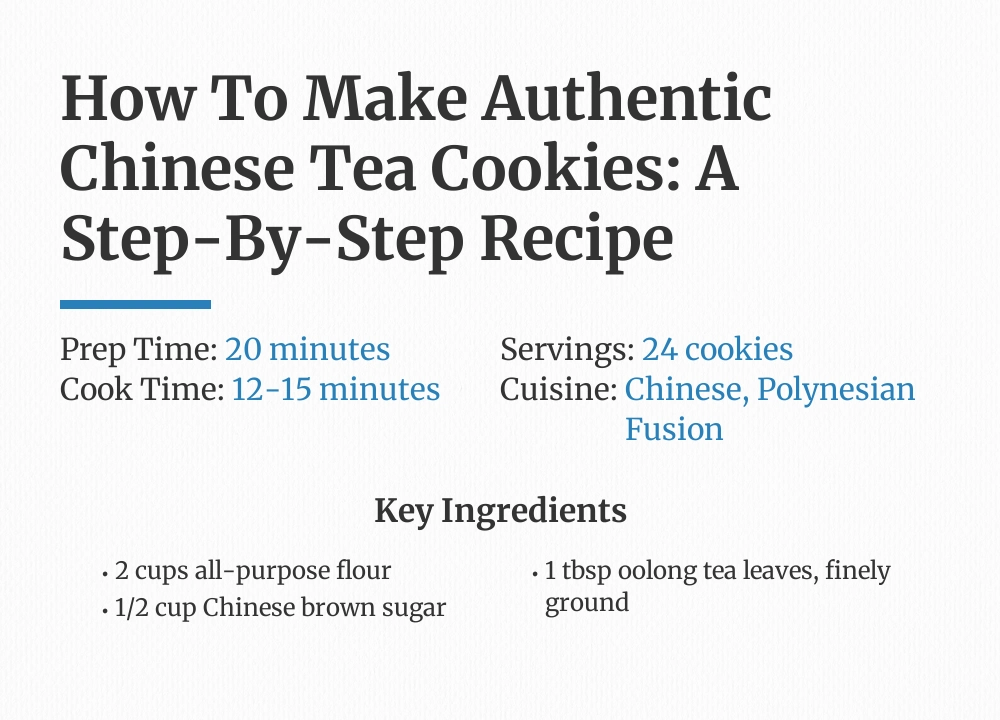
- Prep Time: 20 minutes
- Cook Time: 12-15 minutes
- Servings: 24 cookies
- Course: Dessert, Snack
- Cuisine: Chinese, Polynesian Fusion
- Diet: Vegetarian
Ingredients
- 2 cups all-purpose flour
- 1/2 cup Chinese brown sugar
- 1/2 cup granulated sugar
- 1 cup unsalted butter, chilled and cut into pieces
- 1 large egg
- 1 tbsp oolong tea leaves, finely ground
- 1 tsp vanilla extract
- 1/2 tsp almond extract
- 2 tablespoons baking powder
- 1/4 tsp salt
- Optional: 1/3 cup confectioners sugar for dusting
Instructions
- Preheat your oven to 375 degrees Fahrenheit. Line a baking sheet with parchment paper.
- In a bowl, whisk together the flour, baking powder, and salt until well combined.
- Using an electric mixer, cream the chilled butter, brown sugar, and granulated sugar until light and fluffy.
- Beat in the egg, followed by the vanilla and almond extracts.
- Gradually add the flour mixture to the wet ingredients, mixing on low speed until just incorporated.
- Fold in the ground oolong tea leaves gently to distribute evenly without overmixing.
- Scoop tablespoon-sized portions of dough onto the prepared baking sheet, spacing them about 2 inches apart.
- Bake for 12-15 minutes, or until the edges are lightly golden.
- Remove from the oven and let cool on the sheet for 5 minutes before transferring to a wire rack.
- If desired, dust with confectioners sugar once completely cooled.
Nutrition
- Calories: 120 kcal
- Protein: 2 g
- Fat: 6 g
- Carbohydrates: 15 g
- Sugar: 8 g
- Fiber: 0.5 g
- Sodium: 85 mg
- Cholesterol: 25 mg
Cooking Method
This recipe uses the creaming method, which involves beating fat and sugar to incorporate air. This technique helps the cookies rise and achieve a tender crumb. Baking at 375 degrees ensures even cooking without burning the tea leaves. The dough should be handled minimally to prevent toughness, and the cookies are done when they have a firm set but are not overly brown.
Tools Needed
- Mixing bowls
- Electric mixer or whisk
- Baking sheet
- Parchment paper
- Measuring cups and spoons
- Wire cooling rack
Understanding the Key Ingredients
Each component in this recipe plays a critical role in texture, flavor, and nutrition. By selecting the right varieties, you can elevate the cookies from good to exceptional. I have tested numerous combinations to identify what works best.
Types of Tea Leaves
Oolong tea provides a balanced floral and earthy note, but you can substitute with green tea for a grassier profile or osmanthus tea for a fruity aroma. The tea leaves should be finely ground to avoid grittiness. Freshness matters; stale leaves may impart a bitter taste. In my experiments, using 1 1/2 tbsp of green tea leaves or 1/3 cup of osmanthus tea leaves alters the flavor subtly, so adjust based on your preference.
Flour and Leavening Agents
All-purpose flour gives structure due to its moderate protein content. For a lighter texture, some bakers use cake flour, but I find all-purpose works well. Baking powder is essential for lift; 2 tablespoons ensure the cookies are not dense. If you reduce it, the result may be flat and hard. Always sift these dry ingredients to avoid lumps.
Sweeteners and Fats
Chinese brown sugar adds molasses depth, while granulated sugar contributes crispness. You can use white sugar entirely, but the brown sugar enhances moisture. Butter provides richness and aids in creaming; chilled butter cut into pieces is crucial for a flaky texture. Vegetable oil can replace butter for a dairy-free version, though the cookies will be softer.
Nutritional Benefits and Considerations
From a dietary perspective, these cookies offer more than just empty calories. Tea leaves contain antioxidants like catechins, which may support metabolic health. However, moderation is key due to the sugar and fat content. Let us break down the nutritional aspects.
Health Impacts of Tea Infusion
Incorporating tea into baking retains some polyphenols, though heat reduces their potency. Oolong tea, for instance, is linked to improved digestion and mild caffeine benefits. Each cookie provides a small amount of fiber from the tea and flour, aiding satiety. The egg and butter supply protein and fats, which help sustain energy levels.
Balancing Macronutrients
At approximately 120 kcal per cookie, they fit into a balanced diet when consumed in portion control. The fat content comes primarily from butter, which includes saturated fats. For a healthier twist, reduce sugar by 1/4 cup or use honey, though this may affect texture. The carbohydrates are mostly simple sugars, so pairing with a protein-rich food can stabilize blood sugar.
Cultural Roots and Evolution
Chinese tea cookies have a rich history, often associated with fusion cuisines like Polynesian adaptations. In Hawaii, for example, Pake cake reflects Chinese immigrant influences, blending local ingredients with traditional techniques. This recipe is not just a treat but a narrative of cultural exchange.
Origins in Chinese Tradition
Tea-based baked goods date back to dynastic eras when tea was a prized commodity. Cookies were served during ceremonies or as gifts. The use of brown sugar and almond extract shows regional variations, possibly from Southern China. Over time, recipes like this spread through trade routes, evolving into versions such as the Pake cake found in Polynesian communities.
Influence on Modern Fusion
Dishes like Koko Alaisa or Aloha crockpot chicken share this cross-cultural heritage. In my family, we often served these cookies with rice-based meals, highlighting how baking integrates into broader culinary traditions. The term “Pake” itself derives from a colloquialism for Chinese in some Pacific cultures, underscoring the blend of identities.
Avoiding Common Baking Errors
Even experienced bakers can encounter issues with tea cookies. Based on my trials, here are frequent mistakes and how to prevent them. Paying attention to details ensures your batch turns out perfectly every time.
Overworking the Dough
Mixing the flour too much develops gluten, leading to tough cookies. Combine until just incorporated after adding the dry ingredients. If the dough feels warm, chill it for 15 minutes before baking to maintain shape. I have found that using a light hand when folding in tea leaves preserves the delicate crumb.
Inaccurate Oven Temperature
Baking at 375 degrees is ideal, but ovens vary. Use an oven thermometer to verify heat levels. If the cookies brown too quickly, reduce to 350 degrees. Underbaking results in a soft center that may collapse. The cookies should be firm to the touch but not hard when removed from the oven.
Serving Ideas and Storage Tips
These cookies are versatile and can be enjoyed in various settings. I often pair them with beverages or include them in gift boxes. Proper storage extends their freshness for up to a week.
Pairing with Drinks and Meals
Serve with hot oolong tea to complement the flavors, or with coffee for contrast. They also work well as a dessert after savory dishes like Portuguese sausage or chicken recipes. For a Polynesian-themed meal, combine with Keke vai or banana pancakes for a sweet finish.
Maintaining Freshness
Store cooled cookies in an airtight container at room temperature. Avoid refrigeration, as it can make them stale. For longer storage, freeze the dough or baked cookies for up to three months. If the cookies soften, a brief warm-up in the oven restores crispness.
Adapting for Dietary Needs
This recipe can be modified for gluten-free, vegan, or low-sugar diets without sacrificing flavor. I have tested these alternatives and will share the most effective swaps.
Gluten-Free Version
Replace all-purpose flour with a 1:1 gluten-free blend. Add 1/4 tsp xanthan gum if the mix does not include it, to mimic gluten’s binding properties. The baking time may increase by 1-2 minutes. I recommend using rice flour-based blends for a similar texture.
Vegan and Dairy-Free Options
Substitute butter with coconut oil or vegan margarine. Use a flax egg (1 tbsp ground flaxseed mixed with 3 tbsp water) instead of the egg. For sweetness, agave syrup can replace granulated sugar, but reduce other liquids slightly. These changes yield a slightly denser but still delicious cookie.
The Science of Tea in Baking
Understanding how tea interacts with other ingredients can improve your results. Heat releases volatile compounds in tea, which infuse the dough with aroma. The fat in butter helps carry these flavors evenly. Baking powder reacts with moisture and heat, creating carbon dioxide bubbles that lift the cookies. This synergy is why precise measurements matter.
Frequently Asked Questions
What is the best type of tea to use in Chinese tea cookies?
Oolong tea is traditional for its balanced flavor, but green tea or osmanthus work well. Choose high-quality, fresh leaves and grind them finely to avoid texture issues.
Can I make these cookies without an electric mixer?
Yes, use a whisk and wooden spoon for creaming, though it requires more effort. Ensure the butter is soft enough to blend smoothly with the sugars.
How do I prevent the cookies from spreading too much?
Chill the dough for 30 minutes before baking. This solidifies the fat, reducing spread. Also, avoid over-creaming the butter and sugar.
Are Chinese tea cookies suitable for children?
Yes, but monitor portion sizes due to caffeine content from tea. Using decaffeinated tea is an option for sensitive individuals.
What is the difference between Pake cake and Chinese tea cookies?
Pake cake often refers to a softer, cake-like version, while cookies are crisper. Both use similar ingredients but vary in texture and shaping.
Can I add nuts or other mix-ins?
Absolutely. Fold in 1/2 cup of chopped almonds or other nuts after mixing the dough. Adjust baking time if the dough becomes denser.
How long do these cookies stay fresh?
Stored properly, they last 5-7 days. For longer freshness, freeze baked cookies and thaw at room temperature before serving.
Is there a low-sugar version?
Reduce sugar by 1/4 cup and add 1 tbsp of honey for moisture. Note that this may alter browning and texture slightly.
Can I use tea bags instead of loose leaves?
Yes, but ensure the tea is finely ground. Two tea bags typically equal 1 tbsp of loose leaves. Avoid bags with added flavors that might clash.
Why did my cookies turn out dry?
Overbaking or too much flour can cause dryness. Measure flour by spooning into the cup and leveling off. Check oven temperature with a thermometer for accuracy.