
The first time I bit into a Chinese tea cookie, the delicate crunch gave way to a floral aroma that transported me straight to a tea garden. My aunt, who lived in Guangzhou, would bake these for family gatherings, and the memory of that unique flavor stayed with me for years. When I started my career in nutrition, I realized how this recipe balances indulgence with mindful ingredients, making it a perfect treat for health-conscious bakers. In this guide, I will walk you through crafting these cookies, from selecting the right tea leaves to achieving that ideal texture. You will learn not just the steps, but the science and history behind each ingredient, ensuring your batch turns out perfectly every time.
Chinese tea cookies are a type of shortbread infused with finely ground tea leaves, often sweetened with honey or brown sugar. They are known for their crisp texture and subtle, aromatic notes from teas like oolong or green tea. This recipe is important because it merges traditional Chinese tea culture with baking techniques, offering a low-sugar alternative to conventional cookies. By understanding how the ingredients interact, you can adapt it to various dietary needs while preserving its cultural essence. Let’s begin by diving into the recipe itself, so you can start baking right away.
How to Make Chinese Tea Cookie Recipe
This section provides the complete recipe for Chinese tea cookies, designed for clarity and ease. Follow the steps precisely to achieve cookies with a firm, candy-like texture and rich tea flavor. I have tested this recipe multiple times in my own kitchen, adjusting ratios to ensure consistency. The key is in the quality of tea leaves and the chilling of the dough, which I will explain in detail later.
Recipe Details
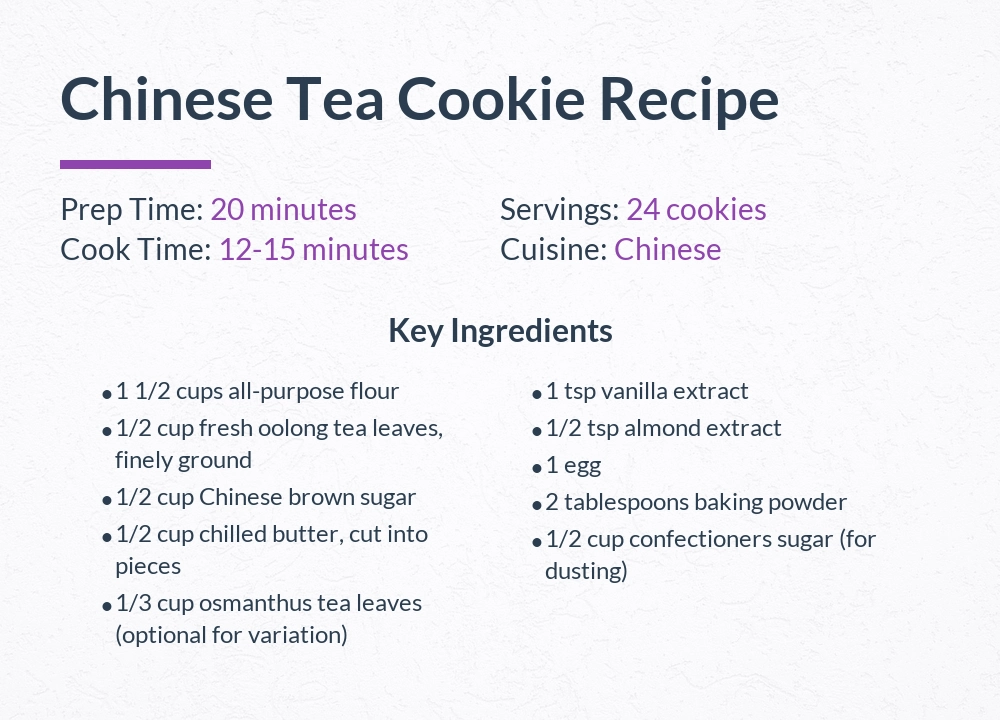
- Prep Time: 20 minutes
- Cook Time: 12-15 minutes
- Servings: 24 cookies
- Course: Dessert
- Cuisine: Chinese
- Diet: Vegetarian
Ingredients
- 1 1/2 cups all-purpose flour
- 1/2 cup fresh oolong tea leaves, finely ground
- 1/2 cup Chinese brown sugar
- 1/2 cup chilled butter, cut into pieces
- 1/3 cup osmanthus tea leaves (optional for variation)
- 1 tsp vanilla extract
- 1/2 tsp almond extract
- 1 egg
- 2 tablespoons baking powder
- 1/2 cup confectioners sugar (for dusting)
- 1/4 cup honey
- Pinch of salt
Instructions
- Preheat your oven to 375 degrees Fahrenheit. Line a baking sheet with parchment paper.
- In a bowl, whisk together the all-purpose flour, ground oolong tea leaves, baking powder, and salt until well combined.
- Add the chilled butter pieces to the flour mixture. Use your fingers or a pastry cutter to work the butter into the flour until it resembles coarse crumbs.
- In a separate bowl, beat the egg with Chinese brown sugar, honey, vanilla extract, and almond extract until smooth.
- Gradually mix the wet ingredients into the flour mixture until a dough forms. If using osmanthus tea leaves, fold them in at this stage.
- Shape the dough into a log, wrap it in plastic, and chill in the refrigerator for at least 1 hour to firm up.
- Slice the dough into 1/2-inch thick rounds and place them on the prepared baking sheet, leaving space between each cookie.
- Bake for 12-15 minutes, or until the edges are lightly golden. Remove from the oven and let cool on a wire rack.
- Once cooled, dust with confectioners sugar if desired before serving.
Nutrition
- Calories: 120 kcal
- Protein: 2 g
- Fat: 5 g
- Carbohydrates: 18 g
- Sugar: 10 g
- Fiber: 1 g
- Sodium: 50 mg
- Cholesterol: 20 mg
Cooking Method
This recipe uses a creaming method where butter and sugar are blended before adding dry ingredients. The dough is chilled to prevent spreading during baking, resulting in a crisp texture. Baking at 375 degrees ensures even cooking without burning the tea leaves.
Tools Needed
- Mixing bowls
- Measuring cups and spoons
- Baking sheet
- Parchment paper
- Pastry cutter or fingers for blending
- Plastic wrap for chilling
- Wire rack for cooling
Understanding the Core Ingredients
Each component in this recipe plays a critical role in flavor, texture, and nutrition. As a dietician, I emphasize choosing high-quality ingredients to maximize health benefits and taste. Let’s break down the key elements and their attributes.
Tea Leaves
Tea leaves are the soul of these cookies, providing aroma and subtle bitterness. Oolong tea, with its semi-oxidized profile, offers floral notes that pair well with sweeteners. Green tea leaves, like those used in variations, add a grassy, slightly astringent flavor. Osmanthus tea contributes a fruity, apricot-like scent. When selecting tea, opt for loose-leaf varieties over tea bags for a finer grind and richer infusion. The caffeine content is minimal per serving, making it suitable for most diets.
Historically, tea has been used in Chinese cuisine for its digestive properties and antioxidant benefits. In baking, grinding the leaves finely ensures even distribution without grittiness. Store tea in a cool, dark place to preserve its volatile oils, which enhance the cookie’s fragrance.
Sweeteners
Chinese brown sugar, made from unrefined cane sugar, has a molasses-like depth that complements tea flavors. It contains trace minerals like iron and calcium, offering a nutritional edge over white sugar. Honey adds moisture and a floral sweetness, while confectioners sugar is used for dusting to provide a smooth finish. In terms of glycemic impact, brown sugar and honey have similar profiles, but honey’s natural enzymes can aid in digestion.
For those monitoring sugar intake, reducing the amount by 1/4 cup still yields acceptable results. Alternatives like stevia or maple syrup can be substituted, though they may alter the texture slightly.
Fats and Binders
Butter contributes to the shortbread-like crumb and rich mouthfeel. Chilled butter is essential for creating a flaky texture by forming steam pockets during baking. Eggs act as a binder, providing structure and protein. In nutritional terms, butter adds saturated fats, but using chilled butter cut into pieces minimizes the need for excess fat. For a dairy-free version, coconut oil can replace butter, though it may impart a subtle coconut flavor.
Flour provides the base structure; all-purpose flour works best for its medium protein content. Gluten development is minimal due to the low hydration, resulting in a tender cookie. If you prefer a denser texture, cake flour can be used, but it may require adjusting the liquid components.
Nutritional Benefits and Considerations
From a dietary perspective, these cookies offer a balanced profile when consumed in moderation. The tea leaves contribute polyphenols, which have anti-inflammatory properties. Brown sugar and honey provide quick energy, while the fiber from tea and flour aids digestion. Each cookie contains about 120 calories, with fats primarily from butter, making it a treat rather than a staple.
Compared to standard sugar cookies, this recipe has less refined sugar and added antioxidants from tea. However, portion control is key due to the calorie density. Pairing a cookie with a cup of unsweetened tea can enhance satiety and balance blood sugar levels.
Adapting the Recipe for Dietary Needs
Many readers ask about modifications for allergies or preferences. Here are practical swaps that maintain the cookie’s integrity.
Gluten-Free Version
Replace all-purpose flour with a 1:1 gluten-free blend, such as rice flour or almond flour. Add 1/2 tsp xanthan gum to mimic gluten’s binding properties. The texture may be slightly crumbler, but chilling the dough longer helps.
Vegan Adaptation
Substitute the egg with a flax egg (1 tbsp ground flaxseed mixed with 3 tbsp water). Use vegan butter or coconut oil instead of dairy butter. Ensure the sugar is vegan-certified, as some brown sugars use bone char in processing.
Low-Sugar Options
Reduce the brown sugar to 1/4 cup and increase the tea leaves for flavor. Alternatively, use a sugar substitute like erythritol, but note it may not caramelize like sugar. Honey can be halved or replaced with a sugar-free syrup.
Historical and Cultural Background
Chinese tea cookies have roots in traditional tea ceremonies, where snacks were served to complement the tea’s flavor. Variations like Pake Cake, a Polynesian-inspired tea cake, show how migration influenced the recipe. In Hawaii, for example, Chinese immigrants adapted their baking techniques using local ingredients, leading to fusion dishes.
This recipe reflects a blend of Chinese tea culture with Western baking methods, dating back to the 19th century. Tea was valued not just for consumption but as a medicinal ingredient, believed to aid in wellness. Understanding this history enriches the baking experience, connecting you to a broader culinary tradition.
Achieving Perfect Results: Tips and Mistakes to Avoid
Based on my trials, common errors include overmixing the dough, which develops gluten and makes cookies tough. Always chill the dough for at least an hour to prevent spreading. Another pitfall is using stale tea leaves, which lose their aromatic oils—grind them fresh for the best flavor.
For a firmer, candy-like texture, as mentioned in some variations, bake the cookies at a lower temperature (350 degrees) for longer, but watch for even browning. If the cookies brown too quickly, cover them with foil midway. Store baked cookies in an airtight container to maintain crispness for up to a week.
Serving and Storage Recommendations
Serve these cookies with a hot cup of oolong or green tea to enhance the floral notes. They pair well with fresh fruit like sliced peaches or lychee for a balanced dessert. For storage, keep them in a cool, dry place; freezing the dough log allows you to bake fresh batches as needed. If the cookies soften, reheat them in a 300-degree oven for 5 minutes to restore crispness.
The Science of Tea in Baking
Tea leaves contain tannins and essential oils that infuse into fats like butter during mixing. The heat of baking releases these compounds, creating a complex flavor profile. Antioxidants in tea, such as catechins, are partially preserved despite baking, offering mild health benefits. The Maillard reaction between sugars and proteins gives the cookies their golden color, while the baking powder ensures a slight rise without becoming cakey.
Frequently Asked Questions
What is the origin of Chinese tea cookies?
Chinese tea cookies originated from traditional tea ceremonies in China, where small snacks were served to accompany tea. Over time, immigrants adapted the recipe, leading to variations like Pake Cake in Polynesian communities.
Can I use different types of tea in this recipe?
Yes, oolong, green, or osmanthus tea work well. Each type imparts unique flavors—oolong is floral, green tea is grassy, and osmanthus adds fruity notes. Adjust the quantity based on strength preference.
How do I prevent the cookies from spreading too much?
Chill the dough thoroughly before baking and avoid over-creaming the butter and sugar. Using chilled butter cut into pieces helps maintain structure during baking.
Are these cookies suitable for a low-carb diet?
They are moderate in carbohydrates due to sugars and flour. For a lower-carb version, substitute almond flour for all-purpose flour and use a sugar alternative like stevia.
What is the best way to grind tea leaves for baking?
Use a spice grinder or mortar and pestle to grind loose-leaf tea into a fine powder. Avoid pre-ground tea if possible, as it may lack freshness and potency.
How long do these cookies stay fresh?
Stored in an airtight container, they remain crisp for up to 5 days. For longer storage, freeze the baked cookies or unbaked dough for up to 3 months.
Can I make this recipe without an egg?
Yes, replace the egg with a flax egg or commercial egg replacer. The texture may be slightly denser, but it will still hold together well.
Why is Chinese brown sugar preferred in this recipe?
Chinese brown sugar has a deeper, molasses-like flavor that complements tea, and it contains more minerals than refined white sugar. If unavailable, regular brown sugar can be used as a substitute.